

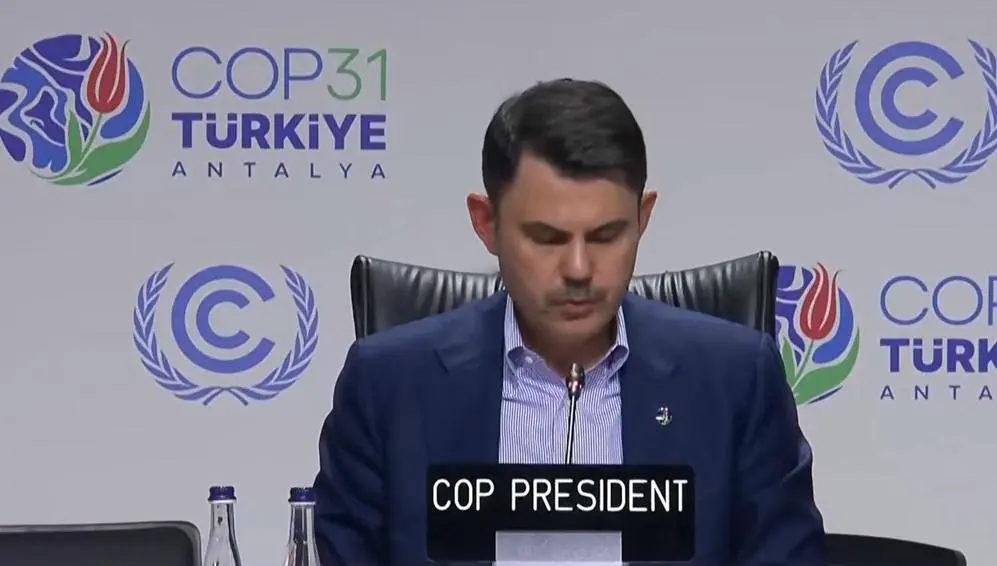
The negotiations, which were scheduled to end on Friday, stretched nearly 48 hours past the deadline as delegates from nearly 200 countries attempted to bridge a widening chasm between high-ambition coalitions and nations prioritizing domestic energy security and technological workarounds. The failure to produce a "Cover Decision"—the overarching political agreement that signals global intent—leaves the international community in a state of uncertainty at a time when climate scientists warn that the window for meaningful action is almost entirely shut.
The Breaking Point: Fossil Fuels and the Ghost of COP28
The primary catalyst for the collapse was the contentious language surrounding the future of coal, oil, and gas. While the 2023 COP28 summit in Dubai was hailed as a milestone for including the first-ever global call to "transition away" from fossil fuels, that momentum has faced significant headwinds in the years since. According to delegates present in Antalya, the draft texts produced during the final hours of COP31 saw those commitments systematically diluted or removed entirely.
The European Union, led by Commissioner for Climate, Net Zero and Clean Growth Wopke Hoekstra, signaled early on Saturday that it would not be party to a "regressive" deal. The EU’s stance was that any agreement failing to build upon the Dubai mandate was a step backward that the planet could not afford. By Sunday morning, when a final compromise draft was circulated, it became clear that the text focused heavily on Carbon Capture, Utilization, and Storage (CCUS) as a primary mitigation strategy, while remaining silent on the absolute reduction of fossil fuel production.
"Unfortunately, the final text fell short of what is needed," Hoekstra stated shortly after the talks were declared dead. "It was backsliding on science. Science must underpin everything we do. It was also backsliding in terms of ambition. There was no willingness to recognize the transition away from fossil fuels and the link between fossil fuels and the planet heating up."
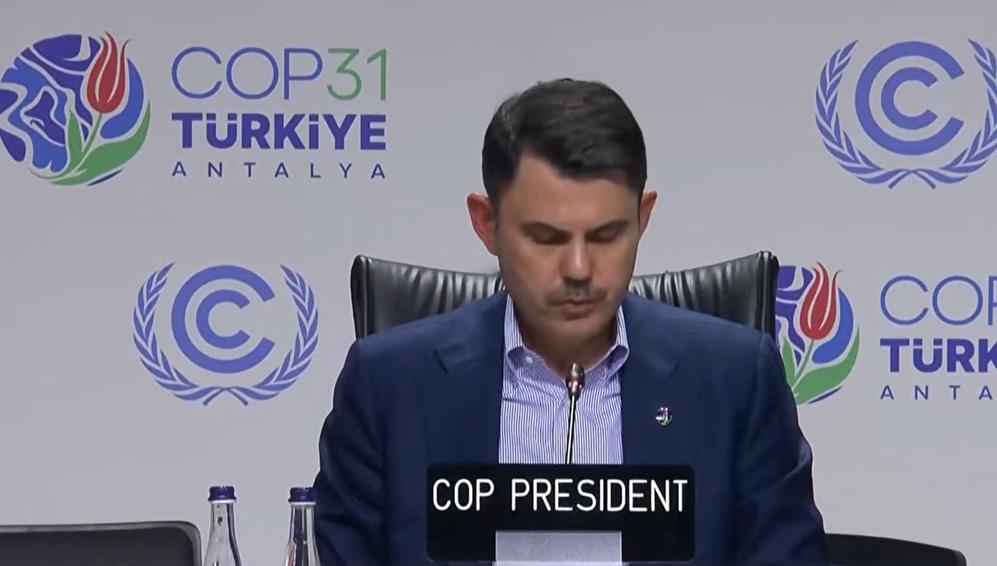
The United Kingdom, which had spent much of the week attempting to play the role of a diplomatic bridge-builder, eventually joined the EU in its exit. UK Secretary of State for Energy Security and Net Zero Miatta Fahnbulleh described the outcome as "immensely disappointing," noting that the proposed decision "meets the moment" by moving backward at a time when implementation must accelerate.
A Year of Scientific Alarm and Failed Finance
The collapse in Antalya comes against a backdrop of alarming environmental data. 2026 has been characterized by climatologists as a year of extremes, with global average temperatures hovering precariously close to the 1.5°C threshold established by the Paris Agreement. A landmark UN report released in September 2024—and reinforced by data throughout 2025 and 2026—concluded that the goal of limiting warming to 1.5°C is now effectively out of reach. The report urged a pivot toward "overshoot management," focusing on net-negative emissions to bring temperatures back down in the latter half of the century.
Despite this scientific urgency, the financial negotiations at COP31 were equally fraught. A central pillar of the talks was the establishment of a New Collective Quantified Goal (NCQG) for climate finance. Wealthy nations were under pressure to set a firm baseline for channeling funds to the Global South to assist with adaptation—the process of preparing infrastructure and societies for the unavoidable impacts of a warming world.
Earlier drafts of the agreement included a pledge to reach at least $120 billion in annual adaptation finance by 2035. However, by the final session, these specific figures had vanished, replaced by vague promises of "scaling up" resources without defined targets or timelines. Developing nations expressed profound frustration, arguing that without guaranteed financial support, they cannot be expected to overhaul their economies or abandon cheaper fossil fuel energy sources.
The CCUS Controversy: Mitigation or Evasion?
Another major point of contention that fueled the EU and UK walkout was the prominence of Carbon Capture, Utilization, and Storage (CCUS) in the draft agreement. The text presented by the Turkish Presidency leaned heavily on CCUS as a "bridge" technology, a move supported by several major oil-producing nations and emerging economies.

Critics of this approach, including the EU and various environmental NGOs, argue that while CCUS is a necessary tool for "hard-to-abate" sectors like cement and steel, it is being used by the fossil fuel industry as a "smoke screen" to justify continued extraction. The EU’s negotiators argued that the draft text over-indexed on unproven or expensive capture technologies at the expense of proven renewable energy deployment and energy efficiency measures.
The disagreement over CCUS highlights a fundamental rift in global climate strategy: whether to focus on capturing emissions at the source or phasing out the source of the emissions altogether. The Antalya draft’s failure to balance these two perspectives proved to be a terminal flaw.
Chronology of the Collapse
The path to the failure of COP31 was marked by several critical turning points over the two-week summit:
- Week One: Negotiations opened with cautious optimism, though early tensions emerged regarding the agenda’s focus on finance over mitigation. Host nation Turkey attempted to position itself as a neutral arbiter, but faced criticism for not pushing a more aggressive mitigation agenda.
- Wednesday, Nov 19: Preliminary drafts showed a significant gap between the G77 plus China bloc, which demanded trillions in total climate finance, and the "High Ambition Coalition," which insisted on stronger language regarding the fossil fuel phase-out.
- Friday, Nov 21 (The Deadline): As the official clock ran out, the Presidency announced that talks would continue into the night. A draft released at midnight was widely panned for its "weak and hollow" language on fossil fuels.
- Saturday, Nov 22: The EU and UK issued a joint warning that they were prepared to walk away. Intense "Green Room" meetings (small-group ministerial negotiations) failed to produce a breakthrough on the $120 billion adaptation target.
- Sunday, Nov 23 (Early Morning): A final "take-it-or-leave-it" text was presented. While it acknowledged the 1.5°C overshoot, it failed to re-insert the COP28 language on transitioning away from fossil fuels. The EU and UK officially withdrew their support, leading to the formal closure of the session without an agreement.
Implications for the Paris Agreement
The lack of a final agreement at COP31 does not dissolve the Paris Agreement, but it significantly weakens the "ratchet mechanism" intended to increase national ambitions every five years. The failure suggests a breakdown in the multilateral process that has governed climate policy for three decades.
Analysts suggest that the vacuum left by the COP31 collapse may lead to a fragmented global climate landscape. We may see an increase in "minilateralism," where small groups of like-minded nations—such as the EU’s Climate Club—forge their own high-standard trade and environmental pacts, potentially leaving behind nations that cannot or will not meet those standards.

Furthermore, the failure to secure adaptation finance is likely to exacerbate the "trust deficit" between the Global North and the Global South. Without a UN-backed framework for finance, developing nations may turn to other sources of investment that do not carry the same environmental or transparency requirements, potentially locking in carbon-intensive infrastructure for decades to come.
Reactions from the International Community
The reaction to the collapse has been one of alarm and finger-pointing. Climate advocacy groups have slammed the outcome as a "betrayal of the most vulnerable."
"Antalya will be remembered as the place where diplomacy failed the planet," said a spokesperson for a coalition of major environmental NGOs. "By refusing to name the problem—fossil fuels—and refusing to pay the bill for adaptation, governments have effectively admitted they are not in control of the crisis."
In contrast, some delegations from fossil-fuel-dependent nations argued that the EU and UK were being "unrealistic" and "inflexible," suggesting that a deal was possible if the Europeans had accepted a more gradual, technology-neutral approach.
As delegates leave Turkey, the focus shifts to the interim meetings in Bonn and the eventual COP32. However, with the 1.5°C goal already slipping away and the spirit of international cooperation fractured, the road to the next summit appears more arduous than ever. The "line in the sand" drawn by the EU and UK in Antalya may have preserved the integrity of their climate positions, but it also underscores the terrifying reality that the world’s governments can no longer agree on how to save the habitable biosphere.
