

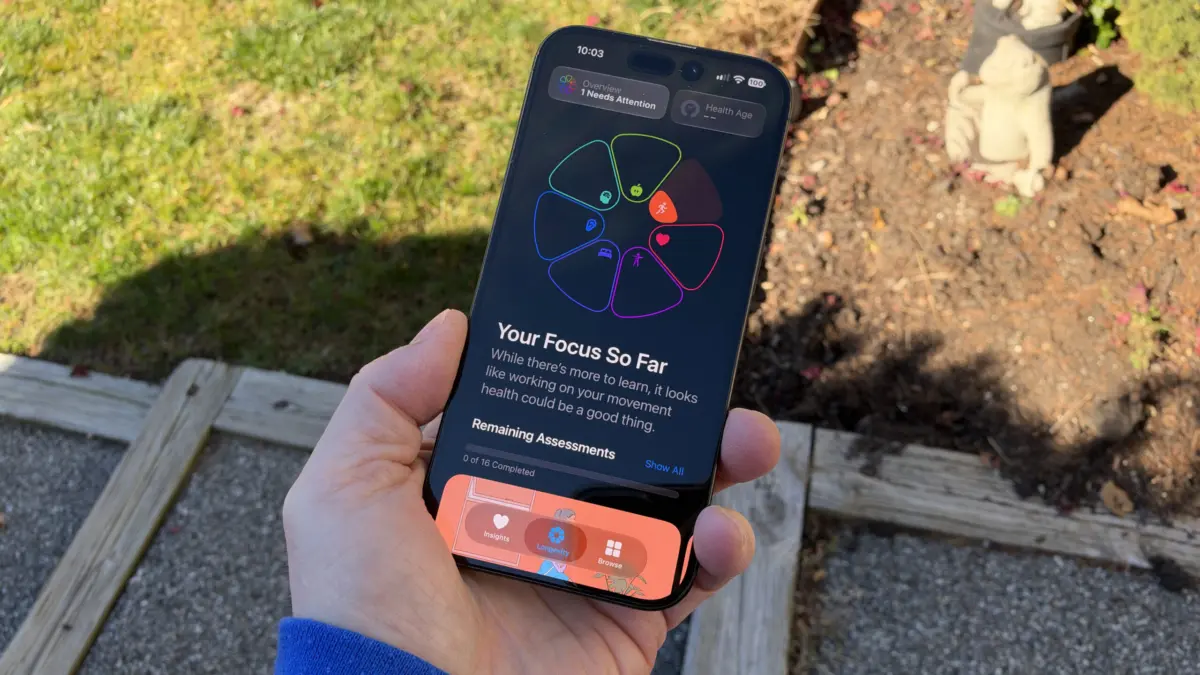
The upcoming release of iOS 27.3 next month marks a significant pivot in Apple’s long-term strategy for digital health, transitioning the Health app from a passive repository of biometric data into an active, AI-driven personal wellness consultant. This overhaul leverages Apple Intelligence, the company’s proprietary generative and analytical AI framework, to provide users with actionable insights rather than mere statistics. By synthesizing data from the iPhone, Apple Watch, and external medical providers, the redesigned Health app seeks to bridge the gap between consumer-grade wearable technology and professional clinical diagnostics. However, the heavy computational demands of these new features mean that the full suite of AI capabilities will be restricted to a specific subset of modern hardware, creating a clear demarcation in the user experience based on device generation.

Since the introduction of HealthKit in 2014, Apple has incrementally added features such as sleep tracking, electrocardiograms (ECG), fall detection, and medication management. Under the leadership of CEO Tim Cook, who has frequently stated that Apple’s "greatest contribution to humanity" will be in the field of health, the company has positioned the Apple Watch and iPhone as essential tools for preventative medicine. The iOS 27.3 update represents the culmination of this decade-long evolution, moving beyond data logging to offer predictive analysis and real-time physical evaluations.
One of the primary pillars of this update is the new Insights screen. Utilizing Apple Intelligence, the app now cross-references various data points to identify patterns that might be invisible to the user. For instance, if the system detects a decrease in physical activity alongside a rise in resting heart rate and poor sleep quality, it will not simply notify the user of these changes. Instead, it will synthesize this information to suggest corrective actions, such as a low-intensity walk or specific sleep hygiene practices. Furthermore, the AI is trained to interpret laboratory results, highlighting potential medical conditions based on blood work or other clinical tests uploaded to the app. This feature aims to demystify complex medical jargon, providing users with a preliminary understanding of their health status before they even speak with a physician.

A secondary but equally impactful feature is the introduction of Health Age. This metric provides a comparative analysis of a user’s physiological health against their chronological age. By aggregating data including heart rate variability (HRV), cholesterol levels, average blood glucose (A1C), and VO2 max, the app calculates a biological age. A Health Age lower than one’s chronological age serves as a validation of current fitness and dietary habits, while a higher Health Age acts as a warning sign. This gamification of health data is designed to motivate long-term behavioral changes by providing a single, easy-to-understand benchmark for overall wellness.
The physical evaluation capabilities of the Health app are also seeing a major upgrade through the Movement Evaluations feature. This tool utilizes the iPhone’s advanced camera system and on-device machine learning to conduct real-time assessments of a user’s flexibility, strength, and balance. During a guided physical routine, the AI monitors the user’s form and provides immediate audio and visual feedback. This technology mirrors the capabilities previously found only in high-end sports science labs or through expensive third-party coaching apps. Crucially, Apple has emphasized that all video processing for Movement Evaluations occurs locally on the device’s Neural Engine. No video data is recorded, stored, or transmitted to Apple’s servers, maintaining the company’s stringent stance on user privacy.

In a move to integrate more deeply with the traditional healthcare system, Apple has expanded its partnership with Quest Diagnostics. Users in the United States will now have the option to order a specialized bloodwork panel directly through the Health app for a flat fee of $119. This panel covers more than 50 biomarkers, providing a comprehensive scan for various medical conditions. Once the results are processed by Quest, they are automatically integrated into the Health app, where the AI-driven Insights tool can analyze them in the context of the user’s daily activity and sleep data. This integration represents a significant step toward a holistic health record that combines clinical accuracy with the continuity of wearable tracking.
While the Health app has historically been a companion to the Apple Fitness+ subscription service, iOS 27.3 introduces a library of strength training and workout videos that are available to all users without an additional monthly fee. Located within the Insights section, these videos focus on foundational body strength and are designed to complement the AI’s suggestions for physical improvement. By lowering the barrier to entry for guided exercise, Apple is positioning the Health app as a central hub for both diagnostics and intervention.

The technical requirements for these features, however, highlight the growing importance of specialized AI hardware. Apple Intelligence requires significant memory and neural processing power, which limits the most advanced features of the new Health app to the iPhone 15 Pro, iPhone 15 Pro Max, and the entirety of the iPhone 16, 17, and 18 lineups. Newer form factors, such as the rumored iPhone Air and iPhone Duo, will also support these capabilities. Users with older devices will still receive the iOS 27.3 update and access to basic features like the new workout videos, but they will be unable to utilize the AI-driven Insights, Health Age calculations, or real-time Movement Evaluations.
The implications of this update extend beyond the individual user. By putting sophisticated diagnostic tools in the hands of millions, Apple is effectively decentralizing aspects of preventative care. Medical professionals have expressed a mixture of optimism and caution regarding this trend. On one hand, the ability for patients to monitor chronic conditions like glucose levels or heart health with high frequency can lead to earlier interventions and better outcomes. On the other hand, there are concerns regarding "cyberchondria," where users may overreact to AI-generated insights or misinterpret the data without professional guidance. Apple has attempted to mitigate this by including disclaimers that the app is not a substitute for professional medical advice, though the line continues to blur as the technology becomes more accurate.

From a market perspective, the iOS 27.3 update strengthens Apple’s ecosystem lock-in. By integrating clinical lab results and proprietary AI analysis, Apple makes it increasingly difficult for users to migrate to competing platforms like Android, which may lack a similarly unified health infrastructure. Furthermore, the $119 Quest Diagnostics partnership opens a new revenue stream and establishes Apple as a significant player in the multi-billion-dollar diagnostic services market.
The chronology of Apple’s health initiatives shows a clear trajectory toward this moment. Following the 2014 launch of HealthKit, the 2018 introduction of the Series 4 Apple Watch brought the first consumer-over-the-counter ECG to the wrist. In 2020, the company added blood oxygen monitoring, and in 2022, it introduced body temperature sensing for reproductive health tracking. The 2024-2025 period has been defined by the integration of large language models (LLMs) and transformer-based AI into the core OS. With iOS 27.3, the focus shifts from the sensors themselves to the intelligence that interprets the sensor data.

As the release date approaches, industry analysts expect a surge in upgrades for older iPhone models as users seek to access the Apple Intelligence suite. The convergence of hardware, software, and clinical partnerships suggests that Apple is no longer content with being a lifestyle brand; it is aiming to become an infrastructure provider for global health. The success of the redesigned Health app will likely be measured by its ability to provide accurate, meaningful advice that reduces the burden on traditional healthcare systems while maintaining the absolute privacy that users have come to expect from the brand. With iOS 27.3, the iPhone moves one step closer to becoming a proactive guardian of its owner’s physical well-being.
