

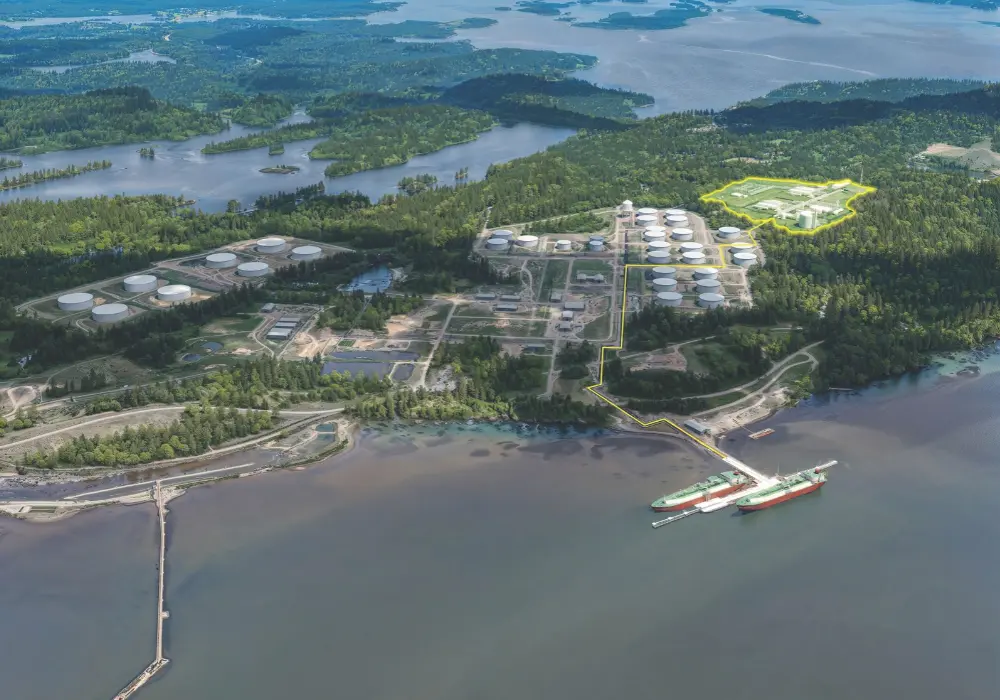
In August 2022, the windswept coastline of Stephenville, Newfoundland, served as the backdrop for what was hailed as a historic turning point in the global energy transition. Canadian Prime Minister Justin Trudeau and German Chancellor Olaf Scholz stood side-by-side to sign the Canada-Germany Hydrogen Alliance. The agreement was a bold statement of intent: Canada would harness its immense wind resources to produce "green" hydrogen—fuel created by splitting water molecules using renewable electricity—and export it to Germany starting as early as 2025. This partnership was framed as a dual solution to the climate crisis and the geopolitical instability caused by Russia’s invasion of Ukraine, which had left Europe desperate for a reliable, carbon-neutral alternative to Russian natural gas.
The European Union’s broader strategy at the time was equally ambitious, aiming to import 10 million tonnes of renewable hydrogen by 2030 to achieve regional carbon neutrality. For Atlantic Canada, a region often characterized by its economic struggles but blessed with world-class wind speeds, the accord signaled the birth of a multi-billion-dollar export industry. Analysts predicted that the influx of foreign capital would not only create thousands of jobs but also accelerate the decarbonization of the regional power grid. However, two years after that historic handshake, the initial euphoria has been replaced by a sobering reality. As technical hurdles mount and financial commitments waver, the path to a green hydrogen economy is proving far more treacherous than originally envisioned.
A Timeline of Diminishing Expectations
The trajectory of green hydrogen in Canada has moved from rapid escalation to a period of significant contraction. Following the 2022 accord, several high-profile projects were announced. In Nova Scotia, EverWind Fuels and Bear Head Energy proposed massive facilities designed to convert wind power into ammonia—a more stable medium for transporting hydrogen over long distances. In Newfoundland, the World Energy GH2 project sought to install hundreds of wind turbines to feed a massive electrolysis plant.
However, the momentum began to stall in early 2024. In February, a major consortium involved in the initial 2022 agreement filed for creditor protection, citing financial instability and the withdrawal of key support. By August 2024, the industry faced another significant blow when a major German utility, which had previously signed a memorandum of understanding (MOU) to purchase green hydrogen from Nova Scotia, announced it would not be moving forward with the deal. This withdrawal was particularly damaging because these "offtake agreements"—guarantees from buyers to purchase the fuel at a set price—are the bedrock upon which project financing is built. Without a guaranteed buyer, the multi-billion-dollar investments required to build wind farms and electrolysis plants become nearly impossible to secure.
The European Union has attempted to buoy the industry, recently committing €200 million to support the development of Canadian renewable hydrogen. Despite this, the gap between government subsidies and the actual cost of production remains a chasm that many private investors are hesitant to cross.
The Physics Problem: Energy Density and Efficiency Losses
To understand why these projects are struggling to "pencil out," one must look at the fundamental physics of hydrogen. Paul Martin, a chemical engineer and co-founder of the Hydrogen Science Coalition, has been a vocal critic of the "hydrogen for everything" narrative. He points to two primary issues: volumetric energy density and round-trip efficiency.
Hydrogen is the most abundant element in the universe, but it is also the lightest. At standard temperature and pressure, it takes up a massive amount of space for the amount of energy it provides. To transport it efficiently, it must be either compressed to extreme pressures (up to 700 times atmospheric pressure) or liquefied by cooling it to -253 degrees Celsius. Both processes are energy-intensive and expensive. Even when converted to ammonia for shipping, the process of synthesis and subsequent "cracking" back into hydrogen at the destination results in significant energy waste.
Furthermore, the "round-trip efficiency" of green hydrogen—the percentage of electricity that survives the journey from the wind turbine to the end-user’s engine or furnace—is notoriously low. Experts estimate that converting electricity to hydrogen, storing it, transporting it, and converting it back to electricity results in a loss of approximately 63% of the initial energy. In a world where renewable energy is still a finite resource, using 100 units of wind power to deliver only 37 units of useful energy is a difficult economic proposition to justify, especially when direct electrification (using batteries) offers efficiencies closer to 80% or 90%.
Comparative Economic Data: Green vs. Conventional Fuels
The economic barrier is perhaps even more daunting than the technical one. Currently, the vast majority of the world’s hydrogen is "grey hydrogen," produced from natural gas through a process called steam methane reforming. This process is cheap but carbon-intensive. Green hydrogen, by contrast, is estimated to cost between three to six times more than grey hydrogen.
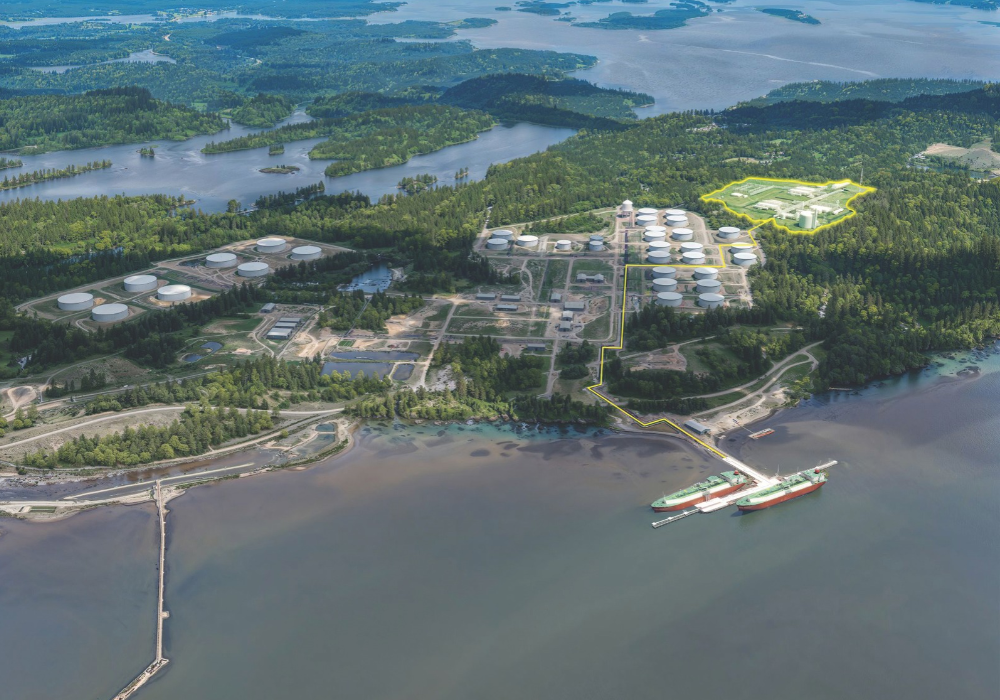
According to data from the International Energy Agency (IEA), the cost of green hydrogen production currently ranges from $3 to $8 USD per kilogram, depending on the cost of renewable electricity and the capital expenditure of electrolyzers. In contrast, grey hydrogen typically costs around $1 to $2 per kilogram. While carbon taxes and subsidies like the U.S. Inflation Reduction Act (IRA) or Canada’s Clean Hydrogen Investment Tax Credit are designed to bridge this gap, they have yet to make green hydrogen competitive with fossil fuels on a purely commercial basis.
In the industrial sector, the price premium is equally stark. For example, the Stegra project in Sweden—formerly known as H2 Green Steel—is a pioneer in using green hydrogen to replace coal in steelmaking. While technically successful, the steel produced via this method currently costs roughly 25% to 33% more than conventionally manufactured steel. This "green premium" requires customers who are willing to pay more for sustainability, a market segment that remains limited in size.
Niche Applications and Indigenous Leadership
Despite the setbacks in the export market, green hydrogen may still find a vital role in domestic, "hard-to-abate" sectors and remote locations. In British Columbia, the Xaxli’p First Nation is leading an initiative to build a community-owned green hydrogen utility. Their goal is to produce liquefied hydrogen fuel to replace the diesel generators that currently power remote Indigenous communities. In these contexts, where diesel must be flown or trucked in at exorbitant costs, green hydrogen becomes economically viable much sooner than it does in a grid-connected city.
Another promising application is long-term energy storage. Jasmin Raymond, a professor at the Institut national de la recherche scientifique (INRS) and a Canada Research Chair, is investigating the use of salt caverns for hydrogen storage. On Quebec’s Magdalen Islands, the seasonal variation in energy demand is a major challenge. The islands currently rely on a 66-megawatt diesel plant.
Raymond’s research suggests that surplus wind energy produced during the summer could be used to create hydrogen, which would then be stored in massive underground salt domes. During the winter, when energy demand spikes by 25 megawatts, the hydrogen could be withdrawn and used to generate electricity. "Batteries are excellent for short-term storage, but they cannot hold energy for six months to bridge the gap between seasons," Raymond explains. For this specific use case, hydrogen acts as a "chemical battery" that can provide long-duration reliability.
Strategic Realignment: The "Low-Hanging Fruit" Argument
As the industry matures, a consensus is emerging among some analysts that the focus on hydrogen should be narrowed. Paul Martin argues that policy-makers should prioritize the "easy" wins of decarbonization—such as the electrification of light transport and home heating via heat pumps—before pouring billions into the "hard-to-decarbonize" sectors like heavy shipping, aviation, and chemical manufacturing.
"Why on earth would you be fussing over the hard-to-decarbonize sectors when you haven’t done the easy ones yet?" Martin asks. He suggests that the 120 million tonnes of fossil-fuel-based hydrogen already used globally for fertilizer and oil refining should be the first target for "greening" before we attempt to build an entirely new global trade network for hydrogen fuel.
The Long-Term Outlook for Canada
The challenges facing Atlantic Canada’s hydrogen ambitions serve as a cautionary tale about the gap between political aspiration and industrial reality. However, proponents like Jasmin Raymond argue that the current "cooling off" period is a natural part of the technological life cycle. Developing energy systems requires thinking decades in advance, and the research being done today on salt cavern storage and electrolyzer efficiency will be the foundation for the energy grid of 2040 or 2050.
For Canada to succeed, the strategy may need to shift from being a raw-resource exporter to a developer of specialized domestic applications. The dream of Newfoundland wind powering German factories may not be dead, but it has certainly moved further into the horizon. In the interim, the focus is shifting toward proving that green hydrogen can work on a smaller scale—in the salt domes of Quebec, the remote valleys of British Columbia, and the industrial heartlands where hydrogen is already an essential, if currently carbon-heavy, ingredient.
