

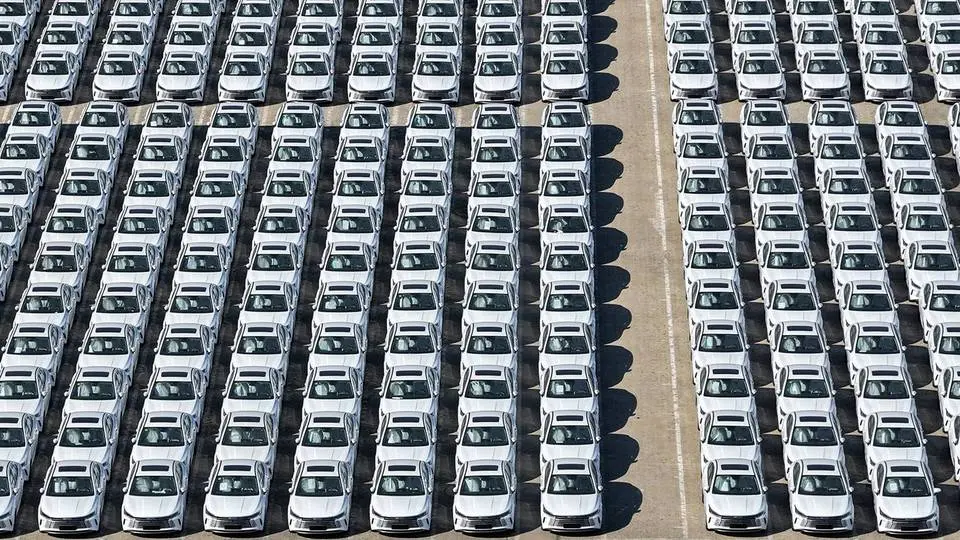
The European Union and China have reportedly struck a tentative agreement to cap Chinese hybrid-electric vehicle (HEV) exports to the EU, a move designed to shield European automakers from an influx of cheaper competition while ostensibly preserving consumer access to a wider range of vehicles. This arrangement, reportedly taking the form of a voluntary export restraint (VER) by China, caps annual HEV shipments at approximately 350,000 units, with a modest annual increase of 6%. While hailed by some as a pragmatic solution that avoids the more disruptive imposition of outright tariffs, the deal raises significant questions about its long-term implications for global trade, industrial policy, and the future of the automotive sector.
Background to the Trade Tensions
The automotive industry has become a focal point of escalating trade frictions between the EU and China. For years, European car manufacturers have enjoyed a dominant position in the global market, renowned for their engineering prowess, luxury branding, and premium pricing. However, the rapid ascent of Chinese automakers, particularly in the burgeoning electric vehicle (EV) and hybrid segments, has fundamentally altered this landscape. Fueled by substantial government subsidies, advanced battery technology, and a burgeoning domestic market, Chinese EV manufacturers have achieved remarkable cost efficiencies and rapid product development cycles.
This has led to a surge in Chinese-manufactured EVs and HEVs entering European markets, often at prices significantly lower than their European counterparts. European carmakers, already grappling with the enormous costs of transitioning to electric mobility and facing intense competition from established global players like Tesla, expressed growing alarm. Concerns mounted that this "dumping" of affordable Chinese vehicles could not only erode their market share but also undermine their profitability and their ability to invest in future technologies.
The European Commission, acting on behalf of its member states, launched an anti-subsidy investigation into Chinese electric vehicles in September 2023. This investigation, a precursor to potential punitive tariffs, signaled the EU’s intent to address what it perceived as unfair trade practices. The investigation focused on whether Chinese EV manufacturers were benefiting from illegal state subsidies that allowed them to sell their vehicles in the EU at artificially low prices. The probe highlighted the delicate balancing act European policymakers face: the desire to protect domestic industries and jobs from foreign competition versus the imperative to provide European consumers with affordable and diverse product choices. High tariffs, while potentially shielding European manufacturers, would inevitably lead to higher prices for consumers, potentially slowing the adoption of cleaner vehicles.
The Reported EU-China Hybrid Car Export Deal
The reported agreement, as detailed by Bloomberg, represents a departure from the immediate imposition of tariffs. Instead, it proposes a negotiated limit on Chinese HEV exports. The figure of 350,000 vehicles per year appears to be a carefully calibrated number, likely intended to allow a significant presence for Chinese brands while preventing an overwhelming surge that could destabilize the European market. The annual 6% increase suggests a mechanism for gradual market expansion, acknowledging the dynamic nature of the EV sector.
The concept of a Voluntary Export Restraint (VER) is not new to international trade. VERs are agreements where an exporting country voluntarily limits the quantity of its exports to an importing country. They are often used as an alternative to formal protectionist measures like quotas or tariffs, allowing both sides to avoid the political fallout and economic disruptions associated with more overt trade barriers. In this instance, China would ostensibly agree to police its own exporters, setting the annual cap and ensuring compliance. This approach offers several perceived advantages:
- Avoiding Tariffs: Tariffs can trigger retaliatory measures, leading to trade wars that harm all parties involved. A VER avoids this immediate escalation.
- Market Access Preservation: While restricted, Chinese HEVs would still have access to the European market, allowing Chinese manufacturers to gain experience and build brand recognition.
- Industry Adjustment Time: The cap provides European automakers with a defined period to adapt their strategies, improve their cost competitiveness, and develop new models to counter Chinese offerings.
- Consumer Choice: Consumers would continue to have access to a range of HEVs, albeit with potentially longer waiting times or fewer model options than if there were no restrictions.
However, the efficacy and fairness of VERs are often debated. Critics argue that they can lead to "trade diversion," where exports are redirected to other markets, and can also encourage "rent-seeking" behavior, where protected industries become less innovative due to reduced competitive pressure. Furthermore, the enforcement and monitoring of VERs can be complex.
Timeline and Key Developments
While the specifics of the agreement are not yet officially confirmed by either the EU or China, the reported breakthrough follows a period of intense diplomatic engagement and market speculation.
- September 2023: The European Commission officially launches its anti-subsidy investigation into Chinese electric vehicles. This marked a significant escalation in trade tensions.
- Late 2023 – Early 2024: Reports begin to emerge of secret negotiations between EU officials and Chinese counterparts regarding potential export restrictions or other trade management measures.
- February 2024: During a visit to China, German Chancellor Olaf Scholz raises concerns about fair competition and overcapacity in the Chinese EV market.
- March 2024: The EU’s investigation progresses, with officials conducting on-site inspections of Chinese EV manufacturers. Speculation intensifies that a tariff-based solution is increasingly likely.
- May 2024: Bloomberg reports on the leaked details of the reported VER agreement, suggesting a negotiated cap on HEV exports.
This timeline underscores the evolving nature of the dispute, moving from an initial investigation to a reported negotiated settlement. The reported deal, if finalized, signifies a shift towards managed trade rather than outright protectionism.
Supporting Data and Market Context
The context for this agreement is crucial. China has become the world’s largest producer and consumer of electric vehicles. In 2023, China’s EV output reached over 9.5 million units, representing more than 60% of global production. Chinese brands like BYD, SAIC, and Geely have rapidly expanded their offerings and market share, both domestically and internationally.
For the EU, the automotive sector is a cornerstone of its economy, employing millions and contributing significantly to GDP. However, European automakers have been slower to fully embrace the EV transition compared to some Chinese competitors. While brands like Volkswagen, BMW, and Mercedes-Benz are investing heavily in EVs, they face challenges in matching the cost-effectiveness of Chinese offerings, particularly in the hybrid segment.
The data on Chinese car imports into the EU is telling. In 2023, imports of Chinese-made EVs into the EU surged by nearly 50% compared to the previous year, reaching over 450,000 vehicles. This rapid growth is a primary driver of the EU’s protective response. The reported cap of 350,000 HEVs suggests that the EU aims to curb this inflow, particularly in a segment where European manufacturers are still striving to achieve competitive pricing.
Official Responses and Reactions (Inferred)
While official statements from both the EU and China are likely to be cautious until a formal agreement is announced, we can infer potential reactions based on their stated positions and past actions.
European Union (Inferred):
- Commissioner for Trade Valdis Dombrovskis (or equivalent): Might express cautious optimism about reaching a mutually agreeable solution that "balances market access with fair competition." He would likely emphasize that the agreement aims to "prevent market distortion" and "support the green transition" by ensuring a level playing field. The focus would be on the "voluntary" nature of the restraint and its potential to avoid more damaging trade disputes.
- European Automobile Manufacturers’ Association (ACEA) (Inferred): Would likely welcome any measure that provides a degree of protection and stability for the European automotive industry. However, they might also express concerns about the specific details of the cap and the annual growth rate, pushing for stronger safeguards if they deem them insufficient. They would likely emphasize the need for long-term industrial policy support for the sector.
- Consumer Advocacy Groups (Inferred): Might express reservations, arguing that any restriction on imports, even a voluntary one, could lead to higher prices and fewer choices for consumers. They would likely call for transparency in the agreement and continued efforts to promote affordable, sustainable mobility options.
China (Inferred):
- Ministry of Commerce Spokesperson: Would likely reiterate China’s commitment to free and fair trade, while also asserting its right to protect its industries. They might frame the agreement as a testament to China’s willingness to "engage constructively" and find "win-win solutions." The emphasis would be on China’s "responsible global trading partner" image. They might also subtly hint at the potential for retaliatory measures if the agreement is not respected or if further protectionist actions are taken by the EU.
- Chinese Automakers (Inferred): Would likely express disappointment at the export cap, as it limits their growth potential in a key overseas market. However, they would also likely signal their intention to comply with the agreement while focusing on innovation and efficiency to remain competitive. Some might see this as an opportunity to further consolidate their domestic market or explore other export destinations.
Broader Impact and Implications
The EU-China car export deal, if finalized, carries significant implications beyond the automotive sector:
- Precedent for Trade Management: This agreement could set a precedent for how other sectors facing similar competitive pressures might be managed. It suggests a growing trend towards negotiated solutions and managed trade, moving away from pure free market principles in certain sensitive industries. This could embolden other countries to seek similar arrangements to protect their domestic industries.
- Shifting Global Automotive Landscape: The deal acknowledges the undeniable rise of China as a global automotive powerhouse. It signals that European automakers can no longer rely on their historical dominance and must adapt to a more competitive global environment. The focus will likely shift towards innovation, cost reduction, and premium branding as key differentiators.
- Geopolitical and Economic Balancing Act: The agreement highlights the complex geopolitical and economic balancing act that major global powers are undertaking. The EU is attempting to foster its own strategic autonomy in critical sectors while maintaining economic ties with China, a vital trading partner. This delicate dance is likely to continue across various industries.
- Impact on EV Transition: The long-term impact on the global transition to electric vehicles is complex. On one hand, limiting the influx of cheaper Chinese EVs might slow down the overall adoption rate in Europe if it leads to higher prices. On the other hand, it could spur European manufacturers to accelerate their own EV development and cost reduction efforts, ultimately leading to a more sustainable and competitive European EV market.
- Future of Trade Disputes: The success or failure of this VER will be closely watched. If it proves effective in de-escalating tensions and providing stability, it could become a model for resolving future trade disputes. Conversely, if it leads to loopholes, disputes over compliance, or simply shifts the problem elsewhere, it could be seen as a temporary fix that ultimately fails to address underlying competitive imbalances.
In conclusion, the reported EU-China car export deal represents a significant development in international trade relations. It is an uneasy compromise born out of escalating tensions in the automotive sector, attempting to navigate the difficult terrain between protecting domestic industries and preserving global trade. While offering a potential reprieve from outright tariff wars, its long-term success and implications for the future of global trade, industrial policy, and the automotive sector remain to be seen. The world will be watching to see if this negotiated cap can truly foster a more stable and equitable trade environment, or if it is merely a temporary pause in a larger, ongoing economic contest.
