

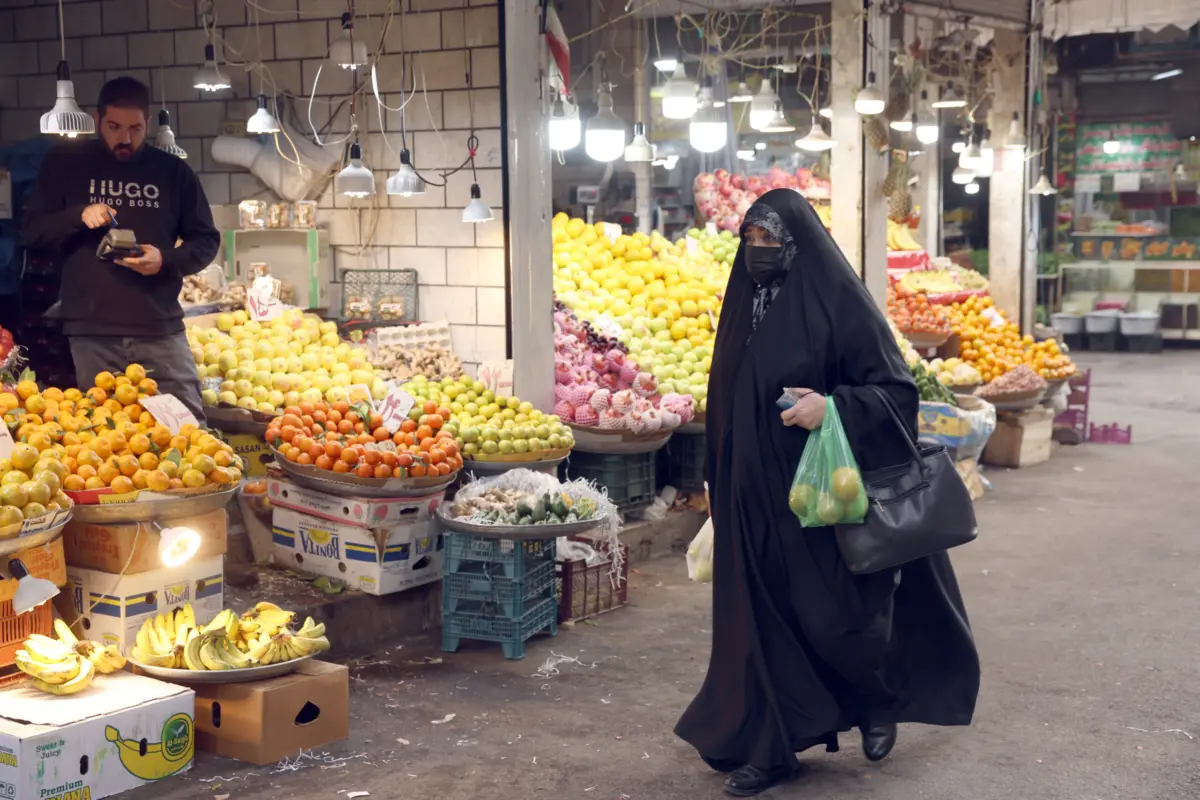
The Islamic Republic of Iran is currently grappling with a severe economic downturn that threatens the stability of its domestic markets and the livelihoods of its 90 million citizens. Following months of an intensive naval blockade orchestrated by the United States, coupled with a series of escalating diplomatic and military confrontations, the Iranian economy is projected to contract at a pace rarely seen in modern history. While Washington asserts that its "maximum pressure" campaign is nearing its objective of forcing a fundamental shift in Tehran’s regional and nuclear policies, economic analysts and Iranian officials remain divided on whether the current pressure will lead to a diplomatic breakthrough or a total systemic collapse.
The US-led strategy involves a comprehensive maritime blockade of Iranian ports, disruptions to overland trade routes, and a tightening web of financial sanctions designed to isolate the country from the global financial system. The arrival of the USS Roosevelt, the third US aircraft carrier to be deployed to the region this month, signals a heightened state of military readiness intended to deter Iranian retaliation and enforce the economic embargo. This military posturing follows a period of intense kinetic conflict that began earlier this year, marking 2026 as one of the most volatile years in the history of the Middle East.
A Year of Escalation: The 2026 Timeline
The current crisis traces its roots to the early months of 2026. On February 28, a series of strikes resulted in the death of the Iranian Supreme Leader, Ayatollah Ali Khamenei, an event that plunged the nation into a period of mourning and political uncertainty. In the wake of this leadership vacuum, the United States and Israel intensified their efforts to curb Iran’s regional influence and its nuclear ambitions.
By mid-2026, the diplomatic deadlock had solidified. Washington issued a new set of demands, insisting that Tehran must unconditionally reopen the Strait of Hormuz—a vital artery for global energy supplies—and implement a verifiable cessation of its uranium enrichment programs. In response, the transitional Iranian authorities maintained a stance of "strategic defiance," refusing to concede while the country remained under a total economic blockade.
The situation escalated further in November 2026. On November 16, the USS Roosevelt entered the Middle East, bolstering a naval presence that already included two other carrier strike groups. A day later, on November 17, Iranian-backed groups claimed responsibility for drone attacks targeting US military radar systems in Bahrain. These strikes were viewed by international observers as a desperate but defiant signal that Tehran retains the capability to strike US interests despite its internal economic hemorrhaging.
The Macroeconomic Toll: Hyperinflation and GDP Contraction
The statistical reality of Iran’s economic state is increasingly grim. According to Tehran-based economist Peyman Molavi, the convergence of negative economic growth and a ballooning money supply is creating a perfect storm for hyperinflation. For decades, Iranian administrations have attempted to cover budget deficits by printing currency, a practice that has now resulted in a year-on-year money supply growth of approximately 51 percent. Molavi predicts this figure could reach 60 percent by the end of the Persian calendar year in March 2027.
Under the weight of the blockade, which has effectively halted oil exports—the lifeblood of the Iranian budget—the foreign currency crunch has become critical. Molavi estimates that annual inflation could surge to 85 percent, with point-to-point inflation potentially reaching the 100 percent threshold. This inflationary pressure is not confined to abstract numbers; it is manifesting in the "parallel markets" of gold, foreign exchange, and real estate, making basic assets unattainable for the middle class.
Data from the Statistical Centre of Iran underscores the severity of the crisis. For the Iranian month of Mehr (ending October 22), the 12-month average inflation rate was recorded at 76.8 percent. More alarmingly, food and beverage inflation has surpassed triple digits, reaching 113.4 percent. This means that the cost of basic sustenance has more than doubled for Iranian families in a single year, leading to a widespread erosion of purchasing power.
Official Defiance and the "Autumn Chickens"
Despite the dire economic indicators, Iranian officials are attempting to project an image of resilience and preparedness. Abdolnaser Hemmati, the Governor of the Central Bank of Iran, has been vocal in his criticism of US Treasury Secretary Scott Bessent. Responding to Bessent’s claims that the Iranian economy is on the verge of a historic collapse, Hemmati invoked a traditional Persian proverb, suggesting that it is too early to judge the success of the sanctions before the full cycle of the crisis has played out.
Hemmati recently announced that the Central Bank has managed to secure $30 billion in foreign currency reserves. He stated that these funds are being prioritized for the procurement of "essential goods," including medicine and basic foodstuffs, to prevent a humanitarian catastrophe. However, independent analysts question the longevity of these reserves if the blockade on oil exports continues through the winter.

Simultaneously, Economy Minister Ali Madanizadeh has insisted that Iran is not entirely isolated. He pointed out that while maritime routes are blocked, several overland trade routes remain functional. Although the border with Iraq remains closed due to security concerns, Madanizadeh argued that Iran’s geography allows it to maintain some level of trade with other neighbors, blunting the impact of the US "economic wall."
The View from the Grand Bazaar: Stagnation and Uncertainty
The impact of the blockade is most visible in the historic Grand Bazaar of Tehran, the traditional heartbeat of the country’s commerce. Merchants who have survived decades of sanctions now say the current conditions are unprecedented. Saleh, a 37-year-old shopkeeper specializing in industrial electric motors, described a market characterized by "stagnation and suspension."
"The goods are there—we have stock from China and some domestic products—but there are no buyers," Saleh told reporters. He explained that the volatility of the US dollar has made it impossible for manufacturers to set prices or for clients to commit to long-term projects. While he noted that his business has not yet collapsed, the volume of sales has dropped by more than 60 percent. The only reason many shops remain open is that the massive price increases on existing inventory have allowed for a temporary, if artificial, profit margin.
This sentiment is echoed across social media, where ordinary Iranians share stories of financial ruin. One user on the platform X noted that items which cost a certain amount a year ago now require five times that capital. "Millions of people have been crushed in between," the post read, highlighting the human cost of the geopolitical standoff.
Comparative Analysis: Is the Soviet Model Applicable?
US Treasury Secretary Scott Bessent has frequently compared the current situation in Iran to the final years of the Soviet Union. He noted that the Soviet economy shrank by approximately 22 percent in the three years preceding its 1991 collapse. With Iran’s GDP already having shrunk by 10.1 percent in the first quarter of the current Persian year, Bessent predicts a total contraction of 25 percent by March 2027.
However, some economists argue that the comparison is flawed. Peyman Molavi points out that Iran’s economic model, while heavily reliant on state intervention and oil, possesses a level of informal market resilience and diversified domestic production that the Soviet Union lacked. Nevertheless, the nominal figures are undeniable: Iran’s GDP has plummeted from $645 billion in 2012 to roughly $300 billion today. This 50 percent reduction in the size of the economy over 14 years represents a staggering loss of national wealth.
The primary concern for the Iranian government is the "sense of suspension." When an economy enters a state where investment halts and the future is perceived as entirely unpredictable, the resulting negative growth becomes a self-fulfilling prophecy. The lack of capital expenditure in the oil and gas sectors, necessitated by the blockade, means that even if sanctions were lifted tomorrow, it would take years for Iran to return to its previous production capacity.
Implications for Regional Stability
The economic strangulation of Iran carries significant risks for the broader Middle East. History has shown that when the Iranian government faces extreme domestic pressure, it often seeks to project power externally to consolidate nationalistic support or to create leverage in negotiations. The recent strikes on US assets in Bahrain and the ongoing threats to the Strait of Hormuz suggest that Tehran may be moving toward a "scorched earth" diplomatic strategy.
If the Iranian economy reaches a breaking point, the resulting social unrest could lead to a massive refugee crisis or a power vacuum that extremist elements might exploit. Conversely, if the government survives the winter through its $30 billion reserve and continued overland trade, the US may find itself in a prolonged military standoff with no clear exit strategy.
As the Persian year moves toward its conclusion in March, the world watches to see if the "autumn chickens" of Washington’s policy will indeed hatch into a regime-changing collapse, or if Tehran will once again prove its ability to endure through "the greatest economic isolation in history." For the millions of Iranians caught in the middle, the debate is less about geopolitics and more about the daily struggle to afford bread in an economy that is rapidly disappearing.
