

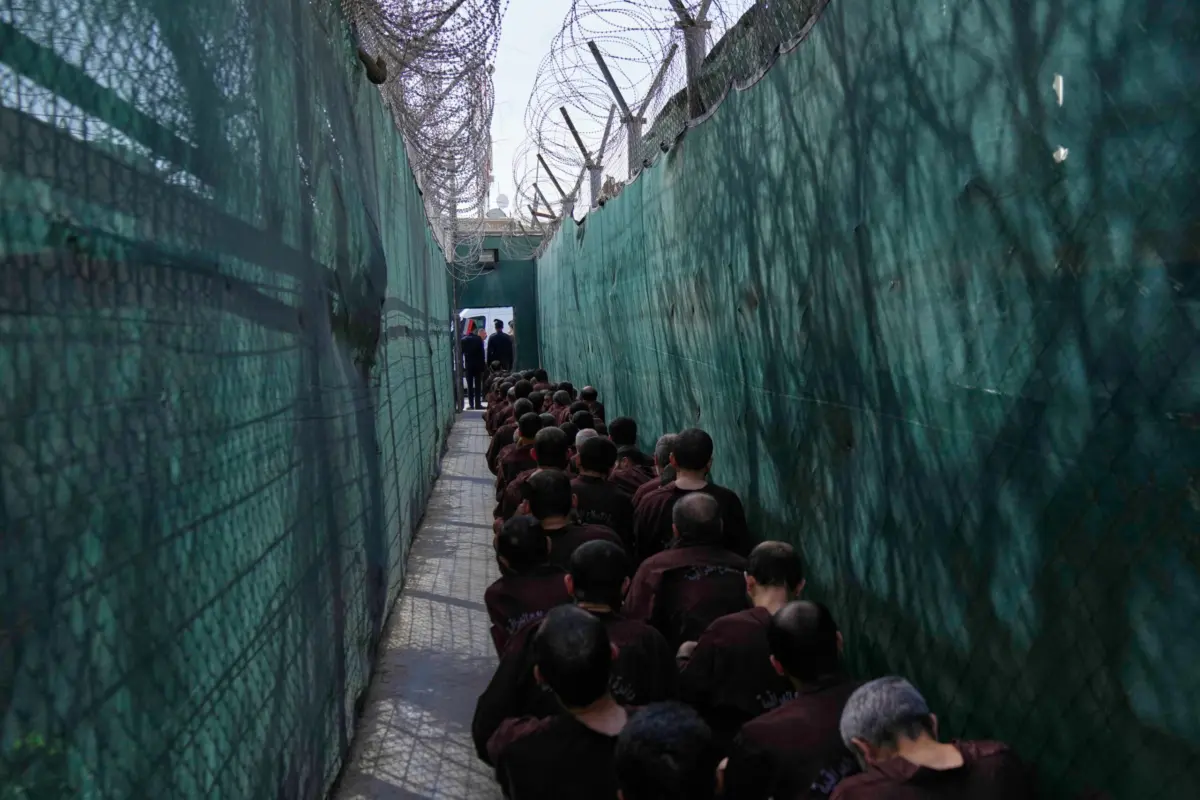
An Iraqi criminal court has delivered life sentences to six more French nationals for their involvement with the ISIL (ISIS) group, bringing the total number of French citizens convicted in the country for terrorism offenses to sixteen. The Karkh Criminal Court in Baghdad issued these latest verdicts on Wednesday, with representatives from the French embassy reportedly in attendance, underscoring the diplomatic sensitivity surrounding these high-profile cases. The Iraqi News Agency (INA) confirmed the sentencing, citing official statements from Iraq’s judiciary, which has been at the forefront of prosecuting thousands of individuals accused of affiliation with the extremist organization that once controlled vast swathes of Iraq and Syria.
This wave of convictions is part of a broader judicial process initiated after a significant transfer of foreign ISIL detainees from Syria to Iraq. Trials for 47 French citizens, repatriated from Syria last year, commenced in September, highlighting the intricate legal and diplomatic challenges faced by nations grappling with the aftermath of the caliphate’s collapse. Of the sixteen French nationals convicted thus far, fifteen have received life sentences, while one individual was sentenced to 15 years in prison last month. These judgments reflect Iraq’s resolute stance on holding foreign fighters accountable under its stringent anti-terrorism laws, even as human rights organizations frequently raise concerns about the fairness and transparency of these trials.
The Genesis of a Crisis: ISIL’s Rise and the Foreign Fighter Phenomenon
The convictions in Baghdad are a stark reminder of the profound and far-reaching impact of the Islamic State of Iraq and the Levant (ISIL), which burst onto the global stage in 2014. Exploiting the chaos of the Syrian civil war and the instability in post-invasion Iraq, ISIL rapidly expanded its territorial control, establishing a self-proclaimed caliphate. Its brutal ideology, characterized by extreme violence, sectarianism, and a sophisticated propaganda machine, attracted thousands of foreign fighters from over 100 countries, including a significant contingent from Western nations like France.
Estimates vary, but intelligence agencies suggested that between 30,000 and 40,000 foreign fighters joined ISIL in Iraq and Syria. France, in particular, was one of the largest contributors of foreign fighters from Western Europe, with intelligence services estimating that over 1,700 French citizens or residents traveled to join extremist groups in the region. Many of these individuals, driven by a complex mix of ideological fervor, disillusionment, and a quest for purpose, abandoned their lives in Europe to participate in what they perceived as a religious duty or a revolutionary struggle. Their presence significantly bolstered ISIL’s ranks and contributed to its operational capabilities, both on the battlefield and in its governance structures.
The group’s reign of terror included systematic massacres, public executions, the sexual enslavement of women and girls, and the destruction of cultural heritage sites. Its territorial expansion reached its peak by 2015, controlling an area roughly the size of Great Britain. The international community, recognizing the severe threat posed by ISIL, responded with a US-led coalition that launched military operations in Iraq and Syria, providing air support and training to local forces. Iraq, backed by these international allies, declared victory over ISIL in December 2017, liberating its last major strongholds. The group’s territorial defeat in Syria followed two years later, in March 2019, with Kurdish-led forces, supported by Washington, capturing the last sliver of ISIL territory in Baghuz.
Iraq’s Judicial Crusade Against Terrorism
Following the territorial defeat of ISIL, Iraq found itself grappling with an immense challenge: how to process the thousands of suspected ISIL members captured during the conflict, including a substantial number of foreign nationals. In February of the previous year, Iraq received more than 5,700 ISIL detainees from over 60 countries, who had been transferred from prisons run by Kurdish-led forces in northeastern Syria. This transfer underscored the international community’s reliance on Iraq to address the issue, given the complex legal and logistical hurdles involved in repatriating and prosecuting these individuals in their home countries.
Iraq’s counter-terrorism laws are among the strictest globally. Article 4 of Iraq’s Anti-Terrorism Law (Law No. 13 of 2005) criminalizes not only direct involvement in terrorist acts but also membership in a terrorist organization, providing support, or even simply promoting its ideology. This broad legal framework allows Iraqi courts to prosecute individuals based on association and intent, often leading to severe penalties, including life imprisonment or death sentences. Since 2017, Iraqi courts have handed down hundreds of execution orders and life sentences to individuals convicted of "terrorism" offenses, encompassing both Iraqi citizens and foreign fighters.
The judicial process typically involves investigations by security forces, followed by trials in specialized criminal courts, such as the Karkh Criminal Court. While Iraqi authorities assert that these trials adhere to due process, human rights organizations have consistently voiced serious concerns. Critics argue that trials are often rushed, based heavily on confessions extracted under duress or torture, and that defendants frequently lack adequate legal representation, access to evidence, or the opportunity to present a robust defense. These concerns are amplified for foreign defendants who may face language barriers and a lack of understanding of the Iraqi legal system.
France’s Repatriation Dilemma and Diplomatic Scrutiny
The sentencing of French nationals in Iraq highlights the ongoing and deeply contentious debate within France regarding the repatriation of its citizens who joined ISIL. For years, the French government maintained a firm policy against repatriating adult male foreign fighters, arguing that they should face justice in the countries where their alleged crimes were committed. This stance was driven by a combination of security concerns, public opinion, and the practical difficulties of gathering evidence and prosecuting them in France. Repatriation has largely been limited to children, particularly orphans, and some women on a case-by-case basis, often following intense legal and humanitarian pressure.
The transfer of French citizens from Syria to Iraq, initiated last year, marked a significant shift in this policy, albeit indirectly. Rather than repatriating them to France, Paris opted to facilitate their transfer to a third country where they could face trial. This approach, while relieving France of the immediate burden of prosecuting these individuals on home soil, has not escaped criticism. Human rights advocates argue that by allowing its citizens to be tried in Iraq, France is effectively outsourcing justice to a system that may not meet international fair trial standards, potentially exposing them to unfair trials and harsh punishments, including the death penalty (though Iraq has not executed foreign nationals for ISIL crimes in recent years, the possibility remains a concern).
The presence of French embassy representatives at the Karkh Criminal Court proceedings indicates a level of diplomatic engagement and monitoring, aiming to ensure some semblance of oversight and to provide consular assistance. However, this oversight is often limited, and the extent to which diplomatic presence can influence the judicial outcome or the adherence to international fair trial standards remains a subject of debate. The cases of individuals like Thomas Barnouin, a 45-year-old Frenchman sentenced among the foreign fighters, further complicate the narrative. Barnouin, during his trial, reportedly claimed he traveled to Syria convinced of a religious duty and unaware that ISIL would carry out attacks in France. Such defenses, while offering insight into the defendants’ perceived motivations, rarely sway the Iraqi courts, which focus on the act of joining a designated terrorist organization.
Individual Narratives Amidst Collective Guilt
The sheer number of foreign fighters and the standardized nature of the Iraqi trials often obscure the individual stories behind the statistics. Thomas Barnouin’s case offers a glimpse into the complex paths that led individuals to join ISIL. A prominent figure within French jihadist circles, Barnouin was known to have strong ties to Mohamed Merah, the perpetrator of the 2012 Toulouse and Montauban attacks. His journey to Syria, alongside others, represents a pattern of radicalization that has deeply troubled Western societies. His claim of ignorance regarding ISIL’s attacks in France, while perhaps strategically deployed in court, underscores the often-delusional narratives adopted by some foreign fighters to rationalize their actions or mitigate their culpability.
Such individual accounts, however, are often dwarfed by the overwhelming evidence of ISIL’s atrocities. The group’s systematic use of propaganda, its calls for global jihad, and its execution of terror attacks in Europe and beyond demonstrated a clear intent to inflict harm far beyond its territorial caliphate. For the Iraqi judiciary, the act of joining such an organization, regardless of individual intent regarding specific attacks, constitutes a grave offense against the state and its citizens.
Broader Implications and Future Challenges
The ongoing trials and sentencings of foreign ISIL members in Iraq carry significant implications for international law, counter-terrorism efforts, and regional stability.
Firstly, they highlight the challenge of achieving justice for victims of ISIL’s brutality. While these convictions offer a measure of accountability, the sheer scale of the crimes committed means that many perpetrators may never be brought to justice, and the victims’ suffering continues.
Secondly, the differing legal standards and human rights concerns surrounding the Iraqi trials underscore a broader international dilemma: where and how should foreign fighters be tried? The reluctance of many Western nations to repatriate their citizens has created a judicial vacuum, which Iraq has stepped in to fill, often with limited resources and under intense pressure.
The legacy of ISIL continues to haunt Iraq and the broader region. Mass graves are still being uncovered, bearing witness to the group’s genocidal campaigns and atrocities against ethnic and religious minorities. Testimonies of brutality, sexual slavery, and displacement continue to emerge, demanding investigation and recognition. The long-term challenge of rehabilitation and reintegration for those who were complicit or coerced, particularly women and children, remains immense. Furthermore, while territorially defeated, ISIL’s ideology persists, and its remnants continue to pose a significant security threat through insurgent activities and sporadic attacks.
Diplomatically, these trials test the relationships between Iraq and Western nations. While there is a shared interest in combating terrorism, disagreements over judicial processes, human rights, and the fate of citizens can strain alliances. The current situation necessitates continued international cooperation, not only in intelligence sharing and counter-terrorism operations but also in developing more robust and internationally agreed-upon frameworks for prosecuting and rehabilitating foreign fighters. The successful prosecution of these individuals, while critical, represents only one facet of the complex, multifaceted challenge posed by the enduring legacy of the ISIL caliphate. The international community must continue to address the root causes of radicalization, support post-conflict reconstruction, and uphold human rights, even in the most challenging of circumstances, to prevent the resurgence of such extremist movements.
