

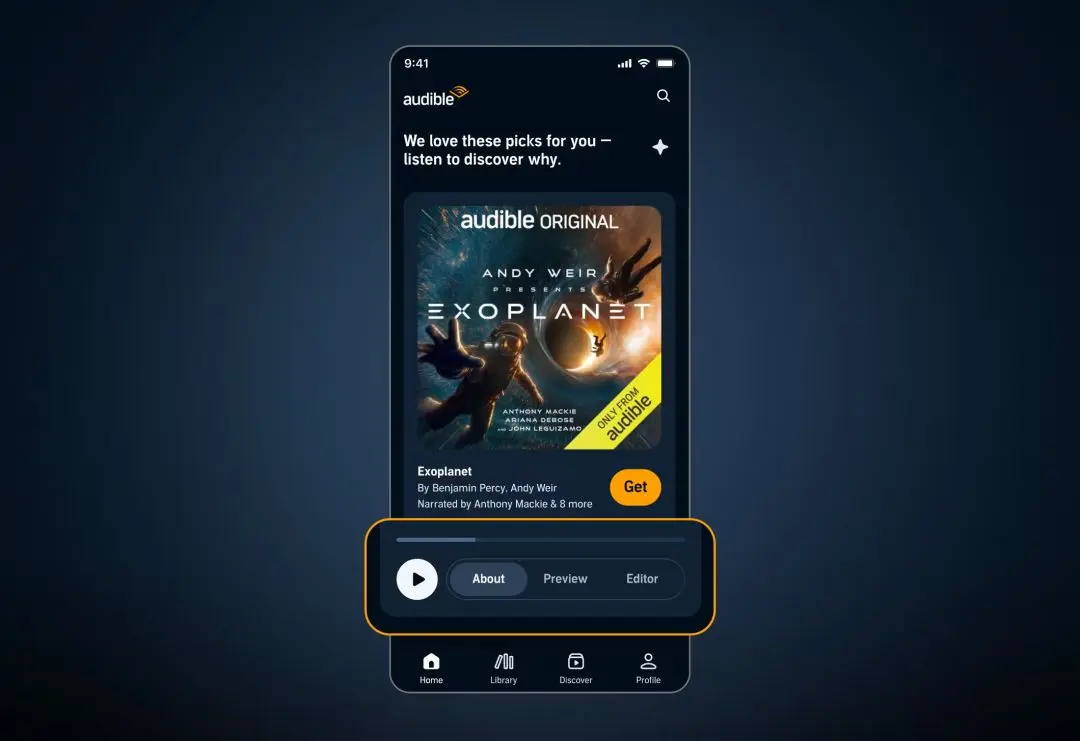
Audible, the Amazon-owned titan of the digital spoken-word industry, has officially integrated generative artificial intelligence into its primary discovery interface. On Monday, the company announced the launch of "Audio Discovery," a sophisticated tool designed to streamline the decision-making process for listeners overwhelmed by the platform’s massive library. This new feature offers an AI-generated overview of a book’s core themes, a synthesis of listener sentiment, and curated commentary from authors or editors, all delivered through an audio-first experience that complements the traditional narrated sample.
The initiative represents a significant pivot in how digital media platforms handle "choice paralysis." By leveraging Large Language Models (LLMs) to scan thousands of user reviews and metadata points, Audible aims to provide a "concise take" on why a specific title might resonate with an individual listener. The launch comes at a critical juncture for the company as it navigates an increasingly crowded landscape, characterized by the aggressive entry of music streaming giant Spotify into the audiobook domain.
The Mechanics of Audio Discovery
The Audio Discovery feature is engineered to function as a digital concierge. When a user navigates to a book’s detail page, they are no longer limited to reading static text descriptions or listening to a five-minute snippet of the narration. Instead, the AI generates a cohesive summary that highlights the narrative’s mood, central themes, and the specific elements that have garnered praise from the community.
According to technical specifications released by Audible, the overview is voiced by an AI-generated narrator, while the supplementary commentary is harvested from a vast archive of past interviews conducted by Audible’s editorial team. This hybrid approach—combining synthetic voice technology with authentic human insight—is intended to make the discovery process feel more personal.
"Picking your next listen should feel like getting a tip from a friend," said Andy Tsao, Audible’s Chief Product and Analytics Officer. Tsao emphasized that the goal is to surface "hidden gems" and "rare finds" that might otherwise be buried under the weight of the platform’s 850,000-plus title catalog. The feature is specifically optimized for mobile users who may be commuting or multitasking, providing a hands-free way to evaluate a book’s suitability.
A Strategic Response to Spotify’s Expansion
The timing of this rollout is not coincidental. For years, Audible enjoyed a near-monopoly on the premium audiobook market. However, that dominance has been challenged by Spotify, which recently integrated audiobook listening hours into its standard Premium subscriptions. In October, Spotify expanded its audiobook offering to more than 180 markets, providing its 600 million-plus users with access to a rotating selection of titles without the need for a separate credit-based subscription model.
Industry analysts suggest that Audible is moving to defend its territory by enhancing the "value-add" of its platform. While Spotify offers convenience and bundle pricing, Audible is positioning itself as the "premium, feature-rich" destination for serious bibliophiles. By introducing AI tools that allow for deeper engagement with the content—such as the recently launched "Ask a Question" and "Recaps" features—Audible is attempting to build a moat around its user base through technological sophistication.
Timeline of Audible’s AI Integration
Audible’s embrace of generative AI has accelerated rapidly over the final quarter of 2024. The following chronology outlines the company’s recent technological milestones:
- October 2024: Audible introduces a suite of AI tools in beta, including "Recaps" and "Ask a Question." These tools allow listeners to catch up on complex plots they may have stepped away from or interact with characters through an AI interface to clarify plot points.
- Late October 2024: Spotify announces its global expansion into 180 markets, significantly increasing the pressure on Amazon’s audiobook ecosystem.
- Early November 2024: Audible begins testing personalized "Collections" based on algorithmic listening tastes, moving away from generic genre categories.
- November 18, 2024: The official launch of "Audio Discovery" for select English-language titles in the United States.
- December 2024 (Projected): Broad rollout of the interactive AI suite to all U.S. subscribers, expanding beyond the initial beta group.
Synergies with the Amazon Ecosystem
The technology underpinning Audio Discovery draws heavily from the innovations pioneered by its parent company, Amazon. Over the past year, Amazon’s retail platform has successfully deployed AI-generated review highlights. These summaries provide shoppers with a quick glance at the "pros and cons" of a product based on thousands of customer submissions, filtering out repetitive or irrelevant feedback.
Audible’s implementation takes this a step further by converting that data into an audio format. The AI parses publicly available reviews to identify what listeners "liked" about a book—whether it be the narrator’s performance, the pacing of the plot, or the emotional depth of the characters. This alignment with Amazon’s broader AI strategy suggests a unified push toward "conversational commerce," where the platform acts as an active participant in the consumer’s journey rather than a passive storefront.
Data and Market Analysis: The Rise of Audiobooks
The global audiobook market is currently valued at approximately $6.8 billion and is expected to grow at a compound annual growth rate (CAGR) of over 25% through 2030. This explosive growth is driven by the convenience of the format and the increasing quality of production.
However, as libraries grow larger, discovery becomes the primary friction point. Market research indicates that the average digital consumer spends nearly 20 minutes per day simply deciding what content to consume. Audible’s Audio Discovery tool aims to reduce this "decision fatigue." By providing a 60-second audio brief, the company hopes to increase the conversion rate from "browsing" to "listening," thereby increasing the overall consumption of "credits" within its subscription model.
Ethical Considerations and Potential Pitfalls
Despite the technological prowess of the new feature, some critics point to potential risks regarding transparency and bias. The AI’s reliance on publicly available reviews raises questions about the "echo chamber" effect. If the AI primarily pulls information from positive remarks to "sell" a book, listeners may be deprived of a balanced view that includes critical or negative feedback.
Furthermore, there are concerns within the creative community regarding the use of AI voices. While Audible’s current implementation uses AI to summarize reviews and metadata, the broader trend toward AI-narrated books remains a point of contention among professional voice actors and the SAG-AFTRA union. Audible has clarified that the Audio Discovery feature is intended to supplement, not replace, the human-narrated samples that remain a staple of the platform.
The company has also stated that the overviews will draw on synopses and metadata provided by publishers, ensuring that the AI’s "understanding" of the book is grounded in the author’s original intent. However, the accuracy of AI summaries remains a subject of ongoing scrutiny, as LLMs are occasionally prone to "hallucinations" or misinterpretations of complex literary themes.
Broad Impact and the Future of Literary Engagement
The expansion of these AI features marks a fundamental shift in the relationship between the listener and the text. With the upcoming broad release of "Ask a Question" and "Recaps" in December, Audible is moving toward an interactive model of consumption.
For instance, a listener who has been away from a 40-hour epic fantasy novel for several weeks can now ask the AI for a summary of the last three chapters to refresh their memory. This level of granular interaction was previously impossible without external wikis or fan-made summaries. By keeping these tools within the app, Audible ensures that its platform remains the central hub for the entire listening experience.
As the technology matures, it is likely that these AI-driven summaries will become more personalized. Future iterations could potentially compare a new title to books the user has already enjoyed, saying, "If you liked the character development in The Goldfinch, you might appreciate the protagonist’s journey in this story."
Conclusion
The launch of Audio Discovery is more than just a minor update; it is a declaration of intent. As Amazon and Audible face a rejuvenated competitive landscape, they are betting heavily on the idea that AI can solve the problem of abundance. By turning data into a conversational "tip from a friend," Audible is attempting to humanize the algorithm and maintain its status as the world’s premier destination for audio storytelling. The success of this initiative will likely be measured by its ability to keep listeners engaged in an era where their attention is being fought for by every major tech company on the planet.
