

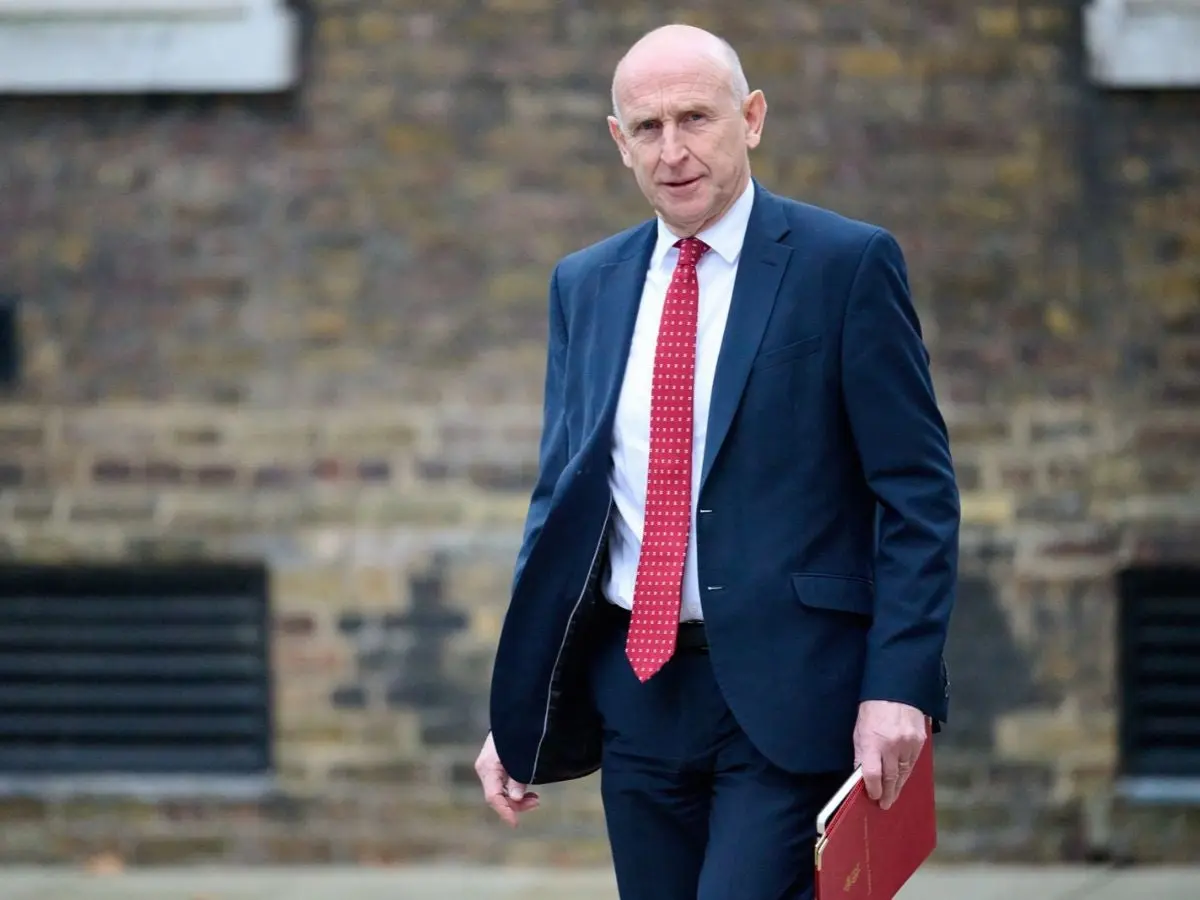
With the UK’s Autumn Budget 2026 looming on October 28th, Chancellor John Healey faces immense pressure to address the escalating cost of government borrowing. The absence of pre-Budget press briefings has amplified taxpayer uncertainty, leaving many anticipating significant fiscal adjustments. While the Labour manifesto explicitly rules out increases to the main rates of income tax, employee National Insurance, and VAT, attention is increasingly shifting towards potential changes impacting capital, property, and savings.
Experts and industry figures suggest the Chancellor’s strategy may involve building a "buffer against uncertainty." However, this approach appears to be at odds with the desires of many clients, who are reportedly seeking a period of fiscal stability that may not materialize. The unusually early delivery of this Budget further fuels speculation that it could be one of the most unpredictable in recent memory, especially for high-net-worth individuals (HNWIs) and their financial advisors.
A Landscape of Recent Tax Reforms and Growing Concerns
The current fiscal climate is already marked by a series of significant tax changes that wealthy families are still processing. These include the abolition of non-domicile status, effective from April 2025, and curbs on agricultural and business property relief set for April 2026. Looking further ahead, pensions are slated to fall under inheritance tax (IHT) from April 2027, and a "mansion tax" – a council tax surcharge of £2,500 to £7,500 annually on homes valued over £2 million in England – is scheduled for April 2028.
This cumulative impact of policy shifts has contributed to a broader sense of regulatory fatigue. A recent Spear’s tax survey in 2026 revealed a widespread lack of confidence in the UK’s economic trajectory. Alarmingly, nearly half of the respondents expressed doubt that Prime Minister Andy Burnham and Chancellor Healey could improve the UK economy during the remainder of the current parliamentary term. This sentiment underscores the anxieties of those most affected by fiscal policy decisions.
Expert Perspectives on the Pre-Budget Atmosphere
Alex Simpson, who leads the private client team at Ostberg Sinclair & Co, noted the stark contrast to previous Budgets, stating, "In contrast to the past few years’ Budgets, there has been a relative lack of press briefings, leaving taxpayers with little certainty." This lack of clarity has been a significant driver of client discussions, with uncertainty itself becoming a dominant theme.
Kelly Greig, a private client partner at Kingsley Napley, echoed these sentiments, suggesting the Chancellor aims to create a "buffer against uncertainty." However, she contrasted this with her clients’ desires: "My clients want a pause, and I wouldn’t count on one." This divergence highlights the challenge facing the government in balancing fiscal needs with taxpayer expectations.
The Wealth Tax Dilemma: A Top Concern for the Affluent
The prospect of a wealth tax, though not currently in existence in the UK, has emerged as a primary concern for the affluent. A survey conducted by La Vida, a firm specializing in residency and citizenship by investment, found that taxation was the top concern for 82.6% of its surveyed clients, comprising 46 millionaires and ultra-millionaires.
The survey revealed that 26% of respondents indicated a wealth tax would prompt them to consider leaving the UK. This figure significantly outpaced other potential tax increases, such as rises in income tax (22%), inheritance tax (20%), and capital gains tax (CGT) and property tax (both 15%).
Paul Williams, CEO of La Vida, emphasized the potential economic impact of such a move. He stated that the average wealth of their respondents is "more than 20 times the national average," meaning each departure represents "a significant tax loss for HMRC." This underscores the delicate balance the government must strike between revenue generation and maintaining the UK as an attractive place for wealth.
Mitch Young, co-founder of consultancy Fusion, offered a pragmatic approach to clients: "Prepare, but don’t panic." This advice encapsulates the prevailing sentiment among advisors as they navigate the evolving fiscal landscape.
What Should HNWIs Expect from the Autumn Budget 2026?
The upcoming Budget is anticipated to bring scrutiny to several key areas of personal finance, with particular focus on capital gains, property, and inheritance tax.
Capital Gains Tax (CGT)
Capital gains tax rates and bands have already seen adjustments, with rates increasing in October 2024. However, Prime Minister Andy Burnham’s long-standing argument that "work is taxed more heavily than wealth" has fueled speculation that Labour might seek to align CGT with income tax rates.
Kelly Greig described this as "the obvious move, and the one that clients seem to be the most nervous about." However, some advisors remain skeptical about the economic rationale of such a significant shift. Alex Simpson suggests that modelling often indicates such increases can be self-defeating.
Andrea Jones, Irwin Mitchell’s national head of private client advisory, believes targeted changes to rates or reliefs are more probable than a wholesale alignment. Adam Craggs, head of tax, investigations and financial crime at RPC, places the odds of an increase in the main CGT rates at 7/10, noting that it "falls outside Labour’s principal tax pledges and offers an obvious route to bring in additional revenue."
The potential for changes has already influenced taxpayer behavior. Rakesh Dabasia, private client partner at Buzzacott, noted that earlier speculation about a CGT rise did not result in a rate change but did prompt many taxpayers to accelerate transactions, "leading to increased CGT revenue for HMRC regardless of the actual change." He and Xavier Nicholas, head of private clients at Forsters, also highlighted the potential impact of removing the CGT uplift on death, a change that would significantly alter succession planning.
For individuals considering asset disposals, Mitch Young advises understanding the implications of a higher rate but cautions against "creating a disposal purely to try and beat a tax rise that may not happen."

Property Taxation
While the "mansion tax" is yet to be implemented, attention is turning to whether its scope might be broadened. Reports over the summer suggested the Treasury was considering a lower threshold of £1.5 million for this surcharge. Damian Bloom, head of private clients at Winston Taylor, expressed doubt that the Prime Minister would "risk ripping up a newly introduced policy in favour of a national property tax."
However, property remains a "visible and cannot be moved overseas" asset, making it a prime target for taxation, as noted by Andrea Jones. Mitch Young concurs, adding that wealthy families already face a substantial tax burden associated with acquiring, holding, and passing on property. Explicitly ruled out for this Budget, however, are the abolition of stamp duty land tax or council tax, according to Xavier Nicholas.
Inheritance Tax (IHT)
Families are still adapting to recent reforms affecting agricultural and business property relief, with further changes anticipated regarding pensions falling into the IHT net from April 2027. Andrea Jones does not foresee a complete overhaul of IHT but anticipates potential changes to specific reliefs, exemptions, or planning opportunities. She warns that "even narrow changes could have a significant effect on families whose wealth is spread across businesses, property, pensions and different generations."
Alex Simpson pointed to possible adjustments in reliefs or limits on lifetime gifting, while Xavier Nicholas suggested an extension of the seven-year rule for lifetime gifts to ten years. Rakesh Dabasia indicated that the exemption for gifts out of excess income, a crucial method for wealth transfer, could be tightened. Conversely, some advisors, like Adam Craggs, anticipate no major reform, citing the ongoing political sensitivity surrounding earlier relief changes. Mitch Young’s advice remains consistent: "good estate planning shouldn’t really be driven by one Budget."
Wealth and Exit Taxes
Despite a wealth tax topping the list of concerns in the La Vida survey, advisors generally view an annual levy as a distant prospect. Kelly Greig assigns it a 2/10 likelihood, citing the complexities of valuing illiquid assets and suggesting that "the likelier route is a collection of narrower measures on capital, property and savings." Damian Bloom, however, views the mansion tax as a potential precursor to a broader wealth tax.
Opinions are more divided on the possibility of an exit tax. Greig considers it "the most underrated option," pointing to its implementation in countries like Canada, Australia, Germany, and the US, which "raise modest sums, but they price departure and stop it being free." Rakesh Dabasia believes any move towards wealth or exit taxes would likely commence with a consultation period.
Some clients are proactively seeking to mitigate risks by establishing non-UK residence before the Budget through split-year rules. However, most advisors urge caution. Mitch Young stresses the importance of considering "the whole picture," as "moving country purely to save tax is a pretty major life decision and is rarely as simple as some of the headlines make it sound."

Income Tax
While income tax rates are protected by the Labour manifesto, the thresholds are not, and they are already frozen until April 2031. Kelly Greig and Damian Bloom both estimate a 6/10 likelihood of a further extension to this freeze. Bloom suggests that freezing only the higher thresholds would be a more electorally palatable option for the Chancellor. Rakesh Dabasia also highlights that fiscal drag, which pushes more taxpayers into higher tax bands without altering headline rates, remains "a stable and reliable source of tax revenues."
Preparing for Budget 2026: A Strategy of Informed Planning
The prevailing advice for HNWIs ahead of the Budget is to plan thoughtfully rather than react impulsively. Rakesh Dabasia advises against knee-jerk reactions, but suggests that accelerating transactions or planning that were already under consideration might be beneficial. Kelly Greig cautions that "pre-Budget leaks are often kites flown to test reaction, and irreversible decisions made on them are usually regretted."
Andrea Jones recommends a comprehensive review of wills, trusts, pension nominations, ownership structures, powers of attorney, and succession plans, ensuring that asset records and valuations are up-to-date.
Regarding potential tax cuts, Rakesh Dabasia believes there will be no scope for them. Mitch Young’s advice is pragmatic: "You don’t necessarily need to do something before the Budget, but you should know what you would do if the rules change." Damian Bloom agrees, stating, "Knowledge gives you options." This emphasis on informed preparedness reflects the complex and uncertain fiscal environment that UK taxpayers are set to navigate in the coming months.
