

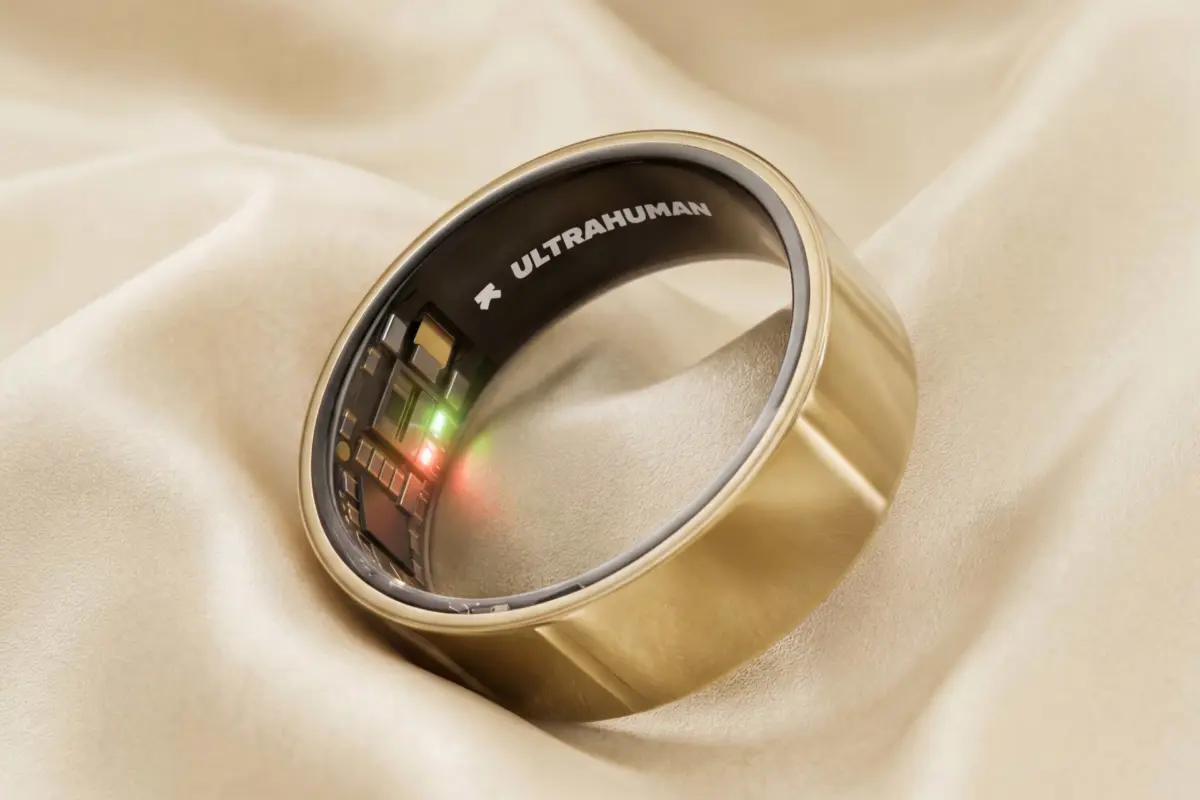
The Bengaluru-based health technology startup Ultrahuman, widely recognized for its high-performance smart rings and metabolic tracking systems, has entered into a strategic two-year memorandum of understanding (MoU) with the Abu Dhabi Public Health Center (ADPHC). This collaboration aims to develop, validate, and eventually deploy a sophisticated biological-age model across the United Arab Emirates (UAE). By integrating clinical biomarkers with continuous data streams from wearable devices, the initiative seeks to provide citizens and residents with a dynamic understanding of their physiological aging process, moving beyond the traditional constraints of chronological age.
The partnership represents a significant milestone for Ultrahuman as it transitions from a hardware-centric consumer electronics firm into a comprehensive health-data and longevity platform. Under the terms of the agreement, the startup will work alongside Abu Dhabi health authorities to create a system that identifies specific lifestyle and physiological factors—such as sleep quality, physical activity, cardiovascular health, and metabolic efficiency—that contribute to either the acceleration or deceleration of the biological aging process.
The Shift Toward Algorithmic Health and Longevity
The core of this initiative lies in the distinction between chronological age, the number of years a person has been alive, and biological age, which reflects the actual state of their internal physiological health. While chronological age is immutable, biological age is plastic and can be influenced by environmental factors, diet, and behavior. Ultrahuman CEO Mohit Kumar emphasized that while the company’s flagship product, the Ultrahuman Ring, is a primary vehicle for data acquisition, the company’s ultimate value proposition lies in the interpretation of that data.
Working with a sovereign entity like the Abu Dhabi government provides Ultrahuman with a unique opportunity to scale its algorithms across a diverse population. To date, Ultrahuman has sold approximately 800,000 smart rings globally. However, its typical user base is concentrated in the 25-to-43-year-old demographic. By integrating with the UAE’s public health infrastructure, the company will be able to refine its models using data from a much broader range of age groups and ethnic backgrounds, significantly enhancing the accuracy and utility of its predictive health tools.
Technical Framework and Wearable-Agnostic Design
A critical component of the biological-age model is its "wearable-agnostic" architecture. While Ultrahuman’s own hardware is optimized for the platform, the model is being designed to ingest data from a variety of sources, including wrist-worn trackers, chest straps, and continuous glucose monitoring (CGM) patches. This flexibility ensures that the health-age insights are accessible to a wider segment of the population, regardless of which specific wearable device they choose to use.
The model operates by cross-referencing wearable signals—such as heart rate variability (HRV), resting heart rate, and sleep stages—with clinical biomarkers obtained through blood tests and other medical screenings. By analyzing how these markers typically shift over time, the algorithm can identify deviations from expected aging patterns. For instance, an individual with high levels of systemic inflammation or poor metabolic flexibility might show a biological age significantly higher than their chronological age, prompting early intervention.
Once the research and validation phase is complete, the biological-age metrics will be integrated into the UAE’s existing digital health ecosystems. This includes TAMM, the Abu Dhabi government’s unified services platform, and Sahatna, a comprehensive health app. This integration ensures that health data is not siloed within a private app but is instead a functional part of the citizen’s official health record.
Strategic Importance of the UAE Market
The UAE has emerged as a critical growth engine for Ultrahuman, currently ranking among its top 10 global markets. The region accounts for approximately 4% to 5% of the company’s total revenue. Beyond mere sales figures, the UAE exhibits a 25% higher user retention rate compared to other international markets, suggesting a strong local appetite for proactive health management and longevity technology.
Abu Dhabi, in particular, has positioned itself as a global hub for biotechnology and preventive medicine. The emirate’s "Vision 2031" and various public health initiatives emphasize the importance of early detection and lifestyle modification to reduce the burden of non-communicable diseases (NCDs) like diabetes and heart disease. For Ultrahuman, the partnership is a logical extension of its five-year presence in the market, providing a platform to prove that its algorithms can work at a national scale.
Data Privacy and Ethical Considerations
In an era of heightened sensitivity regarding health data, both Ultrahuman and the ADPHC have underscored their commitment to privacy. Mohit Kumar clarified that the biological-age model will not be "trained" on UAE citizen data in a way that compromises privacy. Instead, an existing algorithm developed using Ultrahuman’s global dataset will be deployed onto the UAE’s data infrastructure.
Crucially, Ultrahuman will not have access to personally identifiable information (PII). The processing of sensitive health data will occur within the secure frameworks established by the Abu Dhabi health authorities, ensuring compliance with local data residency and protection laws. This "privacy-by-design" approach is essential for gaining public trust in a state-sponsored health tracking initiative.
Competitive Landscape and Regional Rivalry
The partnership with Ultrahuman comes at a time of intense competition in the smart-ring and wearable health space. In May 2024, the Department of Health – Abu Dhabi (DoH) announced a similar partnership with Oura, the Finnish company that pioneered the smart-ring category. Oura’s collaboration focuses on longitudinal health data with an emphasis on women’s health and cardiometabolic risk.
While both companies are operating within the same emirate, Ultrahuman’s focus remains specifically on the biological-age model and longevity. Kumar noted that while the government often collaborates with multiple tech providers to foster innovation, Ultrahuman’s specific mandate regarding health-age modeling is distinct. The presence of two major smart-ring makers in Abu Dhabi highlights the region’s commitment to becoming a "living lab" for the future of preventive healthcare.
Chronology of Ultrahuman’s Expansion
The journey to this national-scale partnership has been marked by rapid technological and corporate evolution for Ultrahuman:
- 2019-2020: Ultrahuman is founded by Mohit Kumar and Vatsal Singhal, initially focusing on a fitness app and the M1 continuous glucose monitoring platform.
- 2022: The company launches the Ultrahuman Ring, entering the hardware market to compete directly with Oura and Fitbit.
- 2023: Ultrahuman introduces the "UltraFactory," a vertically integrated manufacturing facility in India, allowing for faster iteration of hardware and firmware.
- Early 2024: The startup raises $35 million in a Series B funding round led by Blume Ventures, Steadview Capital, and Nexus Venture Partners, with participation from Qualcomm Ventures.
- May 2024: Ultrahuman announces "PowerRing," a vision for a smart ring capable of running complex on-device software, moving closer to the functionality of a computer.
- September 2024: The partnership with ADPHC is formalized, marking the company’s first foray into national-level public health integration.
Analysis of Broader Implications
The move by Abu Dhabi to adopt biological-age modeling signals a shift in public health strategy from "sick care" to "preventive care." By providing citizens with a tangible metric like biological age, health authorities can leverage behavioral economics to encourage healthier lifestyles. People are often more motivated by the prospect of "reversing their age" than by abstract warnings about long-term disease risk.
For the wearable industry, this partnership validates the transition from consumer gadgets to clinical-grade health tools. As companies like Ultrahuman and Oura prove their utility in public health settings, the boundary between consumer electronics and medical devices continues to blur. This could lead to a future where wearable data is routinely used by physicians to personalize treatment plans or by insurance companies to reward healthy behaviors.
Furthermore, the "wearable-agnostic" nature of the UAE project suggests that the real value in the future of health tech lies in the software and the proprietary algorithms rather than the physical ring or watch. As hardware becomes commoditized, the ability to accurately interpret complex biological signals will become the primary competitive advantage.
Future Outlook
The next two years will be dedicated to the rigorous research and clinical validation of the biological-age model within the UAE’s specific demographic context. Following this period, the rollout is expected to occur in phases, though a definitive timeline for full national availability has not yet been disclosed.
As Ultrahuman continues to refine its "Ring as a computer" philosophy—supported by investors like Qualcomm—the integration of artificial intelligence will likely play a larger role. Future iterations of the biological-age model may include real-time AI coaching, where the device not only tells a user their "age" but provides immediate, actionable advice to lower it based on current physiological stress markers.
The collaboration between Ultrahuman and Abu Dhabi serves as a blueprint for how tech startups and governments can cooperate to tackle the global challenge of aging populations and rising healthcare costs. By focusing on longevity and biological health, the initiative seeks to extend not just the lifespan, but the "healthspan" of an entire nation.
