

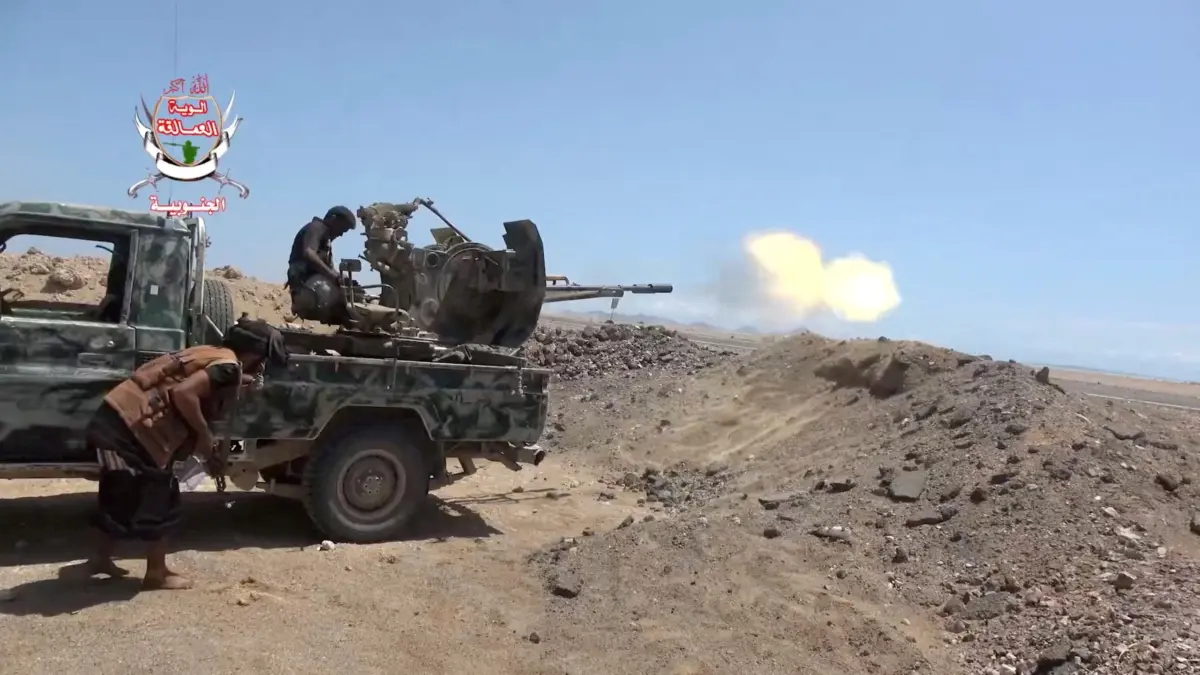
The military of Yemen’s internationally recognized government, bolstered by a Saudi-led coalition, has announced a significant escalation in its campaign against the Houthi movement, reporting the deaths of more than 1,150 rebel fighters in a series of intensive operations over the last 24 hours. This surge in violence marks a pivotal moment in the protracted conflict, as pro-government forces launch "Operation Dawn of Yemen," a multi-pronged offensive designed to reclaim strategic territories and neutralize Houthi military capabilities across several frontlines.
Colonel Majed Abdullah al-Nazili, the official spokesperson for the Yemeni government forces, confirmed the scale of the operation in a press briefing, detailing nearly 2,000 targeted strikes and ground maneuvers. According to military reports, the offensive successfully liquidated over 1,100 combatants aligned with the Iranian-backed Houthi group, while simultaneously dismantling key infrastructure used by the insurgents. The operations were not limited to personnel; Al-Nazili stated that ground forces and aerial support destroyed at least 180 combat, transport, and supply vehicles, alongside several critical ammunition depots.
As the "Dawn of Yemen" operation continues to unfold, government forces are reportedly advancing their assault on multiple fronts, with a specific focus on the southwestern coast. The objective is clear: to break the Houthi grip on vital maritime corridors and secure the hinterlands surrounding the nation’s most strategic ports.
Strategic Significance of the Bab al-Mandeb Strait
The current theatre of war is centered around the strategic southern cities of Mocha and Dhubab. These locations are of paramount importance due to their proximity to the Bab al-Mandeb strait, a narrow chokepoint between the Arabian Peninsula and the Horn of Africa. The strait serves as a gateway for global shipping, connecting the Red Sea to the Gulf of Aden and the Indian Ocean.
For the international community, the stability of Bab al-Mandeb is a matter of global economic security. Approximately 4.8 million barrels of crude oil and refined petroleum products pass through the strait daily toward Europe, the United States, and Asia. The Houthis, who have maintained control over the capital, Sanaa, and significant portions of northwestern Yemen since late 2014, seized the coastal areas near the strait in September of the following year.
By controlling Mocha and Dhubab, the Houthis have effectively gained the ability to threaten international shipping lanes. Both the Saudi-led coalition and the Houthi rebels claim varying degrees of control over these lanes, leading to a volatile environment for commercial vessels. The current pro-government push aims to push Houthi forces back from the coastline to ensure that this critical trade route remains open and insulated from the ongoing civil war.
The Attack on Riyadh and the International Response
The escalation in ground and air operations follows a high-profile attack on King Khalid International Airport in Riyadh, Saudi Arabia. On Saturday, a projectile—suspected to be a Houthi-launched ballistic missile—struck the vicinity of the airport, resulting in several casualties and significant disruption to civil aviation. Flights were canceled or diverted as Saudi authorities scrambled to secure the capital’s primary transport hub.
While the Houthis have not officially claimed responsibility for this specific strike, the group has issued increasingly aggressive warnings to international aviation companies. The movement has declared the entirety of Saudi airspace a "combat zone," warning that any aircraft operating within it—with the exception of those flying over the holy cities of Mecca and Medina—is a legitimate military target.
The attack on Riyadh has drawn immediate international condemnation and prompted a potential shift in U.S. involvement. When questioned at the White House regarding whether the United States would join retaliatory strikes against the Houthis, President Donald Trump stated that his administration would "make a decision soon." The U.S. has historically provided logistical and intelligence support to the Saudi-led coalition, but a direct combat role would represent a significant deepening of American involvement in the Yemeni quagmire.
Expanding the Conflict: The Pakistan Factor
In a move that threatens to internationalize the conflict further, Houthi representatives have issued stern warnings to Pakistan. Reporting from Yemen, analysts note that the Houthis are preparing for a war on multiple fronts, targeting not just local adversaries but also international actors they perceive as aiding the Saudi cause.
"The Houthis say that if Pakistan engages in any military activities against them on behalf of Saudi Arabia, then they will be treated in the same fashion as the Saudis are currently being dealt with," reported Al Jazeera’s Yousef Mawry.
The threats are not merely rhetorical. Intelligence suggests that the Houthis have developed plans to launch ballistic missiles toward Pakistan and initiate attacks on Pakistan-flagged vessels in the Red Sea and the Arabian Sea. This development follows Pakistan’s historical security cooperation with Riyadh, although Islamabad has officially maintained a policy of neutrality regarding the ground war in Yemen. The Houthi threat aims to deter Pakistan from providing further military or technical assistance to the Saudi-led coalition.
Timeline of Recent Escalations
The current surge in violence is the culmination of a series of events that have derailed previous attempts at a ceasefire. To understand the gravity of "Operation Dawn of Yemen," it is necessary to look at the recent chronology:
- September 2014: Houthi rebels seize the capital city of Sanaa, forcing the internationally recognized government into exile.
- March 2015: A Saudi-led coalition intervenes in Yemen, launching "Operation Decisive Storm" to restore the government of President Abd-Rabbu Mansour Hadi.
- Late 2015: Houthis seize strategic positions overlooking the Bab al-Mandeb strait, leading to sporadic attacks on naval and commercial vessels.
- Recent Months: Mediation efforts led by regional actors and the United Nations stall as both sides refuse to make concessions on port control and airport access.
- Last 48 Hours: Pro-government forces launch "Operation Dawn of Yemen," resulting in the reported death of 1,150 Houthi fighters and the destruction of 180 vehicles.
- Saturday: A missile strike hits King Khalid International Airport in Riyadh, prompting threats of U.S. intervention and Houthi warnings to global aviation.
Military Data and Tactical Analysis
The scale of the "Dawn of Yemen" operation is reflected in the sheer volume of military data provided by the Yemeni government. The 2,000 targeted operations cited by Colonel al-Nazili include a mix of precision airstrikes, long-range artillery barrages, and coordinated ground assaults.
The destruction of 180 vehicles is particularly significant. In the rugged terrain of Yemen, mobility is the primary advantage for Houthi guerilla units. By neutralizing transport and supply vehicles, the Saudi-backed forces are attempting to sever the rebels’ logistical chains, making it difficult for them to reinforce the frontlines in Mocha and Dhubab. Furthermore, the targeting of ammunition dumps suggests a sophisticated intelligence-gathering effort, likely aided by coalition surveillance technology, aimed at depleting the Houthis’ stockpile of Iranian-designed missiles and drones.
However, military analysts caution that "body counts" and vehicle destruction statistics provided by warring parties are often difficult to verify independently. While the pro-government side claims a massive victory, the Houthis remain entrenched in the mountainous northwest, utilizing a network of tunnels and natural fortifications that make a total military defeat unlikely in the short term.
Humanitarian and Geopolitical Implications
The intensification of fighting comes at a devastating cost to the civilian population. Yemen is already home to what the United Nations has described as the world’s worst humanitarian crisis. More than 80% of the population requires some form of humanitarian assistance, and the renewed fighting in coastal areas threatens to block the entry of food and medicine through the ports of Hodeidah and Salif.
Baraa Shiban, an associate fellow in international security and a Yemen expert at the Royal United Services Institute (RUSI), notes that the current situation is unique in its lack of diplomatic exits. "There is no mediation happening this time—there are no regional or local mediators that are able to cool down the situation," Shiban told Al Jazeera. He emphasized that the violence is unlikely to "die down" anytime soon, as both sides believe they can achieve a decisive military breakthrough.
The geopolitical implications are equally grim. The conflict in Yemen has long been viewed as a proxy war between Saudi Arabia and Iran. A sustained offensive that successfully pushes the Houthis back from the Red Sea would be a major strategic win for Riyadh. Conversely, if the Houthis successfully execute their threats against international shipping or expand the war to include targets in Pakistan, the conflict could trigger a broader regional conflagration that draws in more global powers.
Conclusion and Future Outlook
As "Operation Dawn of Yemen" enters its next phase, the international community watches with apprehension. The pro-government forces’ focus on the Bab al-Mandeb strait underscores the economic stakes of the war, while the Houthi threats against aviation and foreign vessels signal a move toward unrestricted warfare.
With the U.S. administration considering its options and the Houthis refusing to back down from their territorial gains in the north, the path toward a negotiated settlement seems more distant than ever. The reported death toll of 1,150 fighters in a single day is a somber reminder of the high intensity of the conflict and the potential for even greater casualties as the fighting spreads to new fronts. For now, the strategic southern cities of Mocha and Dhubab remain the epicenter of a struggle that determines not only the future of Yemen but also the security of the world’s most vital maritime arteries.
