

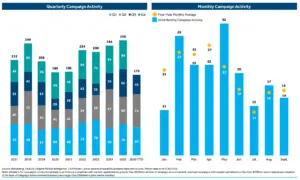
The landscape of shareholder activism in 2026 has demonstrated a notable resilience, with campaign activity largely in line with previous years despite a tempered third quarter. This analysis, drawn from a comprehensive memorandum by Barclays’ Global Head of Shareholder Advisory Jim Rossman, Vice President Abraham Axler, and Associate Josh Jacobs, alongside contributions from Ryan Ferguson, Olakunle Akande, and Arjun Mandhare, provides a detailed look at the trends shaping the activism environment through the first three quarters of the year. While the overall volume of campaigns remains consistent with historical averages, several key shifts are emerging, particularly in the geographic distribution of activism, the strategic demands of activists, and the evolving regulatory environment.

Campaign Activity Maintains Pace Despite Seasonal Slowdown
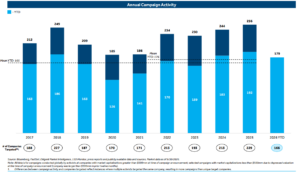
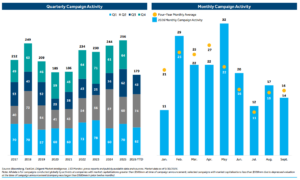
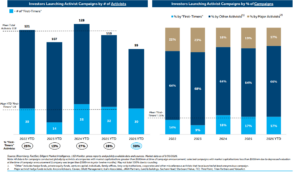
As of the third quarter of 2026, a total of 179 activist campaigns had been launched globally. This figure represents a slight year-over-year decrease of 7%, yet it aligns closely with the four-year year-to-date average of 176 campaigns and the nine-year mean of 165 campaigns. This steadiness suggests that while individual quarters may exhibit fluctuations, the underlying drive for activist intervention remains robust. The third quarter, typically a period of seasonal moderation, saw a sequential decline of 42% in campaign launches, a pattern consistent with historical norms. This dip in Q3 is often attributed to the summer holidays and a general slowdown in corporate decision-making, with a subsequent expectation of renewed activity in the final quarter.
APAC Emerges as a Record Hub for Activism, Driven by Japan
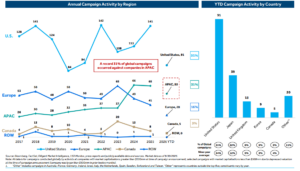
A significant development in 2026 has been the unprecedented surge in activist activity within the Asia-Pacific (APAC) region. APAC now accounts for a record high of 31% of all global campaigns, a substantial increase from previous years. This expansion is primarily fueled by a vigorous wave of activism in Japan, which has become a focal point for both domestic and international activist investors. While the United States continues to lead in absolute numbers of campaigns, the rapid growth and increasing share of APAC highlight a broadening of the activism frontier. This trend suggests a growing recognition among activists of untapped value and potential for change within companies in this dynamic region. The increase in non-Japan campaigns within APAC also indicates a diversification of targets, moving beyond traditional hotspots.
Mergers & Acquisitions Dominate Activist Agendas in Q3
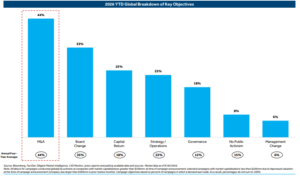
In the third quarter of 2026, demands centered around Mergers & Acquisitions (M&A) constituted over half of all activist campaign objectives. This emphasis on M&A, particularly calls for companies to sell themselves, underscores a strategic shift by activists who are increasingly prioritizing transformative corporate actions over incremental operational adjustments. This focus on strategic transactions can be attributed to several factors, including the desire for substantial value realization, the current M&A market environment, and perhaps a perception that certain companies are undervalued and ripe for acquisition. The data indicates that activists are more inclined to push for outright sales rather than exploring other M&A avenues, signaling a clear preference for structural changes that can unlock significant shareholder value.
Leading Activists Consolidate Board Seat Wins
While the overall number of board seats won by activists year-to-date has been the second lowest in five years at 87, the data reveals a trend of consolidation among the most established players. The leading activists have consistently dominated in securing board representation, indicating their strategic acumen and ability to navigate complex proxy contests. This concentration of success among a few prominent firms suggests that expertise, capital, and a proven track record are increasingly critical for achieving board-level influence. The decline in board seat wins overall might reflect a more cautious approach by some activists or a greater willingness by companies to engage in settlements before full proxy battles.
Evolving Legal and Regulatory Dynamics Shape the Activism Landscape
The regulatory environment continues to be a critical factor influencing shareholder activism. Proposed changes by the Securities and Exchange Commission (SEC), such as the potential rescission of Rule 14a-8, alongside efforts to modernize proxy delivery and clarify Schedule 13G eligibility, signal a period of potential flux. These regulatory shifts, coupled with ongoing scrutiny of proxy advisors at both federal and state levels, create a complex operating environment for activists and corporations alike. Companies are closely monitoring these developments, as they could significantly impact the mechanics of proxy solicitations, shareholder engagement, and the overall effectiveness of activist campaigns. The implications of these regulatory adjustments are far-reaching, potentially altering the balance of power between activists and management.
Notable Campaign Activity and Key Players
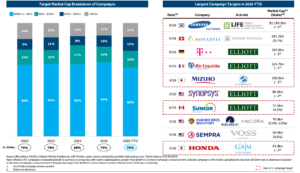
The third quarter of 2026 saw several high-profile activist campaigns launched and developments unfold. Elliott Management, a perennial force in activism, remained exceptionally active. In September, the firm reportedly opposed Deutsche Telekom’s potential merger with T-Mobile US, advocating instead for alternative value creation strategies, including enhanced share buybacks. Earlier in August, Elliott also built a stake in Air Liquide, a French industrial gas giant, reportedly urging management to close the margin gap with industry peers.
Engine Capital made its presence felt in August with a campaign against EPAM, a U.S.-based IT services company. Engine Capital argued that EPAM’s valuation discount was excessive, even amidst sector-wide anxieties related to AI disruption. Their demands included share repurchases, improved executive and board alignment with shareholders, or initiating a sale process. Also in August, Starboard Value targeted Shake Shack, a U.S. fast-casual restaurant chain, advocating for an accelerated U.S. expansion through increased franchising. Starboard posited that a more capital-efficient model could hasten development and boost shareholder value.
The "Top 10 Activists of 2026 YTD" list highlights the dominance of a few key players. Elliott Management led the pack with 16 campaigns launched across seven jurisdictions, targeting companies with an average market capitalization of $41 billion. The top three activists collectively accounted for 18% of year-to-date campaigns, with the top ten comprising 39%. This concentration of activity underscores the specialized nature and significant resources required for successful activist interventions. Oasis, based in Hong Kong, and Palliser, based in the U.K., also featured prominently, demonstrating the global reach of activist strategies.
Geographic Trends and Sector Concentration
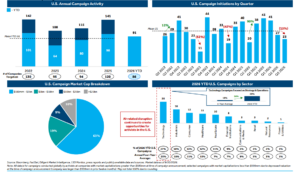
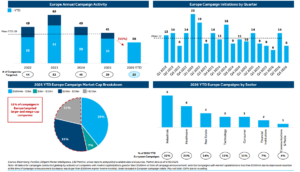
The geographic distribution of activism shows a clear expansion into APAC, driven significantly by Japan, with 31% of global campaigns occurring in the region. The United States, while still leading in absolute numbers, sees its dominance challenged by this Asian growth. European activism, conversely, is on track for a third consecutive year of decline, with a 15% decrease in campaigns observed in 2026. Within Europe, the United Kingdom accounts for over half of the regional activity, with countries like Israel showing an uptick in campaigns.
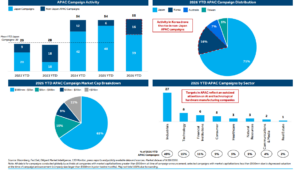
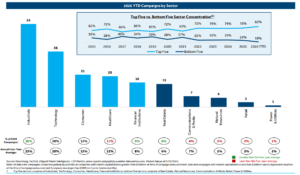
Sector concentration remains a pronounced feature of activist campaigns, with 82% of all campaigns targeting companies within five key sectors. While the specific sectors are not explicitly listed in the provided text, the mention of "technology sector continued to be the most popular pick for activists as they target companies exposed to AI related disruption" in the U.S. context provides a specific example. This focus on technology, particularly concerning AI, suggests that activists are leveraging current market trends and perceived vulnerabilities to drive their agendas.
Campaign Objectives and Outcomes
The primary objectives of activist campaigns in 2026 YTD continue to favor M&A demands over operational adjustments. The data indicates a growing trend of activists pushing for targets to sell themselves, representing a majority of M&A-related demands. This strategic inclination towards divestiture or acquisition reflects a belief that such actions offer the most direct and impactful route to value creation.
While activist pressure often leads to board representation, the number of board seats won year-to-date (87) is notably lower than in previous years, sitting at the second fewest in five years and 10% below the four-year average. Similarly, U.S. settlements, a common outcome of activist engagement, saw a 26% year-over-year decline, with 32 settlements recorded. The U.S. proxy season itself has been characterized by a significant reduction in late-stage settlements and full proxy fights, down 53% compared to the same period in 2025. This could indicate a more effective pre-emptive engagement by companies or a strategic shift by activists towards different engagement tactics.
CEO resignations following activist campaigns have also been lower than in recent years. However, mega-cap companies constitute nearly a quarter of these events, suggesting that even large corporations are not immune to activist-driven leadership changes.
Considerations for the Remainder of 2026
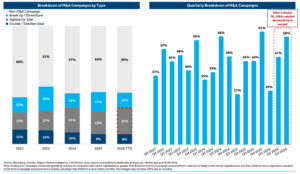
As the year progresses into its final quarter, the market will be watching closely to see if the typical seasonal trends in activism will hold true, especially following a comparatively quiet proxy season. The interplay of ongoing economic conditions, sector-specific dynamics, and the evolving regulatory landscape will continue to shape the strategies and outcomes of shareholder activism. The sustained growth in APAC, the continued focus on M&A, and the impact of regulatory changes are key themes that will likely define the future trajectory of activist engagement. Companies are increasingly expected to proactively engage with their shareholder base and demonstrate clear value creation strategies to mitigate the risk of activist intervention.
The Barclays report, compiled by a team of seasoned professionals in shareholder advisory, provides a critical snapshot of the dynamic world of activism. It highlights not only the consistent underlying activity but also the nuanced shifts in strategy, geography, and regulatory influence that are shaping how activists engage with corporations in 2026 and beyond. The data suggests a maturing activist landscape, where established players continue to exert significant influence, and new frontiers in geographic reach are being explored, all within an environment of evolving regulatory oversight.
