

Fighting has dramatically intensified across Yemen, plunging the nation back into what the United Nations Special Envoy, Hans Grundberg, has termed a "full-scale war." The internationally recognized government forces, backed by a Saudi-led coalition, are pressing a significant military offensive against the Iran-backed Houthi movement, also known as Ansar Allah, which controls large swathes of the country, including the capital, Sanaa. This renewed conflagration follows a period of relative calm brought by a 2022 ceasefire and threatens to further destabilize a region already grappling with heightened tensions.
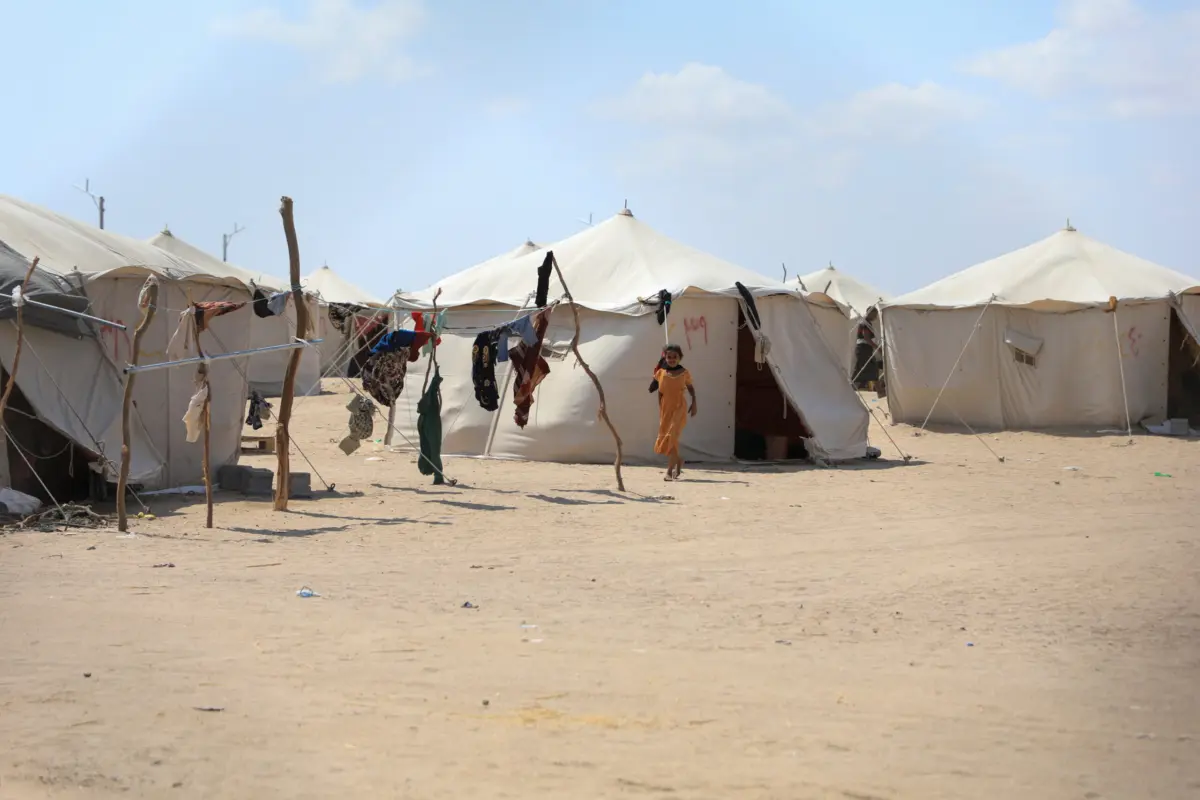
The primary objective of the government’s latest offensive is the recapture of the strategically vital Bab al-Mandeb strait, a narrow choke point at the entrance to the Red Sea. This maritime passage is not only crucial for global trade but has become an increasingly important alternative route for oil exports for Riyadh, especially amidst disruptions in the Strait of Hormuz due to regional geopolitical friction. The humanitarian toll of this resurgence in conflict is already severe, with the United Nations reporting at least 46 civilians killed and over 130 injured since August, many of whom are children. The UN’s migration agency (IOM) further states that more than 200,000 people have been displaced since fighting escalated sharply in September, exacerbating an already dire humanitarian crisis in a country that has faced famine conditions since 2016. Rights groups are voicing profound concerns that Yemen has effectively reverted to the destructive civil war footing that characterized the conflict from its initial eruption in 2014.
The Genesis of Conflict: A Decade of Division
The current crisis is rooted in a complex civil war that began in 2014. Following years of political instability and a revolution three years prior, the Houthi movement capitalized on widespread dissatisfaction with the then-ruling government. They seized control of Sanaa in September 2014 and subsequently established their own governing authority in the capital. This Houthi takeover prompted a military intervention in March 2015 by a Saudi-led coalition, which aimed to restore the internationally recognized government. The ensuing conflict devolved into a protracted and brutal civil war, resulting in an estimated 150,000 to 227,000 deaths, both from direct combat and humanitarian consequences, with millions more displaced from their homes. For much of this period, the Houthis maintained control over the northern regions, while the Yemeni government held sway in the south, operating primarily from the interim capital of Aden.

A UN-brokered truce in April 2022 offered a glimmer of hope, leading to a significant lull in fighting and facilitating the delivery of much-needed humanitarian aid to Yemen’s impoverished population. However, this fragile calm began to unravel in late 2023.
A Chronology of Escalation and Renewed Hostilities
The period of relative peace was shattered by a series of escalating events, intrinsically linked to broader regional dynamics:
- Late 2023: Houthi Entry into Red Sea Hostilities: The Houthis, identifying as a key component of Iran’s “Axis of Resistance” – an alliance of proxy armed groups – began disrupting international shipping in the Red Sea. They declared these actions a response to Israel’s military campaign in the Gaza Strip.
- March 2024: Missile Strikes on Israel: The Houthis further broadened their engagement by firing missiles towards Israel, formally entering into the wider regional confrontation that saw heightened tensions between Iran, its allies, and the United States and Israel.
- July 2024: Blockade Declaration and Ground Offensive: In a significant escalation, the Houthi movement declared a naval blockade of Saudi ports and shipping routes passing through the Bab al-Mandeb strait. While the Houthis asserted this was retaliation for ongoing Saudi blockades on Yemen, analysts widely interpreted the move as a calculated attempt by Iran to gain leverage in its intermittent negotiations with the United States, a close ally of Riyadh. This declaration was swiftly followed by a lightning ground offensive on the strategic port city of Mocha, successfully pushing back Yemeni coalition forces.
- September 2024: Seizure of Strategic Territory: Houthi forces continued their advance, sweeping through and seizing territory along Yemen’s western coast, critically including the Bab al-Mandeb strait itself. This offensive culminated in the capture of the strategically located Mayyun Island (also known as Perim Island) within the strait, granting the Houthis a significant advantage in controlling the vital shipping lanes.
- October 4, 2024: Government Counter-Offensive Announced: In response to the Houthi advances, Rashad al-Alimi, the leader of the Yemeni government’s Presidential Leadership Council (PLC), formally announced a comprehensive military offensive with the explicit aim to "restore state authority" across all Houthi-held territories. This operation was subsequently named "Dawn of Yemen."
- October 6-8, 2024: Intense Clashes and Cross-Border Attacks: The "Dawn of Yemen" operation rapidly escalated. On Sunday, the Yemeni government officially launched the offensive, declaring its intention to retake all remaining Houthi-held territory, including the capital, Sanaa. Simultaneously, on Saturday, the government claimed to have conducted over 2,750 precision strikes within a 24-hour period, resulting in the "neutralization" of more than 1,400 Houthi fighters. Colonel Majid al-Nuzaili, spokesperson for the armed forces, stated via the Saba news agency that these operations also targeted high-value military assets deep within Houthi-controlled areas. He affirmed that ground forces had "successfully" breached Houthi defenses, recaptured operationally significant positions, and were continuing their advance.
Concurrently, the Houthis, who have developed sophisticated ballistic missile and drone capabilities, launched retaliatory attacks. On Friday, Saudi Arabia’s aviation authorities reported that Houthi strikes on Riyadh International Airport had killed three Saudi citizens, including a pilot, and wounded several others. These were the first such fatalities in the kingdom since the fighting resumed, prompting several airlines to suspend flights to Riyadh. In turn, coalition forces heavily bombarded Sanaa on Friday, leading to multiple reported injuries, including a child. Battles also raged fiercely for control of the strategically important city of Taiz.
The Current Situation: A Return to Full-Scale War
The scale and intensity of the current fighting unequivocally signify Yemen’s return to full-scale civil war. The UN Special Envoy, Hans Grundberg, underscored this stark reality, lamenting that civilians, particularly women and children, are once again bearing the "brunt of escalating violence."

On the ground, Saudi-backed Yemeni forces are pushing relentlessly towards Houthi strongholds, focusing on recapturing areas surrounding the Bab al-Mandeb strait. This crucial trade route is indispensable for global shipping, facilitating the flow of goods into and out of the Red Sea. Riyadh’s increased reliance on this strait for its oil exports underscores its paramount economic and strategic importance, especially given the precarious situation in the Strait of Hormuz.
The "Dawn of Yemen" operation is multifaceted, involving extensive air support and ground assaults. Colonel Majid al-Nuzaili’s statements confirm that the military aims to dislodge the Houthis from key operational positions and ultimately reclaim all territory, including the capital, Sanaa, which has been under Houthi control since 2014.
Fierce battles are concentrated around the southern coastal cities of Mocha and Dubhab. Both cities are strategically critical for controlling access to the Bab al-Mandeb. While the Houthis seized this area in September, effectively gaining control of the strait, both sides currently assert dominion over the shipping lanes, leading to a dangerous and volatile standoff.
The Houthi retaliatory capabilities are evident in their missile and drone attacks. The strike on Riyadh International Airport highlights their capacity to project power beyond Yemen’s borders, directly threatening Saudi Arabian infrastructure and civilian populations. The fatalities reported mark a severe escalation and underscore the direct risks posed by the resurgent conflict to regional stability.
In Sanaa, the capital, coalition bombardment has been extensive. Al Jazeera’s Yousef Mawry, reporting from Sanaa, described the situation as "beginning to resemble the 2015 Saudi-led coalition war on Yemen, when Sanaa and various other provinces were attacked relentlessly around the clock." Mawry detailed strikes on Sanaa International Airport, several industrial facilities (including a chips factory and a sponge factory), and at least four telecommunications infrastructure sites within Houthi-controlled areas. Mount Attan, a prominent feature in Sanaa, was reportedly hit by ten air raids. Saudi coalition officials claim these strikes have destroyed 136 military targets, including launch pads and radars. Conversely, the Houthis accuse Saudi Arabia of targeting public infrastructure and telecommunications, warning that the campaign risks plunging the country back into a humanitarian crisis on par with the devastating period between 2015 and 2022.

International Reactions and the Call for Diplomacy
The international community is closely monitoring the deteriorating situation. The United Nations Special Envoy, Hans Grundberg, stressed the urgent need for the UN Security Council (UNSC) to support renewed mediation efforts. He warned that "unless war is to become Yemen’s permanent reality, the time to consider political strategies is now." However, analysts suggest that recent military gains by Yemeni government forces might embolden them to pursue the offensive rather than immediately agree to a settlement, complicating diplomatic efforts.
The United States, while previously expressing reluctance to become directly involved in the Yemen conflict, has issued a strong condemnation of the recent escalation. Speaking at a UN Security Council meeting, Jeff Bartos, the US ambassador to the UN for Management and Reform, conveyed Washington’s "gravely concerned" stance regarding the Houthis’ recent actions, particularly attacks on civilian infrastructure and airports. Bartos unequivocally stated, "The pattern remains unmistakable. The Houthis act as instruments of Tehran to threaten freedom of navigation, undermine regional stability, and terrorize innocent civilians." He demanded that the Houthis "cease their attacks against the legitimate governments of Yemen and Saudi Arabia" and called for Iran to "cease all support to the Houthis." These statements underscore the US’s view of the Houthis as a proxy force for Iran, contributing to broader regional instability.
Broader Impact and Implications
The return to full-scale conflict in Yemen carries profound implications, both domestically and regionally:

- Exacerbation of Humanitarian Catastrophe: Yemen already endures one of the world’s worst humanitarian crises. The renewed fighting will inevitably worsen this situation, leading to further displacement, increased civilian casualties, and heightened food insecurity. Access for humanitarian aid organizations will become even more challenging, threatening to push millions more to the brink of famine. The 200,000 displaced since September are just the latest wave in a country where millions already rely on aid for survival.
- Threat to Regional Stability and Global Shipping: The strategic importance of the Bab al-Mandeb strait cannot be overstated. Its control by either warring faction, or the active conflict around it, poses a significant threat to international shipping and global energy markets. Any disruption in this vital maritime artery could have ripple effects on global trade, particularly for oil and gas shipments, and further exacerbate global economic uncertainties. The Houthi attacks on Saudi Arabia also demonstrate the capacity for the conflict to spill over borders, raising fears of a wider regional conflagration.
- Complex Geopolitical Chessboard: The conflict in Yemen is deeply intertwined with the broader geopolitical rivalry between Saudi Arabia and Iran, as well as the intricate dynamics involving the United States and Israel. The US’s accusation of the Houthis acting as "instruments of Tehran" highlights the proxy nature of much of the conflict in the Middle East. The escalating fighting in Yemen adds another volatile front to an already tense regional landscape.
- Challenges to Peace Prospects: The current military offensive by the Yemeni government, particularly if it achieves significant gains, could harden positions and make a return to the negotiating table more difficult. Both sides might feel they have more to win on the battlefield than through dialogue, potentially prolonging the conflict and its devastating consequences.
- Economic Strain: The conflict places immense economic strain on all parties involved. For Yemen, it means continued destruction of infrastructure, further economic collapse, and persistent reliance on external aid. For Saudi Arabia, it entails significant military expenditure and the constant threat of cross-border attacks impacting its economy and sense of security.
As the "Dawn of Yemen" offensive unfolds and Houthi retaliations continue, the immediate future for Yemen appears bleak. The international community faces a critical challenge in de-escalating the conflict, protecting civilians, and reigniting a viable path toward a lasting political solution before Yemen becomes permanently mired in the devastation of war.
