

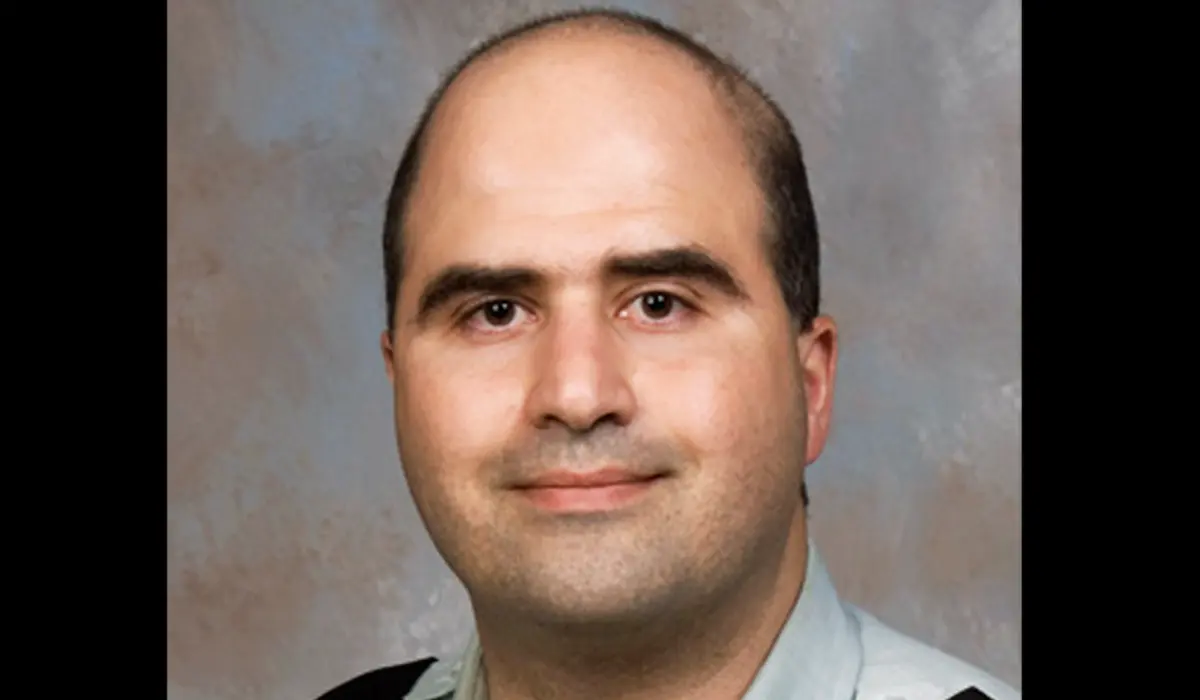
The Pentagon announced on October 9, 2026, that the execution of Nidal Malik Hasan, the former Army psychiatrist responsible for the 2009 Fort Hood shooting, will be carried out by firing squad, will be public, and will be livestreamed. This unprecedented decision marks a significant moment in the history of military justice and capital punishment in the United States. Hasan was convicted of killing 13 people and wounding more than 30 others in a horrific attack at the Texas base. The White House, however, has not yet issued an official confirmation regarding the Pentagon’s comments, leaving a degree of ambiguity surrounding the final approval and specifics of the plan.
The Fort Hood Massacre: A Day of Unspeakable Violence
The events of November 5, 2009, remain etched in the collective memory of the nation and particularly for the military community. On that fateful day, Major Nidal Malik Hasan, a U.S. Army psychiatrist, unleashed a barrage of gunfire on unarmed soldiers and civilians at the Soldier Readiness Processing Center at Fort Hood, Texas. The facility was bustling with service members undergoing medical evaluations and preparations for deployment to Afghanistan and Iraq. Hasan, armed with two handguns, opened fire indiscriminately, targeting those who were about to serve their country.
The attack resulted in the deaths of 13 individuals: 12 active-duty service members and one civilian. Among the fallen were soldiers from various branches, including a pregnant private, Francheska Velez. Over 30 others sustained injuries, many of them severe and life-altering. The chaos lasted approximately 10 minutes before Hasan was shot and paralyzed by civilian police officers, ending his rampage. The incident was immediately classified as a mass shooting, but investigations soon uncovered a more sinister, ideologically driven motive.
Nidal Malik Hasan: A Path to Radicalization
Nidal Malik Hasan’s journey from a promising military doctor to a convicted mass murderer is a complex narrative rooted in ideological extremism. Born in Arlington, Virginia, to Palestinian immigrant parents, Hasan had a seemingly conventional upbringing. He earned a medical degree and entered the Army Medical Corps, eventually specializing in psychiatry. However, signs of his radicalization and mental distress began to surface during his military career.
Colleagues and superiors noted his increasingly strident anti-American and anti-war sentiments, particularly concerning the conflicts in the Middle East. He often expressed views that aligned with radical Islamic ideology, including sympathy for suicide bombers. These concerns, while noted, did not lead to his removal from service or a comprehensive intervention. He was reportedly in contact with Anwar al-Awlaki, a radical Yemeni-American cleric and propagandist for al-Qaeda, through email exchanges. Investigators later determined these communications played a significant role in solidifying Hasan’s extremist views and his resolve to commit violence.
Hasan’s deployment orders to Afghanistan, which were imminent, are believed to have been a significant trigger. He reportedly viewed the deployment as a betrayal of his faith and sought to prevent what he considered a war against Muslims by targeting fellow soldiers. His actions were not a spontaneous outburst but a premeditated act of terror, which he later admitted was an act of "jihad."
The Legal Odyssey: Court-Martial and Appeals
The legal proceedings following the Fort Hood shooting were protracted and highly publicized, reflecting the gravity of the crime and its profound impact. Hasan was charged with 13 counts of premeditated murder and 32 counts of attempted premeditated murder under the Uniform Code of Military Justice (UCMJ).
His court-martial commenced in August 2013 at Fort Hood. Hasan, who had been paralyzed from the chest down since the shooting, largely represented himself during the trial, often making minimal effort to mount a defense. He openly admitted to the killings, stating he was acting as a "mujahid" or holy warrior. His primary objective, it appeared, was to be sentenced to death, which he viewed as a path to martyrdom. Despite being advised by standby counsel, Hasan’s defense strategy was virtually non-existent, focusing instead on justifying his actions through religious interpretation.
On August 23, 2013, a panel of 13 military officers found Nidal Malik Hasan guilty on all counts. Five days later, on August 28, the same panel sentenced him to death by lethal injection, along with a dishonorable discharge, forfeiture of all pay and allowances, and reduction in rank.
The military justice system mandates an automatic appeals process for capital cases. Hasan’s case proceeded through various levels of military courts. The Army Court of Criminal Appeals upheld his conviction and death sentence in 2015. This was followed by an appeal to the U.S. Court of Appeals for the Armed Forces (CAAF), the highest military court, which also affirmed his conviction and sentence in 2020. Further appeals to the U.S. Supreme Court were either rejected or not pursued. The final stage of the military capital appeals process involves a clemency review by the convening authority (typically a general officer) and, ultimately, the President of the United States as Commander-in-Chief. This lengthy process ensures meticulous review, a safeguard against wrongful execution, and has historically contributed to the rarity of military executions.
Military Capital Punishment: A Rare Recourse
Capital punishment within the U.S. military justice system is a rare but constitutionally permissible practice. The UCMJ authorizes the death penalty for specific offenses, including premeditated murder, espionage, and treason, especially during wartime. However, actual executions are exceedingly uncommon. The last military execution took place in 1961, when Private John A. Bennett was hanged for rape and attempted murder. Since then, despite numerous individuals being sentenced to death by courts-martial, no military prisoner has been executed.
As of late 2026, only a handful of individuals remain on the military’s death row, held at the U.S. Disciplinary Barracks at Fort Leavenworth, Kansas. The method of execution for military death row inmates is typically lethal injection, as codified in the Manual for Courts-Martial. However, the UCMJ also allows for other methods, including a firing squad, if lethal injection is deemed unavailable or unconstitutional, or if the condemned specifically requests it and it is approved. Nidal Malik Hasan had, at various points, expressed a preference for execution by firing squad, perhaps aligning with a perception of a more "honorable" or public death in line with his extremist ideology. The Pentagon’s confirmation of the firing squad method suggests that this request has been granted or that the military has deemed it the most appropriate method in this unique circumstance.
The Livestream Decision: Precedent and Ethical Quandaries
The Pentagon’s announcement of a public and livestreamed execution for Nidal Malik Hasan introduces an unprecedented dimension to capital punishment in the United States. While executions have historically been public spectacles in various societies, modern U.S. practice limits attendance to official witnesses, victim families, and media representatives. Livestreaming, in particular, has never been utilized for a U.S. execution, military or civilian.
The rationale behind such a decision is likely multifaceted. For the victims and their families, it could offer a degree of transparency and a final, undeniable sense of justice and closure. For the military, it might be perceived as a powerful statement against internal threats, a reinforcement of discipline, and a demonstration of accountability within its ranks. It could also serve as a deterrent, though the efficacy of capital punishment as a deterrent remains a contentious debate.
However, the decision immediately ignites a fierce ethical debate. Critics argue that livestreaming an execution risks turning a solemn act of justice into a public spectacle, potentially desensitizing viewers to violence or even inadvertently glorifying the condemned, particularly if Hasan were to attempt to use his final moments to propagate his extremist views. Human rights organizations are likely to vehemently oppose the move, condemning capital punishment in general and highlighting the perceived barbarity of a public, livestreamed execution. Concerns about the psychological impact on viewers, the potential for extremist groups to exploit the footage, and the dignity of the condemned (even a mass murderer) are paramount in these discussions.
Legal experts will scrutinize the legality and constitutionality of livestreaming an execution, particularly in relation to the Eighth Amendment’s prohibition against cruel and unusual punishment. While the method of execution itself might be deemed constitutional, the public spectacle aspect could open new legal challenges.
Reactions and Perspectives
The Pentagon’s announcement, even without White House confirmation, is expected to elicit a broad spectrum of reactions from various stakeholders:
- Victims’ Families: For the families of the 13 individuals killed and the dozens wounded, the news will undoubtedly bring a complex mix of emotions. Many will likely express relief and a sense of long-awaited justice, believing that Hasan is finally facing the ultimate consequence for his heinous acts. The transparency of a livestream might be welcomed by some seeking definitive closure. However, others may find the public nature of the execution distressing, reopening old wounds and potentially detracting from the dignity of their loved ones.
- Military Officials: The U.S. military leadership is expected to emphasize the rigorous adherence to the rule of law and the sanctity of the military justice system. They will likely frame the execution as a necessary step to uphold military discipline, honor the fallen, and demonstrate that acts of terror from within the ranks will not be tolerated. The decision to livestream might be presented as a measure of ultimate transparency and accountability.
- Legal Scholars and Civil Liberties Advocates: Legal scholars will dissect the precedent-setting nature of the livestreamed execution, debating its constitutional implications and its impact on the future of capital punishment. Civil liberties and human rights organizations, such as the American Civil Liberties Union (ACLU) and Amnesty International, are almost certain to issue strong condemnations. They will reiterate their opposition to the death penalty, regardless of the crime, and argue that a public, livestreamed execution is an affront to human dignity and risks creating a macabre spectacle.
- Public Opinion: Public reaction is anticipated to be deeply divided. A significant portion of the public, particularly those who remember the horror of the Fort Hood shooting, may support the decision, viewing it as a fitting punishment for a terrorist who targeted fellow service members. Others, however, will express moral objections to capital punishment, the use of a firing squad, and especially the livestreaming of the event, considering it barbaric and antithetical to modern values.
Broader Implications and Future Outlook
The execution of Nidal Malik Hasan, particularly under the announced conditions, carries profound implications across several domains:
- Military Justice and Accountability: The case of Nidal Malik Hasan has already spurred significant introspection within the military regarding the identification and mitigation of insider threats and radicalization within its ranks. His execution, if carried out as described, would underscore the military’s commitment to holding its own personnel accountable, even to the fullest extent of the law, for acts of treason or terror. It also signals the military’s willingness to exercise its unique authority regarding capital punishment after decades of dormancy.
- Transparency vs. Spectacle: The livestream decision will force a national conversation about the boundaries of transparency in justice. While open courts and public records are cornerstones of democratic legal systems, the public display of an execution ventures into uncharted territory for modern America. It raises questions about the role of media, the potential for desensitization, and whether such an event can truly serve justice without descending into sensationalism.
- Ethical and Moral Debates: The execution will undoubtedly reignite the broader debate surrounding capital punishment in the United States. Opponents will seize on the case to highlight what they perceive as the inherent cruelty of state-sanctioned killing, while proponents will argue for its necessity as a just retribution for heinous crimes. The firing squad method, in particular, adds another layer to this ethical discussion, as it is often viewed as a more visceral and archaic form of execution compared to lethal injection.
- National Security Landscape: Hasan’s attack was a stark reminder of the threat of homegrown extremism and radicalization within the military. While many reforms have been implemented since 2009, the final act of justice in his case will serve as a permanent reminder of the vigilance required to protect national security from internal threats.
As October 9, 2026, unfolds, the world awaits further details and, crucially, White House confirmation of the Pentagon’s announcement. The execution of Nidal Malik Hasan, nearly two decades after his horrific crime, is poised to be a defining moment in American military and legal history, challenging societal norms and sparking intense debate about justice, punishment, and public accountability in the digital age.
