

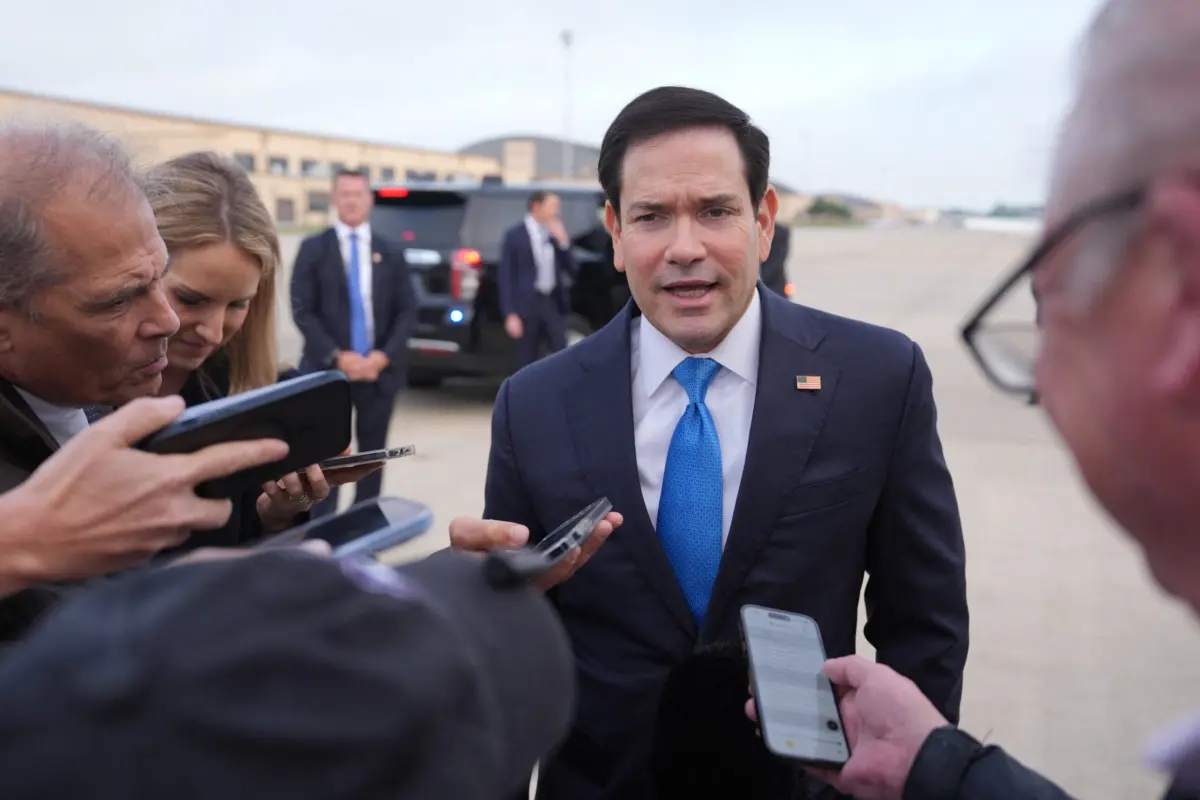
United States Secretary of State Marco Rubio has commenced a pivotal four-day diplomatic tour across Europe, with his arrival in Reykjavik, Iceland, marking the initial engagement. The high-stakes itinerary is set to navigate through crucial bilateral and multilateral discussions, addressing a spectrum of economic and security challenges, and aims to reinforce transatlantic alliances. Following his engagements in the North Atlantic nation, Secretary Rubio is scheduled to proceed to Greece for the sixth US-Greece Strategic Dialogue, culminating his tour in Lisbon, Portugal, for further discussions on defense, economic, and technological cooperation. This diplomatic offensive unfolds against a backdrop of complex geopolitical dynamics, notably the ongoing tensions with Iran and recent security incidents affecting US assets abroad.
A Diplomatic Odyssey Begins in Reykjavik
Secretary Rubio’s visit to Iceland underscores the increasing strategic importance of the Arctic region and the enduring partnership between the United States and this North Atlantic ally. Upon his arrival in Reykjavik on Monday, "economic and security collaboration" were prominently highlighted as the primary agenda items for his talks with Icelandic officials, according to an official statement released by the Department of State. These discussions are expected to delve into a range of critical issues, including Arctic security, which has gained significant traction due to the impacts of climate change opening new shipping lanes and increasing geopolitical interest from various global powers, including Russia and China.
Iceland, a crucial NATO member despite lacking a standing army, plays a vital role in transatlantic security through its geographical position, acting as a critical surveillance and defense hub in the Greenland-Iceland-UK (GIUK) gap. This strategic choke point is essential for monitoring maritime traffic in the North Atlantic. Discussions in Reykjavik are anticipated to cover enhanced intelligence sharing, collaborative efforts in maritime security, and contributions to NATO’s collective defense posture. Economically, the dialogue is likely to explore avenues for increased trade, investment in renewable energy technologies where Iceland is a global leader, and cooperation in sustainable development, reflecting shared values and interests. The historical context of the US military presence at Naval Air Station Keflavik, though significantly reduced from its Cold War peak, remains a pertinent backdrop to ongoing security discussions, emphasizing the long-standing defense relationship.
The Shadow of Fairford: Disentangling Security Incidents and Strategic Deployments
A significant undercurrent to Secretary Rubio’s European tour, particularly prior to his departure, has been the recent security incident near RAF Fairford in the United Kingdom and the subsequent withdrawal of US B-1B Lancer bombers from the base. Addressing reporters ahead of his flight, Rubio unequivocally stated that he would not "directly tie" the United States’ decision to remove its B-1 bombers from the British base of Fairford to the incident that occurred last week. "I wouldn’t just directly tie that to the move that was made," Rubio reiterated, explaining that "the Department of War [Department of Defense] is constantly reallocating resources where they need to be." He further asserted confidence in the security of all US bases and extended praise for the cooperation demonstrated by United Kingdom authorities in the aftermath of the arrests.
The RAF Fairford Incident: A Chronology of Events
The incident in question, which has drawn considerable international attention, involved the arrest of five British men near the British airbase at Fairford. These individuals were apprehended on suspicion of preparing "terrorist acts" and were subsequently released on bail. In a related development, a sixth man, identified as a dual UK-Iranian national, was separately arrested in London and has also since been released on bail. The nature and specific targets of the alleged "terrorist acts" have not been publicly detailed, but the proximity to a critical US military installation raised immediate concerns.
The RAF Fairford base has long served as a forward operating location for US strategic bombers, playing a pivotal role in projecting American air power globally. The B-1B Lancer bombers, which were stationed at Fairford and have now been returned to the US, had been actively involved in operations, specifically having been used for strikes on Iran in previous periods of heightened tension. Their deployment to European bases like Fairford is a routine part of US Air Force Global Strike Command’s "Dynamic Force Employment" model, designed to demonstrate strategic flexibility and readiness across various theaters.
The B-1B Lancer: A Key Asset in Global Power Projection
The B-1B Lancer, often referred to as the "Bone," is a supersonic variable-sweep wing heavy bomber, forming a critical component of the United States Air Force’s long-range strike capabilities. Capable of carrying a substantial payload of conventional weapons, including precision-guided munitions and joint air-to-surface standoff missiles (JASSM), the B-1B is designed for rapid global deployment and sustained operations. Its presence at RAF Fairford in Gloucestershire, England, underscores the base’s strategic importance as a hub for US air operations in Europe and beyond, offering geographical advantages for reach into the Middle East and parts of Africa. The deployment of such high-value assets to forward bases is a clear signal of US commitment to regional security and its ability to project power swiftly. The decision to withdraw these assets, even if officially attributed to routine reallocation, inevitably invites scrutiny and speculation, particularly given the concurrent security incident and the broader geopolitical climate.
US Military Doctrine: Dynamic Force Employment and Resource Reallocation
Rubio’s reference to the "Department of War [Department of Defense] constantly reallocating resources" points to the Pentagon’s evolving military doctrine, particularly the concept of Dynamic Force Employment (DFE). DFE emphasizes unpredictability, strategic flexibility, and the ability to rapidly deploy and redeploy forces globally in response to emerging threats or shifting strategic priorities, rather than maintaining static, fixed presences. This approach aims to complicate potential adversaries’ planning and maximize the impact of available resources. While the official stance frames the B-1B withdrawal within this doctrine, the timing, immediately following a serious security alert, ensures that external observers will inevitably draw connections, regardless of official denials. The military’s constant assessment of threats and resource needs involves a complex calculus of operational requirements, maintenance cycles, and the current geopolitical landscape.
The Geopolitical Chessboard: US-Iran Tensions and European Security
The incident near RAF Fairford cannot be fully understood without acknowledging the persistent and often volatile tensions between the United States and Iran. A NATO military source, speaking anonymously due to the sensitivity of the information, had reportedly stated: "It is still believed that Iran poses an acute threat to US assets in the UK." This assessment starkly contrasts with Rubio’s efforts to decouple the B-1 withdrawal from the specific incident, highlighting a potential divergence in public messaging versus intelligence community assessments.
Iran’s Revolutionary Guards, a powerful paramilitary organization designated as a terrorist entity by the US, has a history of issuing stark warnings and threats against US military interests globally. They had previously explicitly stated that the Fairford base was a "legitimate target." While Tehran, the capital of Iran, swiftly denied any links to last week’s incident and the arrests, the historical context of these threats and the ongoing shadow war between the two nations add a layer of complexity and concern to any security breach near a US installation. This backdrop includes numerous incidents of maritime harassment in the Persian Gulf, drone shoot-downs, and suspected attacks on oil infrastructure, all contributing to a climate of heightened alert for US forces worldwide.
Strengthening Alliances: The Greek Leg of the Tour
Following his engagements in Iceland, Secretary Rubio will travel to Greece to lead the US delegation for the sixth US-Greece Strategic Dialogue. This annual high-level forum is a testament to the strengthening strategic partnership between Washington and Athens, focusing on a broad range of issues critical to regional stability and bilateral cooperation. The agenda for this year’s dialogue is particularly concentrated on defense cooperation, regional and energy security.
Greece, a pivotal NATO ally and a key player in the Eastern Mediterranean, has seen its strategic importance grow in recent years. Defense cooperation with the US has expanded significantly, evidenced by increased joint military exercises, the upgrading of Greek military capabilities with US assistance, and the continued strategic access afforded to US forces at facilities like Souda Bay in Crete. Discussions are expected to cover mutual defense commitments, counter-terrorism efforts, and enhancing interoperability between the two militaries.
Furthermore, regional security in the Eastern Mediterranean remains a complex and often volatile arena, marked by geopolitical competition, maritime disputes, and migration challenges. The dialogue will likely address collaborative efforts to promote stability, de-escalate tensions, and support democratic processes in the wider region. Energy security is another crucial component, with Greece positioning itself as an emerging energy hub, facilitating the diversification of European energy supplies away from over-reliance on single sources, particularly through projects involving natural gas and renewable energy infrastructure. This aligns with broader US and European objectives to enhance energy independence and resilience.
Forging Future Partnerships: Portugal as the Final Stop
Secretary Rubio’s European tour will conclude in Lisbon, Portugal, where he will engage in discussions focusing on defense, economic, and technology cooperation. Portugal, another long-standing NATO ally, maintains a crucial role in transatlantic security and a deep historical and cultural bond with the United States.
Defense cooperation between the US and Portugal is primarily anchored by the Lajes Field air base in the Azores, which serves as a strategic mid-Atlantic hub for air transport and maritime surveillance, supporting US and NATO operations across the Atlantic and into Europe, Africa, and the Middle East. Discussions in Lisbon are expected to explore ways to further enhance military interoperability, expand joint training opportunities, and address shared security challenges, including cybersecurity and maritime security in the Atlantic.
Economically, the US is a significant trading partner and investor in Portugal. The dialogue will likely seek to identify new avenues for increasing bilateral trade and investment, particularly in emerging sectors. Technology cooperation is also expected to feature prominently, reflecting a global trend towards leveraging technological innovation for economic growth and national security. This could involve partnerships in areas such as digital infrastructure, artificial intelligence, and cybersecurity, aiming to foster innovation ecosystems and strengthen supply chain resilience.
Implications for Transatlantic Security and Global Strategy
Secretary Rubio’s multi-nation tour, set against the backdrop of the Fairford incident and ongoing US-Iran tensions, carries significant implications for transatlantic security and broader US global strategy. The careful messaging regarding the B-1B withdrawal attempts to manage perceptions of vulnerability while maintaining strategic flexibility. However, the NATO source’s assertion of a continued "acute threat" from Iran underscores the persistent challenges in balancing deterrence with de-escalation.
The evolving nature of US force posture, moving towards more dynamic deployments, reflects a strategic shift from large, permanent bases to a more agile and responsive global presence. This strategy aims to enhance readiness and unpredictability but also necessitates robust intelligence and counter-terrorism cooperation with host nations, as highlighted by the Fairford arrests.
The engagements in Iceland, Greece, and Portugal collectively emphasize the US commitment to reinforcing its alliance network in Europe, a cornerstone of its foreign policy. These alliances are crucial for addressing a myriad of contemporary challenges, from conventional military threats and regional instability to cyber warfare, energy security, and the strategic competition in the Arctic. The US approach seeks to leverage these partnerships to project stability, counter malign influences, and advance shared democratic values and economic interests across a complex geopolitical landscape.
Conclusion: Navigating Complex Geopolitical Landscapes
Secretary Rubio’s European tour represents a critical diplomatic effort to solidify alliances, address pressing security concerns, and advance US strategic interests in a period of significant global flux. While the public narrative meticulously separates routine military adjustments from specific security incidents, the underlying geopolitical realities of persistent threats and strategic competition remain undeniable. The success of this tour will be measured not only by the immediate outcomes of bilateral discussions but also by its contribution to a more coherent and resilient transatlantic framework capable of navigating the complex challenges that define the current international order. The ongoing balancing act between maintaining robust defense capabilities and preventing escalation, particularly with adversaries like Iran, will continue to shape US foreign and defense policy for the foreseeable future.
