

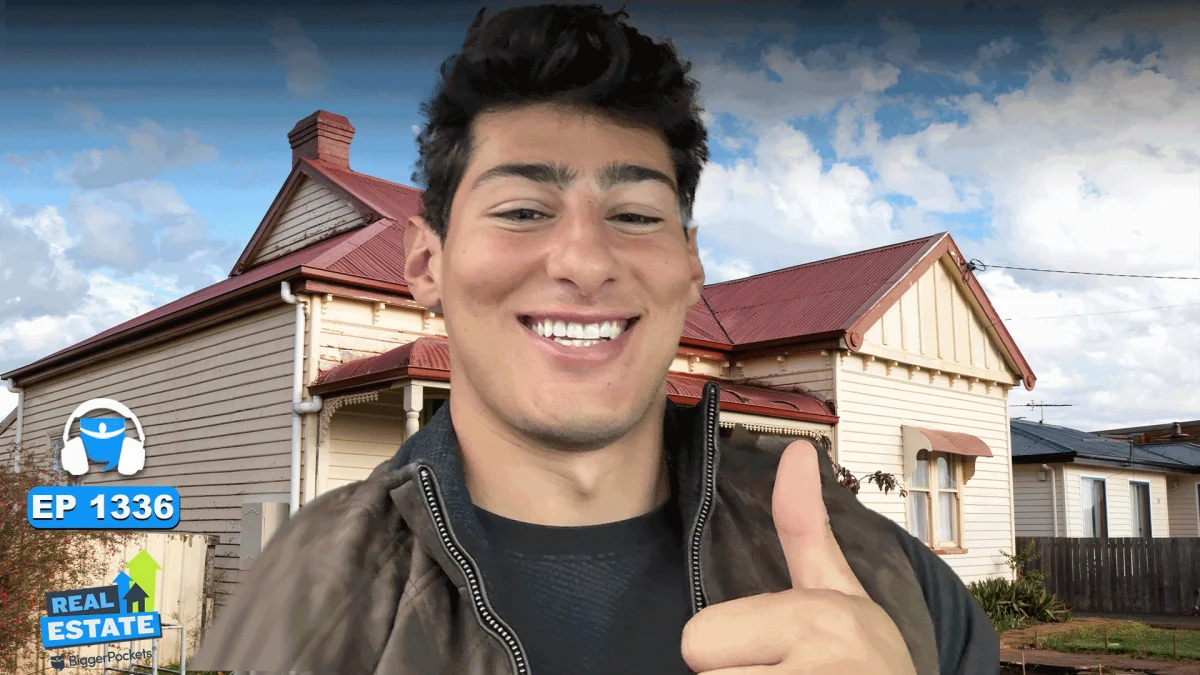
The trajectory of Lawrence Guerguis’s professional life underwent a radical shift during his junior year of college, moving away from a projected 40-year career in high-stakes finance toward a specialized niche in residential real estate. Known online as "Landlord Larry," Guerguis has successfully amassed a portfolio of 40 rental properties within a three-year window, generating substantial monthly cash flow and achieving a level of financial independence that typically takes decades to secure. His strategy, which prioritizes Midwest affordability and government-subsidized rental programs, offers a case study in modern asset acquisition and the utilization of non-traditional financing.
The Catalyst: A Shift in Financial Philosophy
While attending college in San Diego, Guerguis originally intended to pursue a career in investment banking. This path, often characterized by high compensation but extreme labor demands, was his primary focus until a chance encounter with a veteran in the field provided a sobering perspective. During a conversation at a local establishment, the banker revealed the personal toll of his profession, noting that despite his high income, he was limited to only two weeks of vacation per year and lacked the time to enjoy his wealth.
This interaction prompted Guerguis to reconsider the value of "time freedom" versus "nominal wealth." He concluded that the traditional finance route required a level of devotion to money that he did not possess. Consequently, he shifted his focus toward real estate—a sector he identified as a vehicle for building passive income and reclaiming control over his schedule.
The Initial Venture: The Peoria Duplex
Lacking the capital required for the high-priced California real estate market, Guerguis began searching for entry-level opportunities in the Midwest. His first significant financial move involved selling his personal vehicle for approximately $16,000 to fund a down payment.
Using digital platforms like Zillow and Redfin, he filtered for properties with a maximum purchase price of $70,000. This search led him to Peoria, Illinois, where he identified a duplex priced at $65,000. Operating entirely from California, Guerguis utilized social media groups to hire a local handyman to conduct a visual inspection of the property.
To finance the acquisition, he bypassed traditional bank loans, which typically require a W-2 income history that he lacked as a student. Instead, he secured a Debt Service Coverage Ratio (DSCR) loan. These loans are specifically designed for investors, as they qualify the borrower based on the projected rental income of the property rather than personal employment history. Guerguis closed the deal with a $15,300 down payment, establishing a proof of concept that would serve as the foundation for his future scaling.
Strategic Integration of Section 8 Housing
A pivotal component of Guerguis’s success is his heavy reliance on the Section 8 Housing Choice Voucher program. This federal program, overseen by the U.S. Department of Housing and Urban Development (HUD), provides rental assistance to low-income families, the elderly, and the disabled. For landlords, the program offers a high degree of financial security, as the government guarantees a significant portion of the monthly rent.
In his first Peoria deal, Guerguis secured a tenant whose income was low enough that the government covered 100% of the rent. With a mortgage payment of roughly $480 and a monthly rental income of $1,400, the property produced immediate and significant cash flow. This success reinforced his strategy: acquiring low-cost properties in markets where the Fair Market Rent (FMR) set by HUD provides a high yield relative to the purchase price.
Portfolio Expansion and the Move to Cleveland
Following his graduation, Guerguis moved from Southern California to Cleveland, Ohio, a city he identified as one of the most viable markets for Section 8 investing. Cleveland’s real estate landscape is characterized by an abundance of single-family homes at price points significantly lower than the national average, coupled with a robust demand for affordable housing.
Before moving, Guerguis conducted extensive market research, contacting dozens of listing agents to request video tours and mechanical assessments of properties. This "boots-on-the-ground" approach allowed him to identify reliable partners and understand the nuances of various Cleveland neighborhoods.
Upon arrival in July 2024, he executed an aggressive acquisition strategy, purchasing six properties within his first six months in the city. His portfolio grew to include 40 properties, primarily single-family homes, spread across Cleveland and St. Louis, Missouri. By focusing on three-bedroom and four-bedroom units, Guerguis tapped into a high-demand segment for families utilizing housing vouchers.
Financing and Capital Partnerships
A significant challenge for any rapid-scale investor is the exhaustion of personal capital. To maintain his momentum, Guerguis sought out private equity through unconventional channels. He utilized Discord, a digital communication platform popular among cryptocurrency investors, to pitch his real estate model.
He successfully partnered with a younger investor who had accumulated wealth in the crypto market but sought to diversify into tangible, cash-flowing assets. This partnership allowed Guerguis to fund down payments for his early Cleveland acquisitions. The agreement involved a split of equity and cash flow, which Guerguis eventually bought out as his portfolio’s revenue matured. This transition from partnered growth to sole ownership allowed him to reinvest 100% of his profits into further acquisitions.
Market Context and Economic Implications
Guerguis’s success reflects broader trends in the U.S. housing market, particularly the "Rust Belt" revitalization and the rise of out-of-state investing. Cities like Cleveland and St. Louis have become magnets for investors from high-cost coastal areas seeking higher "cap rates"—the ratio of a property’s net operating income to its purchase price.
According to data from various real estate analytics firms, Cleveland has consistently ranked as one of the top markets for rental yields. The affordability of the housing stock allows investors to enter the market with relatively low capital, while the government-backed rents of the Section 8 program provide a hedge against economic volatility and tenant default.
However, this trend has also sparked debate regarding the impact of out-of-state investors on local housing markets. Critics argue that large-scale acquisitions by investors can drive up prices for local first-time homebuyers. Conversely, proponents suggest that investors like Guerguis provide essential renovations to aging housing stock and increase the availability of high-quality, managed affordable housing.
The Role of Social Media in Modern Real Estate
Guerguis has leveraged his "Landlord Larry" persona on Instagram and TikTok to build a brand that serves both as an educational platform and a networking tool. By sharing transparent data, including bank statements, rent amounts, and renovation costs, he has cultivated a following that provides him with access to off-market deals and a steady stream of private lending inquiries.
In an era where "finfluencers" often face scrutiny for lack of substance, Guerguis emphasizes the "boring" aspects of the business: the numbers, the legal contracts, and the mechanical inspections. He posits that while real estate is a high-ticket career, the education required to navigate it is accessible to anyone willing to treat it as a formal discipline.
Future Outlook and Strategic Goals
As of late 2024, Guerguis continues to expand his holdings, with a focus on maximizing the efficiency of his existing portfolio through rent increases and professional management. His long-term vision includes potentially returning to the academic world as a professor to teach real estate investment, sharing the practical knowledge he gained in the field.
His journey from a college student selling his car to a portfolio owner of 40 properties illustrates a significant shift in the "American Dream." For Guerguis and a growing cohort of Gen Z investors, the goal is no longer a corner office on Wall Street, but rather a diversified portfolio of Midwest rentals that provide the ultimate luxury: the ability to own one’s time.
Analysis of the "Landlord Larry" Model
The Guerguis model is built on three pillars:
- Arbitrage of Geography: Earning income in high-yield, low-cost markets while maintaining the lifestyle flexibility of a modern entrepreneur.
- Risk Mitigation via Government Programs: Utilizing Section 8 to ensure consistent revenue, even during periods of broader economic instability.
- Leverage of Non-Traditional Capital: Using DSCR loans and private partnerships to scale beyond the limits of personal savings and traditional W-2 requirements.
While the rapid acquisition of 40 properties involves inherent risks—including management overhead and the maintenance requirements of older Midwest homes—Guerguis’s focus on mechanical integrity over cosmetic appeal has positioned his portfolio for long-term durability. His story serves as a contemporary blueprint for navigating the complexities of the 21st-century real estate market.
