

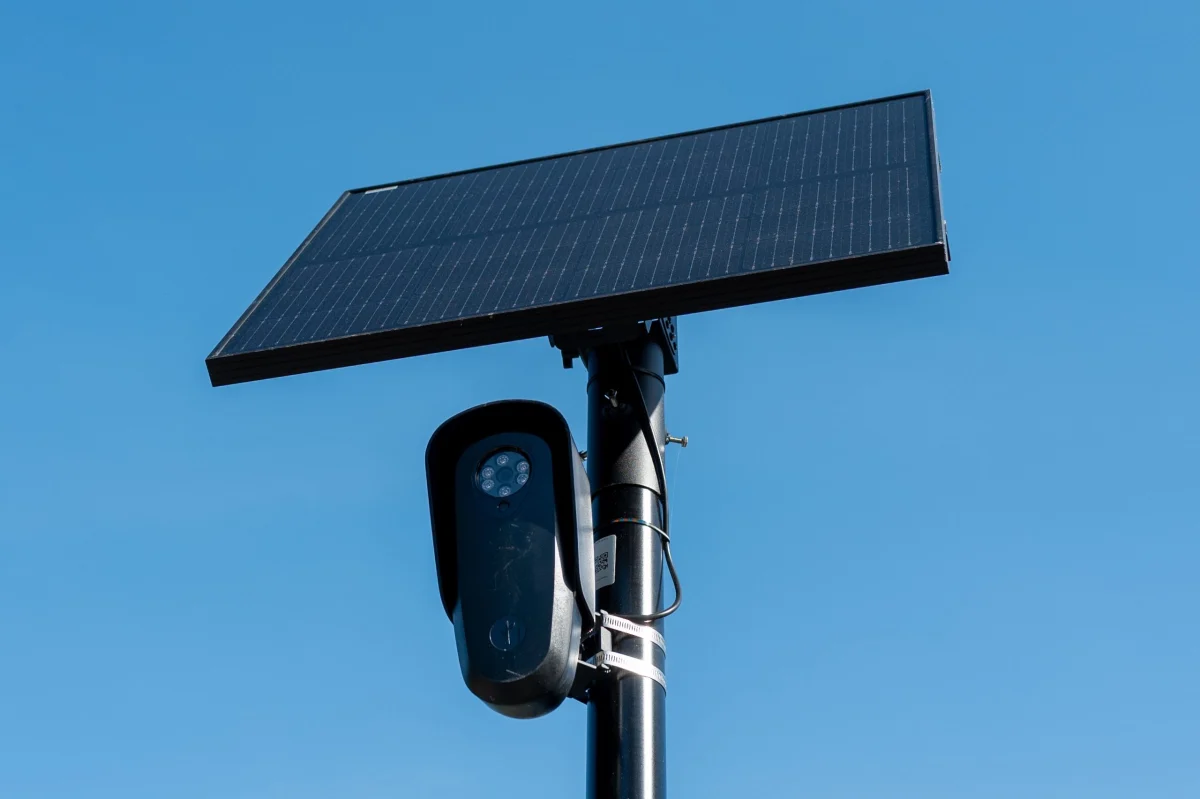
A federal judge in Oklahoma has issued a landmark ruling declaring that a Tulsa County Sheriff’s deputy violated a citizen’s Fourth Amendment rights by using the Flock Safety license plate reader database to conduct a warrantless search of her travel history. While the decision by U.S. District Judge Sara Hill does not establish a binding legal precedent for all federal courts, it marks one of the first significant judicial rebukes of the widespread, "indiscriminate" surveillance practices facilitated by the rapidly growing network of automated license plate readers (ALPRs). The ruling has sent shockwaves through the law enforcement community and the surveillance technology industry, raising fundamental questions about the balance between public safety and the constitutional right to privacy in an era of ubiquitous digital tracking.
The case centered on a specific incident in which a deputy utilized the Flock Safety system—a private network of high-speed cameras that capture and catalog license plates, vehicle makes, models, and colors—to track a woman’s movements across the country. According to court documents, the deputy had no probable cause or reasonable suspicion to investigate the woman other than the observation that her vehicle bore a California license plate while traveling through Oklahoma. Based on this observation alone, the deputy accessed the Flock database to review her historical travel patterns. This data was subsequently used to justify a roadside stop and a subsequent search of her vehicle, which allegedly uncovered 91 pounds of methamphetamine.
Despite the discovery of the illicit substances, Judge Hill ruled that the initial search of the Flock database was unconstitutional. Consequently, all evidence obtained following that search, including the seized narcotics, was ordered suppressed under the legal doctrine known as the "fruit of the poisonous tree." This doctrine dictates that evidence obtained through illegal government actions—such as a warrantless search—is inadmissible in court.
The Mechanics of the Ruling and the "Indiscriminate" Nature of ALPRs
In her written opinion, Judge Hill articulated a robust defense of privacy rights in public spaces. She emphasized that while individuals are visible when driving on public roads, the ability of the government to passively and retrospectively catalog their every movement over extended periods constitutes a profound shift in the nature of policing. The judge noted that the deputy had "no apparent reason" for the search, highlighting a lack of traditional investigative leads that would typically necessitate such a deep dive into an individual’s personal history.
The ruling specifically addressed the technological capabilities of Flock Safety. Unlike traditional police work, which might involve a tailing a specific suspect based on a lead, the Flock system operates by recording every vehicle that passes its sensors, regardless of any suspected criminal activity. This information is then stored in a searchable database accessible to thousands of law enforcement agencies. Judge Hill characterized this as a form of "indiscriminate mass surveillance," distinguishing it from targeted investigations.
She drew a parallel to the Supreme Court’s 2018 decision in Carpenter v. United States, which established that the government generally needs a warrant to access historical cell site location information (CSLI). In Carpenter, the court argued that because cell phones provide an intimate window into a person’s life and movements, they are protected by the Fourth Amendment. Judge Hill applied similar logic to the Flock system, noting that it allows law enforcement to "indiscriminately and passively catalog your whereabouts over an extended period of time and then use that information for any purpose whenever convenient."
Background Context: The Rise of Flock Safety
Flock Safety, a startup based in Atlanta, has experienced meteoric growth over the last five years. Its technology is currently utilized by more than 5,000 law enforcement agencies across the United States, as well as thousands of private homeowners’ associations (HOAs) and businesses. The company’s value proposition is built on the "Flock Safety Eagle" and "Falcon" cameras, which are designed to capture "objective evidence" to help solve crimes such as carjackings, amber alerts, and organized retail theft.
The company claims its technology helps solve upwards of 10% of all reported crime in the U.S. by providing police with actionable leads. However, the system’s architecture has long been a point of contention for civil liberties advocates. The "Transparency Portal" offered by Flock is intended to show the public how the cameras are used, but critics argue that the sheer scale of the network—which captures billions of images monthly—creates a "dragnet" that treats every citizen as a potential suspect.
The Oklahoma ruling highlights the specific concern regarding "Hot Lists" and historical searches. While Flock is often marketed as a tool to catch stolen cars in real-time, the database also allows officers to perform "fingerprint" searches, looking for vehicles based on specific traits or searching for the history of where a specific plate has been seen over the previous 30 days.
Chronology of Growing Resistance and Legislative Action
The ruling in Oklahoma arrives amidst a broader national pushback against ALPR technology. Over the past year, the momentum has shifted from rapid adoption to increased scrutiny and, in some cases, outright bans.
- Early 2024: Privacy advocacy groups, including the ACLU and the Electronic Frontier Foundation (EFF), intensified their litigation efforts against cities using Flock without clear data-retention policies or warrant requirements.
- Summer 2024: Major states began to reconsider their relationship with the technology. In Florida and Texas, several local governments moved to block or dismantle Flock camera networks, citing concerns over data security and the potential for federal overreach.
- August 2024: Flock Safety CEO Garrett Langley acknowledged public concerns during a series of interviews, calling for a "compromise" between the needs of law enforcement and the privacy expectations of the public. He also issued an apology regarding instances where the technology was allegedly used by rogue officers to stalk individuals, including ex-partners.
- September 2024: Reports surfaced that Flock Safety was attempting to reduce its workforce through voluntary employee buyouts. Analysts suggested this was a strategic move to lean out operations as the company faced increasing legal hurdles and a potential slowdown in municipal contracts.
- October 2024: Senator Bernie Sanders (I-VT) introduced the "Block Flock Act" in the U.S. Senate. This proposed legislation seeks to prohibit federal agencies from using automated license plate readers and would restrict federal grant money from being used by local police departments to purchase such systems unless strict privacy safeguards and warrant requirements are met.
Statements and Reactions from Key Stakeholders
The legal community has reacted to Judge Hill’s ruling with a mix of caution and validation. Privacy experts argue that the decision is a necessary "course correction" for a technology that evolved faster than the laws governing it.
"This ruling sends a clear message that the Fourth Amendment does not vanish simply because technology makes surveillance easier and cheaper," said a spokesperson for a prominent digital rights non-profit. "The court correctly identified that the retrospective search of a person’s entire travel history is a search of their private life, requiring judicial oversight."
Law enforcement advocates, however, express concern that the ruling could hamper investigations. Supporters of ALPR technology argue that license plates are public identifiers and that there should be no expectation of privacy regarding where a vehicle is driven on public thoroughfares. They contend that requiring a warrant for every database query would create a bottleneck that could allow dangerous criminals to escape detection.
Flock Safety has remained relatively quiet regarding the specific Oklahoma case but has reiterated its commitment to working within legal frameworks. In a general statement, the company noted that it provides tools for agencies to implement their own "transparency and audit" policies, placing the onus on law enforcement to use the technology ethically and legally.
Analysis of Implications: A Turning Point for Surveillance?
The Oklahoma ruling is significant not because it changes the law nationwide, but because it provides a judicial roadmap for future challenges. Defense attorneys across the country are likely to cite Judge Hill’s reasoning when moving to suppress evidence in cases where ALPR data played a central role in an arrest.
If more judges adopt this view, the business model for companies like Flock Safety could be fundamentally altered. If a warrant becomes a standard requirement for accessing historical ALPR data, the "on-demand" nature of the service—one of its primary selling points—would be diminished. This could lead to a decrease in demand from cash-strapped police departments that may not have the resources to process warrants for routine investigative queries.
Furthermore, the ruling adds significant weight to Senator Sanders’ legislative efforts. By having a federal judge describe the technology as "indiscriminate mass surveillance," proponents of the Block Flock Act can argue that their concerns are not merely theoretical but are recognized by the judiciary.
As the case moves forward and potentially faces appeals, the central question remains: Can a society maintain the benefits of high-tech policing without sacrificing the fundamental right to move freely without the government maintaining a permanent record of every journey? For now, the court in Oklahoma has signaled that the current trajectory of warrantless, ubiquitous license plate tracking has overstepped its constitutional bounds. The "fruit of the poisonous tree" in this instance was 91 pounds of drugs, but the broader cost, according to the court, was the erosion of the Fourth Amendment.
