

The Korogi Athletic Park in Nisshin, Japan, is currently the epicentre of cricketing fervour as arch-rivals India and Pakistan face off in the highly anticipated gold medal match of the 2026 Asian Games men’s cricket tournament. With India having posted a challenging total of 211 runs, Pakistan is now tasked with chasing down 212 to secure the coveted gold, a target that promises a thrilling conclusion to an already captivating tournament. This showdown not only represents a battle for continental supremacy in cricket but also rekindles one of the sport’s most intense and storied rivalries on a global multi-sport stage.
The Asian Games 2026: Cricket’s Grand Return and Global Ambitions
The 2026 Asian Games, hosted across Aichi Prefecture and Nagoya in Japan, has once again brought cricket into the fold of major multi-sport events, reaffirming its growing appeal and the Olympic Council of Asia’s commitment to diverse sporting representation. Cricket’s inclusion, specifically in the fast-paced Twenty20 (T20) format, is a strategic move aimed at attracting a broader audience and potentially paving the way for its inclusion in future Olympic Games. The T20 format, known for its dynamic play, high scores, and dramatic finishes, is particularly suited for such multi-sport events due to its shorter duration compared to One-Day Internationals (ODIs) or Test matches. Previous editions of the Asian Games in Guangzhou (2010), Incheon (2014), and Hangzhou (2022) have featured cricket, with varying levels of participation from top-tier national teams. The 2026 edition in Japan marks a significant step, especially with both India and Pakistan committing their full-strength or strong developmental squads, underscoring the prestige associated with an Asian Games gold medal. For Japan, a nation traditionally less associated with cricket, hosting such a high-profile final is a monumental opportunity to popularize the sport and showcase its organizational capabilities on an international platform.
A Rivalry Etched in History: India vs. Pakistan
The cricketing encounter between India and Pakistan transcends mere sport; it is a cultural phenomenon, a reflection of deep-seated national pride and a historical narrative that captivates billions. Due to complex geopolitical reasons, bilateral cricketing ties between the two nations have been severely limited for over a decade, making their clashes in multi-national tournaments like the Asian Games, World Cups, and Asia Cups incredibly rare and immensely significant. Each match is imbued with an unparalleled intensity, drawing massive viewership and generating fervent discussions across continents. From the iconic encounters in the early days of cricket to the modern T20 era, these matches have consistently delivered unforgettable moments, dramatic comebacks, and displays of extraordinary skill. The 2026 Asian Games final adds another chapter to this legendary rivalry, with the added incentive of an Asian Games gold medal, a prize that holds immense value for both national sporting bodies and the respective governments. The atmosphere at Korogi Athletic Park is electric, palpable with the hopes and expectations of millions of fans tuned in globally.
The Road to the Final: A Tale of Dominance and Determination
Both India and Pakistan navigated challenging paths to reach this pinnacle, demonstrating superior skill, strategic acumen, and mental fortitude throughout the tournament.
India’s Unbeaten March:
The Indian contingent, often fielding a blend of established stars and promising young talent in multi-sport events, displayed formidable strength from the outset. Their campaign began with comprehensive victories in the group stages, where they often restricted opponents to low totals or chased down targets with ease. Key performances came from their top-order batsmen, who consistently provided explosive starts, and their spin contingent, which expertly stifled opposition scoring rates in the middle overs. In the quarter-finals, India overcame a spirited challenge from a determined Sri Lankan side, largely thanks to a brilliant all-round performance from their captain. The semi-final saw them dismantle a resilient Bangladesh team, with the likes of Tilak Varma and Shivam Dube playing crucial roles in setting competitive totals and then defending them with disciplined bowling. Varma, in particular, has been a revelation throughout the tournament, showcasing his aggressive yet composed batting style, while Dube’s power-hitting and medium-pace bowling have provided vital balance. Their consistent form and collective team effort ensured an unbeaten run to the final, setting them up as strong contenders for the gold.
Pakistan’s Resilient Journey:
Pakistan, known for its unpredictable yet supremely talented cricketing prowess, also demonstrated its mettle en route to the final. Their journey was characterized by strong bowling performances and an ability to recover from challenging situations. After securing comfortable wins in their group, Pakistan faced a stern test against Afghanistan in the quarter-finals, a match that went down to the wire and showcased Pakistan’s composure under pressure. Their pace attack, a traditional strength, consistently troubled opposition batsmen, picking up crucial wickets at key moments. In the semi-finals, they faced a well-organized Nepal team, overcoming a strong batting display with a disciplined chase, guided by experienced campaigners and explosive finishers. Their path to the final underscored their resilience, tactical flexibility, and the emergence of new talents alongside seasoned players, all contributing to their quest for Asian Games glory.
The Gold Medal Match: India’s Dominant Batting Display
The final began under clear skies and ideal cricketing conditions at Korogi Athletic Park, a venue that has largely favoured batsmen throughout the tournament, offering a true and fast surface. India won the toss and, without hesitation, elected to bat first, aiming to put a commanding total on the board and exert pressure on Pakistan.
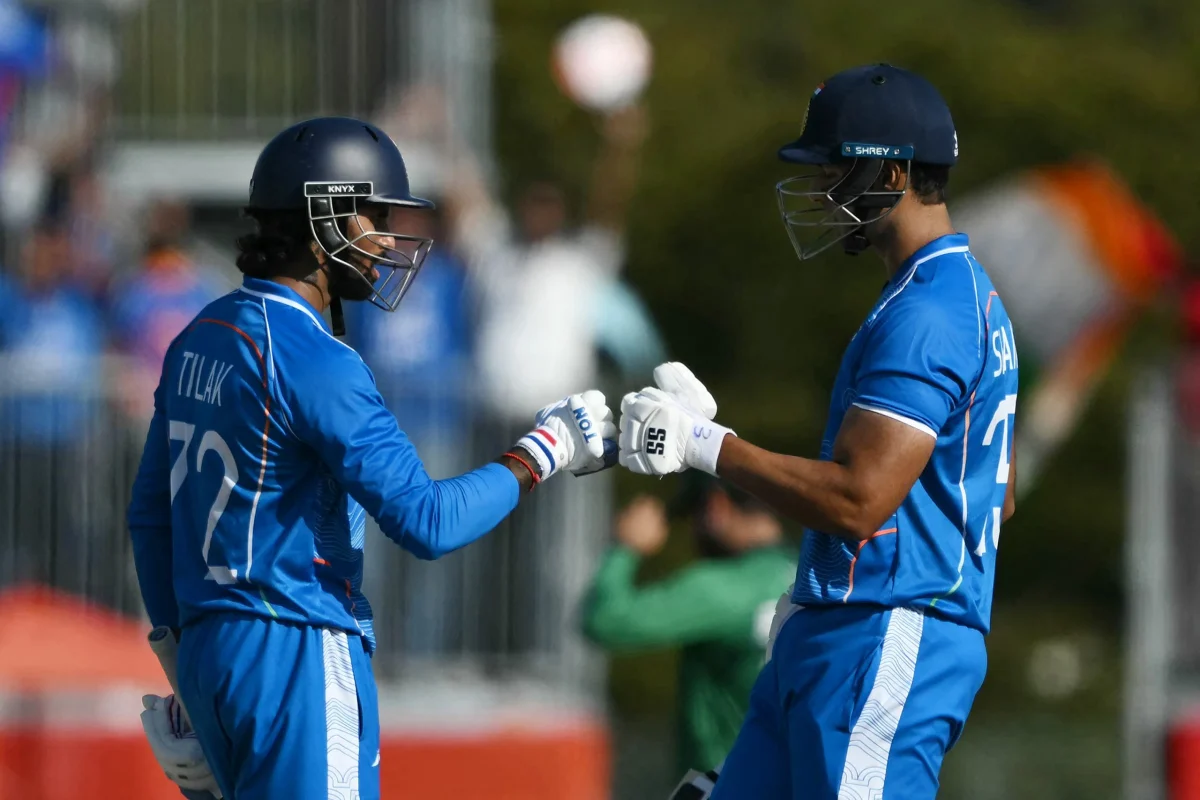
India’s innings commenced with an aggressive intent, their openers quickly capitalizing on the powerplay restrictions. Despite an early wicket, the Indian middle order consolidated brilliantly. It was the partnership between the dynamic left-hander Tilak Varma and the powerful all-rounder Shivam Dube that truly propelled India’s score. Varma, continuing his scintillating form, played a masterclass of T20 batting, mixing elegant drives with audacious sixes. His ability to accelerate the scoring rate against both pace and spin was a testament to his maturity and skill. A pivotal moment, captured in an iconic photograph, saw Varma celebrating a massive six with Dube, a shot that underscored India’s momentum and confidence. Dube, at the other end, provided crucial support, rotating the strike effectively and unleashing his brute force when opportunities arose, clearing the boundaries with ease.
As the innings progressed, India maintained a high run rate, consistently finding boundaries and converting singles into twos. Pakistan’s bowlers, despite their best efforts, struggled to contain the flow of runs, especially in the death overs. While some Pakistani pacers managed to pick up crucial wickets towards the end, stemming a potential even higher score, the damage had been done. India finished their allotted overs with a formidable total of 211 runs, setting Pakistan a challenging target of 212 to win the gold medal. The total of 211 is among the highest scores recorded in Asian Games cricket finals, reflecting the batting-friendly conditions and India’s exceptional performance. The innings was a display of controlled aggression, strategic batting, and individual brilliance, leaving Pakistan with a daunting task ahead.
Pakistan’s Arduous Chase for Gold: A Live Battle Underway
As Pakistan’s openers walked out to the crease, the weight of expectation from a nation of millions was palpable. Chasing 212 in a T20 final against a quality Indian bowling attack is a monumental challenge, requiring a blend of explosive hitting, calculated risks, and steely nerve. The required run rate hovers just above 10.5 runs per over, demanding consistent boundary-hitting and minimal dot balls.
The early overs of Pakistan’s chase have been crucial, setting the tone for their innings. The Indian bowlers, buoyed by their batsmen’s efforts, have started with discipline, looking to pick up early wickets and put Pakistan under immediate pressure. The opening spell from India’s fast bowlers has tested Pakistan’s top order, with variations in pace and swing. The spin bowlers are expected to play a significant role in the middle overs, given the turn available on the Korogi Athletic Park pitch. Pakistan’s strategy will likely involve an aggressive start, aiming to maximize the powerplay overs, followed by a period of consolidation and then another acceleration in the death overs. Key partnerships will be vital, and the ability of their middle-order batsmen to counter India’s spin attack will largely determine their fate. Every run, every wicket, every boundary is being met with a roar from the passionate crowd and scrutinized by millions watching worldwide as the live updates continue to pour in, charting every twist and turn of this high-stakes encounter. The match is currently poised on a knife-edge, with Pakistan battling hard against the formidable target set by India.
Official Responses and Broader Implications
Leading up to the final, statements from both team managements reflected the magnitude of the occasion. The Indian coach remarked on the team’s strong preparation and collective spirit, acknowledging the significance of the rivalry but emphasizing focus on their own game plan. "Every match against Pakistan is special, but our primary goal is the gold medal for India at the Asian Games," an Indian team official was quoted saying, prior to the match. Similarly, the Pakistani captain highlighted his team’s determination and confidence, stating, "We respect India as an opponent, but we are here to win gold. We have the talent and the belief to chase any total."
The inclusion of cricket in the 2026 Asian Games, particularly with such a high-profile final, has significant broader implications. For cricket as a sport, it reinforces its legitimacy and appeal in multi-sport events, strengthening its bid for potential Olympic inclusion in the future. The high viewership numbers and global interest generated by this final will undoubtedly serve as a powerful testament to cricket’s marketability and its ability to connect with diverse audiences.
For Japan, hosting this final is a major step in promoting cricket within the country. While baseball remains the dominant bat-and-ball sport, the exposure to top-tier international cricket can inspire a new generation of local players and fans, potentially leading to increased investment in cricketing infrastructure and grassroots development. Economically, the event brings tourism, media revenue, and international exposure to the host cities.
For India and Pakistan, a gold medal at the Asian Games holds immense national pride and prestige. Beyond the sporting achievement, it serves as a moment of national celebration, reinforcing the passion for cricket that runs deep in both countries. Regardless of the final outcome, this gold medal match will be remembered as a significant chapter in the history of Asian Games cricket and the enduring rivalry between two of cricket’s most captivating nations, further cementing the sport’s place on the global sporting calendar.
