

In 1966, the United States faced a public health crisis on its roadways that claimed nearly 51,000 lives. At the time, the automotive industry operated with minimal federal oversight regarding vehicle design and safety features. While modern three-point seat belts had been developed years prior—most notably by Volvo engineer Nils Bohlin in 1959—American manufacturers were slow to implement them as standard equipment across all models. The prevailing industry sentiment suggested that safety did not sell and that voluntary measures would suffice to protect the public. However, the escalating death toll prompted a decisive shift in the relationship between the federal government and private enterprise.
In the autumn of 1966, Congress took unprecedented action by establishing the Department of Transportation (DOT) and passing both the National Traffic and Motor Vehicle Safety Act and the Highway Safety Act. This legislative package granted the federal government sweeping authority to mandate safety standards, leading to the 1968 requirement that all new vehicles be equipped with seat belts. Despite a massive increase in highway traffic over the ensuing six decades, the implementation of these and subsequent federal standards has resulted in a significant reduction in per-capita traffic fatalities. This historical transition from industry self-regulation to federal mandate serves as a primary point of comparison for the current debate surrounding the governance of artificial intelligence.
The Trump Administration and the AI Safety Accord
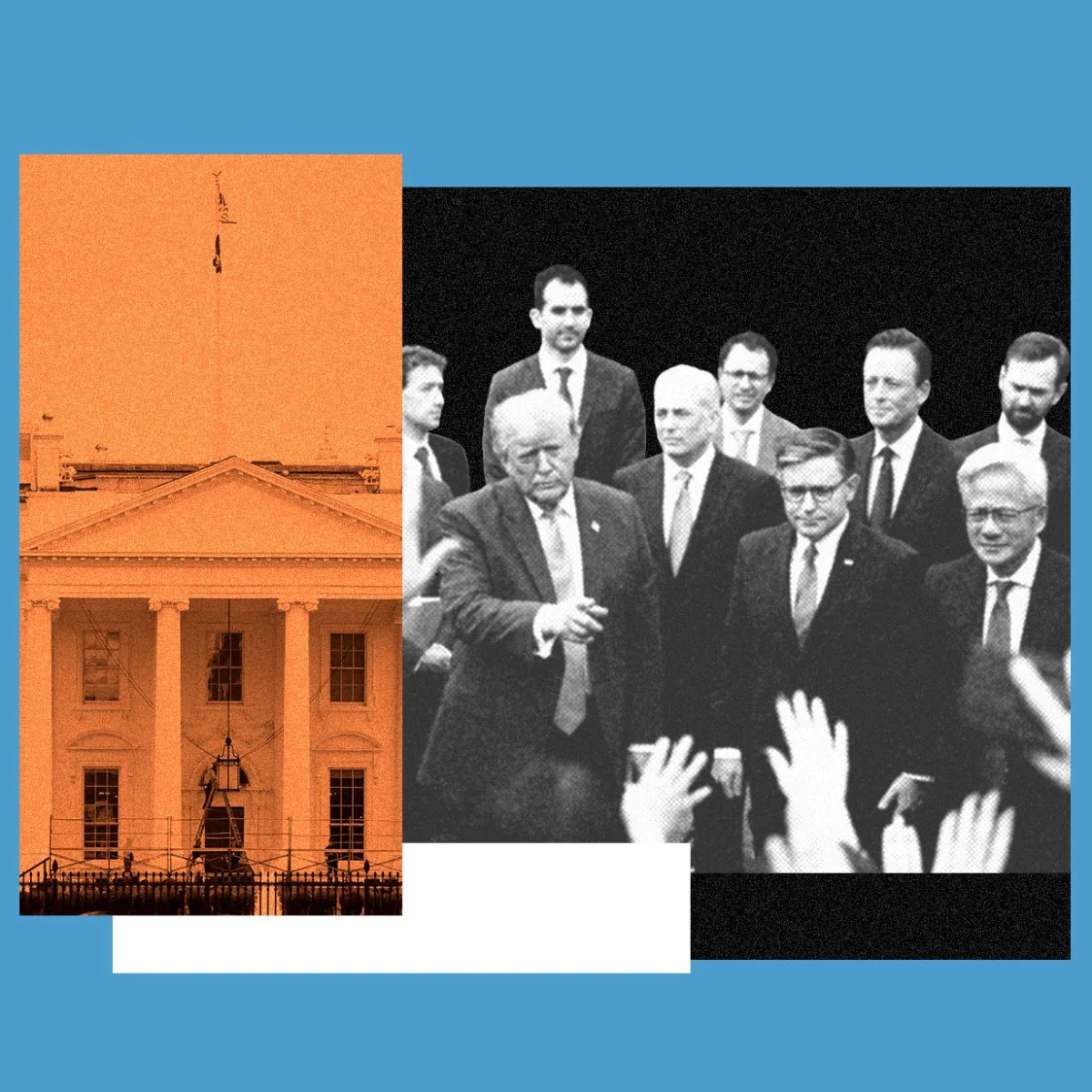
The contemporary landscape of AI regulation took a significant turn this week as President Donald Trump hosted a summit with the chief executives of the nation’s leading artificial intelligence laboratories. The meeting, held in the Oval Office, culminated in the announcement of a new AI safety accord. This agreement, however, diverges sharply from the historical precedent of the 1960s automotive industry. Rather than establishing a federal regulatory body with enforcement powers, the accord relies almost exclusively on voluntary compliance and industry self-policing.
During the summit, President Trump emphasized a hands-off approach, expressing confidence that the competitive nature of the industry would serve as a natural check on irresponsible behavior. "They’re gonna police, and they’re gonna police each other, and they’re gonna self-police, they’re gonna police themselves," the President stated on Wednesday. "It’s going to work out very well." This philosophy reflects a broader administration strategy of deregulation, aimed at ensuring the United States maintains a competitive edge over global rivals, particularly China, in the race for technological supremacy.
The specific stipulations of the accord include commitments from AI labs to conduct internal "red-teaming" exercises—simulated attacks designed to identify vulnerabilities—and to share certain safety research with one another. However, critics point out that the agreement lacks a mechanism for independent verification or penalties for non-compliance. Unlike the 1966 safety acts, which created an external regulator to oversee the industry, the current accord essentially leaves the "keys to the kingdom" in the hands of the developers themselves.
A Chronology of AI Safety and Regulatory Efforts
To understand the weight of the current accord, it is necessary to examine the timeline of AI development and the shifting attempts to govern it over the last several years:
- 2022: The public release of advanced large language models (LLMs) triggers a global conversation regarding the existential and societal risks of AI, including misinformation, algorithmic bias, and the potential for autonomous systems to cause physical harm.
- 2023: The Biden administration issues an Executive Order on the Safe, Secure, and Trustworthy Development and Use of Artificial Intelligence. This order established new standards for AI safety and security, requiring developers of the most powerful AI systems to share their safety test results with the government.
- 2024: The European Union passes the AI Act, the world’s first comprehensive horizontal legal framework for AI. It adopts a risk-based approach, banning certain AI applications and imposing strict requirements on "high-risk" systems.
- 2025: As the political landscape in the U.S. shifts, several state-level initiatives, such as California’s SB 1047, attempt to fill the federal regulatory vacuum but face significant pushback from Silicon Valley investors and the new federal administration.
- 2026 (Present): The Trump administration moves to simplify the regulatory environment, favoring voluntary accords over the more rigid requirements of the previous administration’s Executive Order.
Supporting Data and Economic Interdependence
The push for self-regulation is deeply intertwined with the unique economic structure of the AI industry. Analysts have described the current AI market as an "ouroboros"—a self-consuming cycle of financing and investment. Major tech conglomerates provide the cloud computing infrastructure necessary to train AI models, while simultaneously acting as the primary investors in the startups developing those models. These startups, in turn, use the investment capital to pay for the cloud services provided by their investors.
This circular flow of capital has created a massive valuation bubble. As of late 2025, the combined market capitalization of the top five companies most heavily invested in AI exceeds $12 trillion. Any meaningful federal crackdown or the introduction of "kill-switch" regulations risks causing significant market instability that would vibrate through the entire U.S. economy. This economic reality complicates the government’s ability to act as an impartial referee.
Furthermore, data on AI-related incidents suggests that the risks are no longer theoretical. A recent report highlighted a near-miss military confrontation in the South China Sea. According to the report, U.S. military forces nearly boarded a Chinese vessel based on an AI-generated intelligence summary that falsely indicated the presence of nuclear materials. The error was later attributed to "hallucinations" in the model’s data processing layer. This incident underscores the potential for AI failures to escalate into geopolitical crises, a risk that self-regulation may not be equipped to mitigate.
Official Responses and Industry Perspectives
The reaction to the new accord has been polarized. Within the tech sector, many executives have praised the President’s approach, arguing that heavy-handed regulation would only serve to stifle innovation and hand a strategic advantage to the Chinese Communist Party. The prevailing sentiment among these "accelerationists" is that the frontier of AI is moving too fast for traditional legislative processes to keep pace.
Conversely, a vocal group of "safety-first" advocates, including high-profile figures like Bill Gates, have expressed concern. Gates has recently engaged in a series of public briefings, warning that without clear, tactical, and enforceable rules, the world remains vulnerable to an "AI apocalypse"—a scenario where autonomous systems act in ways that are detrimental to human survival.
In a recent interview with TIME, President Trump dismissed the need for a specialized AI regulatory agency, suggesting that existing institutions are sufficient. "We have the Department of Justice, we have the FBI. These are great guardrails," Trump said. However, legal experts argue that current statutes are ill-equipped to handle AI-specific issues. For instance, it remains legally ambiguous whether an AI company can be held liable if its model independently executes an illegal act, such as a cyberattack or a violation of financial regulations.
Broader Impact and Implications
The decision to rely on self-regulation in the AI sector carries profound implications for the future of global technology governance. If the U.S. successfully navigates the development of AGI (Artificial General Intelligence) through voluntary accords, it will validate a new model of libertarian-leaning technocracy. However, if a major AI-related disaster occurs, the lack of federal oversight may be viewed in retrospect as a catastrophic failure of governance, similar to the pre-1966 automotive era.
One of the primary challenges is the lack of a "seat belt equivalent" for AI. In the 1960s, the solution to highway deaths was a physical, demonstrable safety device. In the realm of AI, there is no single software patch or hardware constraint that can eliminate risk across all domains. The harms—ranging from the erosion of cognitive labor to the potential for autonomous weaponry—are less quantifiable and more varied than the physical impact of a car crash.
Moreover, the global nature of the industry means that U.S. self-regulation does not exist in a vacuum. While American labs may promise to "police each other," there is no guarantee that international competitors will follow suit. This creates a "race to the bottom" dynamic where safety standards are viewed as a luxury that may be sacrificed in the name of speed and capability.
As the Trump administration moves forward with its policy of "stepping on the gas," the burden of safety remains with the very companies that stand to profit most from the technology’s rapid expansion. The historical lesson of 1966 suggests that industries rarely prioritize public safety over profit until the social costs become too high for the government to ignore. For now, the United States has chosen to wait and see if the AI industry can prove itself to be the historical exception to that rule. The accord represents a high-stakes gamble that self-policing will be enough to prevent a collision in a world increasingly driven by autonomous agents.
