

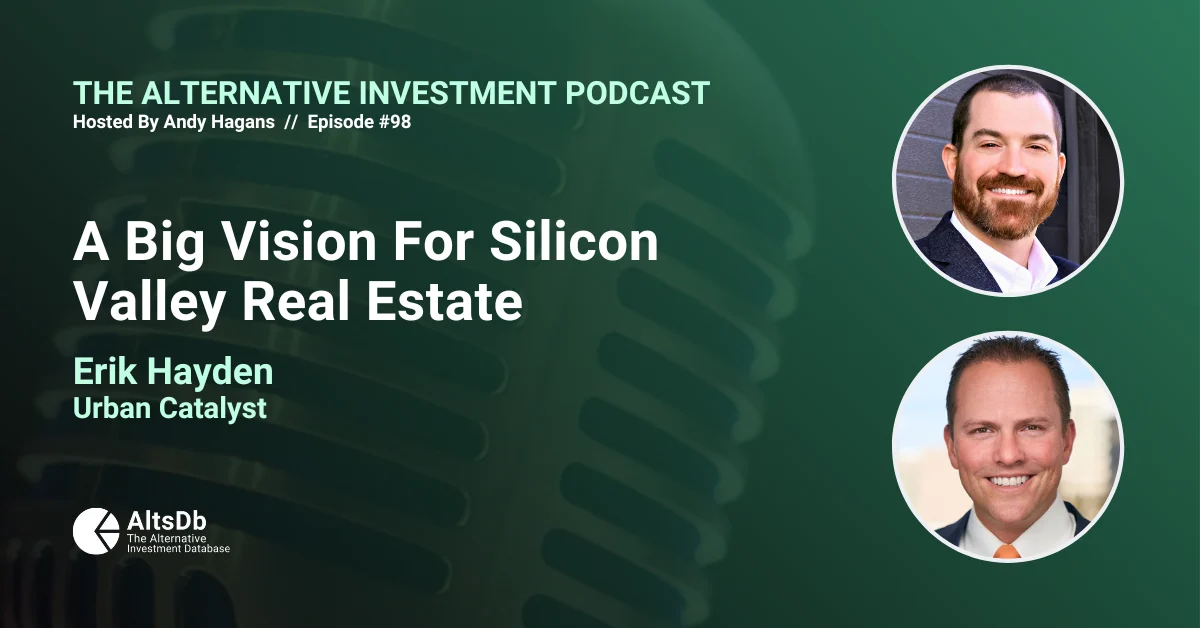
Silicon Valley, a region synonymous with innovation and economic dynamism, is set to experience a sustained wave of growth for decades to come, defying any notions of real estate market "doom and gloom." This optimistic outlook is championed by Erik Hayden, founder of Urban Catalyst and recognized as one of Silicon Valley’s 100 most powerful individuals. Hayden recently shared his insights on how long-term real estate investors can capitalize on this enduring growth, emphasizing strategies for creating generational wealth within this thriving economic hub.
The Enduring Power of Silicon Valley
While broader discussions about California real estate may sometimes lean towards apprehension, the economic engine of Silicon Valley continues to demonstrate remarkable resilience and potential. The region, at the epicenter of the global technology sector, boasts a robust ecosystem that fuels continuous innovation and expansion. Hayden’s firm, Urban Catalyst, has strategically positioned itself to leverage this momentum, focusing on ground-up development and the acquisition of existing assets within key areas like downtown San Jose.
Hayden’s journey into real estate development began with extensive experience in ground-up projects across the San Francisco Bay Area, particularly in San Jose. Recognizing a significant shift in the tech industry’s geographical focus, he founded Urban Catalyst in 2018. His foresight was rooted in observing the outward migration of tech giants from traditional hubs like Palo Alto and Mountain View, a trend that saw development flourish in cities like Sunnyvale. As Sunnyvale neared build-out, Hayden identified downtown San Jose as the next logical frontier for expansion.
"If Palo Alto, Menlo Park, and Mountain View are kind of the center of the tech universe, they’re not really very big cities," Hayden explained. "So we’ve seen a lot of expansion. Of course, these companies, Google, Apple, Meta, they’re expanding all over the country, all over the world, but in the Valley, we’ve seen the slow migration southward from that center of Silicon Valley, towards San Jose."
This strategic foresight has been validated by the subsequent actions of major tech corporations, many of which have acquired land, opened offices, or announced significant expansion plans in San Jose. Urban Catalyst’s proactive approach involved building strong relationships with property owners, enabling them to acquire key parcels before the widespread development boom.
Urban Catalyst: A Foundation of Bold Vision and Strategic Execution
Urban Catalyst operates as a real estate equity fund, specializing in both acquiring and managing existing properties, as well as undertaking ground-up development and rehabilitation projects. While the firm has achieved significant recognition in the Opportunity Zone (OZ) space, Hayden emphasizes that their strategic focus on San Jose predates their involvement with the OZ program.
"We wanted to be in San Jose, and San Jose was also an Opportunity Zone, and we became an Opportunity Zone fund, and it’s been working out pretty great for us," Hayden stated. "It wasn’t the tail wagging the dog. Like, you knew you wanted to do an OZ fund, so you looked for a place. You knew you wanted to be in Silicon Valley because of the opportunity there."
The genesis of Urban Catalyst involved a substantial initial capital raise of approximately $4.5 million, primarily from friends and family who believed in Hayden’s track record and vision. This foundational capital was crucial for establishing operations, covering legal fees for documents like private placement memorandums, and securing office space. The cost of doing business in California, particularly in Silicon Valley, is notably high, with attorney fees for contractor negotiations potentially reaching tens of thousands of dollars and a single PPM costing hundreds of thousands.
Hayden’s entrepreneurial philosophy challenges the conventional view of risk. He posits that entrepreneurship, when approached with a clear strategy and a belief in one’s own capabilities, can be a more secure path than traditional employment, where job security is ultimately dependent on another entity’s success.
"What’s the difference between being an employee and being the owner of a business? You think there’s less risk? There isn’t," Hayden argued. "The person that you work for as an employee, their business can go out of business and then you’re fired. And then what? You’re gonna go find another job. As long as you start your own business, at least you get to make the choices. At least you’re the one that gets to steer the ship."
This proactive and bold approach is characteristic of Urban Catalyst’s strategy. Hayden’s vision was not to start small and gradually scale, but to launch with a significant impact. This mirrors the trajectory of major investment firms like Blackstone, which began with substantial initial funds. Hayden draws a parallel between the effort required to flip a house and build a $100 million building, asserting that the complexity scales with added zeros, not necessarily with an exponential increase in foundational effort.
Disrupting Fundraising: Digital Marketing in Real Estate
Urban Catalyst’s fundraising strategy also set them apart. While many Opportunity Zone funds rely heavily on broker-dealers and registered investment advisors, Hayden’s firm pioneered the use of digital marketing channels such as Google, LinkedIn, and Facebook to directly engage individual investors. This innovative approach, leveraging the 506(c) exemption under SEC regulations, allowed Urban Catalyst to raise $50 million in their first year.
"We raised money directly from investors. And raising money directly from investors, in our first year, we raised $50 million, and we did it through a way that a lot of folks had never tried, which of course is digital marketing, using Google, LinkedIn, Facebook, all that stuff, to drive investors to our website," Hayden explained.
This strategy not only proved effective but also established Urban Catalyst as a thought leader in alternative investment fundraising, prompting other firms to adopt similar digital marketing tactics. The earned media generated through extensive press coverage – over 250 articles in five years – further bolstered their brand, a form of organic marketing that cannot be purchased. This earned media strategy highlights the power of consistent, positive news flow in building brand equity and investor confidence.
Addressing Misconceptions About Silicon Valley’s Economic Landscape
Despite persistent narratives of economic decline in California, Silicon Valley continues to demonstrate exceptional economic might. In 2021 alone, California’s economy, if it were a sovereign nation, would rank as the fourth-largest in the world, surpassing Germany. Silicon Valley experienced one of its most prosperous years on record, with a surge in IPOs comparable to the dot-com era and record-breaking venture capital funding.
"The city of Menlo Park, which has 45,000 people, had more venture capital funding than the entire state of Texas," Hayden noted, illustrating the concentration of capital and innovation in the region.

The perception that large numbers of people are fleeing California is also challenged by data. While there was a minor population dip in 2020-2021, California’s population has a long history of growth, significantly bolstered by international immigration. The state remains an attractive destination due to its climate, economic opportunities, and lifestyle, even for those emigrating from other countries who may view it as a strong value proposition compared to other global cities.
The San Jose Development Boom: Opportunity Amidst Challenges
The housing crisis in California, particularly acute in Silicon Valley, stems from a significant imbalance: six jobs created for every housing unit built over the past three decades. This disparity has driven median home prices in San Jose to between $1.6 and $1.7 million, making it one of the most expensive cities in the U.S. and globally.
This housing shortage, while a significant challenge, also presents development opportunities. Urban Catalyst has navigated the complex regulatory environment in California, achieving approvals for all eight of their projects across their two Opportunity Zone funds. Hayden credits the city of San Jose’s planning and economic development departments for their proactive approach to urban development, particularly in downtown San Jose, which is well-equipped with infrastructure and transit options conducive to high-density projects.
"In downtown San Jose, it’s where all the infrastructure is, it’s where all the transit is. It’s, if you’re going to do high-density development, where are you gonna do it? Here is the place for them," Hayden stated.
This contrasts with some other California cities that have historically been more resistant to development, leading to prolonged political battles and stalled projects.
Urban Catalyst’s Opportunity Zone Fund II: Diversified Projects for a Growing Region
Urban Catalyst’s current offering, Opportunity Zone Fund II, features a diversified portfolio of four projects:
- Echo: A high-rise multi-family development with approximately 400 units.
- Icon: A substantial 500,000 square foot office building.
- Keystone Hotel: A 172-key Marriott Townplace Suites, which is already under construction.
- Gifford Place: A senior living facility, specifically designed for assisted living and memory care.
This diversification strategy is crucial in mitigating risk, especially in a dynamic market. The inclusion of an office building, despite recent negative headlines surrounding the sector, is strategically located to benefit from the significant expansion of Google’s "Downtown West" campus. This massive $19 billion, 10-year development project by Google is set to become its largest campus globally, encompassing 7 million square feet of office space and 6,000 residential units. Urban Catalyst’s projects are situated within proximity to this development, promising significant synergistic benefits.
Hayden also noted that Urban Catalyst is one of the few active Opportunity Zone funds in Silicon Valley, a surprising observation given the region’s economic power. This positions them uniquely to attract investors seeking exposure to this high-growth market.
Addressing the Office Market Dynamics
While the headlines may paint a grim picture for office real estate, Hayden offers a nuanced perspective on Silicon Valley’s office market. He points out that even during the pandemic, the region maintained a strong office market, with record transactions and high prices. While rents have seen a slight decrease and vacancy rates a modest increase, major tech companies continue to sign substantial leases.
"We’re lagging the rest of the country in return to office," Hayden observed, noting that Silicon Valley’s return-to-office rates are lower than in many other parts of the country. However, he attributes this partly to the massive hiring spree in 2021, where companies were willing to accommodate remote work demands. Recent layoffs, while significant in scale globally, represent a smaller percentage of the total workforce hired during the pandemic in Silicon Valley. The region’s unemployment rate remains low, and major tech companies are consolidating rather than broadly shedding local jobs, with some even expanding their physical footprint.
Expanding the Investment Horizon: Delaware Statutory Trusts
Recognizing the need to diversify its offerings and cater to a broader investor base, Urban Catalyst has launched a Delaware Statutory Trust (DST) product. This offering focuses on an industrial property in Dallas, Texas, a departure from their traditional Silicon Valley ground-up development focus.
"We wanted to expand our fund platform to provide more opportunities for our investors," Hayden explained. The DST model, focused on tax-advantaged real estate, aligns perfectly with Urban Catalyst’s core expertise. The chosen industrial property in Dallas features a 10-year lease with 3% annual rent increases, providing built-in rent growth and a clear exit strategy. This approach prioritizes a business plan-driven investment over pure speculation, aiming for stable income and asset appreciation.
The Dallas-Fort Worth metroplex was selected for its robust population growth and its status as the second-largest industrial market in the country. The specific property’s location, situated between Dallas and Fort Worth and near a major freight cargo airport, offers strategic advantages. Historically strong rent growth in the submarket, with industrial rents increasing by 14% year-over-year, further enhances the investment’s potential.
"We like to say, we like to do business based on a business plan, not on speculation," Hayden emphasized, "but it is nice to have a little speculation in your back pocket that it’s gonna be a strong rental growth in the market itself over time as well."
This strategic expansion into DSTs demonstrates Urban Catalyst’s commitment to providing investors with diverse, high-quality investment opportunities, underpinned by their established expertise in real estate and tax-advantaged investment vehicles.
For advisors and high-net-worth investors interested in learning more about Urban Catalyst’s strategies for wealth creation in dynamic markets, the firm can be found at urbancatalyst.com.
