

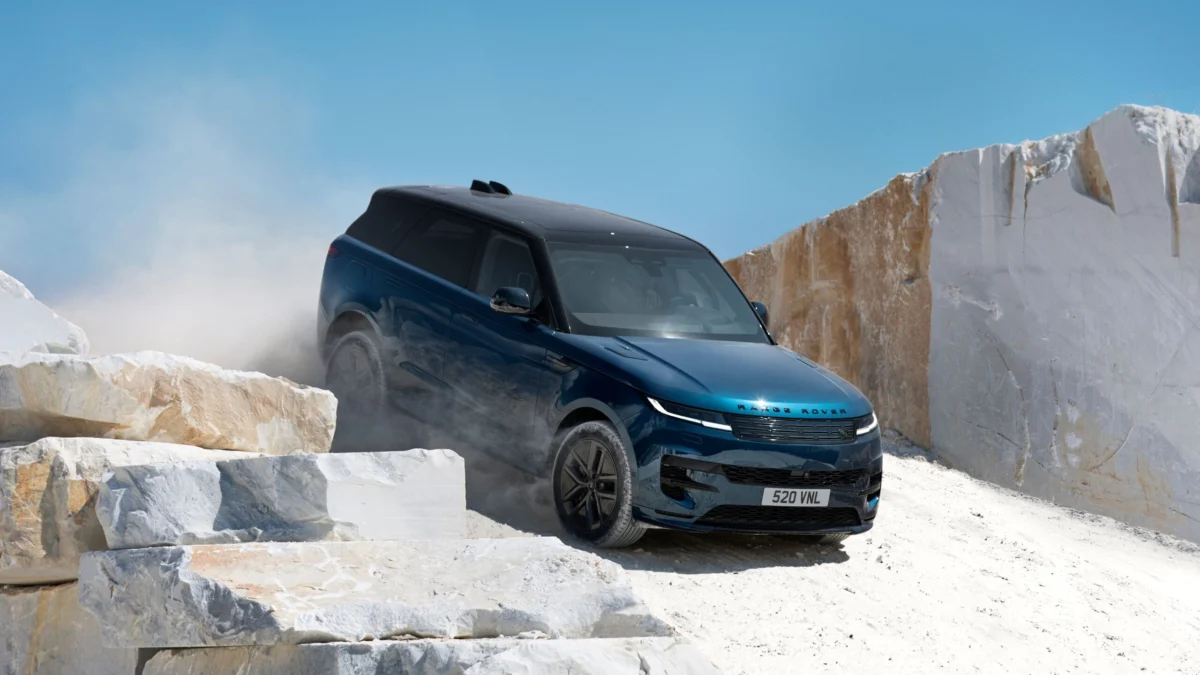
Following the high-profile introduction of the flagship Range Rover Electric in early September and ahead of the scheduled unveiling of the Jaguar Type 01 in New York City, Jaguar Land Rover (JLR) has officially introduced the Range Rover Sport Electric. While the debut arrived with less individual fanfare than its larger sibling, the arrival of the all-electric Sport model represents a pivotal moment for the British automaker. As JLR faces a challenging fiscal landscape and a massive internal restructuring that includes the reduction of 4,000 jobs over the next two years, the Range Rover Sport Electric is positioned as a high-volume, high-margin vehicle essential to the company’s "Reimagine" strategy.
Historically, the Range Rover Sport has served as a cornerstone of JLR’s commercial success, frequently rivaling or exceeding the sales figures of the flagship Range Rover due to its more accessible price point and more dynamic driving profile. The transition of this specific model to a fully electric powertrain is seen by industry analysts as a litmus test for the brand’s ability to retain its loyal customer base while pivoting toward a sustainable, software-defined future.
Engineering and Performance Specifications
The Range Rover Sport Electric is built upon the Flexible Modular Longitudinal Architecture (MLA-Flex), a platform engineered to accommodate internal combustion engines, plug-in hybrids, and battery-electric drivetrains. According to JLR’s engineering team, this electric variant possesses the stiffest body structure in the history of the Sport line. This increased rigidity is largely attributed to the structural integration of the battery casing within the floor of the vehicle. This placement also grants the SUV the lowest center of gravity of any Range Rover Sport model, a factor that significantly enhances lateral stability and cornering performance.
In terms of raw power, the Sport Electric utilizes a dual-motor configuration. Each of the two 260-kilowatt motors contributes to a combined output of 550 pferdestärke (PS) and 850 Newton-meters (Nm) of torque. This output exceeds that of any previous internal combustion or hybrid iteration of the Sport. JLR claims the torque response in the Sport Electric is 50 percent faster than that of the standard Range Rover Electric, allowing for a 0 to 60 mph acceleration time of just 4.3 seconds when utilizing the vehicle’s "Dynamic Launch Mode."
The vehicle’s off-road heritage remains a central focus of its engineering. The Sport Electric features an 800-volt architecture, which supports advanced thermal management and high-speed charging. It retains a class-leading wading depth of 900 mm and the ability to navigate 45-degree inclines, ensuring that the transition to electric power does not compromise the "go-anywhere" capability associated with the brand.
Battery Technology and Charging Infrastructure
The Range Rover Sport Electric is equipped with a 118.5-kilowatt-hour (kWh) battery pack. Under the Worldwide Harmonised Light Vehicles Test Procedure (WLTP), the vehicle is rated for a range of up to 374 miles. When translated to the typically more stringent testing standards of the U.S. Environmental Protection Agency (EPA), this is expected to result in a real-world range of approximately 320 miles.
One of the standout technical features is the "split-charging" technology. This system, paired with the 800-volt architecture, allows the battery to essentially split into two 400-volt units when connected to a compatible high-speed charger. This optimization allows the SUV to add 136 miles of range in roughly 10 minutes under ideal conditions. A 10 to 80 percent charge can be achieved in 22 minutes, placing the Range Rover Sport Electric at the competitive edge of current luxury EV charging speeds.
To further maximize efficiency, JLR has introduced "aerodynamically-optimized" design elements, including a revised front grille and specialized alloy wheels. These modifications are estimated to contribute an additional 10 miles of range during sustained motorway driving by reducing drag and turbulence around the wheel arches.
Dynamic Handling and All-Terrain Capability
To manage the substantial weight of the battery while maintaining the "Sport" moniker’s performance expectations, JLR has integrated a suite of advanced chassis technologies. The vehicle comes standard with all-wheel steering, which reduces the turning circle at low speeds and improves stability during high-speed lane changes.
The electronic Active Roll Control system is a centerpiece of the vehicle’s handling kit. This system is capable of applying up to 1,400 Nm of counter-acting force across each axle to mitigate body roll. Complementing this is an adaptive dynamics system that monitors 100 different parameters—including steering angle, throttle position, and suspension travel—500 times per second. This real-time data processing allows the vehicle to adjust its dampers and torque distribution instantly to maintain "maximum composure" regardless of the surface or driving style.
Market Positioning and Pricing
The Range Rover Sport Electric enters a crowded and increasingly aggressive luxury EV market. In the United Kingdom, the model is priced starting at £109,810. While pricing for the United States market has not yet been finalized, it is expected to sit significantly above the current entry-level internal combustion models.
The vehicle faces stiff competition from established European and emerging luxury brands:
- Porsche Cayenne Electric: Expected to be a primary rival, the Porsche starts approximately £20,000 lower than the Sport Electric, offering a formidable challenge in terms of brand prestige and performance value.
- BMW iX xDrive60: Known for its avant-garde interior and efficient drivetrain, the BMW is a well-established player in the segment.
- Lotus Eletre 600: Representing the new wave of "Hyper-SUVs," the Lotus offers higher performance figures, though with a different brand heritage.
- Polestar 3: While the Polestar 3 Dual Motor is a direct competitor in European markets, its availability in the United States has been halted. Earlier this year, the U.S. government implemented a ban on vehicles utilizing Chinese-developed software in internet-connected cars. Since Polestar is majority-owned by the Chinese firm Geely, it became the first major casualty of this regulatory shift, effectively ceding the U.S. luxury EV market share to JLR and its European peers.
The Broader Context: JLR’s "Reimagine" Strategy
The launch of the Sport Electric is not merely a product update; it is a critical component of JLR’s broader corporate survival plan. The "Reimagine" strategy, spearheaded by CEO Adrian Mardell, aims to transform JLR into an electric-first luxury powerhouse by 2030. However, this transition is occurring during a period of significant financial and operational strain.
The announcement of 4,000 job cuts—roughly 10 percent of JLR’s global workforce—highlights the immense cost of pivoting away from internal combustion engines. The automaker is currently investing £15 billion over five years into its industrial footprint, vehicle programs, and digital technologies. This includes the transformation of the Solihull plant in the UK to produce electric vehicles alongside their petrol and hybrid counterparts.
JLR’s decision to continue offering Plug-in Hybrid Electric Vehicle (PHEV), gasoline, and diesel versions of the Sport alongside the new Electric model suggests a pragmatic approach to the global "EV slowdown." By maintaining a multi-powertrain lineup, JLR can hedge against fluctuating EV demand in markets where charging infrastructure remains underdeveloped, while still meeting stringent emissions targets in the UK, Europe, and California.
Chronology of JLR’s Electrification Journey
The path to the Range Rover Sport Electric has been several years in the making:
- February 2021: JLR announces the "Reimagine" strategy, pledging that Jaguar will become an all-electric brand by 2025 and Land Rover will launch six pure electric variants by 2026.
- April 2023: The company rebrands to "JLR," moving away from the "Jaguar Land Rover" name to emphasize its "House of Brands" (Range Rover, Defender, Discovery, and Jaguar).
- September 2024: The flagship Range Rover Electric is officially launched, opening the order books for the brand’s first-ever EV.
- November 2024: The Range Rover Sport Electric is introduced, showcasing a more performance-oriented take on the 800V platform.
- December 2024: The upcoming reveal of the Jaguar Type 01 in New York City is expected to signal the total rebirth of the Jaguar brand as an ultra-luxury electric marque.
Implications and Outlook
The success of the Range Rover Sport Electric will likely determine JLR’s financial health over the next decade. As a high-volume model, it must generate the revenue necessary to fund the expensive rebirth of the Jaguar brand and the continued electrification of the Defender and Discovery lines.
Industry analysts suggest that JLR’s focus on 800-volt architecture and extreme off-road capability may provide the "moat" necessary to defend against lower-priced competitors. By doubling down on the "luxury" and "capability" aspects of the brand, JLR is betting that its customers are willing to pay a premium for a vehicle that does not compromise on heritage while embracing a zero-emissions future.
However, the geopolitical landscape remains a wildcard. The U.S. ban on Chinese-connected vehicle software has temporarily removed competitors like Polestar, but it also signals a period of heightened regulatory scrutiny that could impact global supply chains. For JLR, the challenge will be navigating these political waters while managing a workforce reduction and a radical technological shift simultaneously.
The Range Rover Sport Electric is more than just a car; it is the manifestation of JLR’s attempt to remain relevant in a world where the roar of a V8 engine is being replaced by the silent efficiency of the kilowatt. Whether the "Sport" badge can maintain its luster without the sound of an exhaust remains to be seen, but the technical specifications suggest that JLR has left nothing to chance.
