

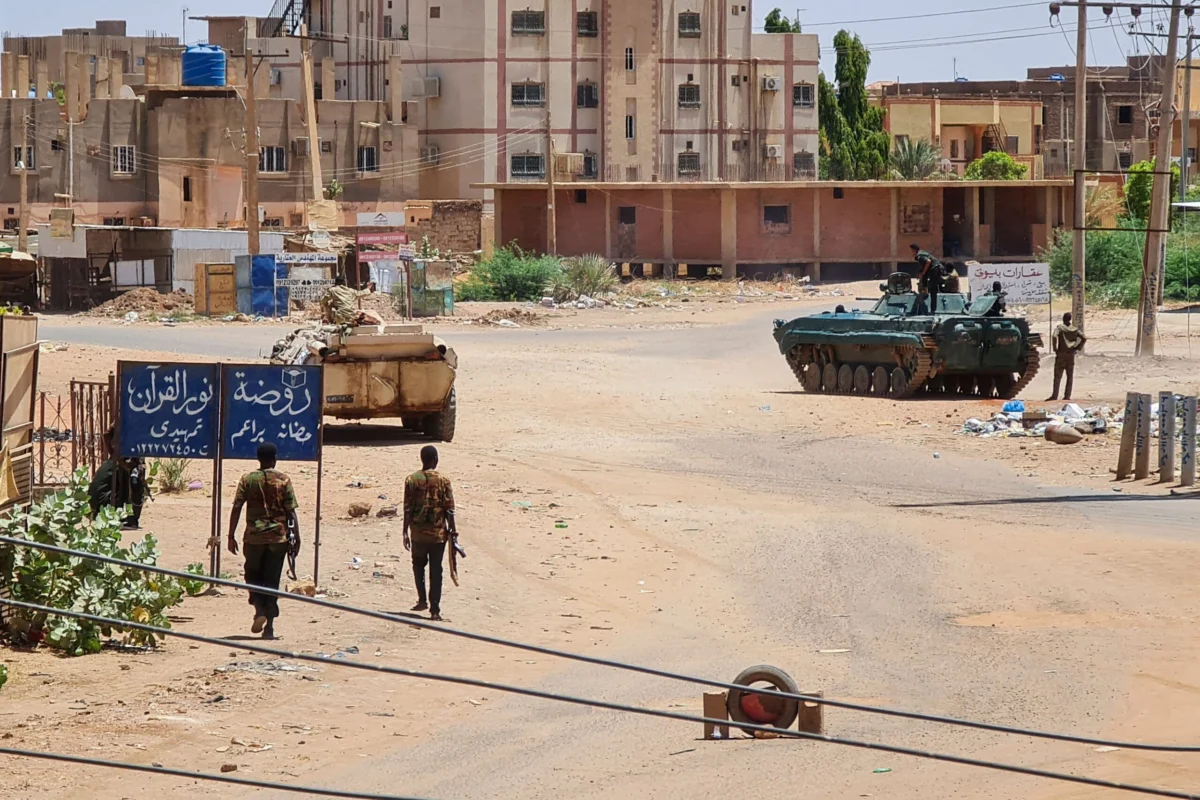
One month after the initial eruption of violence in Khartoum, Sudan stands at a precarious crossroads, with the capital city transformed into a theater of urban warfare and the prospects for a diplomatic resolution appearing increasingly remote. What began on April 15, 2023, as a localized power struggle between two rival military factions has rapidly metastasized into a nationwide crisis, threatening to destabilize the already volatile Horn of Africa. Despite multiple attempts at brokering a ceasefire through internationally mediated talks in Jeddah, Saudi Arabia, the Sudanese Armed Forces (SAF), led by General Abdel Fattah al-Burhan, and the paramilitary Rapid Support Forces (RSF), led by Mohamed Hamdan Dagalo, known as Hemedti, remain locked in a zero-sum battle for total control of the state.
The humanitarian toll of the first thirty days has been catastrophic. According to the International Rescue Committee (IRC), the confirmed death toll has surpassed 600 individuals, with more than 5,000 others injured. However, medical professionals on the ground and international observers warn that these figures are likely a significant undercount, as many casualties remain unrecorded due to the impossibility of reaching hospitals or retrieving bodies from the streets of Khartoum, Omdurman, and Bahri. The violence has not been contained to the capital; it has reignited long-standing ethnic tensions in the Darfur region, specifically in West Darfur, where reports of mass killings and the burning of displacement camps have surfaced, evoking memories of the genocidal violence that plagued the region two decades ago.
A Chronology of Escalation: From Transition to Total War
The roots of the current conflict are deeply embedded in the fractured transition that followed the 2019 popular uprising that ousted longtime dictator Omar al-Bashir. Following Bashir’s fall, a fragile power-sharing agreement was established between civilian leaders and the military. However, this arrangement was shattered in October 2021 when Burhan and Hemedti joined forces to lead a military coup, dissolving the civilian-led government of Prime Minister Abdalla Hamdok.
The uneasy alliance between the SAF and the RSF was born of convenience, as both leaders sought to protect their economic interests and avoid accountability for past human rights abuses. However, tensions began to simmer in late 2022 over the details of a new framework agreement intended to return the country to civilian rule. The primary point of contention was the integration of the RSF—a powerful paramilitary force with its origins in the Janjaweed militias—into the regular army. Burhan insisted on a rapid two-year integration timeline, while Hemedti pushed for a ten-year window, seeking to maintain his independent power base and control over lucrative gold mining operations.
By early April 2023, the rhetoric between the two generals reached a breaking point. The RSF began mobilizing troops toward the Merowe airbase, a move the SAF interpreted as a direct provocation. On the morning of April 15, the first shots were fired in Khartoum, targeting the airport, the presidential palace, and army headquarters. What both sides likely envisioned as a swift "decapitation strike" has instead devolved into a grinding war of attrition that has displaced nearly one million people, forcing them to flee to safer regions within Sudan or across borders into Egypt, Chad, Ethiopia, and South Sudan.
The Humanitarian Crisis and the Collapse of Essential Services
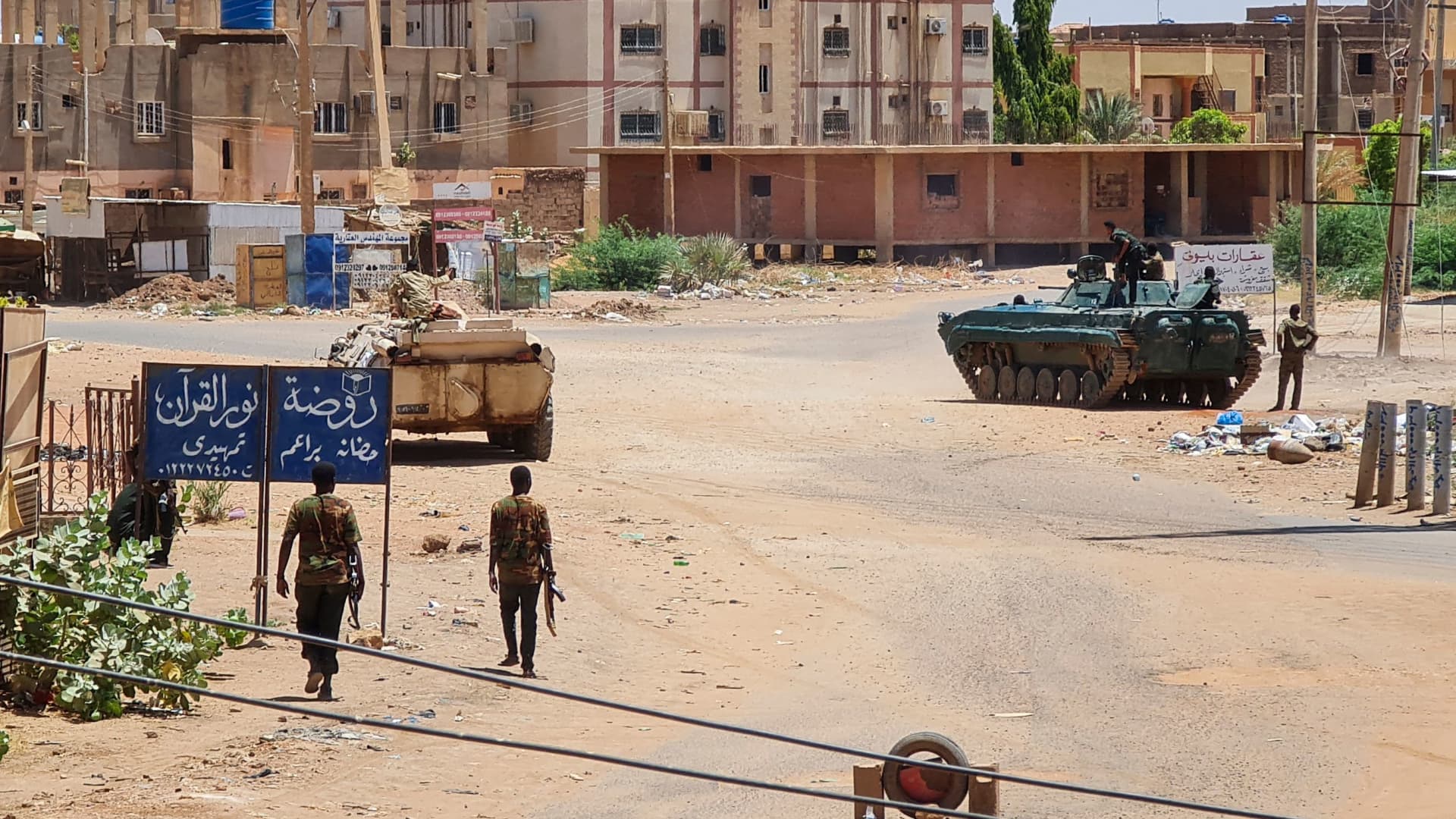
The IRC and other humanitarian agencies have characterized the situation as a "secondary humanitarian crisis." In Khartoum, a city of five million people, the infrastructure of daily life has effectively collapsed. Airstrikes by the SAF and heavy artillery fire from both sides have damaged power grids and water treatment plants, leaving entire neighborhoods without electricity or running water for weeks. The World Health Organization (WHO) has reported that nearly 70% of hospitals in conflict zones are out of service, either due to physical damage, a lack of medical supplies, or being forcibly occupied by combatants.
The economic impact is equally devastating. Sudan was already grappling with triple-digit inflation and a severe economic downturn following the 2021 coup and the subsequent freezing of international aid. Since the fighting began, the prices of basic commodities like bread, fuel, and clean water have tripled or quadrupled. In many areas, the banking system has ceased to function, leaving citizens unable to access their savings to purchase food or pay for passage out of the city. Kurt Tjossem, the IRC’s Vice President for East Africa, emphasized the urgency of the situation, stating, "The longer they remain in these conditions, the more vulnerable they become to disease, hunger, and other hardships."
The Failure of the Jeddah Talks and the "Cycle of Impunity"
International efforts to halt the fighting have focused on the city of Jeddah, where representatives from the SAF and RSF have engaged in talks facilitated by the United States and Saudi Arabia. While the parties signed a "Declaration of Commitment to Protect the Civilians of Sudan" in mid-May, the agreement has proven to be largely symbolic. No permanent ceasefire has been established, and humanitarian corridors remain blocked or dangerous to navigate.
Critics argue that the Jeddah process is fundamentally flawed because it excludes the very civilian voices that led the 2019 revolution. By negotiating exclusively with the two warring generals, the international community may be inadvertently legitimizing their status as the sole arbiters of Sudan’s future. Sudanese-Australian activist and writer Yassmin Abdel-Magied noted that the current diplomatic approach rewards "belligerence" and ignores the aspirations of the 46 million Sudanese citizens who desire a transition to democratic, civilian-led governance.
The international response has also been hampered by the complex web of foreign interests in Sudan. The SAF has traditionally enjoyed the support of Egypt, which views a stable Sudanese military as essential for its own national security and its stance on the Grand Ethiopian Renaissance Dam (GERD). Conversely, Hemedti’s RSF has built strong ties with the United Arab Emirates and has reportedly collaborated with the Russian mercenary group Wagner to secure and export gold. These external dependencies make it difficult for the international community to present a truly united front or to implement effective sanctions that could "throttle" the resources of the warring factions.
The Role of Grassroots Resistance Committees
Amidst the failure of the state and the deadlock of high-level diplomacy, the most effective response has come from within Sudanese society. Informal neighborhood networks known as "resistance committees," which were instrumental in organizing the 2019 protests, have pivoted to provide essential services. These committees have organized community kitchens, coordinated medical evacuations, and managed the distribution of dwindling food supplies.
Abdel-Magied and other observers suggest that these grassroots organizations should have a seat at the negotiating table. "The framework is already there" to raise the voice of the Sudanese people, she argues, suggesting that a delegation of civilian representatives could provide a necessary counterweight to the military’s narrow interests. Without such inclusion, there is a significant risk that any peace deal will simply be a redistribution of power between two men who have already demonstrated a willingness to sacrifice the country for their own ambitions.
Implications for Regional Stability and the Risk of State Failure
The stakes extend far beyond Sudan’s borders. Sudan occupies a strategic position at the crossroads of the Middle East and Sub-Saharan Africa, bordering seven countries. A total collapse of the Sudanese state would likely trigger a massive refugee crisis that could overwhelm the resources of neighboring Chad and South Sudan. Furthermore, the vacuum created by a prolonged conflict could allow extremist groups to gain a foothold in the region, mirroring the instability seen in Libya or Yemen.
In a speech to the UN Human Rights Council, U.K. Minister for International Development and Africa Andrew Mitchell called for an end to the "cycle of impunity" in Sudan, urging the international community to send a "united message of horror." However, words have yet to translate into the kind of coordinated pressure—such as targeted sanctions on the financial assets of the SAF and RSF leadership—that might force a change in behavior.
As the conflict enters its second month, the "worst-case scenario" of a protracted civil war or the complete disintegration of the central government is no longer a distant possibility; it is a looming reality. While the state has not yet failed completely, the window for intervention is closing. The path forward requires more than just temporary ceasefires; it demands a fundamental restructuring of Sudan’s political and military architecture, led by the very civilians who have spent years fighting for a democratic future. Without a shift in the international strategy toward accountability and civilian inclusion, Sudan risks another thirty years of dysfunction, leaving its people trapped in a cycle of violence they did not choose.
