

LONDON, Sept 22 (Reuters) – Global oil prices experienced a significant downturn on Tuesday, plunging to their lowest levels in two weeks, as renewed prospects for increased crude supplies from the Middle East’s critical Gulf region emerged. This market shift was primarily driven by Iran’s indication that it could reopen the strategically vital Strait of Hormuz within seven days, contingent on the easing of U.S. military pressure and the lifting of blockades on Iranian ports. Concurrently, Saudi Arabia, the world’s largest oil exporter, moved to resume exports from its Red Sea port of Yanbu, further alleviating immediate supply anxieties.
Sharp Decline in Crude Benchmarks
The benchmark Brent crude futures for November delivery registered a notable decline, dropping by $2.11, or 2.1%, to trade at $98.23 a barrel by 1151 GMT. This movement reflected a broader market sentiment leaning towards increased supply and reduced geopolitical risk premium. Similarly, the West Texas Intermediate (WTI) October contract, which was set to expire on Tuesday, saw a sharper decrease, shedding $2.48, or 2.59%, to reach $93.30 a barrel. The more actively traded WTI November contract also experienced a substantial fall of $2.36, or 2.55%, settling at $90.01 a barrel. Both Brent November, WTI October, and WTI November futures contracts simultaneously touched their lowest trading points since September 8, underscoring the rapid re-evaluation of supply dynamics by market participants. The simultaneous dips across key contracts highlight a market reacting swiftly to perceived improvements in global oil flow.
Iran’s Diplomatic Overture and the Strategic Strait of Hormuz
The primary catalyst for the market’s response was a statement from a senior Iranian official to Reuters on Tuesday, asserting that Iran possesses the capability to reopen the Strait of Hormuz within a week. This readiness, however, is conditional upon the United States de-escalating its military presence in the region and lifting existing economic blockades on Iranian ports. The official further clarified that the Iranian delegation attending the ongoing UN General Assembly in New York holds full authority to engage in and revive diplomatic discussions with the United States.
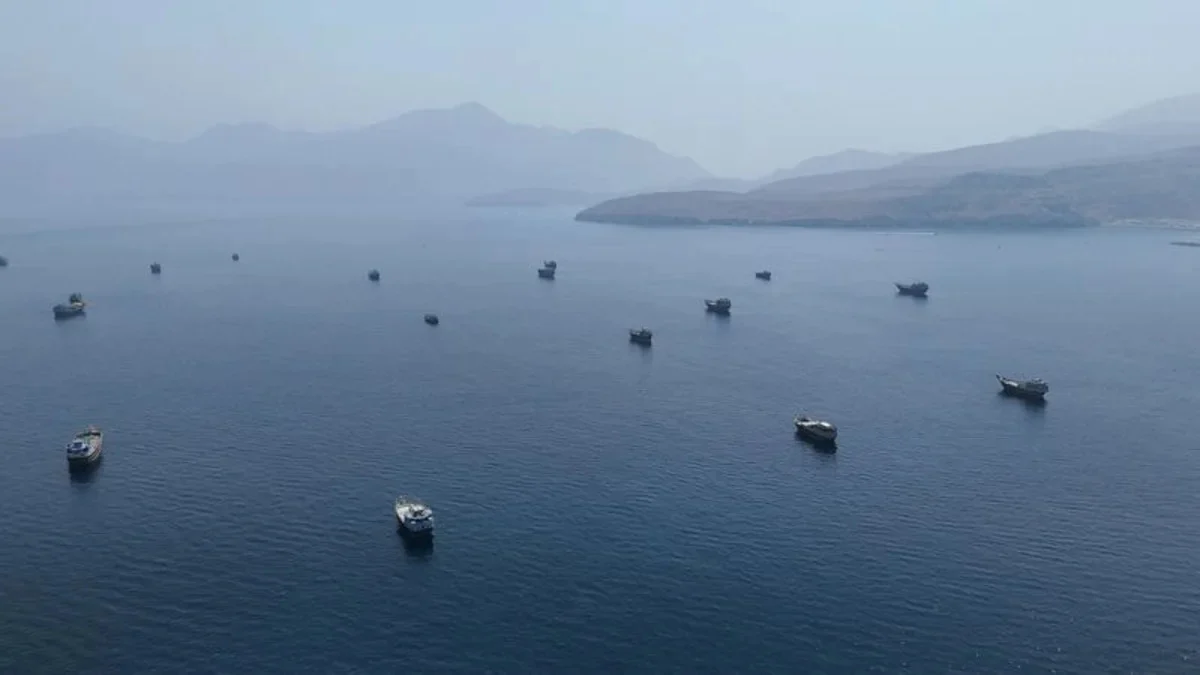
The Strait of Hormuz is an indispensable chokepoint in global energy trade, through which approximately one-fifth of the world’s total oil consumption and a significant portion of liquefied natural gas (LNG) supplies transit daily. Before the onset of intensified US-Israeli attacks on Iran, which commenced in late February, this narrow waterway was a critical conduit for an average of 21 million barrels per day (bpd) of crude oil, condensate, and refined petroleum products. Any disruption or threat of disruption to shipping in the Strait has historically sent shockwaves through global energy markets, often leading to sharp price spikes due to fears of supply shortages. The current Iranian overture, therefore, represents a potentially significant de-escalation in a region fraught with tensions that have frequently threatened global energy stability.
Hamad Hussain, Senior Climate and Commodities Economist at Capital Economics, weighed in on the development, suggesting that the Iranian comments could be an encouraging sign that ongoing diplomatic efforts might be yielding positive results. However, Hussain cautioned that the path to a lasting resolution may still be fraught with "other obstacles," citing potential issues such as "tolls and fees" that would need to be addressed before a comprehensive agreement could be reached. This highlights that while the immediate risk of closure might be receding, the operational and political complexities of fully normalizing transit through the Strait remain considerable.
Saudi Arabia Restores Key Export Route
Further bolstering market confidence in supply stability was the news regarding Saudi Arabia’s oil infrastructure. Three sources briefed on the matter confirmed that Saudi Arabia had successfully restarted operations at its crucial East-West Pipeline. This restoration paves the way for the resumption of crude exports from its Red Sea port of Yanbu, potentially as early as later on Tuesday. The pipeline, a vital artery for Saudi oil exports, had been forced to shut down on September 13 following drone attacks, which subsequently halted crude loadings at Yanbu.
The East-West Pipeline is a critical strategic asset for Saudi Arabia, allowing it to bypass the Strait of Hormuz for a portion of its crude exports. Its capacity of approximately 5 million barrels per day (bpd) provides a significant alternative route, particularly for shipments destined for European markets, reducing reliance on the Persian Gulf exit. The drone attacks that caused the shutdown were widely attributed to Houthi rebels in Yemen, who have frequently targeted Saudi oil infrastructure in recent years, escalating regional tensions and demonstrating the vulnerability of critical energy facilities. The swift repair and resumption of operations at both the pipeline and Yanbu port underscore Saudi Arabia’s commitment to maintaining stable supply flows and its resilience in the face of security challenges.
Despite the disruption at Yanbu, Saudi Aramco, the Kingdom’s state-owned oil giant, had proactively increased its exports through the Strait of Hormuz to compensate. Tanker tracking data revealed that approximately 14 million barrels of Saudi crude were loaded onto seven supertankers inside the Gulf on Sunday, demonstrating the flexibility and adaptive capacity of the Kingdom’s oil export network to reroute supplies through available channels. This strategic maneuvering helped mitigate the impact of the Yanbu disruption on global markets, preventing a more severe price reaction.
Geopolitical Undercurrents at the UN General Assembly
The backdrop to these energy market developments is the ongoing UN General Assembly in New York, where world leaders, including U.S. President Donald Trump, are engaged in high-stakes diplomatic meetings. These discussions are unfolding against a complex and often volatile geopolitical landscape, characterized by an unstable Middle East and Russia’s 4-1/2-year-old war in Ukraine, which shows no immediate signs of abating. The presence of these global leaders provides a crucial platform for dialogue that can directly influence regional stability and, by extension, global energy markets.
The Middle East remains a geopolitical tinderbox, with various conflicts and rivalries influencing oil production and transit. The Yemen conflict, the broader US-Iran standoff, and regional proxy struggles all contribute to an environment of uncertainty that keeps oil prices sensitive to political developments. Meanwhile, the protracted conflict in Ukraine continues to exert pressure on global energy supplies, particularly natural gas and refined products, due to sanctions against Russia, a major energy exporter, and disruptions to traditional trade routes. These broader geopolitical factors mean that while immediate supply fears might ease, the underlying volatility remains a significant concern for traders and policymakers alike. The UN General Assembly offers a crucial arena where diplomatic breakthroughs, or failures, can have immediate and far-reaching consequences for the energy sector.
Market Implications and Refined Product Shortages
While the immediate outlook for crude oil appears to be influenced by easing supply concerns, the market for refined products, particularly diesel, faces more acute challenges. Ole Hansen, Head of Commodity Strategy at Saxo Bank, articulated this distinction, stating that he does not foresee significant further downside to oil prices until there is a tangible increase in supplies through the Strait of Hormuz, especially for refined products, where shortages are currently most pronounced.
The global diesel market has been particularly strained, with prices rallying to record highs in both Europe and the United States. This surge is directly attributable to the combined effects of the conflicts in Iran (implying the broader Middle East instability and sanctions) and Ukraine, which have sharply curtailed exports from some of the world’s largest producers, including Russia, Saudi Arabia, and the United Arab Emirates. Russia, a major exporter of diesel, has faced extensive sanctions, redirecting its exports and creating supply imbalances in traditional markets. Simultaneously, increased demand for diesel, driven by industrial activity and agricultural needs, has exacerbated the supply crunch. The reliance on these key producers for refined products means that geopolitical disruptions in these regions have a more immediate and severe impact on downstream markets, potentially leading to inflationary pressures and economic slowdowns in importing nations.
Analyst Insights and Future Market Dynamics
The current market sentiment, while bearish in the short term, is subject to rapid shifts based on geopolitical realities. Analysts are closely watching the progress of diplomacy at the UN General Assembly. A successful de-escalation of tensions between the US and Iran, leading to a permanent opening of the Strait of Hormuz and potentially even a return of Iranian crude to global markets, could exert sustained downward pressure on prices. Conversely, any breakdown in talks or renewed military posturing could quickly reverse Tuesday’s gains.
The role of OPEC+ (the Organization of the Petroleum Exporting Countries and its allies, including Russia) also remains critical. The group has been carefully managing supply to stabilize the market amidst demand fluctuations and geopolitical uncertainties. While current output levels are aimed at meeting global demand, any significant increase in Iranian supply would necessitate a re-evaluation of OPEC+ quotas to avoid a supply glut. This delicate balancing act by major producers will be a key determinant of price stability in the coming months. Furthermore, global demand forecasts remain a significant variable. While post-pandemic recovery spurred demand, concerns over a potential global economic slowdown or recession could dampen future consumption, adding another layer of complexity to market predictions.
Broader Economic and Geopolitical Ramifications
The volatility in oil prices has far-reaching economic implications. Lower crude prices, if sustained, can provide relief to consumers through cheaper fuel and reduced transportation costs, potentially easing inflationary pressures in many economies. However, for oil-producing nations, particularly those heavily reliant on oil revenues, a sustained price drop can strain national budgets and impact investment plans. Conversely, high refined product prices, especially diesel, can act as a drag on economic activity, increasing operational costs for industries like logistics, manufacturing, and agriculture.
From a geopolitical standpoint, the easing of tensions in the Gulf, even temporarily, could signal a potential shift towards de-escalation, which would be welcomed by the international community. A stable and secure Strait of Hormuz is vital not just for energy security but for global trade routes more broadly. However, the underlying conflicts in the Middle East and Ukraine underscore the fragility of this stability. Any perceived weakness or concession in diplomatic efforts could embolden actors seeking to disrupt regional peace, highlighting the continuous need for robust diplomatic engagement and conflict resolution mechanisms.
The Path Forward: Diplomacy, Security, and Supply Stability
The immediate future of oil prices hinges on a confluence of factors: the genuine progress of US-Iran diplomacy, the continued operational integrity of Saudi Arabian oil infrastructure, and the broader geopolitical climate. While Tuesday’s market reaction reflects a positive sentiment regarding near-term supply, the structural challenges in the global energy market, including the tight refined product supplies and ongoing regional conflicts, mean that volatility is likely to persist. For a truly stable energy market, sustained diplomatic efforts, robust security measures for critical infrastructure, and a balanced approach to supply management from major producers will be paramount. The world watches closely as leaders at the UN General Assembly navigate these complex issues, with direct implications for global energy security and economic stability.
