

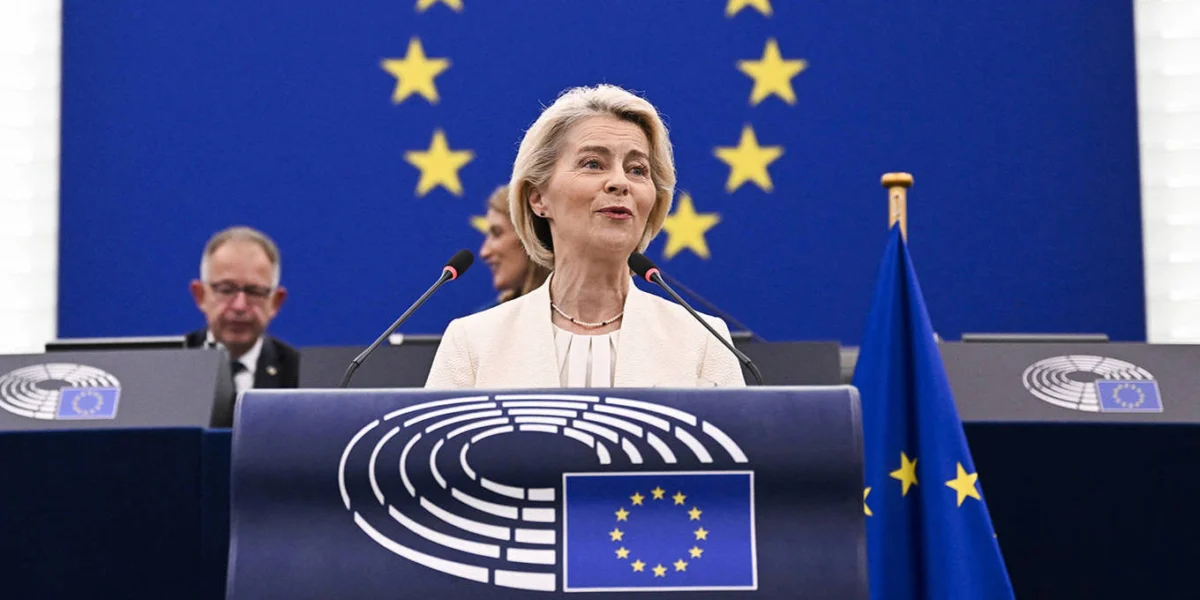
European Commission President Ursula von der Leyen’s recent proposal for a new Congress of Europe, unveiled during her State of the Union address, represents a significant, albeit challenging, endeavor to recalibrate the European Union’s trajectory amidst an increasingly complex geopolitical landscape. Echoing the spirit of its 1948 predecessor, this initiative aims to gather diverse voices to chart a course for Europe’s future. However, its success hinges on its ability to learn from the pitfalls of past attempts at large-scale continental dialogues and to forge a truly inclusive and impactful platform.
A Call to Reflection: The Legacy of 1948 and the Need for Renewal
The inspiration for the proposed Congress of Europe can be traced back to a pivotal moment in post-war history. In May 1948, the Congress of Europe convened in The Hague, bringing together a distinguished assembly of political leaders, intellectuals, and prominent figures from civil society. This gathering, held in the shadow of World War II’s devastation and the burgeoning Cold War, sought to articulate a vision for a unified and peaceful European continent. Key outcomes included the establishment of the European Movement and a powerful call for political, economic, and social union, directly influencing the creation of institutions like the Council of Europe in 1949. The Hague Congress was instrumental in articulating foundational principles of European integration, emphasizing peace, democracy, and cooperation as cornerstones of a revitalized continent.
President von der Leyen’s contemporary call for a similar congress, scheduled to coincide with the 70th anniversary of the Treaty of Rome in 2027, is a deliberate attempt to rekindle this spirit of ambitious, forward-looking deliberation. The Treaty of Rome, signed on March 25, 1957, established the European Economic Community (EEC), a precursor to the modern European Union, and laid the groundwork for economic cooperation and the eventual single market. By invoking this historical parallel, von der Leyen signals a desire to undertake a fundamental reassessment of Europe’s role and capabilities in the 21st century.
Geopolitical Pressures: The Urgent Context for a New European Dialogue
The impetus for a new Congress of Europe is deeply rooted in the escalating geopolitical challenges confronting the European Union. The post-Cold War era of relative stability has given way to a period of heightened volatility, marked by renewed great power competition, the resurgence of aggressive nationalism, and the erosion of established international norms.
Key Geopolitical Challenges:
- The War in Ukraine: Russia’s full-scale invasion of Ukraine, launched in February 2022, has fundamentally reshaped the European security architecture. It has exposed vulnerabilities in the EU’s energy security, highlighted the need for increased defense spending and coordination, and forced a re-evaluation of relations with Moscow. The conflict has also spurred unprecedented levels of EU unity in imposing sanctions and providing support to Ukraine, demonstrating both resilience and the immense strain on the Union’s resources and political capital.
- Global Power Shifts: The rise of China as a global economic and geopolitical player, coupled with the shifting dynamics in the Middle East and Africa, necessitates a coherent and unified European response. The EU must navigate complex trade relationships, assert its values in international forums, and contribute to global problem-solving in areas such as climate change, pandemics, and migration.
- Internal Divides and Democratic Backsliding: While the EU has shown remarkable unity in the face of external threats, internal challenges persist. Concerns about democratic backsliding in some member states, the rise of populist movements, and differing economic interests continue to test the cohesion of the Union. These internal fissures can weaken the EU’s ability to project a unified voice on the global stage.
- Technological Disruption: The rapid pace of technological advancement, from artificial intelligence to cybersecurity, presents both opportunities and challenges. The EU must develop robust strategies to foster innovation, ensure digital sovereignty, and mitigate the risks associated with new technologies, including disinformation campaigns and cyberattacks.
- Climate Change and Environmental Security: The existential threat of climate change requires a sustained and ambitious response. The EU has been a leader in setting climate targets, but the implementation of the Green Deal and other initiatives faces significant economic and political hurdles. Ensuring environmental security is increasingly intertwined with geopolitical stability.
In this context, the proposed Congress of Europe is envisioned as a forum to grapple with these multifaceted issues, to foster a shared understanding of the challenges, and to collectively devise innovative solutions. It aims to move beyond incremental policy adjustments and to engage in a more profound reflection on Europe’s identity, purpose, and future direction.
Learning from the Past: Addressing the Shortcomings of Previous Initiatives
While the historical precedent of the 1948 Congress of Europe offers a compelling model, it is crucial to acknowledge that not all large-scale European dialogues have yielded their desired outcomes. Past attempts to foster deeper integration or to address significant challenges have sometimes been hampered by a lack of inclusivity, insufficient follow-through, or an inability to translate deliberations into concrete action.
Potential Pitfalls to Avoid:
- Lack of Genuine Inclusivity: The original Hague Congress was lauded for its diverse participants. However, future initiatives risk becoming dominated by established political elites or specific interest groups. To be effective, the new Congress must actively seek out and incorporate a broad spectrum of voices, including youth representatives, marginalized communities, small and medium-sized enterprises, and those often overlooked in traditional policy debates.
- Symbolism Over Substance: There is a danger that the Congress could become a purely symbolic event, a grand pronouncement followed by a return to business as usual. The proposed Congress must establish clear objectives, a structured agenda, and mechanisms for accountability to ensure that discussions lead to tangible policy recommendations and actionable outcomes.
- Fragmented National Agendas: Member states often approach European integration with differing national priorities and levels of commitment. A successful Congress will require a delicate balancing act, fostering a sense of shared European destiny while respecting national diversities and ensuring that proposals are politically feasible for all member states.
- Insufficient Public Engagement: The success of any major European undertaking relies on public buy-in. The Congress must not be perceived as an elite-driven process. Mechanisms for widespread public consultation, debate, and participation are essential to build legitimacy and foster a sense of shared ownership of the outcomes.
- Bureaucratic Inertia: The European Union, by its nature, is a complex bureaucratic structure. The Congress must find ways to cut through red tape and to ensure that its recommendations are effectively integrated into the EU’s legislative and policy-making processes, rather than becoming lost in the labyrinth of Brussels.
Structuring for Impact: Towards a Functional Framework for the Congress
For the proposed Congress of Europe to transcend mere rhetoric and deliver meaningful change, its structure and operational framework will be paramount. This necessitates a carefully considered approach to its design, participation, and follow-up mechanisms.
H2: Key Pillars of a Successful Congress Framework
1. Defining Clear Objectives and Scope:
The Congress needs a precisely defined mandate. Is it intended to foster a broader public debate on European values and identity? Is it aimed at identifying specific policy solutions to pressing geopolitical challenges? Or is it a platform for constitutional reform? Clarity on these objectives will guide the selection of participants and the shape of the deliberations. For instance, if the focus is on security, experts in defense, foreign policy, and economics will be crucial. If it’s about societal cohesion, sociologists, educators, and community leaders will be vital.
2. Ensuring Diverse and Representative Participation:
The selection of participants is perhaps the most critical element. Beyond political leaders and established academics, the Congress should actively recruit:
- Youth Delegates: Young Europeans represent the future and often bring fresh perspectives on issues like climate change, digital rights, and employment.
- Civil Society Representatives: Grassroots organizations, NGOs, trade unions, and advocacy groups offer invaluable insights into the realities faced by citizens.
- Business Leaders and Entrepreneurs: Particularly those from SMEs, can provide practical perspectives on economic challenges and opportunities.
- Cultural and Intellectual Figures: Artists, writers, and thinkers can contribute to articulating a shared European identity and vision.
- Experts from Non-EU European Countries: Including nations in the Western Balkans, Eastern Partnership countries, and others with close ties to the EU, could foster broader European cooperation and understanding.
3. Establishing Thematic Working Groups:
To manage the breadth of issues, the Congress should be organized around focused working groups, each tackling a specific area of concern. Potential themes could include:
- European Security and Defense: Addressing the implications of the war in Ukraine, fostering strategic autonomy, and enhancing collective defense capabilities.
- Economic Resilience and Competitiveness: Strategies for navigating global economic shifts, fostering innovation, and ensuring fair competition.
- Climate Action and Green Transition: Accelerating the implementation of the European Green Deal and ensuring a just transition.
- Digital Sovereignty and Technological Advancement: Shaping Europe’s role in the digital age, addressing AI governance, and combating cyber threats.
- Democratic Values and Rule of Law: Strengthening democratic institutions, combating disinformation, and promoting social cohesion.
- European Identity and Cultural Exchange: Exploring how to foster a shared sense of belonging and celebrate Europe’s diverse cultural heritage.
4. Implementing Robust Deliberation and Decision-Making Processes:
The Congress should employ a range of deliberative methods, including plenary sessions, workshops, and facilitated discussions. Transparency in these processes is key. While it may not have direct legislative power, its recommendations should carry significant weight. Mechanisms could include:
- Consensus-Building Efforts: Encouraging participants to find common ground.
- Expert Consultations: Ensuring that deliberations are informed by evidence and research.
- Public Consultations: Allowing citizens to provide input and feedback on proposed ideas.
5. Establishing Clear Follow-Up and Accountability Mechanisms:
A critical lesson from past initiatives is the need for concrete follow-up. The Congress should not be a one-off event.
- Commitment to Action: The European Commission and other EU institutions must commit to seriously considering and, where appropriate, implementing the Congress’s recommendations.
- Regular Reporting: Mechanisms should be established to report on the progress of implementing the Congress’s outcomes.
- Ongoing Dialogue: The spirit of the Congress should be maintained through continued engagement and dialogue between citizens, policymakers, and institutions.
The Road Ahead: Opportunities and Uncertainties
The proposed Congress of Europe, while ambitious, faces significant hurdles. The political will of member states, the ability to navigate divergent national interests, and the capacity to mobilize genuine public engagement will all be critical determinants of its success.
Data Points to Consider:
- European Parliament Elections (2024): The results of the European Parliament elections will set the political tone and mandate for the Commission’s agenda, potentially influencing the momentum and reception of the Congress.
- EU Budgetary Allocations: The feasibility of implementing any ambitious proposals will depend on budgetary considerations and the willingness of member states to allocate necessary resources.
- Public Opinion Polls: Tracking public sentiment on European integration and specific policy areas will provide valuable context for the Congress’s discussions. For example, Eurobarometer surveys consistently show varying levels of public support for deeper integration across different member states and on different issues.
Potential Reactions from Key Stakeholders:
- Member State Governments: Reactions are likely to be mixed, with some seeing it as an opportunity to shape Europe’s future and others viewing it with skepticism, fearing a potential erosion of national sovereignty or a shift in power dynamics.
- European Parliament: The Parliament will likely welcome the initiative as a means to enhance democratic legitimacy and to push for more ambitious European policies.
- Civil Society Organizations: Many will likely see it as a crucial opportunity to influence policy and to advocate for their respective causes, provided the inclusivity criteria are met.
- Citizens: Public reception will depend heavily on the perceived relevance and impact of the Congress. If it is seen as an elite exercise detached from everyday concerns, it risks generating apathy.
The success of the Congress of Europe will ultimately be measured not by the grandiosity of its pronouncements, but by its tangible impact on the lives of European citizens and its contribution to a more secure, prosperous, and unified continent. It is a bold vision, but one that requires meticulous planning, genuine commitment, and a deep understanding of the complex tapestry of European challenges and aspirations. The coming years will reveal whether this ambitious initiative can indeed chart a viable and impactful path forward for a Union at a critical juncture.
