

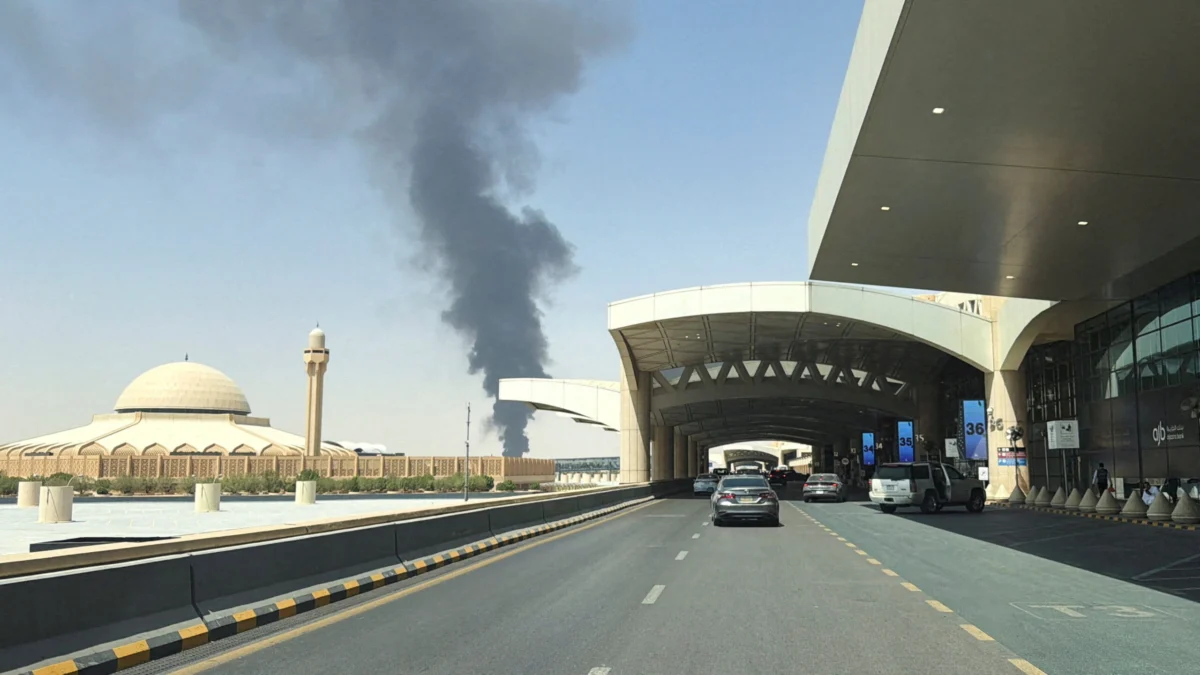
A senior Iranian security official has confirmed that Tehran has formally transmitted its conditions for de-escalating regional conflicts and ending what it describes as "the war" to the United States, utilizing the diplomatic channels provided by Qatari mediators. This significant development, reported on September 20, 2026, marks a critical juncture in the long-standing and often volatile relationship between the two nations, which has been characterized by deep mistrust, proxy conflicts, and a complex web of regional security challenges. The announcement comes amidst heightened tensions following a recent incident in Saudi Arabia, underscoring the urgency of diplomatic engagement to avert further escalation.
Context of Heightened Regional Tensions and Recent Incidents
The revelation of Iran’s diplomatic overture arrives against a backdrop of persistent instability across the Middle East, particularly in the Arabian Peninsula. Just one day prior to the official announcement, on September 19, 2026, a large plume of black smoke was seen rising from the fuel storage area at King Khalid International Airport in Riyadh, Saudi Arabia. While official attribution for the attack was not immediately detailed in the provided information, such incidents have historically been claimed by or attributed to Houthi rebels in Yemen, who are widely perceived to receive support from Iran. This pattern of strikes on Saudi infrastructure, including oil facilities and airports, has become a recurring feature of the protracted Yemen civil war, consistently raising alarm bells about regional security and the potential for broader conflict. The incident in Riyadh serves as a stark reminder of the fragile security environment and the immediate need for a de-escalation pathway.
The term "ending war" used by the Iranian official likely encompasses not a declared war between Iran and the US, but rather the cessation of various proxy conflicts, indirect confrontations, and the broader geopolitical standoff that has seen the region embroiled in a state of perpetual low-intensity conflict for years. This includes, but is not limited to, the devastating civil war in Yemen, tensions in the Persian Gulf and Strait of Hormuz, and the broader struggle for regional influence.
The Indispensable Role of Qatari Mediation
Qatar’s emergence as a crucial intermediary in this high-stakes diplomatic exchange is a testament to its carefully cultivated role as a neutral broker in a deeply polarized region. The small Gulf nation has, for years, positioned itself as a bridge between various antagonists, leveraging its relationships with both Western powers and regional actors, including Iran. Qatar’s ability to host discussions and facilitate communications that direct parties often struggle to initiate has proven invaluable in several critical junctures.
Historically, Qatar has played a significant role in mediating disputes ranging from the Israeli-Palestinian conflict to internal Afghan peace talks. Its diplomatic infrastructure, coupled with a policy of maintaining open channels with a diverse array of states, even those considered adversaries by its neighbors, has solidified its reputation as a reliable and discreet facilitator. For the current US-Iran standoff, Qatar’s capital, Doha, offers a geographically convenient and politically palatable venue for indirect negotiations, allowing both Washington and Tehran to convey messages and conditions without the political optics of direct engagement, which could be perceived as a concession by hardliners on either side. The choice of Qatar as the conduit underscores the sensitivity and the high stakes involved in these discussions, where trust is minimal and every diplomatic move is scrutinized.
A Tumultuous History: US-Iran Relations
To fully appreciate the significance of this diplomatic move, it is crucial to understand the deeply entrenched animosity and mistrust that have defined US-Iran relations for over four decades. The 1979 Islamic Revolution and the subsequent hostage crisis marked a decisive break, setting the two nations on a collision course. Decades of US sanctions, Iran’s pursuit of a nuclear program, its support for regional proxy groups, and divergent strategic interests have fueled a cycle of confrontation.
The landmark 2015 Joint Comprehensive Plan of Action (JCPOA), or Iran nuclear deal, represented a brief period of rapprochement, offering a pathway to alleviate sanctions in exchange for strict curbs on Iran’s nuclear activities. However, the US withdrawal from the JCPOA in 2018 under the Trump administration, followed by the re-imposition and escalation of "maximum pressure" sanctions, plunged relations to new lows. This period saw increased military posturing, attacks on shipping in the Gulf, and the assassination of high-profile military figures, bringing the region repeatedly to the brink of outright conflict. Iran, in response, gradually rolled back its commitments under the nuclear deal, further complicating any future diplomatic efforts. The current attempt at dialogue via Qatar, therefore, represents a potential, albeit fragile, crack in this long-standing wall of antagonism.
The Yemen Crisis: A Proxy Battleground and Humanitarian Catastrophe
The "war" that Iran’s official refers to is most prominently embodied by the devastating civil war in Yemen, which began in late 2014. The conflict pits the Iran-backed Houthi movement against the internationally recognized government, which is supported by a Saudi-led coalition. This war has not only led to an unparalleled humanitarian catastrophe, with millions facing famine and disease, but has also become a critical flashpoint in the broader regional rivalry between Saudi Arabia and Iran.
The Houthis, who control significant parts of northern Yemen, including the capital Sanaa, have repeatedly launched missile and drone attacks deep into Saudi territory, targeting critical infrastructure, including oil facilities, airports, and military bases. The September 19, 2026, incident at King Khalid International Airport is but the latest in a series of such assaults, demonstrating the Houthis’ continued capability to strike Saudi targets and the persistent threat these attacks pose to regional stability and global energy supplies. Saudi Arabia, for its part, has led an extensive air campaign and ground operations in Yemen, aiming to restore the internationally recognized government and counter what it perceives as Iranian expansionism. Both sides have been accused of committing war crimes, and international efforts to broker a lasting ceasefire and political settlement have largely failed. Any comprehensive agreement to "end the war" would undoubtedly need to address the complexities of the Yemen conflict.
Potential Iranian Conditions for De-escalation
While the specific conditions conveyed by Tehran remain undisclosed, informed speculation based on Iran’s stated grievances and strategic objectives suggests several key demands. Central among these is almost certainly the lifting of US sanctions. Iran has consistently maintained that these sanctions are illegal, economically debilitating, and an impediment to any meaningful diplomatic progress. A phased lifting of sanctions, particularly those impacting its oil exports and access to the global financial system, would be a primary condition.
Another critical demand would likely involve security guarantees regarding its nuclear program and regional influence. Tehran seeks assurances that any future agreement would not be unilaterally abandoned by a subsequent US administration. Furthermore, Iran may seek an end to what it perceives as US interference in its internal affairs and a reduction of US military presence in the Persian Gulf, which it views as a destabilizing factor.
From a regional perspective, Iran might also demand an end to the Saudi-led military campaign in Yemen and a more inclusive political process that acknowledges the Houthi movement’s role. Broader recognition of its legitimate security interests and an end to perceived hostile actions by regional rivals could also feature prominently in its conditions. It is plausible that Iran’s conditions also include a pathway back to a revitalized nuclear deal, albeit with potential adjustments or a broader scope that addresses its economic and security concerns more holistically.
Anticipated US Response and Counter-Demands
The US response to Iran’s conditions, while not yet public, is expected to be cautious and measured. Washington’s long-standing demands have centered on Iran’s nuclear program, its ballistic missile development, and its regional activities, particularly support for proxy groups. The US would likely seek:
- Full compliance with nuclear non-proliferation commitments: This would entail strict verification mechanisms and potentially a return to the parameters of the JCPOA, or even an expanded agreement.
- Cessation of support for regional proxy groups: Specifically, the US would demand an end to actions deemed destabilizing, such as arms transfers to the Houthis or other non-state actors.
- Restraint in ballistic missile development: While Iran views this as a defensive capability, the US and its allies see it as a threat to regional security.
- Adherence to international maritime laws: Ensuring freedom of navigation in critical waterways like the Strait of Hormuz.
- Respect for human rights: Though often secondary in security negotiations, human rights issues within Iran are a persistent concern for Washington.
The US approach would likely involve a combination of pressure and diplomacy, emphasizing that any sanctions relief would be contingent upon verifiable and sustained changes in Iranian behavior. The challenge for Qatari mediators will be to bridge the significant gap between these divergent sets of demands.
Reactions from Regional and International Actors
The news of Iran’s conditions being transmitted via Qatar is likely to elicit a range of reactions from key regional and international players:
- Saudi Arabia: Riyadh is expected to react with a mix of skepticism and cautious hope. While welcoming any genuine steps towards de-escalation, Saudi officials would likely emphasize the need for concrete actions from Iran, particularly regarding the Yemen conflict and an end to attacks on its territory. They would also likely reiterate their demands for a comprehensive and verifiable agreement that addresses Iran’s regional behavior.
- United Arab Emirates (UAE) and Bahrain: Other Gulf states, often aligned with Saudi Arabia, would likely echo similar sentiments, emphasizing the need for regional security guarantees and an end to Iranian interference.
- United Nations and European Union: International bodies and European powers, who have consistently advocated for de-escalation and a diplomatic resolution to the Iranian nuclear issue, would likely welcome the development as a positive step. They would probably urge both sides to engage constructively and leverage the Qatari mediation to its fullest potential, emphasizing the humanitarian imperative in Yemen and the global implications of regional stability.
- Israel: Israel would likely express deep skepticism, reiterating its concerns about Iran’s nuclear ambitions and its regional military activities, potentially urging the US to maintain a firm stance and ensure any deal does not compromise Israeli security.
Broader Implications for Regional Stability and Global Markets
The success or failure of this latest diplomatic initiative carries profound implications for the entire Middle East and beyond. A breakthrough could pave the way for a significant reduction in regional tensions, potentially leading to a de-escalation of conflicts, including the devastating war in Yemen. This, in turn, could unlock greater humanitarian access and facilitate peacebuilding efforts, offering a glimmer of hope to millions affected by ongoing crises.
Economically, a stable Gulf region is crucial for global energy markets. The Strait of Hormuz, a vital chokepoint for a significant portion of the world’s oil supply, is highly susceptible to regional tensions. Any movement towards de-escalation could lead to increased market stability, potentially influencing global oil prices and shipping insurance rates. Conversely, a failure of these talks could lead to a renewed cycle of escalation, further destabilizing the region and posing risks to the global economy.
Challenges and Outlook
Despite the cautious optimism surrounding this development, significant challenges remain. The deeply ingrained mistrust between Iran and the US, coupled with the complexity of their respective demands and the myriad of regional actors with their own agendas, makes a swift resolution unlikely. Hardliners on both sides could seek to derail any progress, fearing concessions.
The process will likely be protracted, involving multiple rounds of indirect communication and potentially direct talks at a later stage. The role of Qatar as a neutral and trusted intermediary will continue to be vital in navigating these treacherous diplomatic waters. For the international community, the hope remains that this exchange of conditions could mark the beginning of a sustained dialogue, ultimately leading to a comprehensive framework for de-escalation and a more stable future for a region long plagued by conflict. The world watches closely to see if this diplomatic lifeline, extended through Doha, can truly bridge the chasm between Washington and Tehran.
