

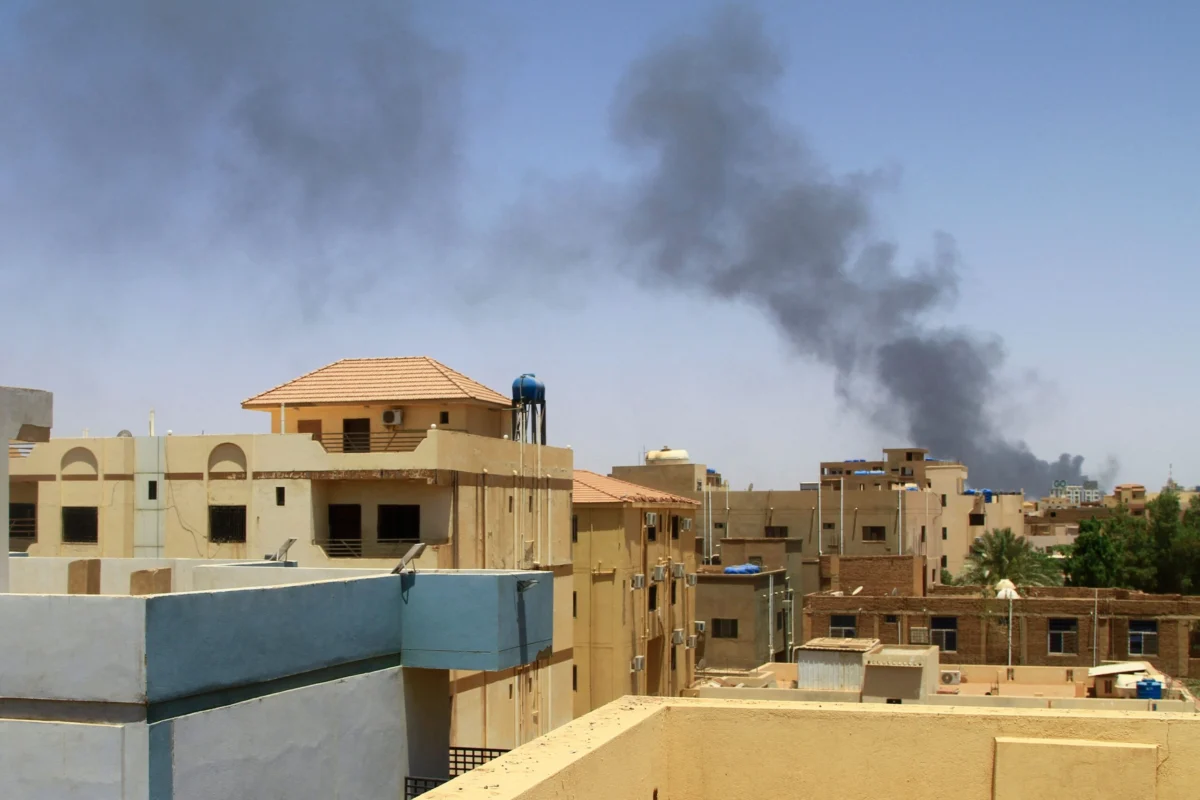
The promise of a temporary reprieve from the brutal conflict devouring Sudan’s capital evaporated on Friday morning as heavy gunfire and artillery shelling shattered a proposed 72-hour humanitarian ceasefire. Despite an announcement by the paramilitary Rapid Support Forces (RSF) that they would observe a truce to coincide with the Muslim holiday of Eid al-Fitr, residents in Khartoum and its sister city, Bahri, reported that the Sudanese Armed Forces (SAF) continued to deploy infantry and engage in fierce urban combat. The failure of the armistice underscores the deepening intractability of a power struggle between two rival generals that has already claimed hundreds of lives, displaced thousands, and pushed the nation to the brink of total collapse.
The Failed Armistice and Continued Hostilities
The RSF initiated the call for a ceasefire early Friday, stating that the 72-hour window was intended to open humanitarian corridors, allow for the evacuation of trapped civilians, and provide families the opportunity to reunite for Eid al-Fitr prayers. "The truce coincides with the blessed Eid al-Fitr… to open humanitarian corridors to evacuate citizens and give them the opportunity to greet their families," the RSF stated in an official communique. However, the sincerity of the proposal was immediately called into question as the sound of heavy weaponry continued to reverberate across the capital.
The Sudanese Army, led by General Abdel Fattah al-Burhan, did not officially endorse the RSF’s proposal in its immediate aftermath. In a pre-recorded video address posted to the army’s social media channels on Friday morning, General Burhan made no mention of a ceasefire, instead focusing on the military’s resolve to secure the country. Witnesses in central Khartoum reported that the morning Eid prayers, usually a time of communal celebration, were punctuated by the whistle of incoming shells and the rattle of machine-gun fire. In the Bahri district, situated across the Nile, large contingents of army regulars were seen deploying on foot, signaling a shift toward more intensive house-to-house clearing operations against RSF positions.
The RSF has accused the military of launching "sweeping attacks" on residential neighborhoods using aircraft and heavy artillery at the very moment citizens were preparing for holiday rituals. Conversely, the SAF maintains that its operations are necessary to dislodge "rebel" forces that have embedded themselves within civilian infrastructure, including hospitals and private homes.
A Chronology of the Conflict’s Explosion
The current violence did not emerge in a vacuum but is the culmination of months of simmering tensions over the restructuring of Sudan’s security apparatus. The timeline of the escalation provides critical context for the current impasse:
- April 11–13, 2023: Tensions spiked when the RSF began mobilizing troops toward the Merowe airbase and other strategic locations without the army’s consent. The SAF warned of a "dangerous turning point" and mobilization risks.
- April 15, 2023: Full-scale hostilities erupted in Khartoum and several other cities. Both sides traded blame for the initial spark, with the RSF claiming the army attacked their base in Soba, and the army claiming the RSF attempted to seize the presidential palace and the airport.
- April 16–18, 2023: The conflict transitioned from skirmishes to full-scale urban warfare. The SAF utilized its superior air power to strike RSF encampments, while the RSF leveraged its mobility and knowledge of urban terrain to seize key government buildings.
- April 19, 2023: International pressure mounted as the death toll surpassed 200. Multiple attempts at short-term "humanitarian pauses" failed within hours of being announced.
- April 21, 2023 (Eid al-Fitr): The RSF’s 72-hour truce fails to hold, with fighting reported in Omdurman, Bahri, and the heart of Khartoum.
The Architect of Discord: A Rivalry Between Generals
At the heart of the carnage is a personal and political feud between General Abdel Fattah al-Burhan, the head of the Sudanese Armed Forces, and General Mohamed Hamdan Dagalo, better known as Hemedti, the commander of the RSF. Once uneasy allies, the two men collaborated in the 2019 ousting of longtime autocrat Omar al-Bashir and subsequently joined forces in a 2021 military coup that dissolved the civilian-led transitional government.
The alliance fractured over an internationally backed framework agreement aimed at returning Sudan to civilian rule. The primary sticking point was the timeline for integrating the RSF—a paramilitary group with its origins in the Janjaweed militias of Darfur—into the regular army. Burhan advocated for a swift two-year integration process, while Hemedti insisted on a ten-year timeline that would allow him to maintain his independent power base.
Hemedti has framed his current offensive as a struggle for democracy against "remnants of the old regime," accusing Burhan of being a "criminal" and a "radical Islamist." Burhan, in turn, has labeled the RSF a "rebel militia" and told Al Jazeera that there is "no other option but the military solution." This rhetoric suggests that both leaders view the conflict as an existential zero-sum game, leaving little room for a negotiated settlement.
Humanitarian Collapse and the Flight of Civilians
The human cost of the fighting has been catastrophic. According to conservative estimates from the World Health Organization and local doctors’ unions, at least 350 people have been killed, though the actual figure is believed to be much higher as many bodies remain uncollected in the streets. In the city of El-Obeid, west of the capital, at least 26 people were killed in a single day of clashes marked by widespread looting and the destruction of markets.
Sudan’s healthcare system, already fragile after years of economic sanctions and political instability, is on the verge of total failure. In Khartoum, approximately 70% of hospitals near the conflict zones are out of service. Those that remain open are operating without electricity, running water, or sufficient medical supplies. Doctors have reported being targeted by snipers, and several ambulances have been caught in the crossfire.
The violence has triggered a mass exodus. Thousands of Khartoum residents have fled toward the outskirts or toward the border with Chad. The United Nations Refugee Agency (UNHCR) and the World Food Programme (WFP) estimate that between 10,000 and 20,000 people have crossed into Chad to escape the fighting in the Darfur region, where the conflict has reignited long-standing ethnic tensions.
The WFP was forced to suspend its operations across Sudan—one of its largest programs globally—after three of its staff members were killed in North Darfur during the opening days of the conflict. This suspension is particularly devastating given that nearly 16 million Sudanese—roughly one-third of the population—were already in need of humanitarian assistance before the current crisis began.
International Diplomatic Pressure and Geopolitical Risks
The international community has reacted with alarm to the prospect of a prolonged civil war in Africa’s third-largest country. UN Secretary-General Antonio Guterres, following a virtual summit with the African Union and the Arab League, issued a stern appeal for a cessation of hostilities. "There was a strong consensus on condemning ongoing fighting in Sudan and calling for cessation of hostilities as an immediate priority," Guterres stated, emphasizing that civilians must be allowed to reach safety and access medical care.
The United States, which had been heavily involved in mediating the transition to democracy, has endorsed the ceasefire proposal and warned of the regional implications. Sudan’s strategic location—bordering seven countries and sitting along the Red Sea—makes it a focal point for regional and global interests.
- Egypt: Maintains close ties with the Sudanese military and views a stable, army-led Sudan as essential for its own national security and its interests regarding the Nile waters.
- The Gulf States: Saudi Arabia and the UAE have significant investments in Sudan and have previously provided financial support to both the SAF and the RSF.
- Russia and the West: The conflict has the potential to become a proxy battleground. The Russian mercenary group Wagner has long been active in Sudan’s gold mining sector and has established ties with Hemedti’s RSF. Meanwhile, the U.S. and its allies are desperate to prevent the establishment of a Russian naval base on the Red Sea and to preserve the fragile path toward a pro-Western civilian government.
The Shadow of the Past and the Future of the State
The current crisis is a direct consequence of the "security-first" model that has dominated Sudan since the 1989 coup that brought Omar al-Bashir to power. By creating parallel security forces like the RSF to protect his regime from internal threats, Bashir inadvertently set the stage for the current fragmentation.
The 2019 revolution, which saw thousands of Sudanese citizens risk their lives to demand "Freedom, Peace, and Justice," now feels like a distant memory. The military junta that replaced Bashir has systematically dismantled the democratic aspirations of the people, first through the 2021 coup and now through this internal war.
As the Eid al-Fitr holiday progresses under the shadow of smoke and the sound of artillery, the prospects for a peaceful resolution appear bleak. Without a significant shift in the calculations of Burhan and Hemedti—or a more robust intervention from regional powers—Sudan faces the grim reality of a protracted conflict that could destabilize the entire Horn of Africa and the Sahel region. For the millions of Sudanese trapped in the crossfire, the failed truce is not just a diplomatic setback; it is a life-threatening betrayal of the peace they have sought for decades.
