

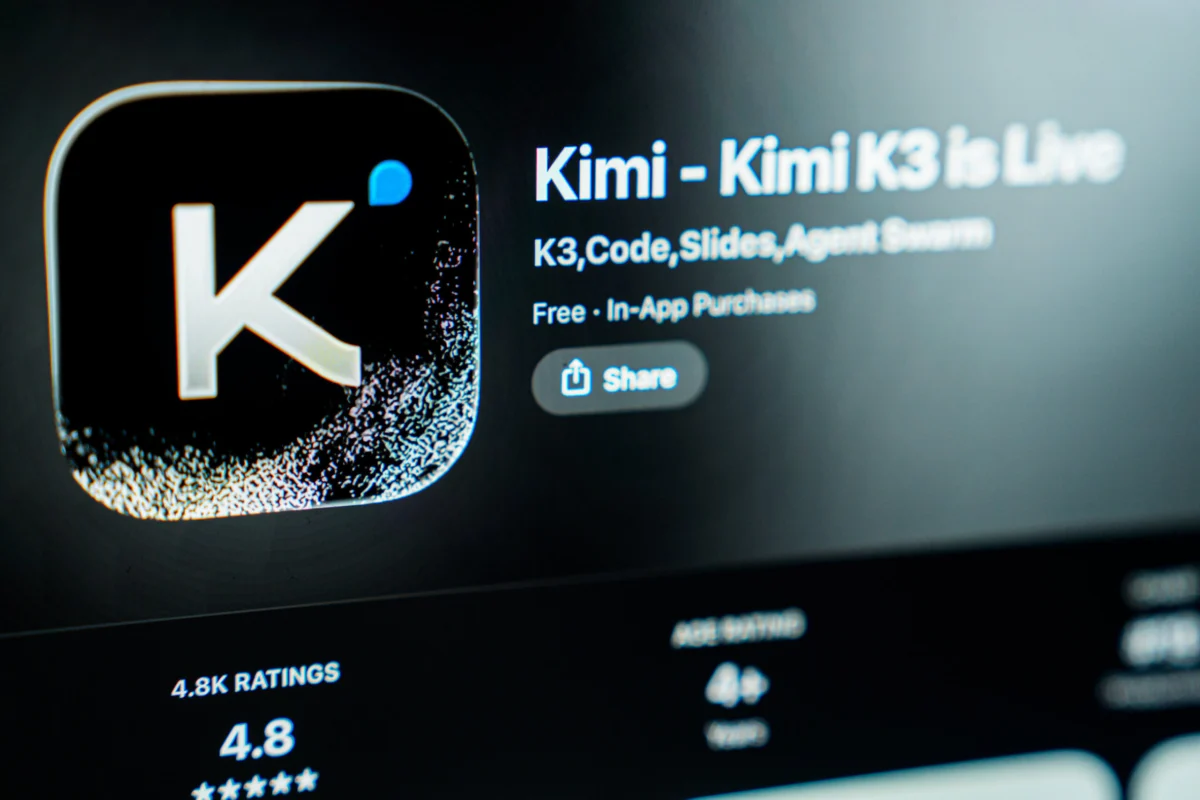
BEIJING – Moonshot AI, the rapidly emerging Chinese artificial intelligence startup behind the sophisticated Kimi large language model, announced on Thursday its strategic expansion into the financial services sector, revealing that a roster of prominent industry players, including leading investment banks, asset management funds, and venture capital firms, have already begun integrating its Kimi AI models into their proprietary tools. This significant move marks a pivotal moment for Moonshot AI, underscoring the accelerating trend of AI companies transitioning from foundational model development to delivering real-world, commercially viable applications within highly specialized and data-intensive industries.
The announcement, made public through Moonshot’s official channels on Thursday, July 21, 2026, detailed the launch of "Kimi for Financial Services," a bespoke suite of AI solutions tailored to meet the rigorous demands of the global financial landscape. Among the early adopters leveraging Kimi’s advanced analytical capabilities are the influential investment bank CICC (China International Capital Corporation) and prominent venture capital entities, including Sequoia China, which has recently rebranded as Hong Shan. This adoption by such key players validates Moonshot AI’s technological prowess and its ability to address complex financial workflows, from market analysis and report generation to risk assessment and investment strategy formulation.
The Strategic Imperative: AI’s Role in Modern Finance
The financial industry, characterized by its voluminous data, intricate regulatory frameworks, and constant need for rapid, informed decision-making, stands as an ideal frontier for advanced AI deployment. Global financial markets generate petabytes of data daily, encompassing everything from stock prices, trading volumes, and economic indicators to corporate filings, news feeds, and social sentiment. Traditional analytical methods often struggle to process this deluge of information efficiently, leading to potential delays in identifying opportunities or mitigating risks. Artificial intelligence, particularly large language models like Kimi, offers a transformative solution by automating data aggregation, enhancing pattern recognition, and providing predictive insights at unprecedented speeds.
Moonshot AI’s Kimi for Financial Services aims to directly address these challenges. The platform is designed to provide financial professionals with direct, streamlined access to a vast array of critical information, significantly enhancing their capabilities for in-depth analysis and comprehensive report generation. This is made possible through strategic partnerships with a consortium of leading industry data providers. Key collaborators include S&P Global Market Intelligence, a world-renowned source of financial data, analytics, and research; Crunchbase, a premier platform for business information and startup funding data; Wind, a dominant provider of financial data and software in China; local financial news leaders, ensuring up-to-the-minute market intelligence; and Tianyancha, a comprehensive business database offering insights into Chinese companies.
Beyond these commercial data partnerships, Kimi also boasts direct integration with critical public financial databases. Users can seamlessly access the U.S. Securities and Exchange Commission’s (SEC) EDGAR system, which houses an exhaustive collection of public companies’ financial filings, annual reports, and other disclosures. This direct access eliminates the need for manual data extraction, dramatically speeding up due diligence processes and competitive analysis. Furthermore, Kimi can tap into the vast economic datasets provided by the International Monetary Fund (IMF) and the World Bank, offering macroeconomic perspectives vital for global investment strategies. The platform also connects to the U.S. Federal Reserve Economic Data (FRED) site, a comprehensive source for economic and financial data covering a wide range of indicators from various sources.
Endorsements and the Promise of AI-Driven Efficiency
The launch was accompanied by strong endorsements from industry veterans, highlighting the tangible benefits Kimi brings to financial workflows. Samuel Fischer, the Beijing branch manager at Deutsche Bank, featured prominently in a promotional video published by Moonshot AI on Thursday. In his statement, Fischer emphasized the critical confluence of advanced AI capabilities with specialized professional expertise. "The real inflection point really is the combination of stronger AI capabilities with professional expertise," Fischer articulated. He further elaborated on the competitive advantage of AI providers that deeply understand the intricacies of financial operations: "AI companies that understand real financial workflows and can deliver reliability and data security will be particularly well positioned to contribute to this transformation."
Fischer underscored the practical applications of Kimi, noting its ability to synthesize disparate data points. "AI can now organize and compare this kind of information, identify inconsistencies, and support initial analysis," he added. While Deutsche Bank’s precise client relationship with Moonshot AI was not immediately clarified, and the bank declined to comment on the matter, Fischer’s insights reflect a broader industry sentiment regarding the transformative potential of AI in finance. His comments implicitly suggest that financial institutions are actively seeking AI solutions that not only offer powerful computational abilities but also integrate seamlessly into existing, complex operational environments, all while upholding stringent standards of data security and regulatory compliance.
Moonshot AI’s Journey and the Competitive Landscape
Moonshot AI’s ascent in the global AI arena has been remarkably swift. Founded by a team of former Google and Meta AI researchers, the Beijing-based startup quickly distinguished itself with its focus on developing cutting-edge large language models. The company’s flagship Kimi K3 model, which forms the technological backbone of the new financial services offering, was first unveiled to the public in July of the preceding year (2025, assuming the article’s date context is July 2026). The K3 model rapidly gained recognition for its extended context window, enabling it to process and understand significantly longer texts compared to many of its contemporaries. This capability is particularly crucial in finance, where legal documents, quarterly reports, and analyst notes can span hundreds of pages.
The release of the Kimi K3 model positioned Moonshot AI as a formidable competitor against leading U.S. AI developers, including OpenAI, the creator of ChatGPT, and Anthropic, known for its Claude models. The global race for AI dominance has intensified, with companies vying for superior model performance, wider commercial adoption, and strategic partnerships. Moonshot AI’s success in attracting significant venture capital funding and now securing major financial clients underscores China’s growing prowess in the AI sector, challenging the narrative of sole Western leadership in foundational AI research and application.
The competitive landscape within China itself is also vibrant, with other domestic giants like Baidu, Alibaba, and Tencent also investing heavily in their own large language models and AI solutions. However, Moonshot AI, as a dedicated AI startup, has demonstrated an agility and focus that has allowed it to carve out a distinct niche, particularly in specialized applications. The company has reportedly filed confidentially for an Initial Public Offering (IPO) in Hong Kong, a move that, if confirmed, would further solidify its market position and provide capital for continued expansion and research. While Moonshot AI has consistently refrained from commenting on market rumors or speculation regarding its IPO plans, the industry anticipates significant investor interest given the company’s rapid growth and strategic market entries.
User Experience and Accessibility
Moonshot AI has designed Kimi for Financial Services with user accessibility in mind. While the platform offers advanced capabilities, it does not necessarily require users to download a separate, dedicated interface. This suggests a flexible integration approach, potentially allowing financial firms to embed Kimi’s functionalities directly into their existing internal systems and proprietary dashboards, minimizing disruption and maximizing adoption rates.
However, a test conducted on Kimi’s mobile application indicated a tiered access model for data, a common practice for premium services. Different kinds of data and potentially varying levels of analytical depth are available to users depending on their subscription tier. This strategy allows Moonshot AI to cater to a diverse range of financial professionals, from individual analysts requiring basic data access to large institutional clients needing comprehensive, real-time intelligence and advanced analytical tools. Subscriptions to Kimi are structured to accommodate various needs and budgets, starting at 49 yuan (approximately $7.31) per month and scaling up to 699 yuan (approximately $104.23) for higher-tier packages. This flexible pricing model makes advanced AI tools accessible to a broader segment of the financial industry, democratizing access to powerful analytical capabilities.
Broader Impact and Future Implications
The launch of Kimi for Financial Services by Moonshot AI carries significant implications, both for the company and for the broader global financial and technological landscapes.
For Moonshot AI: This move firmly establishes the company as a leading provider of enterprise AI solutions, moving beyond foundational model development to tangible commercialization. Securing marquee clients like CICC and Hong Shan provides strong validation for Kimi’s capabilities and credibility, which will be crucial for attracting further clients and investment. It positions Moonshot AI at the forefront of the application layer of AI, where the real value generation often occurs.
For the Financial Industry: The widespread adoption of advanced AI models like Kimi is poised to fundamentally transform financial operations. It promises to significantly boost efficiency in data analysis, report generation, and due diligence. Risk management will become more sophisticated with AI’s ability to detect subtle patterns and anomalies in vast datasets. Investment decision-making will be informed by deeper, faster insights, potentially leading to more agile and profitable strategies. The automation of routine tasks will free up human analysts to focus on higher-value, strategic work requiring nuanced judgment and creative problem-solving. However, it also raises questions about the future of traditional financial roles and the need for upskilling the workforce to effectively collaborate with AI tools.
Data Security and Regulatory Compliance: The integration of AI into finance also brings heightened scrutiny regarding data security, privacy, and regulatory compliance. Financial institutions operate under stringent data protection laws (e.g., GDPR, CCPA, and similar regulations in China). Moonshot AI’s ability to "deliver reliability and data security," as noted by Samuel Fischer, will be paramount to its continued success. Ensuring that AI models handle sensitive financial data responsibly, prevent biases, and comply with evolving regulatory frameworks will be an ongoing challenge and a critical differentiator for AI providers in this sector. The direct access to sensitive data sources like SEC EDGAR and proprietary financial news feeds underscores the need for robust security protocols and ethical AI governance.
Global AI Competition and China’s Tech Ambition: This development further intensifies the global AI race. China has explicitly stated its ambition to become a world leader in AI by 2030, and companies like Moonshot AI are instrumental in achieving this goal. By demonstrating commercial success in a highly demanding sector like finance, Moonshot AI not only strengthens China’s domestic AI ecosystem but also enhances its competitive standing on the international stage, signaling its capacity to innovate and deploy advanced technologies at scale. The ability to integrate with both Chinese and international financial data sources also indicates a global outlook for Kimi’s application.
The Future Outlook: The launch of Kimi for Financial Services is likely just the beginning of a broader trend. As AI models become even more sophisticated and specialized, their applications in finance will expand to areas like algorithmic trading, personalized financial advice, fraud detection, and regulatory technology (RegTech). The success of Moonshot AI in this vertical could pave the way for other Chinese AI startups to target niche industries, fostering a vibrant and diverse AI application landscape. The journey from general-purpose AI models to industry-specific solutions is a critical phase in the maturation of the AI industry, and Moonshot AI’s latest announcement firmly places it at the vanguard of this evolution.
