

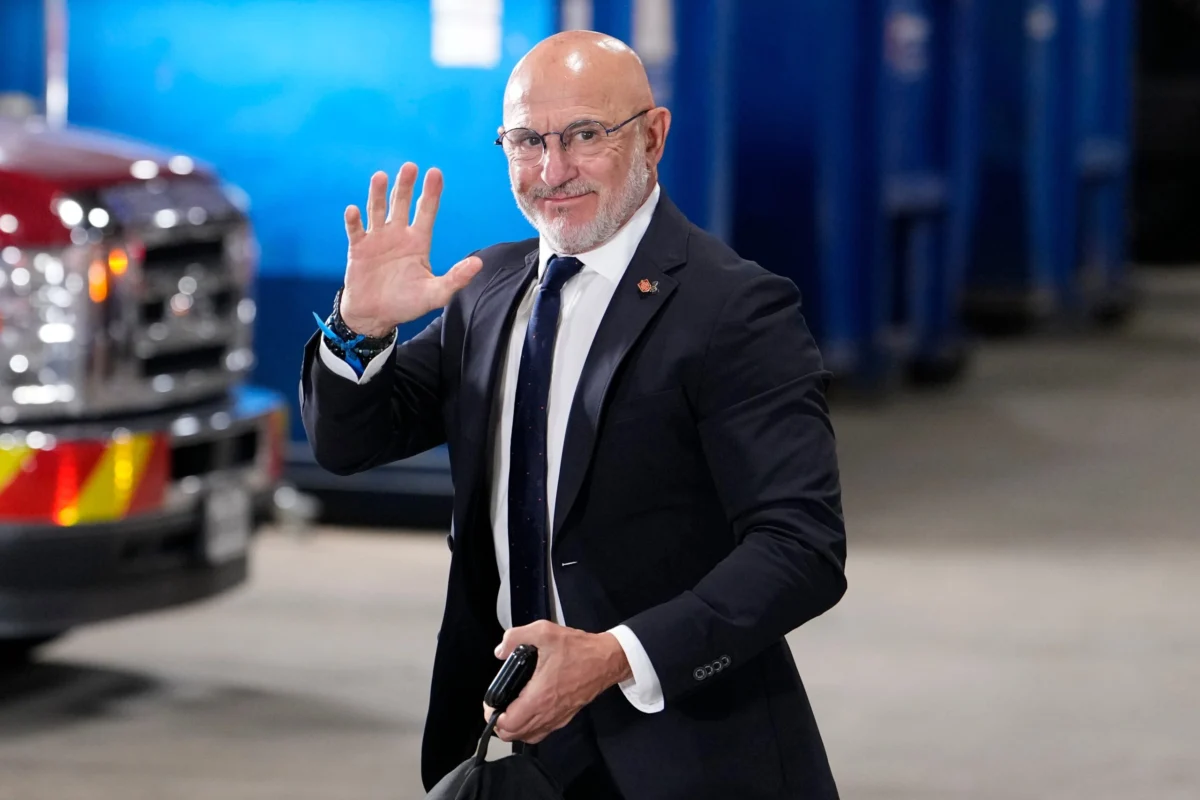
In a poignant demonstration of national solidarity and an overt acknowledgment of a critical humanitarian situation, Spain’s national football team coach, Luis de la Fuente, announced his squad for the upcoming Nations League fixtures from Ceuta on Friday. This unprecedented move, marking the first squad announcement since Spain’s triumph at the FIFA Women’s World Cup in July, transformed a routine sporting update into a powerful statement of support for the Spanish autonomous city, which has recently been at the nexus of a significant migration crisis. The decision underscores the growing intersection of sport and sociopolitical issues, with Spain leveraging its most prominent national symbol – its football team – to draw attention to a vital frontier.
A Symbolic Gesture from Spain’s National Coach
The announcement, delivered via a video featuring De la Fuente alongside local residents in Ceuta, transcended mere team selection. It served as a potent symbolic gesture, designed to elevate the profile of the Spanish exclave in North Africa and express solidarity with its inhabitants amidst ongoing challenges. While De la Fuente refrained from directly detailing the specifics of the border crossing or its wider ramifications, his declarative statement, "This is Ceuta, this is Spain," resonated deeply. It echoed a burgeoning sentiment across mainland Spain that Ceuta, often an overlooked territory for many Spaniards, warrants heightened attention and unwavering national support, particularly in light of the intense migration pressures it faces. The choice of venue highlights a strategic decision by the Royal Spanish Football Federation (RFEF) to align the national team with broader governmental and societal concerns, using the immense platform of international football to address pressing domestic and humanitarian issues.
Ceuta: A Geopolitical Crossroads and Humanitarian Frontline
Ceuta, along with Melilla, represents one of two Spanish territories situated on the northern African coast, sharing a complex and often tense border with Morocco. Its strategic location at the Strait of Gibraltar has rendered it a historical and contemporary crossroads of cultures, economies, and migration routes. Ceuta has been under Spanish sovereignty since 1580, fostering a unique demographic tapestry where Christians and Muslims, Spanish citizens and Moroccan residents, and daily cross-border workers coexist. Despite this relative harmony, the city’s heavily fortified border fence, coupled with its coastal proximity, makes it a frequent target for migrants from across Africa seeking to reach Europe in pursuit of a better life.
The migration crisis referenced in the squad announcement speaks to a critical and often volatile situation. While specific large-scale events, such as the May 2021 surge where thousands of migrants crossed into Ceuta, have garnered international headlines, the pressure on this border is relentless and ongoing. The recent events cited by the coach, referring to a significant influx of "more than 70,000 people" who "stormed across the border in late July from Morocco, with more than 100 dying in the chaos," represent a staggering figure that, if accurate for a single event, would mark an unprecedented escalation. While many of these individuals are reported to have quickly returned, the presence of "a few thousand" migrants remaining in a city of just over 80,000 residents presents immense logistical, social, and humanitarian challenges for local authorities and aid organizations. These events underscore the critical role Ceuta plays as a physical and symbolic frontier for Europe, bearing the brunt of complex geopolitical dynamics and human desperation.
A Timeline of Key Events Leading to the Announcement
The decision to announce the squad from Ceuta is the culmination of several interlinked developments:
- May 2021 Mass Crossing: A major incident saw approximately 10,000 migrants, including many minors, cross into Ceuta from Morocco within days, straining local resources and triggering a diplomatic crisis between Spain and Morocco. This event brought Ceuta’s migration challenges into sharp international focus.
- Ongoing Border Pressure: Since the 2021 events, Ceuta has continued to experience consistent, albeit smaller-scale, attempts by migrants to cross its land and sea borders, highlighting the persistent migratory routes through North Africa.
- July 2023 – Spain’s Women’s World Cup Victory: The Spanish women’s national team achieved a historic victory, winning the FIFA World Cup. This triumph significantly elevated the profile of Spanish football globally and domestically, creating a powerful platform for national representation and influence.
- Late July 2023 – Reported Migration Surge: The specific incident referenced by De la Fuente, involving a reported influx of "more than 70,000 people" and fatalities, would represent a major humanitarian event, drawing renewed attention to Ceuta’s vulnerable position.
- September 2023 – Nations League Squad Announcement: Coach Luis de la Fuente leverages the national team’s newfound prestige post-World Cup to make a statement of solidarity from Ceuta, consciously linking sporting achievement with national responsibility.
Spain’s Nations League Campaign: Sporting Ambitions Amidst Social Messaging
Despite the profound social message accompanying the squad announcement, the sporting objectives for Spain remain clear. The team is set to embark on a challenging Nations League campaign, an international competition that has grown in prominence since its inception. Spain opens its fixtures against England at Wembley Stadium on September 26. This match will be particularly significant as the Spanish players will, for the first time, wear two stars on their shirts, commemorating the nation’s two World Cup titles (the men’s in 2010 and the women’s in 2023). This visual representation of dual triumphs further cements Spain’s status as a formidable force in global football.
Following their visit to London, Spain will host Croatia on September 29, before welcoming the Czech Republic on October 3. The team will then travel to face Croatia once more on October 6, completing a demanding schedule against top European sides. The Nations League offers a competitive platform for national teams, serving as a pathway to major tournaments and providing valuable competitive experience.
Squad Composition: Continuity and New Talent
Coach De la Fuente’s squad selection largely maintained the core of the team that achieved World Cup glory, signaling a desire for continuity and stability. However, several changes were necessitated by injury, retirement, or the emergence of new talent:
- Goalkeeper: Inter Milan’s Josep Martinez has been called up to replace Barcelona’s Joan Garcia, who is sidelined with a minor knee issue. This provides an opportunity for Martinez to gain valuable international experience.
- Defense: Real Madrid defender Dean Huijsen steps in for Marcos Llorente, who recently announced his retirement from international football, opening a spot for the promising young talent.
- Midfield: Fermin Lopez, another rising star from Barcelona, replaces his club teammate Gavi, showcasing the depth of talent emerging from Spanish academies.
- Forward: Espanyol striker Roberto Fernandez receives his first senior international call-up, taking the place of Borja Iglesias, and offering a fresh option in attack.
These adjustments reflect the natural evolution of a national squad, balancing the experience of established players with the dynamism of emerging talents, all while maintaining the strategic vision of the coaching staff.
Broader Impact and Implications
The decision to announce the squad from Ceuta carries significant implications across several domains:
- Elevating Ceuta’s National Profile: The high-profile announcement immediately elevates Ceuta from a sometimes-forgotten outpost to a central point of national conversation. It reinforces its status as an integral part of Spain and draws attention to the unique challenges faced by its residents and authorities.
- Sports Diplomacy and Soft Power: Spain’s national football team acts as a powerful instrument of soft power. By linking the team’s image with a humanitarian issue in Ceuta, the RFEF and the Spanish government subtly project an image of national unity, responsibility, and concern for its territories, both domestically and internationally. This form of sports diplomacy can foster national cohesion and potentially garner international understanding and support for Spain’s position regarding its enclaves and migration policies.
- Humanitarian Awareness: The gesture brings the plight of migrants and the complexities of border management into the mainstream consciousness, potentially sparking further public debate, advocacy, and calls for coordinated European responses to migration challenges.
- Intersection of Sport and Politics: This event further solidifies the trend of major sporting organizations and athletes engaging with social and political issues. While some argue for the separation of sport and politics, such actions demonstrate the increasing recognition of athletes and teams as influential voices capable of driving social change and raising awareness.
- The Mbappé Controversy in Context: The Ceuta announcement also indirectly casts light on previous controversies related to expressions of solidarity with the city. A recent incident involving Real Madrid stars Kylian Mbappé, Vinicius Junior, and Ibrahima Konaté, who were criticized by a Real Madrid supporters’ group for allegedly not fully wearing a tribute shirt in support of Ceuta, highlights the sensitivity and expectation surrounding public gestures of support. Their partially rolled-up shirts, perceived by some as a slight, underscore the high emotional stakes attached to expressions of national and regional solidarity, particularly when tied to a significant issue like the migration crisis. The national team’s unequivocal gesture from Ceuta serves as a stark contrast and a clear statement of national intent.
In conclusion, Luis de la Fuente’s decision to unveil the Nations League squad from Ceuta is more than a mere logistical choice; it is a profound act of national symbolism. It intertwines the unifying power of football with the complex realities of Spain’s geopolitical frontiers and humanitarian responsibilities. As Spain’s national team embarks on its next sporting challenge, it does so with a renewed sense of purpose, carrying not only the hopes of a nation for sporting glory but also a potent message of solidarity for a city at the very edge of Europe.
