

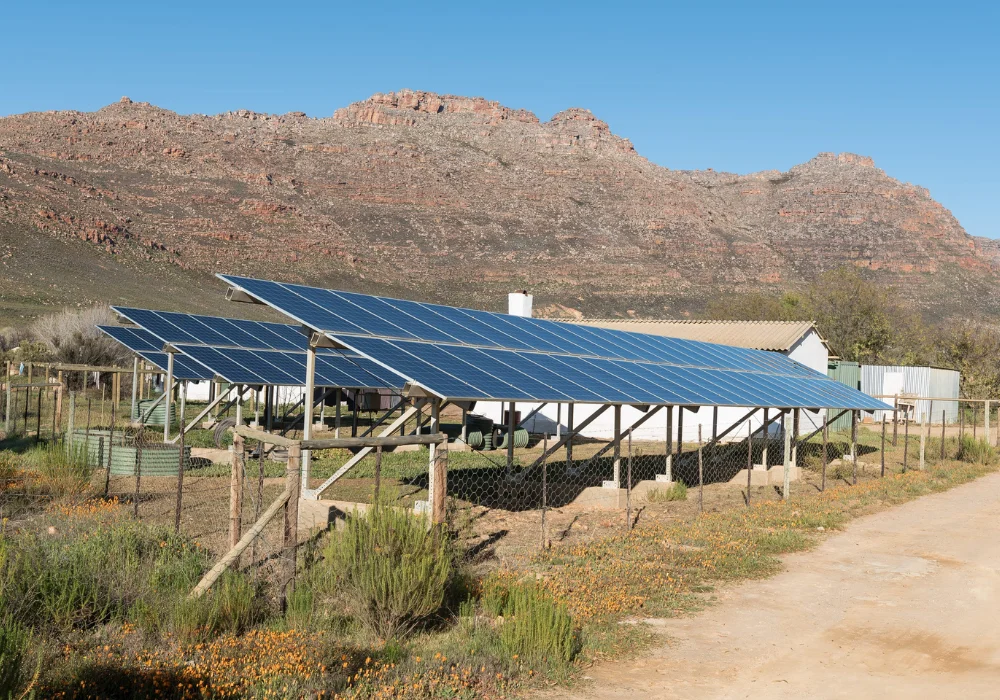
In the remote farming village of Khirais, Syria, a quiet transformation is unfolding that challenges traditional models of national reconstruction and energy distribution. For a monthly fee of just US$0.20, 24 households now enjoy round-the-clock electricity, a stark contrast to the national average where many citizens receive less than two hours of power per day. This shift is not the result of a massive state-led infrastructure project, but rather a localized, decentralized solar initiative that has become a lifeline for a community once crippled by a decade of armed conflict.
When the residents of Khirais began the arduous process of rebuilding their village in 2021, they faced a systemic energy vacuum. The area’s infrastructure had been decimated, leaving the public grid capable of providing only sixty minutes of electricity daily. The consequences were devastating: refrigerated food spoiled rapidly, children were unable to study after sunset, and local agricultural producers found it impossible to operate basic electrical machinery. The arrival of a regional nonprofit marked a turning point, installing solar panels on the community center that now power essential lighting, refrigeration, and medical appliances. While Khirais is a small-scale success story, it serves as a critical case study for a broader global phenomenon: the rise of "survivalist" renewable energy in the world’s most fragile states.
The Chronology of Syria’s Energy Collapse
To understand the magnitude of the current solar boom, one must examine the systematic disintegration of the Syrian power sector over the last 14 years. Prior to the outbreak of armed conflict in 2011, Syria possessed a relatively robust energy sector with an installed generation capacity of approximately 9.5 gigawatts (GW). The country boasted a near-universal electrification rate, supporting a burgeoning industrial base and a modernized agricultural sector.
Between 2011 and 2018, the conflict inflicted catastrophic damage on the national grid. Major power plants in Aleppo, Homs, and the Damascus suburbs were either destroyed, seized, or rendered inoperable due to lack of maintenance and spare parts. By the end of 2023, the available capacity had plummeted to roughly 1.6GW—a staggering 83% reduction from pre-war levels. This collapse created a massive energy deficit for a population that, despite the war, continued to require power for survival and basic economic activity.
The period between 2021 and 2025 has seen the emergence of a "decentralized era." As the central government struggled with fuel shortages and the high costs of grid repair, private citizens and local communities began to take matters into their own hands. Industry estimates indicate that nominal off-grid solar capacity in Syria rose from approximately 250 megawatts (MW) in 2022 to more than 2GW by early 2025. Today, roughly one-quarter of all Syrian households utilize some form of solar equipment to mitigate the failure of the public utility.
Global Context: Energy Fragility and the Financing Gap
The Syrian experience is a localized manifestation of a global crisis. According to the Council on State Fragility, more than 80% of the estimated 800 million people worldwide who live without electricity are located in fragile or conflict-affected settings. These regions represent the final frontier of the global electrification effort, yet they remain systematically underserved by international finance.
In 2025, the Green Climate Fund (GCF) approved a record US$3.26 billion in new project funding. However, only about US$500 million—roughly 15%—was allocated to fragile and conflict-affected states. This disparity highlights a significant barrier to recovery: conventional energy finance often avoids high-risk zones, preferring the stability of emerging markets with functional central banks and clear regulatory frameworks.
Experts argue that these fragile areas require energy systems that are "conflict-resilient." Distributed renewable energy (DRE)—including rooftop solar, small-scale wind turbines, and localized mini-grids—offers a solution by dispersing risk. Unlike a centralized power plant, which represents a single point of failure and a high-value target during conflict, decentralized systems generate power close to the point of consumption. This reduces dependence on vulnerable transmission corridors and fuel supply lines that are often the first casualties of civil unrest.
The Socio-Economic Drivers of Syrian Solar Adoption
The surge in solar adoption in Syria is driven by necessity rather than environmental ideology. Research has identified a direct correlation between conflict intensity and renewable energy production. One study found that a 1% increase in conflict intensity in Syria was associated with a 9.71% increase in renewable energy production in the short term. As the grid failed and diesel prices for generators skyrocketed, solar became the only viable alternative for maintaining a semblance of modern life.
Shafiqul Alam, a lead analyst at the Institute for Energy Economics and Financial Analysis (IEEFA), notes that the speed of deployment is a primary advantage. "Distributed systems can be built fast, very fast," Alam says. In contrast, the rehabilitation of a national grid is a multi-year, multi-billion-dollar endeavor that requires political stability and massive capital inflows.
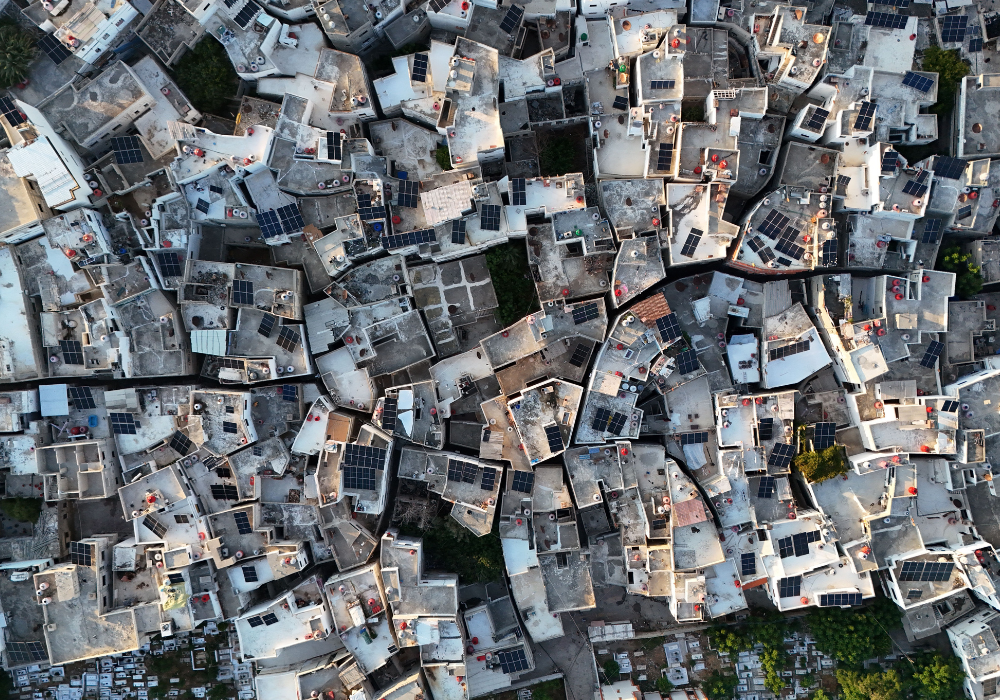
The strategic utility of this "timing gap" cannot be overstated. While decentralized solar cannot currently power heavy industry at a national scale, it supports the foundational activities of post-conflict recovery. In rural Syria, solar-powered pumps are being used to irrigate farmland, while in urban centers, solar allows small-scale manufacturers and shops to remain open. In one notable instance, solar power has even been used to charge electric vehicles for medical aid delivery, operating at a fraction of the cost of conventional fuel-based transport.
The Risk of a Two-Tier Energy System
Despite the benefits, the rapid and unregulated growth of solar in Syria has introduced new socio-economic risks. The market is increasingly defined by a "two-tier" system based on access to hard currency. Because solar components—panels, inverters, and lithium batteries—are almost entirely imported, they must be purchased with foreign currency, typically the US dollar.
Hayley Schuler-McCoin, a senior research fellow at the Carboun Institute, points out that the households most capable of achieving energy resilience are those with "strong remittance networks" or those receiving wages in foreign currency. For the average Syrian family, the upfront cost of a basic solar setup—often exceeding US$1,000—is an insurmountable barrier in an economy where the local currency has lost the vast majority of its value.
Those without access to capital remain trapped in a cycle of energy poverty, relying on expensive and polluting diesel generators or simply going without power. This creates a disparity where the wealthy can "buy their way out" of the infrastructure collapse, while the poor remain tethered to a failing state system. Schuler-McCoin emphasizes that if commercial or agricultural sites receive public or concessional finance for solar, these projects should be legally required to share power with adjacent low-income neighborhoods to prevent deepening social inequality.
Lessons from the Bangladesh Model
To address these inequities, analysts point toward successful models in other developing contexts. Bangladesh’s Infrastructure Development Company Limited (IDCOL) is frequently cited as a blueprint for fragile states. The IDCOL model combined capital subsidies with delivery through local partner organizations, such as NGOs and microfinance institutions, rather than relying solely on commercial banks.
This approach bypasses the "credit profile" problem. In conflict zones, most borrowers lack formal credit histories or collateral, making them "unbankable" by traditional standards. By providing credit guarantees and pre-financing to local intermediaries who understand the community’s repayment capacity, the barrier to entry is lowered. For Syria, implementing a similar "capital subsidy" or a micro-loan scheme could ensure that solar technology reaches the most vulnerable households, not just the affluent.
Integrating Decentralization into National Recovery
The ultimate challenge for Syrian policymakers and international donors is to ensure that the boom in decentralized solar does not come at the expense of the national grid. While solar provides an essential bridge, a functional grid remains necessary for heavy industry and urban centers.
The World Bank’s US$146 million Syria Electricity Emergency Project is a significant step in this direction. The project focuses on repairing high-voltage interconnectors and substations to restore the backbone of the system. However, experts argue that modern reconstruction must include "net-metering" provisions. This would allow households and businesses with surplus solar generation to sell power back to the grid, creating a new revenue stream for citizens and reducing the overall load on the state utility.
"Many small systems can make a massive revolution," says Shafiqul Alam. "If there is public support, the multiplier effect could be huge."
Conclusion: A New Blueprint for Fragile States
The transformation of villages like Khirais suggests that the future of energy in fragile states may not be found in massive, centralized power plants, but in a mosaic of local, resilient, and interconnected systems. Syria’s "accidental" green transition provides a blueprint for how other conflict-affected regions—from Yemen to Sudan—might navigate the collapse of state services.
However, for this transition to be sustainable and equitable, it requires a shift in international finance. Moving beyond "feel-good" outliers requires institutionalizing the support for decentralized systems, ensuring they are integrated into national grid planning, and providing the financial mechanisms necessary to make clean energy affordable for all. The solar panels on the roofs of Damascus and the community centers of rural Syria are more than just hardware; they are symbols of a community’s refusal to remain in the dark, signaling a new era of energy-led recovery.
