

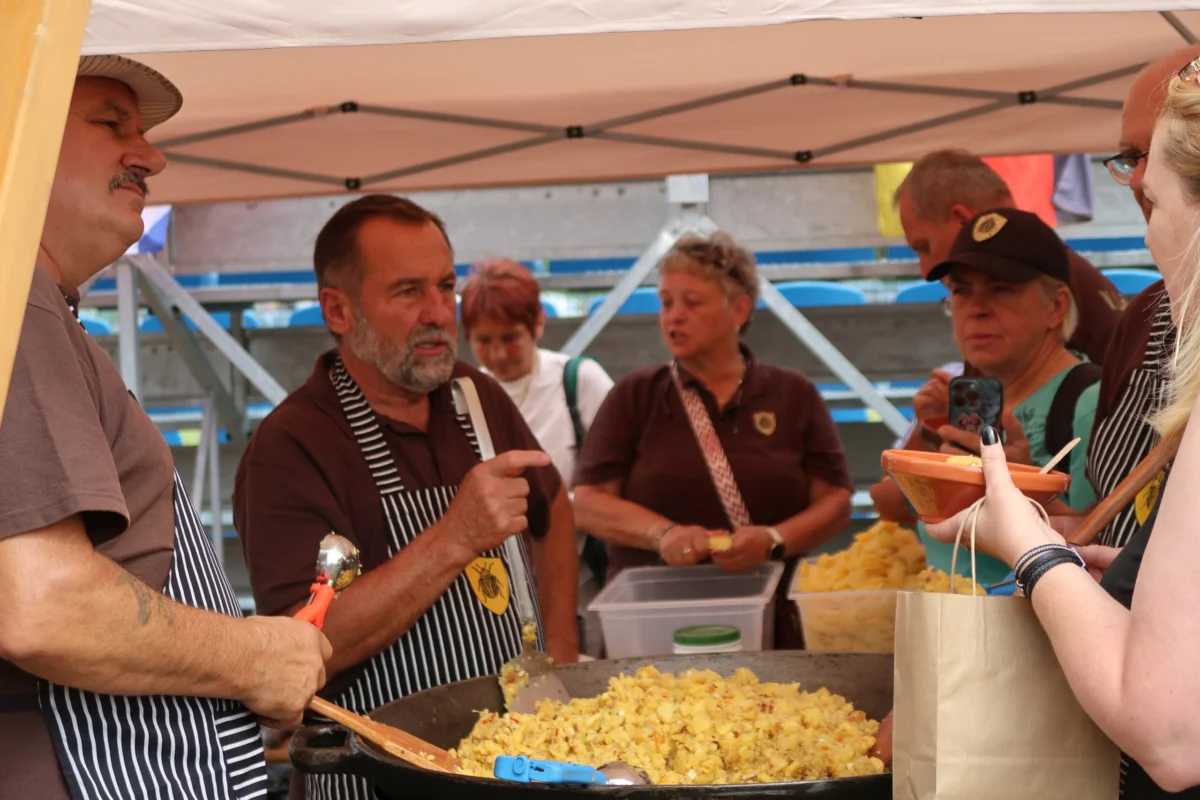
The village of Lipovci, nestled in the sweeping flatlands of Prekmurje in northeastern Slovenia, recently became the epicenter of a national culinary celebration as it hosted the 26th International Festival of Roasted Potatoes. For a single day, this community of approximately 1,000 residents transformed into a bustling hub where the scent of sizzling onions, rendered pork fat, and earthy tubers filled the air. More than 50 societies and hundreds of participants—ranging from multi-generational farmers to urban potato enthusiasts—gathered to honor a dish that has defined Slovenian domestic life for centuries. However, beneath the festive melodies of accordions and the lighthearted debates over the perfect recipe, a somber reality permeated the event: the Slovenian potato, a cornerstone of the national diet, is facing an existential threat driven by volatile climate patterns and shifting economic pressures.
The festival, which began as a tongue-in-cheek gathering in the early 2000s, has evolved into a significant cultural touchstone. It is organized by the Society for the Recognition of Roasted Potatoes as a Main Dish, an organization dedicated to elevating the potato from a mere side accompaniment to its rightful place at the center of the plate. Despite the jovial atmosphere, participants this year spoke frequently of the "invisible guest" at the table: a devastating summer drought that has decimated crops across the continent. Estimates provided by the Chamber of Agriculture and Forestry of Slovenia suggest a grim outlook for the current harvest, with yield losses ranging between 30 and 90 percent depending on the region and the specific potato variety.
A Cultural Staple Under Environmental Siege
For many Slovenians, the potato is more than just a carbohydrate; it is a symbol of resilience and luck. The colloquial expression "to have potatoes" (imeti krompir) is synonymous with being fortunate. Yet, fortune was in short supply during the summer of 2024. Agricultural analysts point to the first half of August as the critical breaking point, when a sustained heatwave and a lack of precipitation struck just as later-maturing varieties were in their final stages of development.
Matjaz Lavric, a resident of the capital, Ljubljana, has been a regular at the festival for 15 years. A self-described "potato guy through and through," Lavric emphasized that for many Slovenians, life is unimaginable without the tuber. His preferred preparation involves tarragon—a local aromatic twist—and he argues that the dish is hearty enough to stand alone as a main course. This year, however, his supply was noticeably different. Sourced from a friend’s farm, the potatoes were significantly smaller than in previous years. "It took us much longer to peel them," he noted, highlighting how the drought stunted the growth of the tubers, leading to a labor-intensive harvest of "baby" potatoes that were never intended to be small.
The struggle is even more pronounced for those who rely on the land for their livelihood. Janez Jambrosic, a small-scale farmer from Velike Lasce in southern Slovenia, reported losing half of his harvest. For Jambrosic, the drought was not an isolated incident but part of a worsening trend of erratic weather. He has adapted his cooking methods to reflect modern health sensibilities, using vegetable oil instead of the traditional pork fat, but he cannot so easily adapt to a climate that denies his crops the water they need during the peak of the growing season.

Historical Context: From Resistance to National Identity
The potato’s dominance in Slovenia is a relatively recent historical development. In 1767, Empress Maria Theresa of the Austro-Hungarian Empire issued a royal decree mandating the planting and cultivation of potatoes across the region. At the time, the measure was met with fierce resistance from local farmers. The peasantry initially viewed the potato with suspicion, believing it to be fit only for livestock feedstock or even potentially poisonous to humans.
Over the decades, however, the potato proved its worth as a "famine-breaker." It thrived in the varied Slovenian terrain, from the Alpine foothills to the Pannonian plains. By the 19th century, it had become the "second bread" of the nation. The Society for the Recognition of Roasted Potatoes as a Main Dish leans into this history, using a flag featuring the Colorado potato beetle—the grower’s primary "frenemy." The beetle is a destructive pest, yet the society views it as a kindred spirit: a fellow creature that recognizes the potato’s supreme value.
The festival’s move to a different location each year—this time in Lipovci—serves to highlight the regional variations in preparation. In Carinthia (Koroška), farmers like Petra Molek continue to favor traditional fats. At her stand, she presented versions roasted in both pork fat and sausage fat. "It depends a lot on the type of potato and the location of the field," Molek explained, noting that her specific plot fared better than others due to localized soil moisture retention.
The Economic and Agricultural Crisis in Numbers
The festive atmosphere in Prekmurje stands in stark contrast to the statistical reality of Slovenian agriculture. In 2025, data indicates that Slovenia produced only about one-third of its total potato consumption. This self-sufficiency rate has been in a steady decline, a trend that alarms food security experts. Several factors contribute to this downward trajectory:
- Rising Input Costs: The price of fertilizers has surged in recent years, driven by global energy market fluctuations. For small-scale, part-time farmers who characterize the Slovenian agricultural sector, these costs often outpace the potential profit from a harvest.
- Regulatory Pressures: Increasingly stringent European Union restrictions on pesticide use, while aimed at environmental protection, have left some farmers feeling vulnerable to blight and pest infestations that can wipe out a crop overnight.
- Low Purchase Prices: Farmers often face pressure from large retail chains to keep prices low, making it difficult to compete with cheaper imports from larger agricultural powers like Egypt or Cyprus.
- Climate Volatility: The 2024 drought is part of a broader pattern of "extreme" weather. Beyond potatoes, farmers at the festival reported that corn yields (used for feedstock) and wine-making grapes were also severely impacted, with some corn fields being entirely destroyed.
Global Implications: A Continent-Wide Shortage
The crisis is not confined to the borders of Slovenia. A report released by the United Kingdom-based Energy and Climate Intelligence Unit (ECIU) provides a sobering macro-analysis of the situation. The ECIU suggests that the recent summer droughts are likely to reduce the potato harvest by approximately 3.1 million tonnes across the world’s leading exporters, including Germany, France, Belgium, and the Netherlands.
Tom Lancaster, a food and farming analyst at the ECIU, remarked that for potato growers on the front line of climate change, "the chips are well and truly down." As one of Europe’s most water-intensive crops, the potato is a "canary in the coal mine" for agricultural stability. Industry yield estimates across Northern and Central Europe are down by 20 percent on average, but as seen in Slovenia, localized losses can be much higher.

This continental shortage has a ripple effect on global food prices. As supply drops in the "Big Four" exporting nations (France, Germany, Netherlands, and Belgium), the cost of processed potato products, such as frozen fries and crisps, is expected to rise, further fueling food inflation across Europe.
Analysis of the Sector’s Future
The Slovenian agricultural landscape is uniquely vulnerable due to its structure. The sector is dominated by small, family-operated farms, many of which are run on a part-time basis. These farms are often passed down through generations, preserving traditional knowledge but lacking the capital for large-scale irrigation systems that could mitigate drought impact.
Marija Bev, a farmer from Dobrna in eastern Slovenia, managed to save her crop by harvesting early. "They’d already survived the worst of the drought by the time we put them in the cellar," she said. This strategy of "escaping the heat" by planting early-maturing varieties may become a necessary standard for the industry. However, early harvesting often results in lower starch content and a different texture, which affects the quality of the traditional roasted potato.
The International Festival of Roasted Potatoes serves as a defiant act of cultural preservation. While the "hymn to the potato" was sung and the accordions played, the underlying message of the 26th festival was clear: the survival of this national dish depends on more than just a good recipe. It requires a systemic response to climate change, a stabilization of agricultural costs, and a renewed commitment to domestic food production.
As the sun set over the flatlands of Prekmurje, the stands began to pack up, and the last of the paper plates were cleared away. The "potato people" of Slovenia returned to their homes, many with lighter sacks of tubers than in years past. The festival proved that the spirit of the potato remains strong, but as the climate continues to shift, the luck associated with "having potatoes" is becoming increasingly hard to find.
