

The anxieties animating the Make America Great Again (MAGA) movement regarding immigration and the broader American apprehension surrounding the proliferation of data centers, while seemingly disparate, share a common root: a profound insecurity about an individual’s or community’s place within a rapidly evolving economic landscape. However, a crucial distinction exists. The former narrative often seeks to reassure native populations of their inherent value and the enduring significance of their position. Conversely, the latter frequently carries an undercurrent of foreboding, suggesting that one’s current economic standing may soon become obsolete, rendered worthless by forces beyond immediate control. This analysis delves into the parallels and divergences of these two pervasive fears, exploring their origins, manifestations, and societal implications.
The "Great Replacement" Theory: A Global Phenomenon Fueling Fear
Few ideas have achieved the global reach and insidious influence of the "Great Replacement" theory. This ideology posits that native populations are being deliberately and systematically supplanted by immigrants, a narrative that has provided a foundational vocabulary for nationalist and far-right movements across the world. Originating in France with the writer Renaud Camus, the theory has been instrumental in the ascendance of Marine Le Pen’s National Rally in France, has underpinned Viktor Orbán’s prolonged tenure in Hungary, and has found fertile ground within Germany’s Alternative für Deutschland. In the United States, it has directly informed Donald Trump’s calls for mass deportations and has been tragically cited by perpetrators of mass violence in Christchurch, New Zealand; El Paso, Texas; Hanau, Germany; and Buffalo, New York.
The appeal of such theories lies in their ability to tap into deep-seated anxieties about cultural and demographic change. In societies experiencing significant immigration, or rapid economic shifts, individuals may feel a sense of displacement or loss of identity. The "Great Replacement" offers a simplistic, albeit dangerous, explanation: a scapegoat in the form of immigrants, presented as an existential threat to the established order. This framing allows for the mobilization of a potent emotional response, often fueled by misinformation and a distorted perception of reality.
Supporting Data and Demographic Shifts
Understanding the context of these fears requires acknowledging the demographic realities of many Western nations. For decades, many developed countries have experienced declining birth rates among their native-born populations, coupled with sustained levels of immigration, driven by a variety of factors including economic opportunities, political instability in origin countries, and humanitarian concerns.
For example, in the United States, the non-Hispanic white population is projected to decline as a share of the total population in the coming decades. The U.S. Census Bureau’s projections indicate a significant increase in the Hispanic and Asian populations. While these are natural demographic shifts driven by birth rates and immigration patterns, they can be perceived by some as a threat to existing cultural norms and political power structures. This perception is often amplified by nationalist rhetoric that frames immigration not as a demographic evolution, but as a deliberate act of subversion.
The Rise of Data Centers: A New Frontier of Economic Anxiety
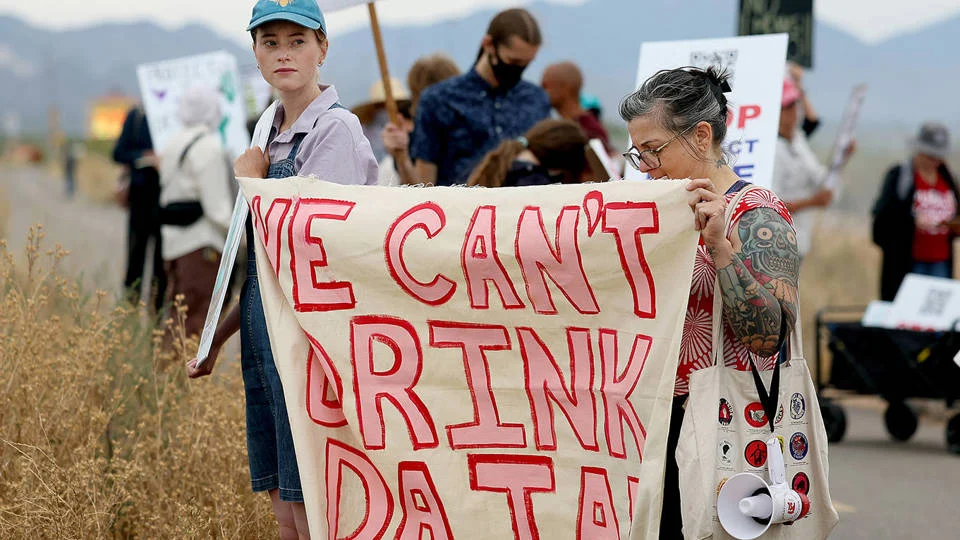
In parallel, a distinct yet analogous anxiety has emerged concerning the rapid expansion of data centers. These massive facilities, housing the servers and infrastructure that power the digital world, are increasingly a focal point of local opposition. While the "Great Replacement" theory targets a human element – immigrants – the fear surrounding data centers is directed at an infrastructural one, yet the underlying insecurity is remarkably similar.
Data centers represent a new wave of industrial development, often characterized by their immense energy consumption, significant water usage, and the visual impact of their sprawling campuses. For communities, the arrival of a data center can signal a fundamental alteration of their local environment and economy. The fear is not necessarily about the technology itself, but about its perceived consequences: increased electricity costs, strain on water resources, and the potential displacement of traditional industries or residential areas.
Economic Implications and Job Creation Debates
The economic arguments surrounding data centers are complex and often contentious. Proponents highlight the significant capital investment, the creation of construction jobs, and the ongoing operational roles they generate. However, critics often point out that the number of permanent, high-skilled jobs created by data centers is relatively small compared to their environmental footprint and the tax incentives they often receive.
For instance, a report by the National Renewable Energy Laboratory (NREL) in 2021 highlighted the growing energy demand of data centers, projecting that they could account for a substantial portion of total U.S. electricity consumption in the coming years. This raises concerns about grid stability, energy costs for existing residents and businesses, and the environmental impact of increased energy generation, particularly if that generation relies on fossil fuels.
Furthermore, the land required for these facilities can be considerable, leading to debates about land use and the potential loss of agricultural land or undeveloped spaces. This can trigger a sense of loss and displacement, particularly in rural or semi-rural communities that may have a strong connection to their traditional land use.
Parallels in Insecurity: Loss of Control and Identity
The common thread binding the fear of immigrants and the fear of data centers is a sense of diminished control and a perceived threat to one’s established identity and economic security.
For proponents of the "Great Replacement" theory, immigrants are seen as usurpers, threatening the cultural and demographic dominance of the native population. This taps into a fear of losing a perceived historical or ethnic identity, and a belief that one’s "place" in society is being actively eroded. The narrative offers a clear villain and a perceived solution: exclusion and expulsion.
With data centers, the anxiety stems from a feeling of being overwhelmed by forces beyond local control. The decision to build a massive data center is often made by distant corporations, with local communities having limited leverage to resist. The scale of these projects, their energy demands, and their impact on local resources can feel alien and intrusive, leading to a sense of powerlessness. The fear here is that one’s community is being irrevocably altered, not by a human element to be expelled, but by an inexorable economic and technological tide that renders existing ways of life obsolete. The "place" being threatened is not just cultural, but economic – the fear is that the community’s existing economic foundation will be undermined, leaving it with little value in a new, technologically driven landscape.
Chronology of Rising Concerns
While anxieties about immigration have a long and complex history, the "Great Replacement" theory gained significant traction in the early 21st century, particularly after the mid-2000s. Its integration into mainstream political discourse accelerated in the 2010s, coinciding with increased global migration flows and the rise of populist movements.
The growth of the data center industry, while ongoing for decades, has seen a dramatic acceleration in recent years, driven by the explosion of digital services, cloud computing, and artificial intelligence. Public awareness and concern regarding their environmental impact and community-level effects have intensified in the last five to ten years, leading to more organized local opposition and greater media attention.
Differing Outcomes: Value vs. Obsolescence
The fundamental difference in the nature of these fears lies in their perceived outcomes. The "Great Replacement" narrative, however flawed, suggests that the "native" population’s place is inherently valuable and that immigrants are seeking to usurp that pre-existing value. The emphasis is on preserving a perceived hierarchy and status quo.
The fear of data centers, on the other hand, often carries a more existential economic dread. It suggests that the current economic value of a place, its resources, or its existing industries might soon be rendered irrelevant or insufficient in the face of new technological demands. The concern is not about being replaced by something of equal or lesser value, but about becoming economically obsolete. This can manifest as a fear that local infrastructure, jobs, and community identity will be unable to adapt to the new economic realities dictated by massive technological infrastructure.
Official Responses and Community Engagement
Official responses to both concerns vary widely. In the case of immigration, political rhetoric often reflects the anxieties of segments of the population, leading to policy debates around border security, immigration reform, and assimilation. International organizations and human rights groups frequently advocate for more humane and inclusive immigration policies, while academic research often debunks the pseudoscientific underpinnings of theories like the "Great Replacement."
Regarding data centers, local governments often grapple with balancing the economic benefits promised by developers against community concerns. This can lead to intense public hearings, environmental impact assessments, and zoning disputes. Some communities have successfully negotiated stricter environmental standards or community benefit agreements, while others find themselves with limited recourse against large-scale development projects. The debate often pits economic development against environmental protection and local quality of life.
Broader Impact and Implications
The persistence of these anxieties has significant implications for societal cohesion and economic policy. The "Great Replacement" narrative fuels division, distrust, and can contribute to xenophobia and political polarization. It distracts from the complex social and economic factors that drive migration and integration.
The fear of data centers, while perhaps less overtly divisive, highlights a growing disconnect between technological advancement, economic development, and community well-being. It points to the need for more equitable distribution of the benefits of technological growth and greater consideration of the environmental and social costs. It also underscores the challenge of adapting local economies to globalized, capital-intensive industries.
Both fears, in their own ways, are symptomatic of a broader societal struggle to navigate rapid change. They reflect a deep-seated human need for stability, security, and a sense of belonging in an increasingly complex and unpredictable world. Addressing these anxieties requires not just policy interventions, but also open dialogue, accurate information, and a commitment to building more inclusive and resilient communities. The challenge lies in distinguishing genuine concerns about economic and social well-being from narratives that exploit fear and division for political or ideological gain.
