

The Federal Reserve is widely anticipated to raise its target federal funds rate by a quarter of a percentage point this Wednesday, marking the central bank’s first rate hike in more than three years. This decisive move comes amidst a confluence of challenging economic factors, including stubbornly high inflation, escalating energy prices, and persistent geopolitical tensions, particularly with Iran. For American households already grappling with significant financial strain, this policy shift is expected to translate into increased borrowing costs across a spectrum of consumer and business loans.
The primary driver behind the Fed’s expected action is the sustained upward trajectory of inflation. The consumer price index (CPI), a comprehensive gauge of inflation, continued its ascent last month, pushing the annual inflation rate to 3.4% in August. This figure significantly exceeds the Federal Reserve’s long-term target of 2%, signaling a persistent erosion of purchasing power for consumers. Government data explicitly identified higher oil and gas prices as a substantial contributor to this inflationary surge. These energy costs, in turn, filter through the economy, impacting transportation, manufacturing, and ultimately, the prices of goods and services.
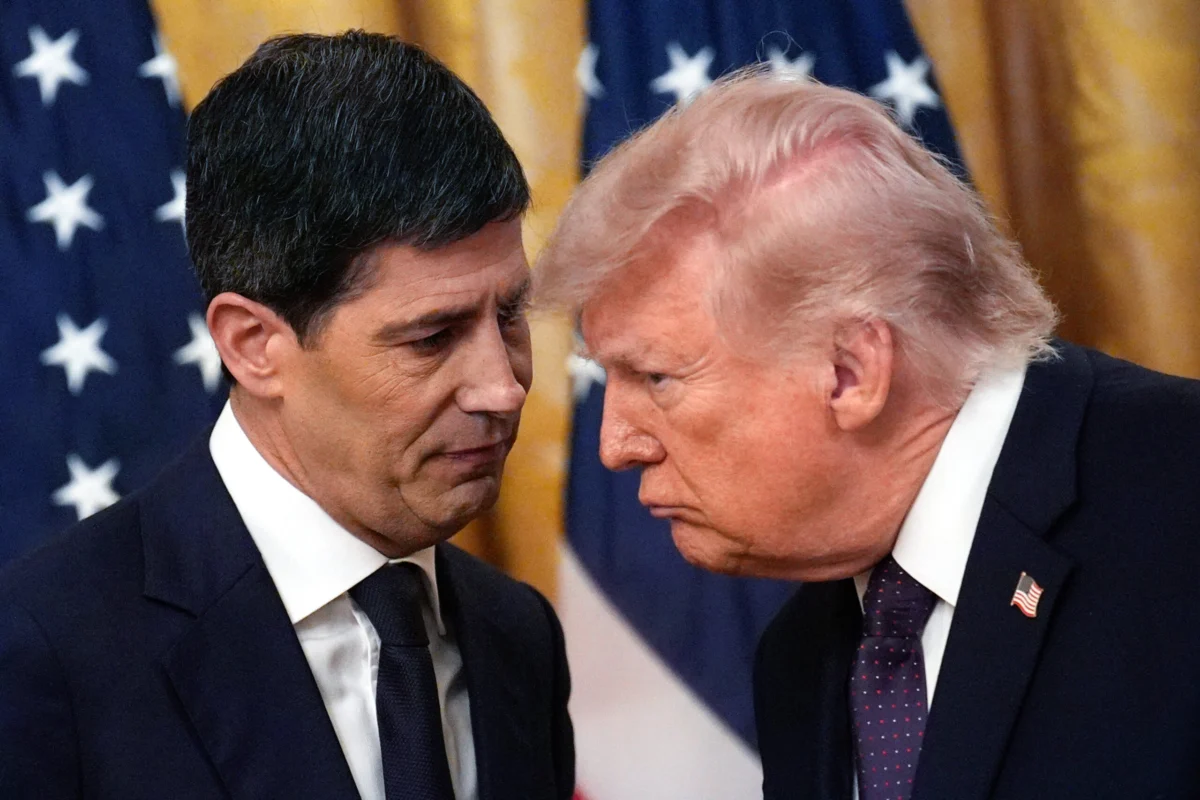
Fed Chairman Kevin Warsh, who was sworn into his role alongside President Donald Trump on May 22, 2026, has repeatedly underscored his unwavering commitment to reining in inflation and steering it back towards the central bank’s mandated 2% target. His public statements have consistently emphasized the necessity of proactive measures to maintain price stability, a core tenet of the Fed’s dual mandate which also includes maximizing employment. However, this hawkish stance places Warsh and the independent Federal Reserve on a potential collision course with President Donald Trump, who has consistently advocated for lower federal funds rates, viewing them as a catalyst for economic growth and a benefit to consumers. The President’s past rhetoric has often suggested that higher rates could stifle economic expansion, setting the stage for a notable public policy disagreement between the executive branch and the nation’s monetary authority.
The Economic Landscape Fueling the Fed’s Decision
The current economic environment presents a complex challenge for monetary policymakers. Beyond the headline CPI figure, a deeper dive into the inflation data reveals broad-based price increases. While energy costs have been a prominent factor, inflationary pressures have also been observed in sectors such as food, housing, and services. Supply chain disruptions, remnants of the global pandemic, have continued to exert upward pressure on prices for various goods, while robust consumer demand, supported by a relatively strong labor market, has also contributed to demand-pull inflation. The unemployment rate, while not explicitly detailed in recent reports, is inferred to be at a level that does not warrant further stimulus, thus allowing the Fed to focus squarely on price stability.
Geopolitical developments have undeniably exacerbated the inflationary situation, particularly in the energy sector. Prolonged tensions with Iran, specifically concerning the crucial Strait of Hormuz – a vital chokepoint for global oil shipments – have kept crude oil prices elevated and volatile. Any perceived threat to the flow of oil through this strategic waterway sends ripples through international markets, driving up the cost of petroleum products globally. This direct impact on crude oil trickles down to the pump, affecting gasoline prices for consumers and diesel costs for businesses, thereby fueling broader inflationary trends across the economy. The recent discussions surrounding U.S.-Iran relations and Gulf oil talks have done little to definitively de-escalate these market anxieties, leaving energy prices vulnerable to sudden spikes.
A Chronology of Mounting Pressures
The path to this anticipated rate hike has been paved by a series of economic indicators and geopolitical events over recent months:
- May 22, 2026: President Donald Trump presides over the swearing-in ceremony of Kevin Warsh as Chairman of the Federal Reserve in the East Room of the White House. This marked the formal leadership transition at the central bank.
- July 14, 2026: The Consumer Price Index report for June 2026 is released, showing continued inflationary trends, signaling that price pressures are not abating.
- August 2026: Throughout the month, reports highlight ongoing volatility and upward trends in global oil and gas prices, significantly influenced by geopolitical developments in the Middle East.
- September 11, 2026: The CPI inflation report for August is released, revealing an annual inflation rate of 3.4%, a critical data point solidifying the need for monetary tightening. The report explicitly attributes a significant portion of this inflation to higher oil and gas prices.
- September (Leading up to the decision): In the days preceding the expected Fed announcement, market indicators underscore the building pressure. The yield on the 10-year Treasury note, a key benchmark for longer-term interest rates, surged to 4.95% last week, reaching its highest level since October 2023. Concurrently, the average interest rate on the 30-year fixed mortgage surpassed 7% for the first time in over a year, reflecting the broader upward trend in borrowing costs even before the Fed’s direct intervention. During this period, Chairman Warsh reiterates his commitment to the 2% inflation target, while President Trump continues to voice his preference for lower interest rates to bolster economic activity.
- This Wednesday: The Federal Open Market Committee (FOMC) is poised to announce its decision, with market consensus firmly pointing to a 25-basis-point increase in the federal funds rate.
The Mechanics of Monetary Policy: How a Rate Hike Works
The federal funds rate, which the Federal Reserve controls, is the interest rate at which commercial banks lend and borrow reserves from each other on an overnight basis. While consumers do not directly pay this rate, changes to it have a profound and widespread ripple effect throughout the entire economy, influencing a multitude of borrowing and savings rates.
When the Fed opts to raise its benchmark rate, it effectively makes borrowing more expensive for banks. These increased costs are then passed on to consumers and businesses in the form of higher interest rates on various financial products. The primary objective of such a move is to cool an overheating economy, thereby dampening aggregate demand and, in turn, curbing inflation. The theory is that by making money more expensive to borrow, spending and investment slow down, which helps to alleviate price pressures.
Conversely, for savers, higher interest rates present a silver lining. As banks adjust their rates upwards in response to the Fed’s action, deposit accounts such as savings accounts, money market accounts, and certificates of deposit (CDs) tend to offer more attractive yields, allowing individuals to earn more on their stored capital. This dynamic represents a direct benefit for those with savings, albeit often outweighed by the increased costs of borrowing for many households.
Official Responses and Political Implications
The anticipated rate hike is not just an economic decision; it carries significant political weight and has elicited varied responses from key stakeholders.
Fed Chairman Kevin Warsh’s commitment to bringing inflation down to the 2% target is seen by many market analysts as a firm assertion of the Fed’s independence and its dedication to its price stability mandate. His stance suggests a willingness to take potentially unpopular steps if deemed necessary for long-term economic health. This position aligns with historical precedents where central banks have acted decisively to combat inflationary spirals, often prioritizing long-term stability over short-term political expediency.
On the other hand, President Donald Trump’s consistent advocacy for lower interest rates reflects a different economic philosophy, one that often prioritizes immediate growth and job creation. His administration has frequently argued that lower rates provide essential stimulus, making it cheaper for businesses to invest and expand, and for consumers to purchase homes and other big-ticket items. The potential for a public disagreement between the President and the Fed Chairman is significant. Such conflicts, while not unprecedented, can introduce an element of uncertainty into financial markets and test the perceived independence of the central bank. Historically, presidents have occasionally voiced their opinions on monetary policy, but direct and sustained pressure can be viewed as an encroachment on the Fed’s autonomy, which is widely considered crucial for its effectiveness.
Economists are largely in agreement that the Fed’s move, while potentially unpopular in some quarters, is a necessary step. Mark Zandi, chief economist at Moody’s, succinctly noted the immediate impact on credit, stating, "Credit card rates, which are above 20%, will rise once the Fed moves to raise rates, likely to record highs." This sentiment is echoed by others who view the hike as a delicate but essential balancing act.
Broader Economic Impact and Implications for Consumers
The reverberations of a Fed rate hike are felt acutely by consumers through various financial products and services. Understanding these impacts is crucial for households navigating the evolving economic landscape.
Credit Card APRs Could Reach Record Highs
For most consumers, one of the most immediate and direct impacts will be on credit card interest rates. Generally, shorter-term rates on consumer debt are closely tied to the prime rate, which typically hovers around 3 percentage points above the federal funds rate. Since most credit cards operate with variable rates, there is a direct and almost immediate connection to the Fed’s benchmark. As the federal funds rate increases by 25 basis points, the prime rate will follow suit, causing credit card annual percentage rates (APRs) to adjust upwards within one or two billing cycles. Given that many credit card rates are already elevated, this hike could indeed push them to new record highs, making revolving debt more expensive and increasing the minimum payments for millions of Americans. For instance, if a consumer holds a credit card with a current APR of 22%, a 25 basis point hike would push that rate to 22.25%, adding to the financial burden of outstanding balances.
Auto Loans
While auto loans are typically fixed once disbursed, a Fed rate hike will undoubtedly influence rates on new car loans. This comes at a particularly challenging time for car buyers, many of whom are already struggling to manage substantial monthly loan payments due to high vehicle prices and previous rate increases. A recent analysis by personal finance site WalletHub estimates that the average APR on a 48-month new car loan could rise by approximately 12 basis points in the months following a 25-basis-point Fed rate hike. This incremental increase, while seemingly small, adds to the total cost of ownership and could further strain household budgets, potentially deterring some prospective buyers or forcing them into longer loan terms with higher overall interest paid.
Student Loans
The impact on student loans is bifurcated. Federal student loan rates are fixed for the life of the loan, meaning existing federal borrowers will not see their rates change. However, rates for new federal borrowers are already higher for the upcoming year, largely determined by the last 10-year Treasury note auction in May. For those with private student loans, the situation is different. Private loans often have variable rates tied to benchmarks such as the Libor, prime rate, or Treasury bill rates. As the Fed raises its target rate, these underlying benchmarks will also increase, leading to higher interest payments for private student loan borrowers. The exact magnitude of the increase will depend on the specific benchmark their loan is tied to and the terms of their loan agreement.
Fed Hike May Have a Mixed Impact on Home Loans
The housing market, a cornerstone of the American economy, will also feel the effects of the Fed’s actions, though the impact may be more nuanced for longer-term mortgages.
Longer-term loans, such as the popular 30-year fixed-rate mortgage, are more closely correlated with long-term Treasury rates rather than directly with the federal funds rate. Last week, the yield on the 10-year Treasury note, which serves as a benchmark for most mortgages, topped 4.95% – its highest level since October 2023. Consequently, the average interest rate on the 30-year fixed mortgage surpassed 7% for the first time in over a year.
However, the relationship isn’t always linear. Jeff DerGurahian, chief investment officer and head economist at LoanDepot, offered a nuanced perspective: "A Fed hike would not automatically mean higher 30-year mortgage rates." He elaborated, "If the market prices in the move ahead of time and the Fed presents it as a measured step to bring inflation back to 2%, investors could view it as positive for longer-term bonds." In such a scenario, "longer-term Treasury yields could hold steady or move lower, allowing 30-year mortgage rates to do the same. It’s essentially the Fed tapping the brakes now to keep inflation from gaining speed later," DerGurahian explained. This highlights the role of market expectations and communication in shaping the actual impact of monetary policy.
Other home loans, however, are more directly and immediately affected by the Fed’s actions. Adjustable-rate mortgages (ARMs) and home equity lines of credit (HELOCs) are typically pegged to the prime rate. Most ARMs feature an initial fixed-rate period, after which their rates adjust, often annually. In contrast, a HELOC rate adjusts much more immediately, often within one billing cycle, meaning borrowers with these types of loans will quickly see their interest payments rise.
‘A Potentially Overlooked Upside’: Benefits for Savers
While the focus often remains on increased borrowing costs, a Fed rate hike does present a notable advantage for savers. Deposit rates offered by banks and credit unions on products like savings accounts, money market accounts, and certificates of deposit (CDs) tend to correlate with changes in the target federal funds rate.
Mark Hamrick, an economic analyst and founder of The Hamrick Brief, highlighted this positive aspect, noting, "A potentially overlooked upside to elevated rates is the opportunity to capture higher yields for savings." This means individuals holding cash in these accounts can earn more interest, providing a boost to their financial returns. Hamrick further advised, "For both borrowing and saving, it is important to shop around for the best rates to avoid overpaying and to maximize returns." This counsel is particularly pertinent in a rising rate environment, as different financial institutions may adjust their rates at varying speeds and to different extents, making it worthwhile for consumers to compare offerings.
Outlook and Future Considerations
The Federal Reserve’s anticipated rate hike this Wednesday marks a pivotal moment in monetary policy, signaling a firm commitment to combating persistent inflation. While the immediate effect will be higher borrowing costs for many consumers and businesses, the central bank is betting that this measured step will ultimately contribute to long-term economic stability by bringing inflation back to its target. The potential for political friction with the White House underscores the delicate balance the independent Fed must strike between its economic mandates and broader political pressures. As households continue to navigate a landscape of financial strain, monitoring these developments and proactively managing personal finances will be more crucial than ever. The question remains whether this will be a solitary adjustment or the beginning of a sustained tightening cycle, a decision that will largely depend on the future trajectory of inflation and the broader economic performance.
