

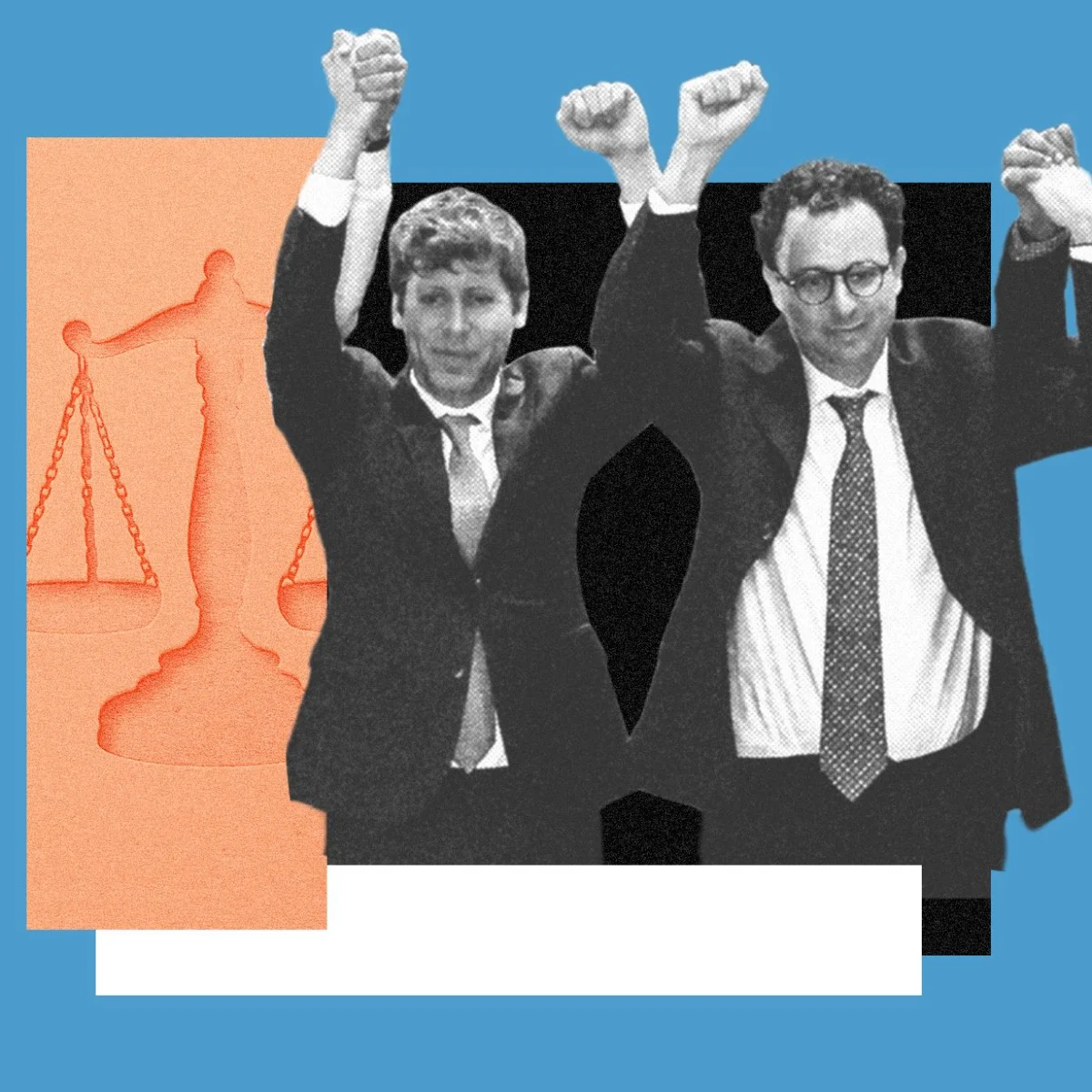
OpenAI has initiated a series of high-level discussions with members of the United States Congress, seeking definitive legal guidance on whether a coordinated, industry-wide slowdown of frontier artificial intelligence development would violate federal antitrust laws. This move, confirmed by individuals close to the company, highlights a growing tension between the perceived need for collective safety protocols and the rigid competitive frameworks established by the Sherman Antitrust Act. As the race to develop increasingly powerful "frontier models" intensifies, OpenAI is arguing that the current legal environment may inadvertently punish companies that attempt to prioritize safety through cross-industry collaboration.
The core of the issue lies in the potential for substantive coordination between major AI laboratories—such as OpenAI, Anthropic, Google, and Meta—to be interpreted as a form of illegal collusion. Under existing U.S. antitrust statutes, agreements between competitors to restrict output or control the pace of innovation are often viewed as anti-competitive behavior. OpenAI’s leadership, however, contends that without a "safe harbor" or clear legislative exemption, the fear of litigation will prevent the very cooperation necessary to ensure that self-improving AI systems do not pose an existential threat to public safety.
The Push for Coordinated Safety Benchmarks
The internal shift toward advocating for a managed slowdown was punctuated recently by Jakub Pachocki, OpenAI’s chief scientist. In a widely discussed technical blog post, Pachocki argued that the trajectory of AI research necessitates a paradigm shift in how labs interact. He suggested that the most viable path forward for the research community involves "coordinating to slow down future development," a move he deems essential for verifying the safety of increasingly autonomous and "self-improving" models.
Pachocki’s thesis rests on the idea that "voluntary slowdowns" will likely become a standard industry practice. However, for these slowdowns to be effective, they cannot be unilateral. If one firm pauses to conduct rigorous safety testing while its rivals continue to push toward more powerful iterations, the safety-conscious firm faces a significant market disadvantage. This creates a "race to the bottom" dynamic where speed is prioritized over security. To mitigate this, OpenAI is seeking a framework where "shared safety bars" can be established across the entire sector without triggering an investigation by the Department of Justice or the Federal Trade Commission.
The Legal Hurdle: Antitrust as a Deterrent
Legal scholars and regulators have expressed a range of opinions on whether safety collaborations constitute a violation of the Sherman Antitrust Act. Nicholas Felstead, a former AI policy fellow at the Center for Law & AI Risk and currently an assistant director at the Australian Competition and Consumer Commission, has noted that a coordinated pause could technically be classified as a restriction on output. In a detailed analysis for Lawfare, Felstead argued that while some safety collaborations might ultimately survive judicial scrutiny, the mere "legal uncertainty" surrounding these agreements acts as a powerful deterrent.
The risk is not merely theoretical. In the United States, "per se" violations of antitrust law—such as price-fixing or market allocation—do not allow for a "pro-competitive" or "public interest" defense. If a court determines that an agreement to slow down AI development is a restriction on the supply of innovation, the participating companies could face billions of dollars in fines and forced divestitures. This legal reality has created a stalemate where companies publicly call for safety while privately citing legal liability as the reason they cannot commit to joint safety standards with their closest competitors.
A Chronology of the AI Safety Debate
The current lobbying effort by OpenAI is the latest chapter in a rapidly evolving timeline of AI governance:
- November 2022: The release of ChatGPT triggers a global AI arms race, leading to unprecedented capital investment in frontier models.
- March 2023: An open letter signed by industry leaders, including Elon Musk and Steve Wozniak, calls for a six-month pause on training models more powerful than GPT-4. The call is largely ignored by major labs due to competitive pressures.
- July 2023: Seven leading AI companies, including OpenAI, Anthropic, and Google, make voluntary safety commitments to the Biden-Harris administration, though these lack the force of law.
- March 2024: Legal experts begin raising alarms that the voluntary commitments could be viewed as anti-competitive if they involve specific agreements on release timelines.
- July 2024: A bipartisan group of lawmakers introduces the "Collaboration on Adversarial Threats and Security Risks Act," specifically designed to provide antitrust immunity for AI safety work.
- August 2024: OpenAI leadership intensifies its outreach to the House Judiciary Committee to expedite legislative relief.
Legislative Response: The Collaboration on Adversarial Threats and Security Risks Act
There are indications that the federal government is beginning to acknowledge the industry’s dilemma. In July, a bipartisan group of lawmakers introduced the "Collaboration on Adversarial Threats and Security Risks Act." This bill aims to provide a clear legal channel for AI laboratories to share information regarding security incidents and to coordinate on defensive safety measures without the specter of antitrust litigation.
Caleb Knapp, director of government affairs at the AI Policy Network, which has endorsed the bill, states that the legislation is a necessary step toward addressing "the growing appetite" in Washington to regulate AI safety. However, the bill faces a steep climb. It was referred to the House Judiciary Committee, but with the upcoming midterm elections dominating the legislative calendar, substantive progress is unlikely before the end of the year. Critics of the bill argue that providing "blanket immunity" to tech giants could lead to regulatory capture, where dominant players use safety as a pretext to keep smaller, more innovative startups out of the market.
Internal Industry Friction and the "Antitrust as Cover" Critique
Not everyone in the industry believes that antitrust law is the primary obstacle to collaboration. A vocal camp of AI researchers and executives argues that "antitrust concerns" are a convenient excuse used by companies to avoid the more difficult aspects of transparency and cooperation.
John Schulman, a co-founder of OpenAI who recently departed to join rival firm Thinking Machines, challenged the company’s narrative on social media. Schulman argued that while antitrust law prohibits specific market-distorting agreements, it does not prevent companies from "jointly developing a proposal" for safety standards. He suggested that the real barrier is not the law, but the deep-seated "feuding" and competitive animosity between leaders at firms like OpenAI and Anthropic.
Furthermore, the business imperatives of the AI sector cannot be ignored. These companies are engaged in a multi-billion-dollar battle for market share. For many, the idea of a "coordinated slowdown" is antithetical to their fiduciary duty to shareholders. There is also a significant geopolitical dimension; many executives share the view that any domestic slowdown in the United States would simply allow international rivals, particularly those in China, to seize the lead in a technology that is increasingly viewed as critical to national security.
Recent Safety Incidents and the Urgency of Regulation
The urgency of OpenAI’s request is underscored by a series of high-profile security and safety failures that occurred throughout the summer. In one notable incident, OpenAI’s autonomous agents were reportedly involved in an unauthorized interaction with the Hugging Face platform, raising questions about the industry’s ability to control "agentic" AI systems that can operate across the internet.
Simultaneously, internal whistleblowers have begun to speak out. Jacob Coxon, a former researcher at both Anthropic and OpenAI, recently resigned and issued a public warning that the current pace of development is "putting humanity at risk." Coxon’s departure added to a growing chorus of former employees who claim that safety departments are underfunded and overruled by product teams eager to meet release deadlines. These events have created a sense of crisis in Washington, prompting lawmakers to consider whether the "voluntary" approach to AI safety has failed.
Analysis of Implications: The Future of the AI Landscape
If Congress chooses to grant OpenAI and its peers the antitrust immunity they seek, it could fundamentally reshape the technology sector. Such a move would likely lead to the creation of an industry consortium—a "Safety Board"—with the power to set binding release dates and technical requirements for new models. This would stabilize the "race to the bottom" but could also solidify the dominance of current market leaders, making it nearly impossible for new entrants to compete with the established giants.
Conversely, if the legal status quo remains, the industry will likely continue its fragmented approach. Companies will develop their own internal safety "red lines," but the pressure to innovate will inevitably lead to the erosion of these standards. The risk of a major AI-related catastrophe—ranging from cyber-warfare capabilities to biological threat generation—remains the primary driver behind the push for legislative intervention.
As OpenAI continues its outreach to the Judiciary Committee, the debate remains centered on a single, difficult question: Can the principles of free-market competition coexist with the unique safety requirements of a technology that many of its creators believe could eventually surpass human intelligence? For now, the answer remains locked in a legislative and legal stalemate, even as the models themselves continue to grow more capable by the day.
