

The U.S. mortgage market experienced a significant shift last week, with a notable uptick in demand for adjustable-rate mortgages (ARMs) as conventional fixed-rate loans continued their upward trajectory. This movement signals a growing willingness among borrowers to embrace riskier financial products in pursuit of lower initial monthly payments amidst persistent economic pressures. Data released by the Mortgage Bankers Association (MBA) reveals that ARMs constituted 8.5% of all mortgage applications, an increase from 8% the previous week and marking the highest level observed since June of this year. This figure stands in stark contrast to the early years of the pandemic, specifically 2020-2021, when mortgage rates plummeted to historic lows, and ARM demand barely registered above 3% of total applications.
The appeal of ARMs in the current environment is primarily driven by their more favorable introductory interest rates. For instance, the average rate for a five-year ARM last week dipped to 5.82%, down from 5.94% in the preceding week. This compares sharply with the average contract interest rate for 30-year fixed-rate mortgages with conforming loan balances (capped at $832,750 or less), which escalated to 6.85% from 6.79% the week prior. Accompanying this rise, points — a fee paid to the lender at closing to secure a specific interest rate — also increased to 0.67 from 0.65, inclusive of the origination fee for loans with a 20% down payment. This widening spread between fixed and adjustable rates is a key factor influencing borrower decisions, pushing many towards the perceived immediate savings offered by ARMs, despite the inherent long-term variability.
The Resurgence of Adjustable-Rate Mortgages: A Closer Look
Adjustable-rate mortgages have a complex history in the American housing market. Prior to the 2008 financial crisis, ARMs were often associated with subprime lending practices, contributing to the instability that led to widespread foreclosures. These products frequently featured teaser rates that would reset dramatically higher after an initial period, catching many borrowers unprepared. However, the ARMs available in today’s market are generally more regulated and structured, offering fixed introductory periods that can range from three to ten years, most commonly five or seven years. During this initial phase, the interest rate remains constant, providing borrowers with predictable payments. After this period, the rate adjusts periodically, typically once a year, based on a predetermined index (such as the Secured Overnight Financing Rate, or SOFR) plus a margin, subject to caps on how much the rate can change at each adjustment and over the life of the loan.
The current surge in ARM applications suggests that a new generation of homebuyers and refinancers, or those with strong financial planning, are either more comfortable with the structure or feel compelled by the significant cost difference. With the average 5-year ARM rate nearly a full percentage point lower than its 30-year fixed counterpart, the immediate savings on monthly payments can be substantial, potentially freeing up hundreds of dollars each month for other expenses or investments. For borrowers anticipating a move or a significant increase in income within the fixed-rate period, or those who believe interest rates will fall before their loan adjusts, an ARM presents an attractive proposition. However, the inherent risk of payment shock remains a critical consideration, especially if interest rates continue their upward trend or remain elevated when the fixed period expires.
Broader Mortgage Market Dynamics and Total Demand Contraction
The upward movement in 30-year fixed mortgage rates has had a chilling effect on overall mortgage demand. According to the MBA’s seasonally adjusted index, total application volume saw a decline of 2.7% for the week. This contraction is a direct consequence of higher borrowing costs, which reduce purchasing power and make homeownership less accessible for many prospective buyers. Joel Kan, vice president and deputy chief economist at the MBA, attributed the rise in rates to "ongoing investor concerns over inflation and the federal budget deficit." He noted that the 30-year fixed rate’s ascent to 6.85% marks its highest point since June 2025 and is 36 basis points higher than the same week one year ago.
These investor concerns are rooted in the broader macroeconomic landscape. Persistent inflation, which has remained stubbornly above the Federal Reserve’s target, signals that the central bank may need to maintain a restrictive monetary policy stance for longer than previously anticipated. The federal budget deficit, a measure of the difference between government spending and revenue, also plays a role. A large and growing deficit often requires the Treasury to issue more bonds, increasing the supply of government debt in the market. If demand does not keep pace, yields on these bonds can rise, which in turn influences other long-term interest rates, including mortgage rates. The ten-year Treasury yield, a key benchmark for mortgage rates, has been particularly sensitive to these fiscal and monetary policy outlooks.
The Retreat of the Refinance Market
The segment of the mortgage market most acutely affected by the rising rates is refinancing. Applications to refinance a home loan plummeted by 6% for the week, marking a substantial 25% drop compared to the same week one year ago. This represents the slowest pace for refinance activity since May 2025, underscoring the significant impact of the current rate environment. For the vast majority of homeowners, refinancing becomes financially viable only when current interest rates are significantly lower than their existing mortgage rate, allowing them to reduce their monthly payments or shorten their loan term. With rates now hovering near multi-decade highs, the incentive to refinance has all but evaporated for a large segment of the population who locked in historically low rates during the pandemic era. Many homeowners are effectively "rate-locked" into their current mortgages, unable to leverage their accumulated home equity without incurring a higher interest rate. This has broader implications for consumer spending and mobility, as homeowners are less likely to sell and move if it means sacrificing a historically low mortgage rate.
Navigating a Stalled Purchase Market Amidst Inventory Growth
In contrast to the steep decline in refinancing, applications for mortgages to purchase a home remained relatively flat, registering a marginal decrease of 0.2% for the week. Despite this weekly stagnation, purchase applications were still 4% higher than the same week one year ago, indicating a degree of underlying resilience in demand. However, this resilience is being severely tested by the affordability crunch. "Higher mortgage rates continue to weigh on prospective homebuyers looking to act, even as housing inventory has increased in many markets," Kan observed.
The increase in housing inventory is a critical development. For several years, a severe shortage of homes for sale exacerbated price appreciation, creating a challenging environment for buyers. While more homes are now available, the benefit of increased choice is being offset by the prohibitive cost of financing. First-time homebuyers, often reliant on every percentage point of interest rate savings, are particularly vulnerable to this squeeze. Even with a growing supply, high mortgage rates combined with still-elevated home prices mean that monthly housing payments remain out of reach for many, forcing them to either delay their homeownership dreams or compromise significantly on their desired property. For sellers, increased inventory coupled with constrained buyer demand could eventually lead to slower price appreciation or even modest price adjustments in certain markets, although widespread price declines are not yet a dominant expectation.
A Chronology of Economic Shifts and Rate Escalation
The current state of the mortgage market is a culmination of several years of significant economic shifts.
- Pre-Pandemic (Late 2010s): The U.S. enjoyed a period of relatively low and stable interest rates, with the 30-year fixed mortgage rate often hovering in the 3.5% to 4.5% range. Inflation was largely under control, and the Federal Reserve maintained a dovish stance.
- Pandemic Era (2020-2021): In response to the economic fallout from the COVID-19 pandemic, the Federal Reserve aggressively cut its benchmark federal funds rate to near zero and embarked on massive quantitative easing (QE) programs, purchasing trillions of dollars in Treasury bonds and mortgage-backed securities. This pushed the 30-year fixed mortgage rate to historic lows, frequently dipping below 3% and even touching 2.65% in January 2021, stimulating an unprecedented housing boom and refinance wave.
- Inflation Surge (2022-2023): As the global economy reopened, a confluence of factors – including supply chain disruptions, robust consumer demand fueled by fiscal stimulus, and geopolitical events – led to a sharp acceleration in inflation, reaching multi-decade highs.
- Federal Reserve’s Aggressive Tightening (2022-2024): To combat runaway inflation, the Federal Reserve initiated an aggressive cycle of interest rate hikes, raising the federal funds rate from near zero to over 5% within a span of 18 months. This rapid tightening, combined with the winding down of QE (quantitative tightening), directly impacted Treasury yields and, consequently, mortgage rates. The 30-year fixed rate quickly climbed, often surpassing 7% and even briefly touching 8% in late 2023, levels not seen since the early 2000s.
- The Current Environment (Mid-2026): After a period of stabilization, rates have begun to creep higher again, reflecting persistent inflation concerns and anxieties over the national debt. The market is increasingly subscribing to a "higher for longer" interest rate narrative, suggesting that the era of ultra-low borrowing costs is definitively over, at least for the foreseeable future. The average 30-year fixed mortgage rate has largely remained in the 6% to 7% range through much of 2025 and into 2026, punctuated by periodic surges like the one seen last week.
Expert Reactions and Market Sentiment
Beyond the MBA’s insights, economists and real estate professionals are offering varied perspectives on the current market dynamics. Dr. Eleanor Vance, a senior economist at Global Insights Group, commented, "The increasing reliance on ARMs is a clear indicator of affordability challenges. While they offer temporary relief, they also shift interest rate risk directly onto the borrower. This isn’t the subprime crisis reborn, as today’s lending standards are much tighter, but it does necessitate robust financial planning and a clear understanding of the risks involved for those opting for ARMs." She further emphasized, "The market is trying to find a new equilibrium where demand meets available supply at a price point that is sustainable, but high rates are making that equilibrium elusive."
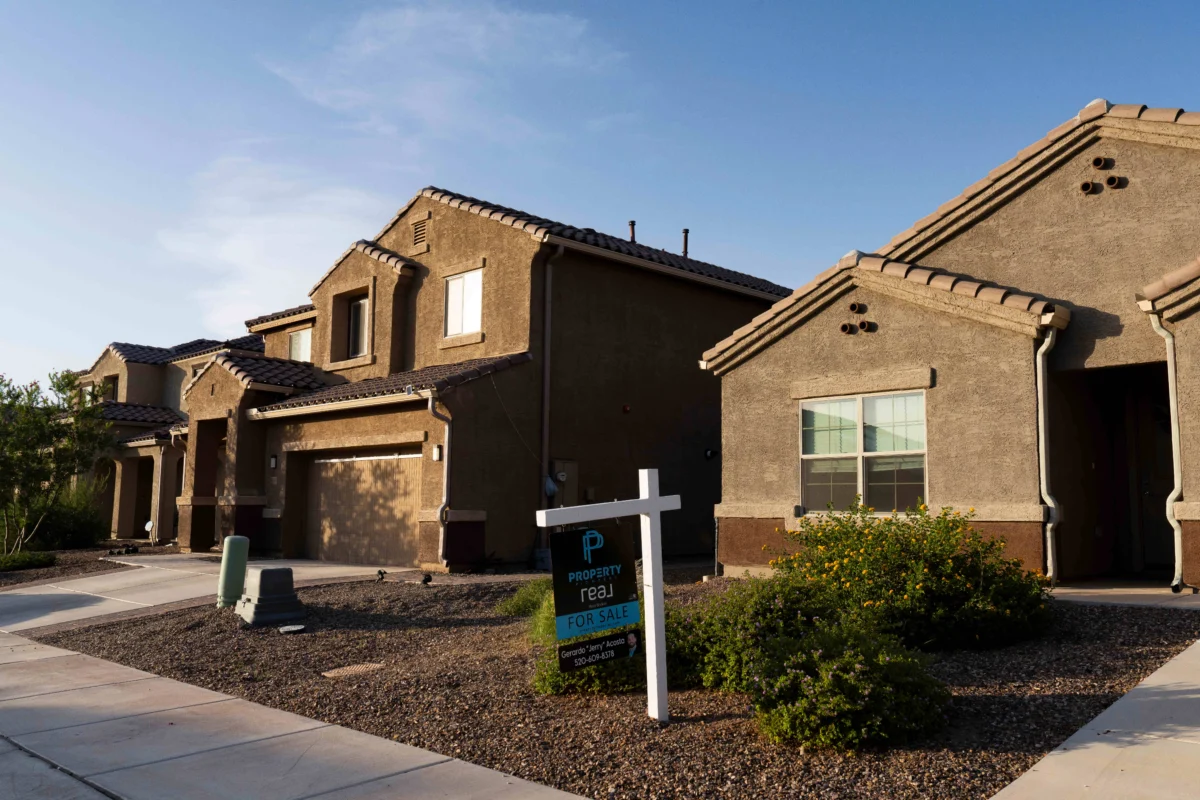
Local real estate agents in markets like Marana, Arizona, where the "For Sale" sign captured on August 5, 2026, symbolizes the ongoing activity, are adjusting their strategies. "We’re seeing buyers become much more rate-sensitive," explained Maria Rodriguez, a broker with Desert Bloom Realty. "Many are pre-approved for a certain payment, and even a quarter-point rate increase can push them out of their comfort zone. For some, an ARM is the only way to make the numbers work right now, especially with prices still relatively firm in desirable areas. We advise clients to factor in potential rate adjustments into their long-term budget, even if they plan to sell before the fixed period ends."
Implications for the Housing Market and Broader Economy
The continued elevation of mortgage rates and the corresponding shift towards ARMs carry significant implications for both the housing market and the broader economy.
- Affordability Crisis Deepens: High rates exacerbate the existing housing affordability crisis, particularly for first-time buyers and lower-income households. This could lead to a widening gap between homeowners and renters, and potentially suppress household formation.
- Slower Home Sales and Price Moderation: While purchase applications have shown some year-over-year growth, the week-over-week stagnation suggests that sales volumes may remain constrained. If higher rates persist, it could lead to further cooling in home price appreciation, potentially even modest price declines in some overvalued markets, as increased inventory and reduced buying power put downward pressure on valuations.
- Economic Headwinds: A slowdown in the housing market has ripple effects across the economy. Reduced home sales impact industries such as construction, home furnishings, and real estate services, potentially dampening overall economic growth. The "wealth effect," where homeowners feel wealthier and spend more when their home values rise, also diminishes.
- Increased Borrower Risk: While current ARMs are generally safer than their pre-2008 counterparts, the transfer of interest rate risk to the borrower is a critical concern. Should rates remain high or climb further when the fixed period ends, borrowers could face significantly higher monthly payments, potentially leading to financial distress or, in extreme cases, foreclosure if they are unable to manage the increased burden. Financial counselors are increasingly emphasizing the importance of stress-testing future budgets against potential rate increases.
Looking Ahead: The Inflation Data and Beyond
The immediate trajectory of mortgage rates hangs precariously on forthcoming economic data. Mortgage News Daily reported that rates were largely unchanged to start the current week, as investors await crucial monthly inflation numbers scheduled for release at the end of the week. These figures will be pivotal. If inflation proves to be higher than economists anticipate, it could reinforce the Federal Reserve’s hawkish stance, leading to expectations of sustained high interest rates or even further hikes, which would likely push mortgage rates sharply higher. Conversely, a surprisingly low inflation reading could provide some relief, signaling that the Fed’s efforts are taking hold, potentially leading to a softening of bond yields and a subsequent dip in mortgage rates.
Beyond this week’s inflation report, the long-term outlook for mortgage rates remains tied to the Federal Reserve’s monetary policy, the stability of the global economy, and the trajectory of the federal budget. The "higher for longer" narrative, which suggests that interest rates will remain elevated for an extended period, continues to gain traction among analysts. This scenario implies that borrowers will need to adapt to a new normal of higher borrowing costs, making careful financial planning and risk assessment more critical than ever in navigating the dynamic and challenging U.S. mortgage market.
