

Ahead of the Federal Reserve’s pivotal September monetary policy meeting, the central bank finds itself at the epicenter of a political maelstrom, facing explicit calls from President Donald Trump and senior administration officials to forgo an interest rate hike and even consider a reduction. This unprecedented public pressure comes as the nation grapples with persistent inflation, mounting affordability challenges for households, and significant geopolitical instability, all set against the backdrop of critical November midterm elections. The Federal Open Market Committee (FOMC) is scheduled to convene on September 15-16, a meeting that market participants and the public alike are watching with bated breath, as the decisions made could profoundly reshape the economic landscape.
The current economic climate is characterized by a delicate balance of competing forces. On one hand, consumers are already contending with soaring borrowing costs for everything from credit card debt to mortgages and auto loans. The New York Federal Reserve recently reported that credit card debt had surged to an alarming $1.26 trillion, exacerbating affordability pressures across various income brackets. For these households, any further increase in rates would represent an additional financial burden, potentially stifling consumer spending and investment.
Conversely, tighter monetary policy, traditionally implemented through rate hikes, is a primary tool for central banks to cool an overheating economy and rein in inflation. By making borrowing more expensive, the Fed aims to curb demand, which in turn can ease price pressures on everyday essentials such as groceries and gasoline. These rising costs have been a consistent pain point for the majority of U.S. households throughout the year, eroding purchasing power and contributing to widespread economic dissatisfaction. Experts argue that while initial rate hikes can be painful, they are ultimately necessary to restore price stability and prevent a more damaging inflationary spiral.
The Impending Decision: September FOMC Meeting
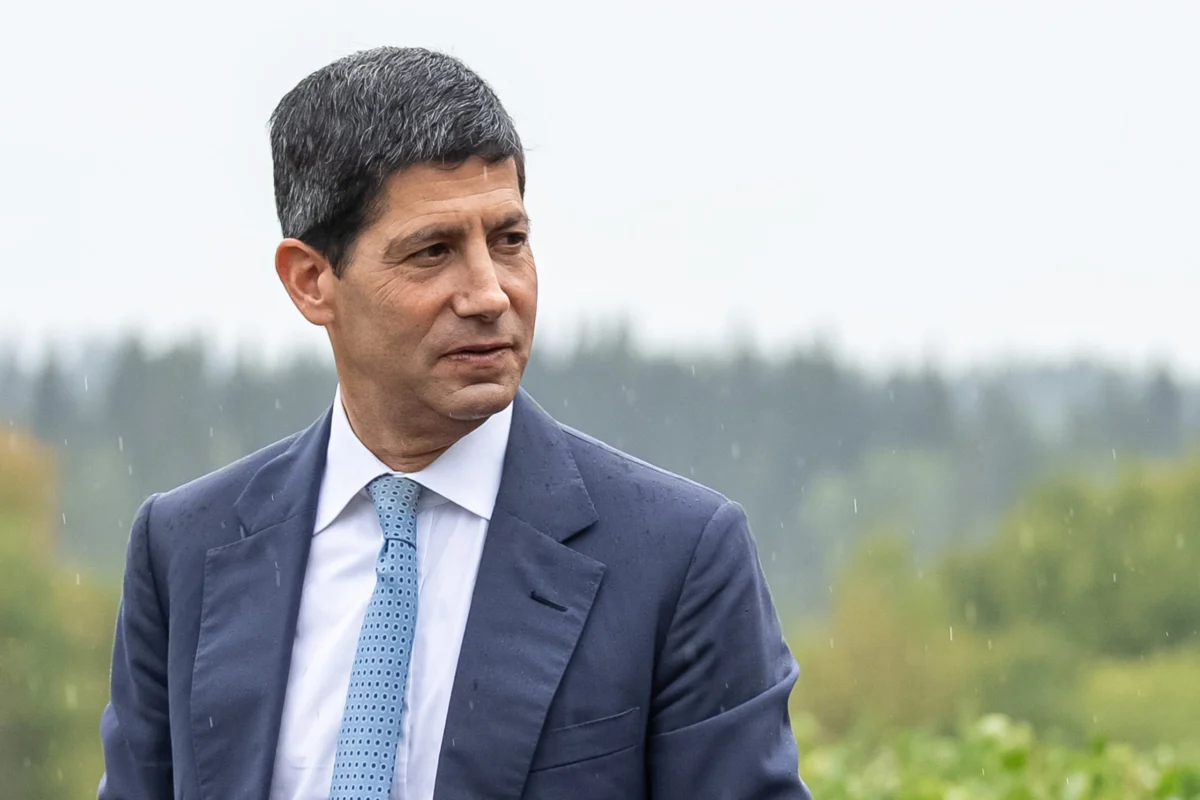
The Federal Reserve has maintained a steady federal funds rate throughout the current year, despite inflation persistently remaining well above its long-term 2% target. The July 2026 Consumer Price Index (CPI) report, for instance, indicated a year-over-year inflation rate significantly higher than desired, underscoring the challenge facing policymakers. Federal Reserve Chairman Kevin Warsh, who was observed walking the grounds during the Kansas City Federal Reserve’s Jackson Hole Economic Policy Symposium in Moran, Wyoming, on August 28, 2026, now presides over an FOMC grappling with intense scrutiny. Warsh has recently moved to curtail the use of "forward guidance"—the practice of signaling upcoming rate moves—a shift that aims to enhance policy flexibility but also adds to market uncertainty regarding future actions.
Despite the administration’s vocal opposition, financial markets are largely anticipating a rate hike. According to the CME Group’s FedWatch tool, fed funds futures were last pricing in a 60% probability that the central bank will increase rates by one-quarter of a percentage point at the upcoming September meeting. This market expectation reflects a belief among investors that the Fed will prioritize its inflation-fighting mandate, even in the face of political headwinds. The expectation is further solidified by the economic principle that neglecting inflation now could lead to greater economic instability in the long run, necessitating even more aggressive measures later.
Political Pressure from the White House
President Trump’s direct appeals to the Federal Reserve highlight a recurring tension between the executive branch and the independent central bank. In a notable September 4 post on Truth Social, the President urged, "The Fed Board, with its great new leader, must get smart — BE PATRIOTS for a change." While these remarks did not explicitly target Chairman Warsh in the same direct manner as his past criticisms of former Chair Jerome Powell, the underlying message was clear: the administration desires lower interest rates, arguing that the U.S. should maintain the lowest possible rates to ensure economic competitiveness globally. This stance aligns with a broader administration philosophy that views higher interest rates as an impediment to economic growth and a competitive disadvantage for American businesses in the international arena.
Senior administration officials have echoed the President’s sentiments, emphasizing concerns about the impact of high borrowing costs on consumers and businesses. This consistent pressure campaign underscores the administration’s desire to see more accommodative monetary policy, especially with the midterm elections looming. Such public interventions are rare and typically viewed with concern by economists and financial experts who stress the importance of the Fed’s operational independence to make decisions free from political influence. The historical record suggests that direct political interference can compromise the central bank’s ability to maintain long-term price stability.

The Economic Imperative: Battling Persistent Inflation
The Federal Reserve’s dual mandate tasks it with achieving both maximum employment and price stability. With the unemployment rate currently low and the economy showing signs of robust, albeit potentially overheated, activity, the focus has increasingly shifted towards controlling inflation. Mark Higgins, senior vice president at Index Fund Advisors and author of "Investing in U.S. Financial History: Understanding the Past to Forecast the Future," emphasized the historical precedent for decisive action. "History demonstrates that the most reliable way to restore price stability is to maintain sufficiently restrictive monetary policy until inflation is decisively tamed," Higgins stated. "Considering the duration of this inflationary episode, I believe sending a clear message via an interest rate hike is appropriate and in the best interest of the American people."
The duration of the current inflationary episode is indeed a significant concern. After years of relatively benign price increases, the post-pandemic recovery, coupled with supply chain disruptions and robust demand, ignited an inflationary surge that has proven more stubborn than many initially predicted. The war with Iran, a new and significant geopolitical factor, has further complicated the picture, particularly by driving up global energy prices. This adds another layer of complexity to the Fed’s decision-making process, as some inflationary pressures are external and not directly responsive to domestic monetary policy. The challenge for the Fed is to differentiate between transient and persistent inflation drivers and to respond appropriately without overreacting to supply-side shocks beyond its control.
The Consumer Conundrum: Affordability and Borrowing Costs
The implications of the Fed’s decision for the average American household are profound and immediate. When the Fed raises its benchmark federal funds rate, borrowing costs across the economy invariably rise. Short-term consumer debt, such as credit card interest rates and adjustable-rate mortgages, is typically tied to the prime rate, which usually moves in lockstep with the fed funds rate. This means that a quarter-point hike by the Fed could translate into higher monthly payments for millions of Americans carrying variable-rate debt. For instance, an increase of 25 basis points could add tens of dollars to monthly payments on a typical credit card balance, further squeezing household budgets already stretched by rising prices.
Longer-term rates, such as those for 15- and 30-year fixed mortgages, while not directly pegged to the fed funds rate, are heavily influenced by inflation expectations and Treasury yields. The 10-year U.S. Treasury yield, a key benchmark for mortgage rates, briefly topped 4.8% on Tuesday, September 8, signaling heightened inflation concerns and pushing the average rate on a 30-year fixed mortgage to 6.89%, according to Mortgage News Daily. This represents a substantial increase from rates observed before the recent geopolitical flare-up and has significantly impacted housing affordability. Many prospective homebuyers find themselves priced out of the market, while existing homeowners with variable-rate loans face increasing financial strain.
Beyond debt, the rising cost of everyday expenses—groceries, gasoline, utilities—has become a dominant theme in household budgeting discussions. Mark Hamrick, an economic analyst and founder of The Hamrick Brief, highlighted this stark reality: "Persistently high prices have weighed especially heavily on middle- and lower-income households, many of which are struggling to afford basic necessities." While higher rates might eventually cool these prices, the immediate effect is often higher borrowing costs before the benefits of disinflation are fully realized. This creates a difficult trade-off for consumers and policymakers alike, as the path to long-term price stability often involves short-term economic adjustments.
Geopolitical Undercurrents: War with Iran and Oil Prices
The ongoing war with Iran has injected a new and volatile element into the global economic equation. Energy markets, particularly crude oil, are highly sensitive to geopolitical tensions in the Middle East. The conflict has led to significant disruptions in oil supply chains and heightened speculation, driving up crude prices. Since energy costs are a fundamental input for nearly all goods and services, rising oil prices inevitably fuel broader inflationary pressures across the economy. This external shock complicates the Fed’s task, as domestic monetary policy has limited direct influence over international commodity prices. The challenge is to prevent these external shocks from embedding themselves into domestic inflation expectations.
The spillover effects are evident in the bond market, where increased uncertainty and inflation expectations have led to higher yields. This dynamic directly impacts U.S. Treasury bonds, which serve as benchmarks for a vast array of other financial products, including corporate bonds, municipal bonds, and, critically, mortgages. The upward movement in the 10-year Treasury yield is a direct reflection of these broader market anxieties, underscoring how geopolitical events can quickly transmit into domestic financial conditions and consumer costs. The rising cost of capital for businesses, stemming from higher bond yields, can also dampen investment and hiring, creating a ripple effect throughout the economy.

The Case Against Premature Easing
Economists and financial analysts have largely cautioned against the administration’s calls for rate cuts, citing severe risks to the Fed’s credibility and the long-term fight against inflation. Mark Zandi, chief economist at Moody’s, articulated this concern clearly: "The president’s exhortation to the Fed to cut rates would prove counterproductive, almost surely causing already-rising long-term rates to rise substantially further." Zandi elaborated that such a move would likely cause fixed mortgage rates, which have already climbed from less than 6% before the war with Iran, to surge "well above 7%." This would not only further strain housing affordability but also increase borrowing costs for businesses and commercial property owners, potentially putting pressure on the stock market as well, as higher discount rates reduce the present value of future earnings.
The primary risk, according to Zandi, lies in the potential erosion of the Federal Reserve’s independence. "Bond investors expecting a Fed rate hike to fight above-target inflation would be spooked by a Fed cut," he explained. "It would signal that the Fed has lost its independence from the president, which would mean even higher inflation in the future." This loss of confidence could trigger a self-fulfilling prophecy, where consumers and businesses, anticipating continued inflation, adjust their wage and pricing decisions accordingly, making the central bank’s job of restoring price stability exponentially harder. Such an outcome could lead to stagflation, a dreaded scenario of high inflation coupled with economic stagnation.
Historical Precedent and Fed Independence
The principle of central bank independence is a cornerstone of modern monetary policy. It posits that monetary policy decisions should be insulated from short-term political pressures to ensure long-term economic stability. History is replete with examples where politically motivated monetary policies led to disastrous inflationary spirals, such as the Great Inflation of the 1970s, which was partly attributed to political interference in monetary policy. The Federal Reserve, established in 1913, was designed to operate free from direct political interference, allowing it to make difficult, unpopular decisions necessary for the nation’s economic health, even if those decisions temporarily slow growth or raise borrowing costs.
The current situation, with direct presidential intervention, rekindles debates about this vital independence. Mark Hamrick emphasized the critical role of preserving the Fed’s credibility. "If consumers lose faith in the Fed’s ability to restore price stability, they may come to believe that higher inflation is inevitable," he warned. "Those expectations could become self-reinforcing, influencing wage and price decisions and making inflation more difficult to control." Ultimately, the administration’s pressure, while politically understandable ahead of midterms, underscores why Federal Reserve autonomy is paramount. "Preserving the institution’s independence ultimately strengthens its ability to serve the American public," Hamrick concluded, highlighting that an independent Fed is better positioned to act in the long-term economic interest of the nation.
Looking Ahead: Beyond September
The September FOMC meeting is not just an economic decision; it’s a political flashpoint. Coming just weeks before the November midterm elections, polls consistently show voters are broadly dissatisfied with the current economic conditions, particularly high prices and elevated borrowing costs. A Fed rate hike, even if economically justified to combat inflation, could be perceived negatively by a segment of the electorate, potentially influencing voting patterns and the political landscape. Conversely, bowing to political pressure and cutting rates could lead to a loss of credibility and a more severe inflationary crisis down the line, which would also have profound political consequences, potentially harming the very administration that pushed for the cuts.
The stakes extend beyond the immediate economic indicators. The integrity of the Federal Reserve as an independent institution is on the line. Chairman Warsh and the FOMC face the unenviable task of navigating intense political pressure, complex economic data, and volatile geopolitical events, all while trying to steer the U.S. economy towards sustainable price stability. Their decision on September 15-16 will not only dictate the immediate trajectory of interest rates but also send a powerful message about the resilience of central bank independence in an increasingly politicized economic landscape.
The broader implications for the U.S. economy are substantial. A credible Fed response to inflation, even if it entails short-term pain, is essential for long-term growth and stability. If the Fed successfully tames inflation without tipping the economy into a deep recession, it would bolster confidence in its stewardship. However, a misstep, whether due to political capitulation or misjudgment of economic conditions, could prolong the inflationary period, further strain household finances, and potentially destabilize financial markets for years to come. The coming days will reveal whether economic principle or political expediency ultimately guides the nation’s central bank.
