

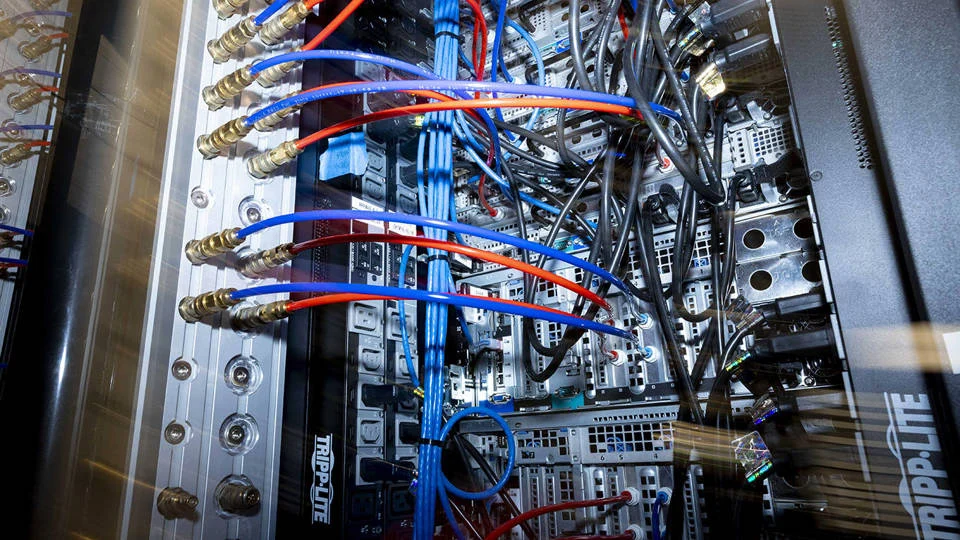
The increasing reliance of critical sectors such as finance, defense, healthcare, and public administration on Artificial Intelligence (AI) is fundamentally reshaping the global geopolitical landscape. While the transformative potential of AI is undeniable, its efficacy is inextricably linked to two vital resources: the vast datasets used for training AI models and the immense computational power required for their operation. Crucially, these resources are not universally controlled by governments. This imbalance creates a precarious situation where nations risk becoming subservient to decisions originating from corporate boardrooms whose interests may not align with national sovereignty, according to analysis of recent events and emerging trends.
The stark reality of this evolving strategic paradigm was underscored in March 2026 when Iranian drones targeted three Amazon Web Services (AWS) facilities in Bahrain and the United Arab Emirates. While two of the facilities sustained direct hits and a third narrowly avoided impact, the incident, which occurred on March 17, 2026, garnered minimal attention beyond specialized intelligence and cybersecurity circles. This lack of widespread public awareness is deeply concerning, as it signifies a critical misunderstanding of the strategic significance of commercial data centers. These facilities, once considered mere background infrastructure, are now as strategically vital as traditional assets like ports or power grids, and equally vulnerable to disruption.
The Escalation of Digital Warfare: A New Era of Conflict
The targeting of AWS facilities in Bahrain and the UAE marks a watershed moment, representing the first known instance of commercial data centers becoming direct military targets. This event signals a significant escalation in the nature of modern warfare, where the digital infrastructure underpinning economies and national functions is now a legitimate and attractive objective for state and non-state actors.
Timeline of Key Events and Developments:
- Pre-2026: Growing global reliance on cloud computing for essential services. Increasing geopolitical tensions and cyber warfare capabilities among various nations. Emergence of AI as a transformative technology across multiple sectors.
- March 17, 2026: Iranian drone attacks on three AWS data center facilities in Bahrain and the UAE. Two facilities are directly hit; a third narrowly misses impact.
- March 18-24, 2026: Initial reports and limited media coverage of the incidents, primarily within cybersecurity and defense publications. Official statements from AWS and relevant governments are minimal or cautiously worded.
- Late March – April 2026: Analysts begin to widely discuss the strategic implications of data centers as military targets. Concerns are raised about the vulnerability of global digital supply chains.
- Ongoing: Increased focus on data sovereignty, national cloud initiatives, and the security of critical digital infrastructure by governments worldwide. Discussions about international norms and regulations governing cyber warfare and the targeting of civilian digital infrastructure intensify.
The implications of this incident are far-reaching. It highlights that any nation heavily reliant on cloud infrastructure provided by foreign entities for its sensitive data and AI operations is inherently exposed to geopolitical risks. The attack, even if intended as a demonstration of capability or a strategic disruption rather than a full-scale assault, underscores the potential for adversaries to cripple a nation’s digital backbone, thereby impacting its economic stability, defense capabilities, and public services.
The Pillars of AI: Data and Compute Power
The strategic vulnerability stems from the dual pillars upon which AI development and deployment rest: data and compute.
Data: The New Oil, But With Concentrated Ownership
The unprecedented growth of AI is fueled by colossal amounts of data. This data, collected through myriad digital interactions, sensor networks, and vast databases, is the raw material that trains AI algorithms to perform complex tasks. However, the collection, storage, and processing of this data are increasingly concentrated in the hands of a few global technology giants. Companies like Google, Microsoft, Amazon, and Meta, which operate massive data centers and cloud platforms, effectively control the repositories where much of the world’s digital information resides.
For countries that do not possess robust domestic data infrastructure or have not implemented stringent data localization policies, this presents a significant challenge. Their citizens’ data, their government’s sensitive information, and the operational data of their industries are stored and managed on servers located outside their national borders, often within jurisdictions with different legal frameworks and political allegiances. This dependence means that access to and control over critical data can be influenced, or even obstructed, by the policies and geopolitical stances of the countries where these data centers are located or where the technology companies are headquartered.
Compute Power: The Bottleneck of Innovation
Equally critical is compute power, particularly the specialized hardware like Graphics Processing Units (GPUs) necessary for training sophisticated AI models. The demand for these high-performance chips, predominantly manufactured by companies like NVIDIA, has surged exponentially. The production of these chips is a complex, globalized process, with manufacturing concentrated in a few highly advanced facilities, notably in Taiwan.
This concentration of manufacturing capacity creates a critical bottleneck. Nations seeking to develop advanced AI capabilities are reliant on the availability of these chips, which are subject to export controls, supply chain disruptions, and the commercial priorities of the manufacturing companies and their host nations. A nation’s ability to innovate and maintain a competitive edge in AI can be directly hampered by its access to this vital compute infrastructure.
Geopolitical Ramifications: A New Digital Iron Curtain?
The targeting of AWS facilities is a stark reminder that the digital realm is not immune to conventional geopolitical conflict. It suggests a future where digital infrastructure becomes a primary battleground, with potential adversaries seeking to exploit vulnerabilities in cloud services, data storage, and AI processing capabilities.
Potential Implications:
- Erosion of National Sovereignty: Dependence on foreign-controlled data and compute resources can undermine a nation’s ability to make independent decisions, particularly in sensitive areas like defense, intelligence, and critical infrastructure management.
- Economic Disruption: Attacks or disruptions to data centers and cloud services could cripple national economies, impacting financial markets, supply chains, and essential services.
- Heightened Cyber Warfare Risk: The incident may embolden other actors to target similar infrastructure, leading to a more volatile and unpredictable cyber threat landscape.
- The Rise of Digital Protectionism: Countries may increasingly adopt policies to foster domestic cloud infrastructure and AI capabilities, leading to a fragmentation of the global digital ecosystem, akin to a "digital iron curtain."
- Arms Race in AI Security: A new arms race may emerge focused on developing more resilient digital infrastructure, advanced cyber defenses, and offensive capabilities to protect and exploit digital assets.
Responses and Adaptations: Towards Digital Resilience
The incident in March 2026 has already begun to prompt a recalibration of strategic thinking among governments and international bodies. While official responses from the companies involved and affected governments have been muted, likely to avoid escalating tensions or revealing sensitive operational details, the underlying concerns are palpable.
Hypothetical Official and Industry Reactions (Inferred):
- Cloud Providers: A spokesperson for a major cloud provider, speaking on condition of anonymity, might state, "The security of our infrastructure and customer data is paramount. We continuously invest in robust security measures and work closely with governments to address evolving threats. The incident in the Middle East highlights the need for a collective approach to digital security."
- Governmental Agencies: A senior official from a national cybersecurity agency might comment, "This event underscores the critical importance of understanding and securing our digital supply chains. We are reassessing our dependencies and exploring strategies to enhance national resilience in the face of such threats. This includes encouraging the development of domestic technological capabilities."
- International Bodies: A representative from a United Nations agency focused on digital cooperation could note, "The targeting of commercial data centers is a worrying development that necessitates a global dialogue on norms and regulations governing cyber warfare and critical digital infrastructure. International cooperation is essential to prevent escalation and ensure the stability of the digital commons."
In response to these growing vulnerabilities, several strategic shifts are anticipated:
- Data Sovereignty Initiatives: Governments are likely to accelerate efforts to enact and enforce data localization laws, requiring that sensitive data be stored and processed within their own borders. This could lead to the development of national or regional cloud platforms.
- Investment in Domestic Compute: Nations may increase investment in developing indigenous AI hardware capabilities or forming strategic alliances to secure access to advanced chips, potentially through joint ventures or sovereign wealth fund investments in chip manufacturers.
- Strengthening Cybersecurity: A significant uplift in cybersecurity budgets and capabilities will be necessary, focusing on threat intelligence, incident response, and the protection of critical digital infrastructure.
- International Norms and Treaties: The incident may spur renewed efforts to establish international treaties and norms governing cyber warfare and the protection of civilian digital infrastructure, though achieving consensus in a fragmented geopolitical landscape remains a significant challenge.
- Diversification of Cloud Providers: Companies and governments might seek to diversify their reliance on single cloud providers, opting for multi-cloud strategies or hybrid solutions to mitigate the risk of a single point of failure.
The Future of Power: A Digital Imperative
The strategic shift observed in March 2026 is not an isolated event but a symptom of a larger transformation. The ability to control, process, and secure data and compute power is rapidly becoming a defining characteristic of national power in the 21st century. As AI continues its inexorable integration into every facet of society, the nations that can assert sovereignty over their digital resources will be better positioned to safeguard their interests, foster innovation, and maintain their autonomy. Conversely, those that remain dependent on externally controlled digital infrastructure face an increasingly uncertain and vulnerable future, where their national destinies could be shaped by forces beyond their influence. The era of data centers as strategic battlegrounds has arrived, demanding a proactive and comprehensive reassessment of global security and power dynamics.
