

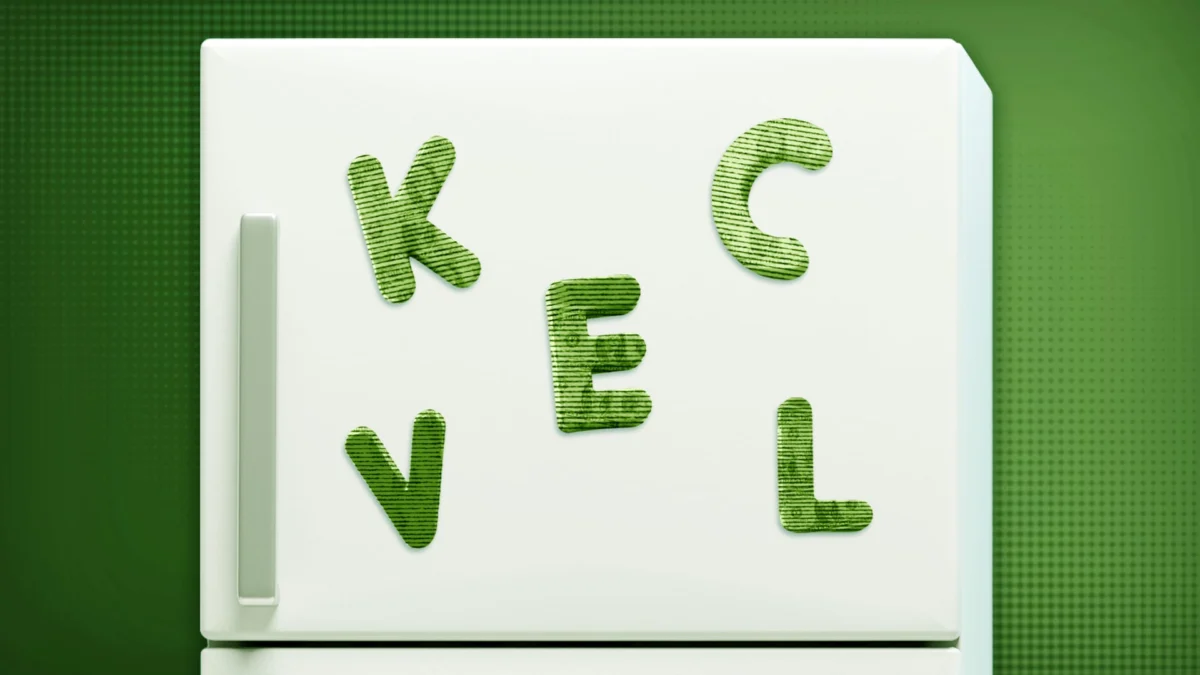
The United States economy, in its post-pandemic evolution, has become a subject of intense debate, with economists, corporate leaders, and policymakers grappling to define its current trajectory. What began as a widely accepted "K-shaped" recovery, illustrating a bifurcated economic experience with distinct upward and downward movements for different segments of the population, is now being re-examined. The prevailing discourse is shifting, with terms like "C-shaped" and "E-shaped" economies emerging as potential new descriptors for the nation’s economic landscape. This linguistic evolution, far from being mere semantic wordplay, carries significant implications for economic policy, consumer behavior, and the perceived fairness of the economic system.
The Reign of the K-Shape and the Dawn of New Metaphors
For several years following the economic disruptions of the pandemic, the "K-shaped" recovery became the dominant metaphor for understanding the American economic moment. This model posited that while some sectors and income brackets were experiencing robust growth (the upward arm of the "K"), others were stagnating or declining (the downward arm). This divergence was largely attributed to differing impacts of the pandemic and subsequent economic policies on various income groups. High-income earners, often with assets that appreciated in value and the ability to work remotely, tended to recover and even thrive, while low- and middle-income individuals, disproportionately affected by job losses, inflation, and rising costs of living, faced greater challenges.
The persistence of this "K-shaped" framework in economic discussions has been unusual, according to Don Rissmiller, chief economist at Baird Strategas. Typically, such descriptive letters gain traction during and immediately after recessions. Their continued relevance several years into an economic cycle, Rissmiller suggests, points to mounting public and policymaker concerns about wealth inequality. This heightened awareness may be driving the ongoing debate and the search for new, more accurate metaphors.
The Treasury Secretary’s Declaration: A Shift Towards a "C-Shaped" Economy?
Earlier this month, U.S. Treasury Secretary Scott Bessent, a former hedge fund manager, declared that the era of the K-shaped economy was over. In a statement that generated significant attention, Bessent posited that the economy was instead transitioning to a "C-shaped" recovery, suggesting that the lower strata of consumers were now gaining ground.
Bessent’s assertion was bolstered by his observations of wage growth among lower-income earners and the impact of recent tax policies implemented under the Trump administration. He specifically cited initiatives such as the "no tax on tips" and "no tax on overtime" policies as measures designed to provide direct financial relief to those at the lower end of the income spectrum. "I got sick of hearing about this K-shaped economy," Bessent stated in an interview with CNBC, emphasizing his conviction that the previous model was no longer representative of the current economic reality.
The sentiment that the economy might be shifting towards a "C-shape" has also found resonance within the corporate world. Christopher Nassetta, CEO of Hilton Worldwide, indicated to analysts that his company was "definitely seeing" signs of a C-shaped economy. Nassetta elaborated that the perceived weakness in high-income consumer spending was not the primary driver of a convergence between different economic segments. Instead, he observed that Hilton’s middle- and upper-middle-tier customer segments had moved from posting negative growth rates to experiencing increases of up to 6%. "The middle class is getting back in the game," Nassetta remarked, underscoring his belief that this trend was undeniable.

Counterarguments and Lingering Doubts: The Enduring K?
Despite these optimistic pronouncements, not all economists are convinced that the K-shaped economy has been definitively relegated to the past. Anthony Chan, former chief economist at JPMorgan, expressed skepticism, particularly in light of geopolitical developments. He pointed to the U.S. war with Iran as a significant disruptive factor that could undermine any nascent economic convergence.
Chan’s analysis highlights that lower-income households tend to allocate a larger portion of their income to energy expenditures. Consequently, they are disproportionately vulnerable to price spikes in gasoline and other energy products. The ongoing conflict in the Middle East poses a persistent threat of elevated inflation, which could erode any gains made by lower-income Americans through tax refunds or housing affordability initiatives. "I’m the first to say that we can make some progress," Chan conceded, "But nothing of the sort of progress that we can say we can bury the K-shaped economy."
The continued weakness in consumer sentiment and the persistent cost of living pressures, which are shaping up to be defining issues in the upcoming midterm elections, further fuel the argument that the K-shaped economy remains a relevant descriptor. The University of Michigan’s widely followed consumer sentiment survey, released recently, indicated an 11% drop in August compared to the previous year, with confidence levels among low- and middle-income respondents experiencing a particularly sharp decline. This suggests that economic anxieties remain prevalent, especially among those with more constrained financial resources.
Corporate leaders from various sectors continue to report observations that align with a K-shaped economic environment. Shane Grant, operations chief for the Americas at Colgate-Palmolive, stated in June at a Deutsche Bank consumer conference that "The dynamic of a K-shaped economy we see is alive and well in the United States." Similarly, Bill Boltz, a merchandising executive at Lowe’s, acknowledged on the home retailer’s earnings call that the K-shaped economy is a significant factor influencing consumer spending trends. Nicholas Fink, CEO of Constellation Brands, maker of popular beverages like Modelo beer and Robert Mondavi wine, even suggested that the economy was becoming "increasingly" like a K.
However, there are also indications that the stark divergence characteristic of the K-shape may be beginning to soften. A report published last month by the Federal Reserve Bank of Richmond indicated that while income growth between 2021 and 2023 did not show a K-shaped divergence, consumption patterns did reflect a distinct break. Furthermore, the Bank of America Institute noted a narrowing gap in credit card spending across income classes starting in May of this year. David Michael Tinsley, the institute’s senior economist, observed in a client note that "What was once a ‘K’-shaped consumer is increasingly becoming one of convergence." Conversely, research from the New York Fed on credit card debt, which reached a near-record $1.26 trillion in the second quarter, continues to highlight the persistent struggles of many households living paycheck to paycheck, suggesting the K-shaped divide remains a dominant economic theme for a significant portion of the population.
The Emergence of the "E-Shaped" Economy: Parallel Tracks?
Beyond the "C-shape," another metaphorical contender for describing the current economic landscape is the "E-shaped" economy. This perspective suggests that the economy has evolved beyond a simple divergence or convergence, instead characterizing three distinct classes of Americans operating on parallel, albeit unequal, tracks. In this view, these groups are neither drifting further apart nor coalescing.
Joel Mokyr, a Nobel Prize-winning economic historian at Northwestern University, described the proliferation of these "alphabet soup" terms as a reflection of the complex and often elusive nature of economic analysis. He noted the historical use of letter shapes, such as "V-," "L-," and "W-shaped," to summarize economic recoveries following major downturns. However, the sustained use of these descriptors several years into a business cycle, as seen with the K-shape, is considered unusual by experts like Rissmiller, suggesting a deeper societal concern about economic stratification.

The "E-shaped" model, as interpreted by some, suggests that each economic group has found a way to navigate the current environment, even if it doesn’t represent an optimal outcome. "It may not be the best outcome," Rissmiller commented, "But it is an outcome that looks more stable than not."
Michael Eisenband, global chairman of corporate finance at FTI Consulting, has argued that the "E-shaped" assessment "better illustrates" clearly divergent spending patterns among different income groups and serves as a "more fitting depiction of the times." Heather Long, chief economist at Navy Federal Credit Union, suggested that an "E-shaped" description might be more accurate than a "C-shaped" one because it better captures the reality of a middle class that is merely "hanging on." She also indicated that the notion of low- and high-earners converging would require "some real mental gymnastics."
Geoff Ballotti, CEO of Wyndham Hotels & Resorts, has also acknowledged the possibility of a "C- or E-shaped" economy when discussing the improving confidence and purchasing power of his middle-tier consumers. However, for some business leaders, the "E-shaped" concept remains relatively novel. Scott Thompson, CEO of Somnigroup International, admitted to being unfamiliar with the "E-shaped" analysis when it was raised on a recent earnings call, stating, "That’s a new one for me. I was ready for K; hadn’t thought about E." This suggests that while the economic discourse is rapidly evolving, certain metaphors may take time to permeate broader business understanding.
The Broader Implications of Economic Metaphors
The ongoing debate over the shape of the U.S. economy—whether it’s a persistent "K," a converging "C," or a parallel "E"—is more than an academic exercise. These labels influence public perception, shape policy decisions, and guide corporate strategies.
A "K-shaped" economy necessitates policies aimed at addressing inequality and supporting those left behind. A "C-shaped" economy, with gains at the lower end, might suggest that existing policies are working and could embolden further support for such initiatives. An "E-shaped" economy, with distinct, parallel tracks, could imply a need for targeted interventions for each group, rather than broad-stroke solutions.
The choice of metaphor has tangible implications. For instance, if the economy is truly "C-shaped," policymakers might feel less pressure to implement aggressive wealth redistribution measures. Conversely, if the "K-shape" persists, calls for greater progressivity in taxation and enhanced social safety nets would likely intensify. The "E-shape" might prompt a more nuanced policy approach, recognizing the unique challenges and opportunities faced by different income strata.
As economic data continues to be released and analyzed, and as geopolitical and domestic factors evolve, the language used to describe the U.S. economy will undoubtedly continue to shift. The current "alphabet soup" of economic descriptors reflects a nation grappling with complex economic realities, seeking to understand who is benefiting, who is struggling, and what the path forward truly looks like. The enduring question remains: which letter, if any, will ultimately prove to be the most accurate and enduring representation of this dynamic period? The answer will shape economic policy and societal well-being for years to come.
