

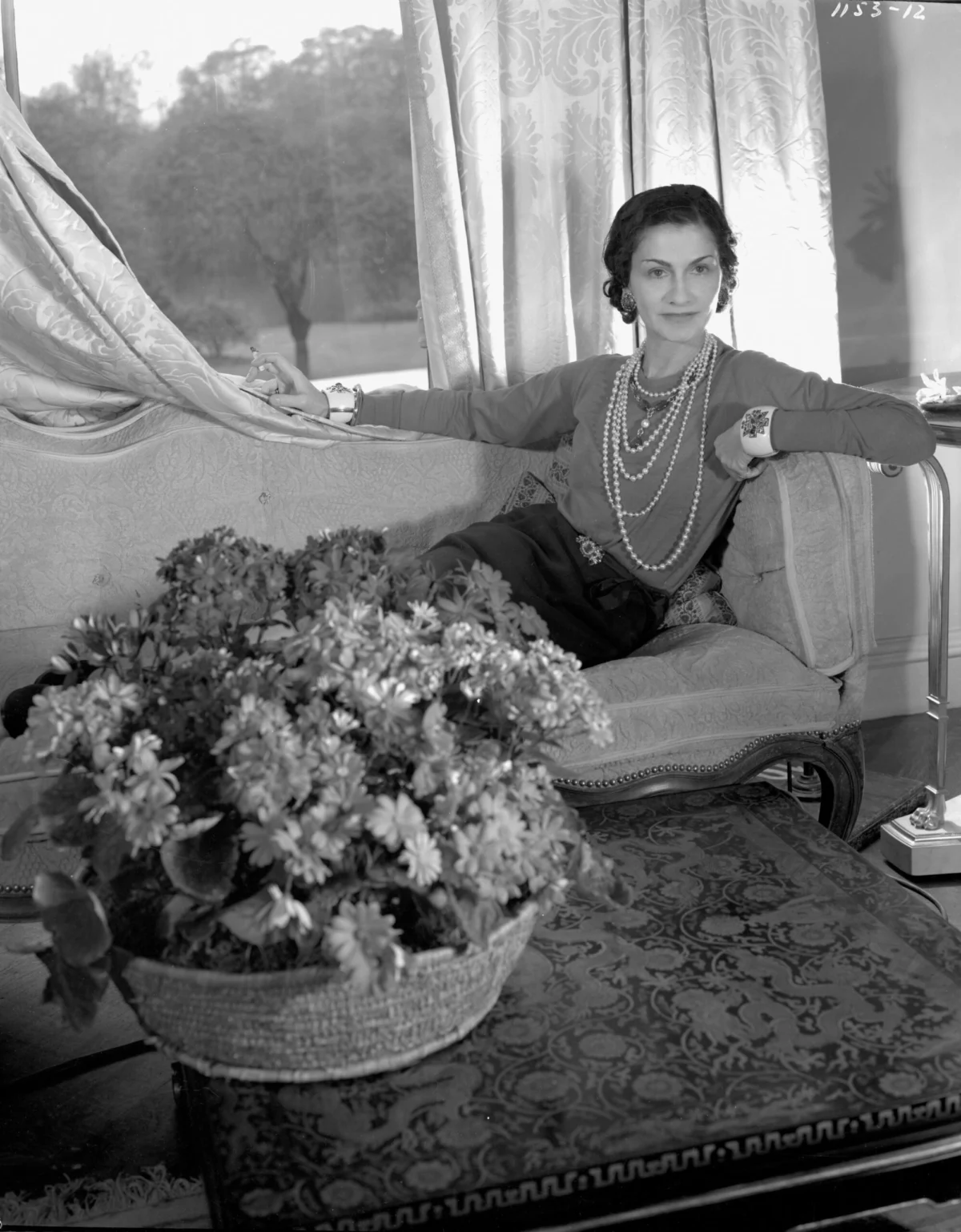
The name Coco Chanel remains an indomitable fixture in the firmament of global fashion, representing a brand that defined 20th-century luxury. However, the woman behind the interlocking "CC" logo, born Gabrielle Bonheur Chanel in 1883, emerged from a background that stood in stark contrast to the opulence she would eventually curate. Born in a charity hospital in Saumur, France, and later abandoned by her father at a convent orphanage in Aubazine following her mother’s death, Chanel’s early life was defined by austerity. This childhood of deprivation did not merely serve as a hurdle to be overcome; it became the aesthetic blueprint for a revolution in style. By the time of her death in 1971, Chanel had not only liberated women from the restrictive corsetry of the Belle Époque but had also established a residential and interior design legacy that mirrored her complex, multifaceted identity.

The Cistercian Roots of a Global Visual Identity
The foundations of the Chanel empire were laid within the stone walls of the Aubazine Abbey. It was here that a young Gabrielle learned the trade of seamstressing, a skill that would facilitate her ascent into Parisian society. Observers and historians have long noted that the minimalist, monochromatic palette of the nuns’ habits—strictly black and white—informed the color scheme that would become her professional signature.
Supporting research into the brand’s iconography suggests that the world’s most recognized fashion logo, the interlocking Cs, was inspired by the geometric patterns of the stained-glass windows at the Aubazine convent. Furthermore, her first and only high jewelry collection, "Bijoux de Diamants," launched in 1932, featured motifs that echoed the floor mosaics of the orphanage. This synthesis of impoverished origins and high-end luxury created a unique brand DNA that favored "pauvre" (poor) materials, such as jersey fabric, reimagined through the lens of elite craftsmanship.

The Rue Cambon Ecosystem: A Masterclass in Brand Architecture
In 1918, Chanel acquired an 18th-century building at 31 Rue Cambon, marking a pivotal moment in the professionalization of the couture house. The building was structured as a vertical ecosystem of the Chanel brand. The ground floor housed the boutique, the first floor was dedicated to the high-fashion salons, and the second floor served as Chanel’s private apartment. The top floor contained her atelier, which remains in use today.
The interior of the Rue Cambon apartment was a departure from the "monastic" simplicity of her clothing designs. While her garments were spare and chic, her living spaces were maximalist "jewel boxes." She filled her rooms with Coromandel screens—of which she reportedly owned more than 30—ornate gilt-framed mirrors, and a vast library of leather-bound classics. The apartment also featured a famous mirrored staircase. This architectural choice was purely functional; it allowed Chanel to sit at the top of the stairs and observe the reactions of clients and the movements of models on the floor below without being seen herself.

International Expansion and the American Influence
As her business grew, so did her geographical footprint. In 1931, Chanel’s influence reached Hollywood at the invitation of film mogul Sam Goldwyn. Goldwyn, recognizing the power of Chanel’s "New Look" for the screen, hired her to design costumes for United Artists’ stars. During this period, Chanel resided at the Hotel Pierre in New York City, which served as her base of operations for a month-long tour of the United States.
This American venture was a calculated business move. By the early 1930s, the Chanel brand was already a significant economic force. The designer understood that the burgeoning film industry was the ultimate vehicle for global marketing. Although her time in Hollywood was brief—she reportedly found the film industry’s aesthetic "vulgar"—the trip solidified her status as a global businesswoman rather than just a Parisian dressmaker.

La Pausa: The Construction of a Riviera Sanctuary
In 1928, Chanel collaborated with architect Robert Streitz to build La Pausa, a sprawling villa on the French Riviera. The property was built on land that local legend claimed was a resting place for the Virgin Mary. The architecture of La Pausa was a direct homage to the Aubazine orphanage, featuring a stone staircase and a cloistered courtyard that mimicked the convent’s layout.
The villa became a cultural hub, hosting intellectual and artistic luminaries such as Salvador Dalí, Jean Cocteau, and Pablo Picasso. The interiors were famously decorated in shades of beige, a color Chanel popularized to mimic the natural tones of the earth and sun-warmed stone. The House of Chanel’s decision to repurchase the property in 2015 for an undisclosed sum underscores the enduring importance of Chanel’s personal residences to the brand’s contemporary marketing and heritage preservation efforts.

The London Years and the Duke of Westminster
Between 1924 and the early 1930s, Chanel’s personal and professional life became deeply entwined with the British aristocracy through her relationship with Hugh Grosvenor, the 2nd Duke of Westminster. During this era, she spent considerable time at Bourdon House, the Duke’s palatial residence in Mayfair.
The Duke’s influence is visible in Chanel’s adoption of English tweeds and sporting attire into her collections. A persistent urban legend in London suggests that the interlocking "C" logos found on lampposts in the City of Westminster were a tribute from the Duke to Chanel. However, historical records from the Westminster City Council clarify that the "CC" stands for "City Council," though the myth continues to be cited as a testament to her pervasive cultural presence in the United Kingdom.

The Ritz Paris: A Thirty-Year Residency
Perhaps no location is more synonymous with the designer than the Ritz Paris. In 1937, Chanel moved into a suite at the hotel, located at 15 Place Vendôme, just across the street from her Rue Cambon headquarters. She would call the Ritz home for the next 34 years.
Her residency at the Ritz spanned the most controversial period of her life: the German occupation of Paris during World War II. While many Parisians suffered under Nazi rule, Chanel continued to live at the hotel, which served as the headquarters for the German Luftwaffe. Historical analyses, including those by biographer Hal Vaughan, have detailed her relationship with Baron Hans Günther von Dincklage, a German officer, and her alleged involvement in "Operation Modellhut." Despite the cloud of collaboration that hung over her after the war, leading to a period of self-imposed exile in Switzerland, she returned to the Ritz and her Rue Cambon atelier for her 1954 comeback.

Legacy and the Preservation of an Aesthetic
Coco Chanel passed away on January 10, 1971, in her suite at the Ritz. Her death marked the end of an era, but the commencement of a monumental legacy. The House of Chanel, under the later creative direction of Karl Lagerfeld and currently Virginie Viard, has meticulously maintained the Rue Cambon apartment exactly as it was on the day she died.
The apartment serves as a "creative cathedral" for the brand’s designers. Every object—from the crystal chandeliers featuring the number "5" to the lion figurines (representing her zodiac sign, Leo)—is used as a reference point for new collections. The preservation of these spaces is not merely sentimental; it is a strategic asset. By maintaining the physical environments in which Chanel lived and worked, the company ensures the continuity of the brand’s narrative.

Impact and Implications
The broader impact of Coco Chanel’s life is measured not only in the billions of dollars the brand generates annually but in the fundamental shift in the feminine silhouette. Her decision to move out of poverty and into the world’s most expensive hotels and villas was a radical act of self-invention.
The data reflects this dominance: as of the 21st century, Chanel remains one of the most valuable luxury brands in the world, with annual revenues exceeding $17 billion as of 2022. The brand’s ability to command such figures is rooted in the "myth of Coco"—a narrative built upon the stones of Aubazine, the screens of Rue Cambon, and the corridors of the Ritz. Chanel’s life demonstrated that for a luxury brand to survive, it must be anchored in a specific, inimitable sense of place. Her homes were not just residences; they were the architectural manifestations of a brand that transformed the fabric of modern life.
