

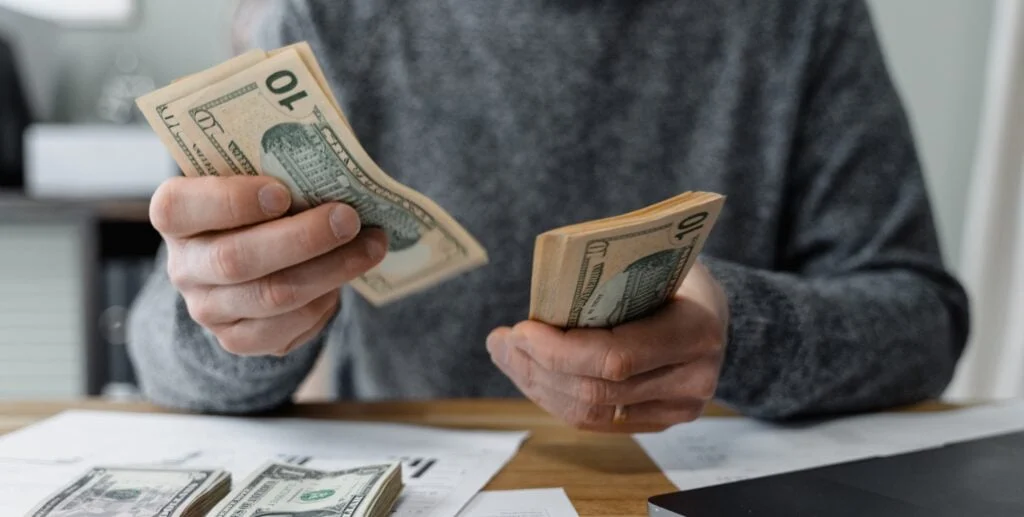
The landscape of American real estate investment is undergoing a fundamental transformation as the era of "easy money" and ultra-low interest rates recedes further into the rearview mirror. For decades, the primary engine of real estate wealth was leverage—the ability to use small amounts of capital to control large assets through mortgage financing. However, a combination of persistently high interest rates, tightening credit standards, and a volatile macroeconomic environment has forced a pivot in strategy. Today, the "all-cash" offer has transitioned from a luxury reserved for the ultra-wealthy to a calculated tactical maneuver for investors seeking to maintain yield and stability in an unpredictable market.
According to the latest data from Realtor.com, the share of all-cash home purchases in the United States stood at 31.4% during the first four months of 2026. While this represents a slight contraction from the 32.3% recorded during the same period in 2025, it remains significantly elevated compared to historical averages. The data suggests a bifurcated market where those with liquid capital are consolidating power, while those dependent on traditional financing face increasing barriers to entry.
Regional Variations and the Rise of the Sunbelt and Midwest
The national decline in cash sales masks a series of intense regional surges. While coastal "gateway" cities have seen a cooling of cash activity due to astronomical price points, the Midwest and the Sunbelt have emerged as the primary theaters for cash-heavy transactions. These regions offer a unique combination of relative affordability and high rental demand, making them ideal targets for investors who want to deploy capital without the burden of monthly debt service.
In the Midwest, cities that were once overlooked are seeing a renaissance driven by "yield-chasing" capital. Investors are moving away from high-appreciation, low-cash-flow markets in favor of environments where the "price-to-rent" ratio remains favorable. Conversely, the Sunbelt continues to attract cash buyers fueled by the migration of both residents and corporate headquarters. This influx of capital is often supported by the liquidation of assets in more expensive markets, such as California or New York, allowing buyers to enter Sunbelt markets with significant liquidity.
State-level data corroborates this trend. Florida, Georgia, and Michigan have consistently reported some of the highest percentages of all-cash deals. In Florida, the influx of retirees and second-home buyers—many of whom are selling primary residences in high-cost states—has created a permanent "cash floor" for the market. Meanwhile, in Michigan and Ohio, the low barrier to entry for properties priced under $150,000 allows individual investors to purchase entire portfolios without interacting with a commercial lender.
The Barbell Effect: A Tale of Two Price Points
One of the most striking findings in recent market analysis is the "barbell effect" regarding cash transactions. According to Realtor.com senior economist Hannah Jones, the majority of all-cash deals are concentrated at the extreme ends of the pricing spectrum: properties priced below $100,000 and those priced above $1 million.
At the lower end of the market, the dominance of cash is often a matter of necessity rather than choice. Properties priced below $100,000 frequently fail to meet the strict collateral requirements of traditional lenders due to deferred maintenance or structural issues. Furthermore, the administrative costs of originating a small mortgage often make them unattractive to large banks. Consequently, this segment of the market is dominated by local "fix-and-flip" investors and "buy-and-hold" landlords who use private funds or personal savings to secure distressed assets.
At the upper end of the market—properties exceeding $1 million—the prevalence of cash is driven by wealth preservation and the avoidance of high-interest debt. High-net-worth individuals, often benefiting from the sustained growth of technology stocks and Artificial Intelligence (AI) sectors, are increasingly viewing real estate as a "safe haven" for their gains. For these buyers, the speed and certainty of a cash close serve as a powerful negotiating tool, allowing them to secure luxury assets at a discount compared to buyers who must wait for appraisal and loan underwriting.
The Death of Cheap Leverage and the Pivot from BRRRR
For nearly a decade, the "BRRRR" method (Buy, Rehab, Rent, Refinance, Repeat) was the gold standard for scaling a real estate portfolio. The strategy relied on the ability to "cash out" equity from a renovated property at low interest rates to fund the next purchase. However, as mortgage rates have stabilized at levels nearly double those of the early 2020s, the "Refinance" portion of the equation has become mathematically unviable for many.
When the cost of debt exceeds the capitalization rate of a property, the investor experiences "negative leverage," where the act of borrowing actually reduces the overall return on investment. In this environment, acquiring fewer properties with all cash is increasingly viewed as a superior strategy to acquiring many properties with high-interest debt.
This shift represents a return to "conservative" real estate fundamentals. Investors are prioritizing immediate cash flow over the speculative hope of rapid appreciation or future rate cuts. By removing the mortgage payment, investors significantly lower their "break-even" point, allowing them to weather periods of high vacancy or unexpected maintenance costs without the looming threat of foreclosure.
Sources of Capital: How Investors are Funding Cash Deals
The term "all-cash" does not always imply that the buyer has millions of dollars sitting in a standard checking account. Instead, sophisticated investors are utilizing a variety of creative liquidity sources to present themselves as cash buyers.
- Home Equity Lines of Credit (HELOCs): Investors with substantial equity in their primary residences or existing portfolios are tapping into those lines of credit to make "cash" offers on new acquisitions. While this technically involves debt, to the seller, the transaction is indistinguishable from a pure cash deal because there is no financing contingency.
- Securities-Backed Lines of Credit (SBLOCs): With the surge in AI-related tech stocks, many investors are choosing to borrow against their brokerage accounts rather than selling their shares and triggering capital gains taxes. This allows them to remain invested in the equity markets while using the liquidity of their portfolio to buy real estate.
- Private Money and Equity Partnerships: The rise of "fractional" real estate investing and private syndications has allowed groups of individuals to pool their resources to make cash purchases. This allows smaller investors to enjoy the benefits of a cash offer without needing to provide the full purchase price themselves.
- 1031 Exchanges: Under Section 1031 of the Internal Revenue Code, investors can defer capital gains taxes by "exchanging" one investment property for another. Many investors are selling highly appreciated assets and using the proceeds to buy new properties for cash, thereby preserving their capital base.
Strategic Scenarios: When the Cash Offer is Most Effective
Market analysts point to several specific scenarios where a cash purchase provides a distinct competitive advantage.
Negotiating with Homebuilders: In the current market, large-scale homebuilders are highly motivated to move inventory to clear their balance sheets. Buyers who can offer a "fast, guaranteed close" for cash are often able to negotiate significant "sweeteners," such as finished basements, high-end appliance packages, or price reductions that would not be available to financed buyers.
The "Live-In" Flip: For individual investors, the "two-out-of-five-year" rule (Section 121 exclusion) remains a powerful tax strategy. By purchasing a property for cash, living in it as a primary residence for two years, and then selling it, a single filer can exclude up to $250,000 (or $500,000 for married couples) of capital gains from taxation. The use of cash simplifies this process and ensures the investor is not "underwater" if market prices fluctuate.
Distressed and Auction Assets: The most lucrative deals are often found in the distressed market, where properties are sold "as-is." At foreclosure auctions or short-sale negotiations, cash is often the only accepted form of payment. Investors who maintain a "dry powder" cash reserve are uniquely positioned to capitalize on these high-margin opportunities.
Risks and the "Liquidity Trap"
Despite the advantages, financial advisors caution that buying real estate with all cash carries inherent risks—most notably, the risk of becoming "house rich and cash poor." Real estate is a notoriously illiquid asset. In the event of a personal financial emergency or a broader economic downturn, an investor cannot easily "withdraw" a portion of their home’s value to cover expenses.
Furthermore, a cash purchase does not eliminate the operational costs of property ownership. Property taxes, insurance premiums (which have seen double-digit increases in states like Florida and Texas), and maintenance requirements continue to accrue regardless of whether there is a mortgage. Analysts warn that if an investor deploys all their available liquidity into a single asset, they may lack the necessary reserves to handle a "nightmare" scenario, such as a protracted legal battle with a tenant or a major environmental repair.
The Macroeconomic Outlook
Looking ahead to the remainder of 2026 and into 2027, the role of the cash buyer is expected to remain central to the real estate market’s stability. As long as the Federal Reserve maintains a "higher-for-longer" stance on interest rates, the spread between mortgage costs and rental yields will remain thin, favoring those who do not need to borrow.
The National Association of Realtors (NAR) Confidence Index suggests that while the total volume of sales may fluctuate, the percentage of cash buyers is likely to find a new, higher "floor" than what was seen in the 2010s. For the modern investor, the goal has shifted from "maximum growth through maximum leverage" to "sustainable income through strategic liquidity." In a world where the cost of money is no longer zero, cash is not just a luxury—it is a primary tool for risk management and market agility.
