

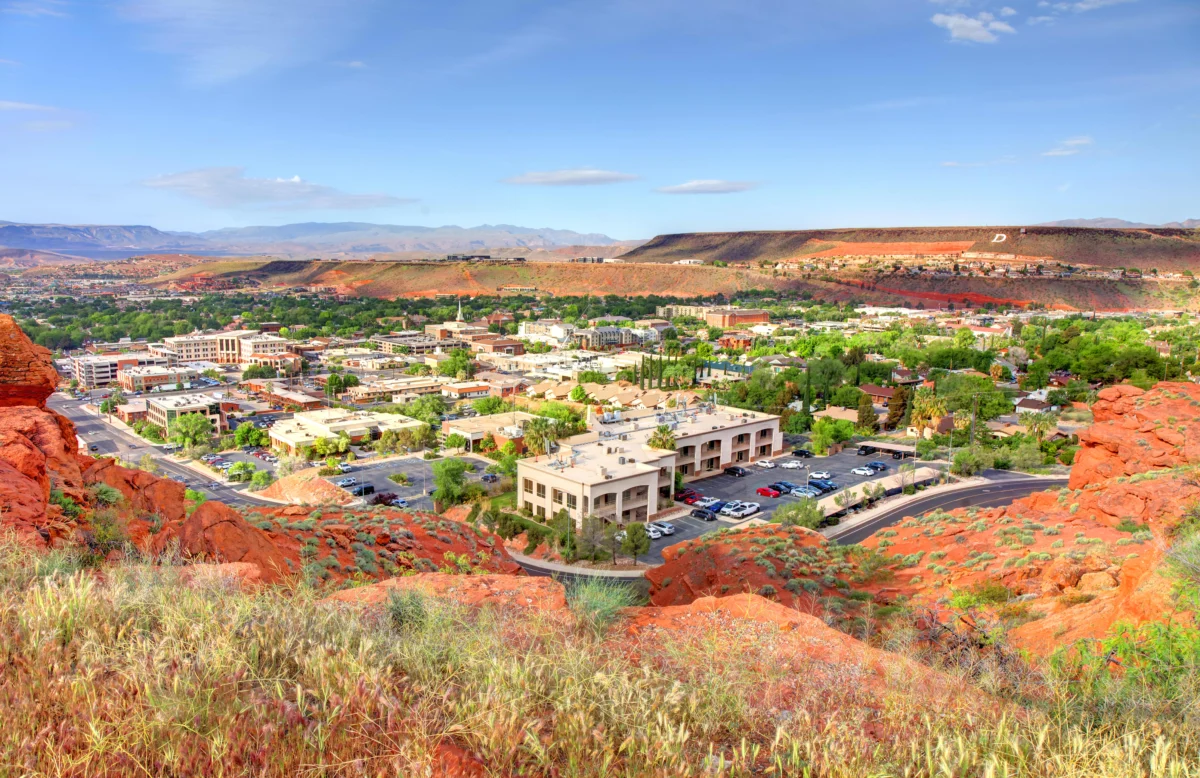
The National Association of Realtors (NAR) has launched a groundbreaking new index designed to serve as a predictive "crystal ball" for commercial real estate investors, identifying future demand across U.S. markets. This innovative tool, which analyzes over 300 metropolitan markets, points to a significant reorientation of investment opportunities, with South Carolina emerging as the top-ranked state for overall future potential demand and St. George, Utah, leading as the strongest metropolitan market nationwide. The findings underscore a discernible shift away from previously "superhot" pandemic-era boomtowns and towards smaller, often overlooked, but economically vibrant regions.
The introduction of NAR’s forward-looking index comes at a critical juncture for the commercial real estate sector, which has experienced unprecedented volatility and transformation in recent years. The aftermath of the global pandemic instigated profound changes in how people work, shop, and live, directly impacting the demand for office spaces, retail establishments, industrial facilities, and multifamily housing. Remote work trends have challenged the traditional office market, while the surge in e-commerce has fueled a relentless demand for warehousing and logistics infrastructure. Simultaneously, demographic shifts, including a migration towards more affordable and amenity-rich regions, have reshaped residential demand patterns. In this complex and rapidly evolving landscape, investors have been seeking more robust, data-driven insights to navigate risks and identify genuine growth opportunities. The NAR index aims to fill this void by providing a systematic, data-backed approach to forecasting future market performance, moving beyond anecdotal evidence or backward-looking metrics.
Methodology: A Comprehensive Economic Barometer
The NAR index is distinguished by its comprehensive methodology, which meticulously measures economic conditions within each of the more than 300 metropolitan markets across four distinct commercial real estate sectors: office, industrial, retail, and multifamily. The core of its predictive power lies in its reliance on robust government data, primarily sourced from the Bureau of Labor Statistics (BLS) and the Census Bureau, for key indicators such as population growth, net migration (both domestic and international), and employment trends. This data-centric approach ensures a factual and objective basis for the rankings.
For the office sector, the index specifically tracks growth in professional and business services employment. This metric is considered a strong leading indicator because these service-oriented industries are primary drivers of office space demand. A robust expansion in professional services typically translates to an increased need for physical office infrastructure, even in an era of hybrid work, as companies seek collaborative spaces and hubs for specialized talent.
In the industrial sector, the index focuses on employment growth within manufacturing, transportation, and warehousing. These industries are directly correlated with the demand for industrial properties, including factories, distribution centers, and logistics hubs. The rise of e-commerce, coupled with ongoing efforts to reshore manufacturing and strengthen supply chains, makes these employment figures crucial for anticipating future industrial space needs.
The retail sector analysis incorporates growth in retail trade employment alongside leisure and hospitality employment. These two components collectively reflect consumer spending power and the vibrancy of a local economy’s experiential offerings. Healthy growth in these areas suggests a strong consumer base and a dynamic local environment capable of supporting new retail establishments and entertainment venues.
Finally, for the multifamily sector, the index prioritizes population growth and net migration, encompassing both domestic and international inflows. These demographic shifts are fundamental drivers of housing demand. A rapidly expanding population, especially one experiencing significant in-migration, directly translates to a greater need for rental units, making this a critical factor for investors in apartment complexes and other rental properties. By combining these sector-specific measures, the index generates an integrated view of a market’s overall commercial real estate potential.
Nadia Evangelou, principal economist and director of real estate research at NAR, emphasized the index’s purpose: "It doesn’t say, ‘OK, go there and just buy property,’ but it says… where the data shows that the momentum is building, the demand is building." This clarification highlights the index as a strategic guide for investors to identify markets with underlying economic strength that will likely translate into future real estate demand, rather than a mere list of speculative targets.
Shifting Tides: Post-Pandemic Market Dynamics
The NAR index provides crucial context by comparing current market conditions to those of 2022, which represented the peak of the pandemic-driven migration boom. This comparison reveals a significant recalibration of market strengths and vulnerabilities. Raleigh, North Carolina, stands out as the only major U.S. market that has demonstrated stronger performance today than it did at the height of the migration frenzy in 2022, according to the index. This resilience can be attributed to Raleigh’s diversified economy, anchored by the thriving Research Triangle Park, which boasts a strong presence of technology, life sciences, and academic institutions. Its continuous inflow of highly educated talent and a supportive business environment have enabled sustained growth, making it an anomaly among larger metropolitan areas.
In stark contrast, formerly "superhot" markets that experienced explosive growth during the pandemic, such as Austin, Texas, Miami, and Naples, Florida, have all shown a marked decline since 2022. The rapid influx of residents and capital into these Sunbelt cities led to unprecedented demand, skyrocketing property values, and intense development. However, the index suggests that this unsustainable pace has moderated. The decline can be attributed to several factors: increased affordability challenges, potential oversupply in certain sub-sectors due to rapid construction, rising interest rates impacting investment and mortgage affordability, and a normalization of migration patterns as the immediate urgency of pandemic-era relocations has subsided. This shift indicates a market correction where fundamentals are beginning to reassert themselves over speculative exuberance.
St. George, Utah: The Unsung Leader
The strongest metropolitan market identified by the index is St. George, Utah. This city, located in southwestern Utah on the Arizona border, has demonstrated the most significant office employment growth in the nation. This remarkable performance is not singular; St. George also exhibits very strong population growth and in-migration, alongside above-average industrial demand. Evangelou noted, "St. George, for example, is the No. 1, because one industry happened to have a good year, so there is a broader momentum over there."
St. George’s ascent can be attributed to its unique blend of economic drivers and quality of life factors. Its strategic location, offering access to stunning natural landscapes (Zion National Park is nearby) combined with a lower cost of living compared to major coastal hubs, has attracted both businesses and residents seeking an alternative to crowded urban centers. The city has become a burgeoning hub for professional services, technology, and healthcare, drawing talent and investment. The robust population growth fuels demand across all commercial sectors, particularly multifamily housing and retail. Furthermore, its industrial demand likely benefits from its position as a growing regional distribution point and a supply chain node for a rapidly expanding population base. The confluence of these factors creates a self-reinforcing cycle of economic vitality, positioning St. George as a prime example of a midsized market with broad-based, sustainable growth.
The Rise of Secondary and Tertiary Markets
A key takeaway from the NAR index is its spotlight on small and midsized markets, which Evangelou suggests could offer some of the best opportunities for investors. This contrasts with traditional investment strategies that often concentrate on major metropolitan areas. She cited Fayetteville, Arkansas; Huntsville, Alabama; and Spartanburg, South Carolina, as exemplary markets exhibiting strong potential.
Fayetteville, Arkansas, located in the northwest corner of the state, is experiencing broad-based growth. This region, often referred to as Northwest Arkansas, is home to the corporate headquarters of Walmart, Tyson Foods, and J.B. Hunt Transport Services, creating a robust economic foundation. The presence of the University of Arkansas further contributes to a dynamic talent pool and a vibrant cultural scene. Its diversified economy, lower operating costs, and growing population make it attractive for various commercial investments, from office to retail and multifamily.
Huntsville, Alabama, stands out with one of the strongest multifamily scores in the nation. Known as "Rocket City," Huntsville has a long-standing legacy in aerospace, defense, and scientific research, driven by institutions like NASA’s Marshall Space Flight Center and the U.S. Army’s Redstone Arsenal. This robust, high-wage employment base consistently attracts a skilled workforce, fueling demand for high-quality rental housing. Its burgeoning tech sector and advanced manufacturing industries also contribute to strong office and industrial demand.
Spartanburg, South Carolina, benefits from the broader economic momentum of its state, which ranks highest overall. Spartanburg, part of the larger Greenville-Spartanburg-Anderson metropolitan area, is a significant manufacturing hub, particularly for the automotive industry (e.g., BMW’s largest plant). This industrial strength drives demand for warehousing and logistics. Coupled with a growing population and strategic location along major interstates, Spartanburg presents a compelling case for industrial and retail investment.
The index also offers granular insights into sector-specific demand. For instance, Salem, Oregon, and Fairbanks, Alaska, are ranked highest for industrial demand. Salem, as the state capital, benefits from its position in the Willamette Valley, a significant agricultural and manufacturing region, with access to major transportation corridors. Fairbanks, while geographically remote, serves as a crucial logistical hub for Alaska’s interior and Arctic operations, supported by military installations and natural resource industries, necessitating strong industrial infrastructure.
Broader Implications: A Paradigm Shift for Investors
The findings of the NAR index signal a potential paradigm shift in commercial real estate investment strategies. For decades, institutional investors and private equity funds predominantly focused on "trophy assets" in gateway cities like New York, San Francisco, and Los Angeles. However, Evangelou’s assessment underscores a fundamental reordering: "When we take a look at New York, San Francisco and the big coastal markets, we see that the large markets are still generally weaker than the fast-growing Sunbelt and smaller markets in this index."
This weakness in major coastal markets can be attributed to a confluence of factors: persistently high operating costs, stringent regulatory environments, ongoing impacts of remote work on office vacancy rates, and a general out-migration of residents and businesses seeking greater affordability and a higher quality of life in other regions. While these markets will always retain their global significance, the data suggests that the highest growth potential for commercial real estate investment now lies elsewhere.
For investors, this means a necessity to broaden their horizons beyond traditional primary markets. The index encourages a more granular, data-driven approach to market selection, emphasizing underlying economic fundamentals, demographic trends, and sector-specific employment growth. It suggests that diligent research into secondary and tertiary markets, often overlooked due to their smaller scale, can yield superior risk-adjusted returns. These markets often offer lower acquisition costs, higher capitalization rates, and stronger potential for rent growth driven by genuine economic expansion rather than speculative fervor.
Furthermore, the index provides a valuable tool for risk management. By identifying markets with strong future demand, investors can mitigate risks associated with declining occupancy rates, stagnant rental growth, and depreciation in less dynamic areas. It empowers them to make more informed decisions about capital allocation, portfolio diversification, and long-term investment planning.
Local governments in these high-potential markets may also leverage this data to attract further investment and plan for sustainable growth. Recognition by a reputable organization like NAR can enhance a city’s profile, drawing attention from developers and businesses, potentially leading to increased infrastructure development, job creation, and overall economic prosperity. The index implicitly encourages a proactive approach to urban planning and economic development in these emerging hubs.
In conclusion, the National Association of Realtors’ new commercial real estate demand index represents a significant advancement in market intelligence. By providing a forward-looking, data-driven perspective, it illuminates a shifting landscape where economic momentum is increasingly found in the Sunbelt and in dynamic small-to-midsized metropolitan areas. This tool is not merely a ranking but a guide, compelling investors to critically re-evaluate their strategies and embrace the nuanced opportunities presented by a rapidly evolving commercial real estate market, signaling a future where adaptability and informed decision-making will be paramount for success.
