

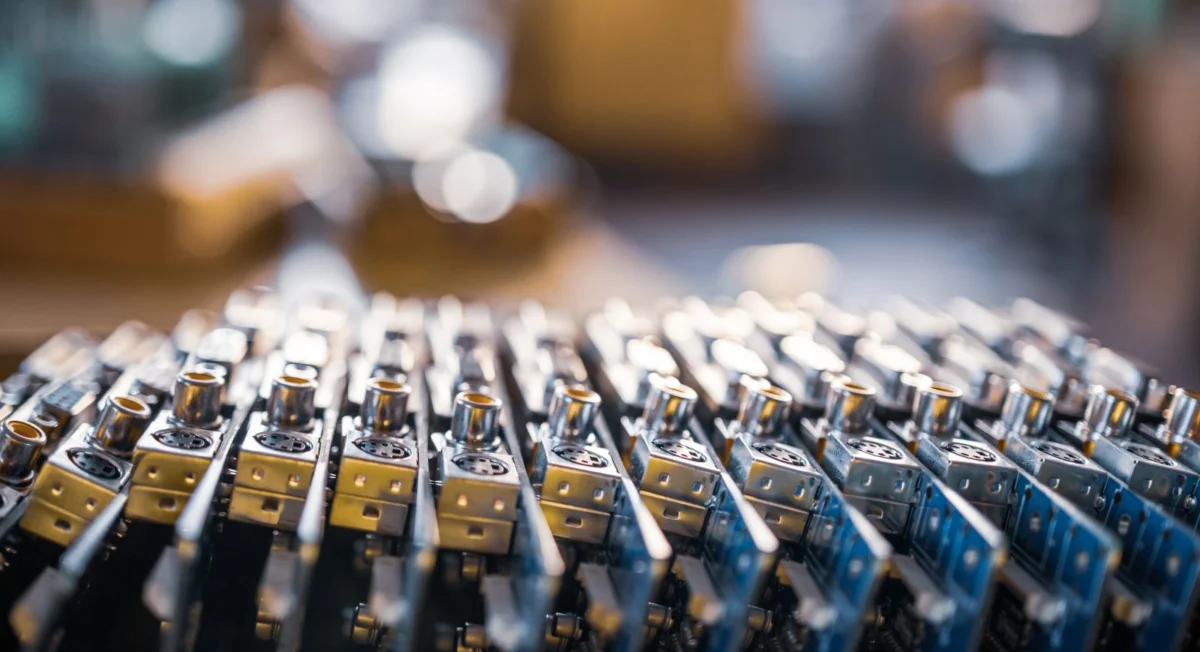
The landscape of data storage has been dramatically reshaped by the relentless demand for higher performance and greater capacity, a trend now supercharged by the burgeoning artificial intelligence (AI) revolution. At the heart of this transformation lies NAND flash technology, a cornerstone for modern data centers, consumer electronics, and enterprise solutions. An analysis, which refers to Milpitas, California-based SanDisk Corporation (SNDK) as a key developer, manufacturer, and seller of these critical data storage devices, highlights the profound impact of this technology. The original assessment positions "SNDK" as a company with a hypothetical market capitalization of $225 billion, placing it firmly in the exclusive "mega-cap" category, signifying substantial influence within the computer hardware industry through its offerings of solid-state drives (SSDs) for various platforms, flash-based embedded storage products, and more.
However, for a comprehensive understanding of the market dynamics, it is crucial to clarify the corporate structure of SanDisk. SanDisk Corporation, a pioneering force in flash memory, was acquired by Western Digital Corporation (WDC) in May 2016 for approximately $19 billion. Consequently, "SNDK" ceased to be an independently traded stock, and its products and technologies are now integrated into Western Digital’s extensive portfolio. While the market capitalization figures cited for "SNDK" in the original analysis appear to be either historical representations from a different era or an illustrative projection of a standalone entity’s potential valuation in today’s market, the underlying principles regarding the surging demand for NAND flash memory, particularly driven by AI infrastructure, remain highly pertinent to Western Digital’s flash business unit and the broader memory sector. Western Digital, as a conglomerate, currently holds a market capitalization significantly lower than the $225 billion figure, typically fluctuating in the range of $15-20 billion, underscoring the need for this contextual clarification.
The Indispensable Role of NAND Flash in the Digital Age
NAND flash memory is a non-volatile storage technology that retains data even without power, making it ideal for a vast array of applications, from smartphones and tablets to enterprise servers and cloud storage. Its evolution has been characterized by continuous advancements in density, speed, and cost-effectiveness, paving the way for the ubiquitous adoption of SSDs over traditional hard disk drives (HDDs) in many performance-critical applications. SanDisk, prior to its acquisition, was instrumental in driving many of these innovations, consistently pushing the boundaries of flash memory design and manufacturing.
The core principle of NAND flash involves storing data in "cells" arranged in a grid. Each cell can store one or more bits of data, depending on whether it’s Single-Level Cell (SLC), Multi-Level Cell (MLC), Triple-Level Cell (TLC), or Quad-Level Cell (QLC) NAND. SLC is the fastest and most durable but stores only one bit per cell, making it expensive. QLC, conversely, stores four bits per cell, offering higher density and lower cost but at the expense of speed and endurance. The ongoing technological race involves increasing the number of layers in 3D NAND structures, allowing for even greater storage capacity within a smaller footprint, crucial for dense data centers. This vertical stacking of memory cells has been a game-changer, enabling capacities that were once unimaginable in such small form factors.
Navigating Stock Performance: A Look at Historical Context and Current Trends
The original analysis, referring to "SNDK stock," noted it reached a 52-week high of $2,354.39 on June 22 and subsequently slipped 35.1% from that peak. Over the past three months, the stock reportedly fell 11%, underperforming the Nasdaq Composite ($NASX), which experienced a 3.6% decline over the same period. This short-term underperformance, however, contrasts sharply with a more positive long-term outlook. The analysis indicated that "SNDK" was up significantly over the past 52 weeks, "massively outpacing" NASX’s 21.7% return during the same timeframe. This suggests a powerful underlying bullish momentum that has seen some recent correction, a common pattern for high-growth tech stocks.
Further technical analysis cited in the original report shows "SNDK" trading above its 200-day moving average since the previous year, a classic indicator of long-term bullish sentiment. The 200-day moving average is often used by investors to gauge the overall trend of a stock, with prices consistently above it suggesting a healthy upward trajectory. However, a recent shift saw it fall below its 50-day moving average since August, signaling potential short-term weakness or a consolidation phase. The 50-day moving average is a more sensitive indicator, and a break below it often prompts traders to re-evaluate their positions, indicating a potential deceleration in near-term momentum.
While these specific "SNDK" figures require the aforementioned contextual understanding regarding SanDisk’s acquisition by Western Digital, they reflect broader trends observed in the memory and storage industry. Western Digital, through its flash business, is indeed a significant beneficiary of strong NAND demand. Its stock performance, while not directly mirroring the hypothetical "SNDK" figures, has often been volatile, reacting to the cyclical nature of the memory market, but also demonstrating significant upside during periods of high demand and pricing power. The general trajectory of memory stocks in periods of high demand, especially from emerging sectors like AI, can exhibit such rapid gains followed by pullbacks as investors recalibrate expectations or profit-take. The memory market is historically known for its boom-and-bust cycles, driven by periods of oversupply and undersupply, but the current AI-driven demand surge presents a potentially new, more sustained growth paradigm.
The AI Infrastructure Boom: Fueling Unprecedented Demand
The primary catalyst identified for the robust performance of companies deeply entrenched in NAND flash memory is the explosive growth of artificial intelligence (AI) infrastructure. The AI revolution, spanning everything from large language models (LLMs) and advanced machine learning to autonomous systems and complex data analytics, demands an unprecedented scale of computational power and, critically, data storage. Hyperscale cloud providers (such as Amazon Web Services, Microsoft Azure, and Google Cloud) and enterprises globally are engaged in an intense race to build out state-of-the-art AI data centers. These facilities are not just larger; they are fundamentally different, requiring specialized hardware optimized for AI workloads.
NAND flash memory is indispensable for these AI data centers for several reasons:
- Speed: AI models process vast datasets, often requiring real-time access to billions or even trillions of parameters. Traditional HDDs are too slow to feed data to powerful GPUs and CPUs efficiently, leading to severe bottlenecks. SSDs, built on NAND flash, offer significantly faster read/write speeds, drastically reducing data loading times and accelerating training and inference processes. For instance, NVMe (Non-Volatile Memory Express) SSDs, which leverage PCIe interfaces, can deliver sequential read speeds of several gigabytes per second, orders of magnitude faster than traditional SATA SSDs or HDDs.
- Capacity and Density: AI datasets can range from terabytes to petabytes, requiring immense storage volumes. Modern 3D NAND technology allows for incredibly dense storage solutions, enabling data centers to store massive volumes of data in a smaller physical footprint, which is crucial for managing power, cooling, and real estate costs in high-density rack environments.
- Endurance: While AI workloads are read-intensive during inference, training phases involve continuous writing and rewriting of data as models learn and optimize. Enterprise-grade NAND flash SSDs are designed for high endurance, capable of handling these demanding write cycles over extended periods without degradation, a key factor in the longevity and reliability of AI infrastructure.
- Energy Efficiency: Compared to spinning disk drives, SSDs consume less power and generate less heat, contributing to lower operational costs and a smaller carbon footprint for massive AI data centers. This energy efficiency is vital as data center power consumption becomes a critical environmental and economic concern.
The escalating demand for AI data centers is creating a potential supply bottleneck for NAND flash memory. As more AI models are developed and deployed, the need for high-performance, high-capacity storage will only intensify. Companies like Western Digital, with its SanDisk-derived technology, are strategically positioned to be primary suppliers of these essential memory drives, benefiting significantly from this sustained demand. This scenario projects a continued surge in revenue and profitability for firms capable of meeting these specialized requirements, shifting market dynamics from a supply-driven to a demand-driven paradigm.
Competitive Landscape and Strategic Positioning
The NAND flash market is highly competitive, dominated by a handful of global giants. Key players include Samsung Electronics, SK Hynix, Micron Technology, Kioxia (formerly Toshiba Memory), and Western Digital. Each company invests heavily in research and development to advance NAND technology, focusing on increasing layers in 3D NAND, improving performance, and reducing costs. The race for technological superiority involves developing advanced controllers, firmware, and packaging techniques to extract maximum performance and reliability from the raw NAND chips.
The original analysis draws a comparison with Seagate Technology Holdings plc (STX), another prominent player in the computer hardware industry. It states that STX shares have grown 380.4% over the past 52 weeks, an "impressive performance, yet nowhere close to SNDK stock." This comparison, while using the hypothetical "SNDK" figures, highlights a crucial divergence in the storage market. Seagate primarily specializes in hard disk drives (HDDs), particularly for enterprise and data center applications, though they also have an SSD presence. The extraordinary growth of STX itself indicates robust demand for mass storage, likely fueled by cold storage, archival needs, and certain enterprise workloads that still favor HDDs for their cost-per-terabyte advantage. However, the performance gap suggested by the original analysis implies that the specific segment of high-performance flash storage directly linked to AI acceleration might be experiencing even more explosive growth than the broader data storage market, where HDDs still play a vital role.
The distinction between HDDs and SSDs is becoming increasingly pronounced in the context of AI. While HDDs offer massive, cost-effective archival storage, they cannot provide the low-latency, high-throughput access required for real-time AI processing. This positions NAND flash manufacturers with a distinct advantage in the highest-growth segments of the AI market, particularly for active data sets and inference engines. This bifurcation of the storage market into performance-tier (flash) and capacity-tier (HDD) solutions is a significant trend, allowing different players to thrive in their respective niches.
Analyst Sentiment and Future Outlook
Wall Street’s sentiment towards companies at the forefront of NAND flash innovation, such as Western Digital’s flash business, remains highly optimistic. The original analysis notes an overall consensus rating of "Strong Buy" among 24 analysts covering "SNDK stock," with a mean price target of $2,144.26, offering a 37% upside potential. Interpreting this through the lens of Western Digital’s flash segment, this strong endorsement reflects confidence in the sustained demand for flash memory, particularly driven by AI, and the company’s ability to capitalize on this trend.
Analysts project that the demand for more AI data centers will continue to rise, potentially leading to a supply bottleneck. This anticipated imbalance between supply and demand is a key factor underpinning the bullish outlook. In a supply-constrained environment, memory manufacturers gain pricing power, which directly translates into higher revenues and improved margins. This dynamic could mitigate some of the traditional cyclicality that has historically plagued the memory industry, potentially leading to a more stable and profitable growth trajectory for leading players. Furthermore, the specialized nature of AI workloads often requires custom or high-performance flash solutions, which command premium pricing.
Beyond direct AI applications, the broader digital transformation across industries, the proliferation of IoT devices, 5G networks, and edge computing all contribute to an ever-increasing need for fast, reliable storage. These trends ensure a diversified demand base for NAND flash, providing resilience even if the AI boom experiences periodic fluctuations. The diversification of demand sources helps to smooth out the inherent volatility of the memory market.
Broader Impact and Implications
The intense demand for NAND flash memory, driven by AI, has several significant implications across the technology ecosystem:
- Innovation Acceleration: The relentless need for higher capacity, faster, and more energy-efficient flash drives spurs continuous innovation in manufacturing processes and memory architectures. This pushes the boundaries of material science and semiconductor engineering, leading
