

The United States has unequivocally stated that it will not engage in diplomatic talks with Iran until a discernible cessation of maritime aggressions, particularly the recent spate of ship attacks in vital international waterways, is observed. This firm stance underscores a deepening diplomatic chasm between Washington and Tehran, amplifying global concerns over regional stability and the security of international shipping. Amidst this geopolitical deadlock, Iranian Minister of Petroleum Mohsen Paknejad has publicly affirmed that the nation’s critical oil industry continues its intricate efforts to "circumvent" the stringent blockade imposed by US forces, acknowledging the operational environment as "difficult but manageable." This declaration highlights Iran’s persistent struggle against economic isolation, even as its perceived actions at sea draw sharp rebukes and preconditions for dialogue from the US.
The current diplomatic freeze is set against a backdrop of escalating tensions that have seen both military posturing and severe economic pressure. The US position, articulated by senior officials, demands a tangible de-escalation of what it describes as Iran’s destabilizing activities in strategic maritime corridors, including the Strait of Hormuz and the Gulf of Oman. These waterways are crucial arteries for global energy supplies, and any disruption carries significant implications for international trade and oil prices. The nature of these "ship attacks" has varied, ranging from suspected limpet mine incidents and drone assaults on commercial tankers to the seizure of vessels under various pretexts, often attributed to elements within the Islamic Revolutionary Guard Corps (IRGC) Navy. Washington views these incidents as direct challenges to freedom of navigation and a deliberate provocation designed to undermine regional security and international norms.
The Economic Warfare Front: "Operation Economic Outcast" and Iranian Resilience
The comments from Iranian Minister Paknejad shed light on the economic dimension of this ongoing conflict. His assertion that Iran’s oil industry is "circumventing" the US blockade speaks to a sophisticated and determined effort to maintain its vital crude exports, which form the backbone of the national economy. This blockade, significantly intensified through "Operation Economic Outcast," a comprehensive economic campaign launched by US Treasury Secretary Scott Bessent under the direction of President Donald Trump in August 2026, aims to sever Iran’s global financial connections and cripple its ability to fund its regional activities.
"Operation Economic Outcast" represented a significant escalation in US sanctions policy. Building upon previous layers of restrictions, this initiative targeted Iran’s remaining access to international banking systems, shipping insurance, and critical spare parts for its energy infrastructure. The goal was to achieve "maximum pressure," driving Iran’s oil exports to near-zero levels and forcing Tehran to reconsider its foreign policy and nuclear ambitions. Historical data from similar sanction regimes indicates that such measures can slash a nation’s oil revenue by as much as 80-90% in the short term, leading to severe economic contraction, hyperinflation, and widespread public discontent.
However, Iran has a long history of adapting to sanctions. Paknejad’s statement suggests a continuation of strategies developed over decades, including the use of "ghost fleets" of aging tankers that switch off transponders, sophisticated illicit oil transfer networks, and the establishment of complex financial conduits involving intermediary companies and countries less susceptible to US pressure. Reports from intelligence agencies and maritime tracking firms often detail instances of Iranian oil being shipped under false flags, transferred ship-to-ship at sea to obscure origin, or routed through third-party nations. While these methods incur higher costs and reduce profit margins, they demonstrate Iran’s commitment to sustaining its exports. The phrase "difficult but manageable" encapsulates this reality: the sanctions inflict considerable pain on the Iranian economy, but they have not yet achieved a complete shutdown, allowing the regime to maintain a degree of operational capacity.
A Chronology of Escalation and Retaliation
The current volatile situation is the culmination of several years of heightened tensions, particularly following the US withdrawal from the Joint Comprehensive Plan of Action (JCPOA) in 2018.
- 2018-2020 (Post-JCPOA Withdrawal): The Trump administration reimposed and expanded sanctions, targeting Iran’s oil exports, banking sector, and key industries. Iran responded by gradually reducing its commitments under the nuclear deal and increasing uranium enrichment.
- 2021-2025 (Periods of Standoff and Minor Skirmishes): While some diplomatic efforts were attempted under subsequent US administrations to revive the JCPOA, they ultimately failed. Tensions in the Gulf remained high, marked by periodic harassment of shipping, drone incidents, and proxy conflicts in the wider Middle East.
- August 2026 (Launch of "Operation Economic Outcast"): The US, citing continued Iranian nuclear advancements and regional destabilization, launched its most aggressive economic campaign to date. This move was explicitly designed to cut off Iran’s global financial connections entirely.
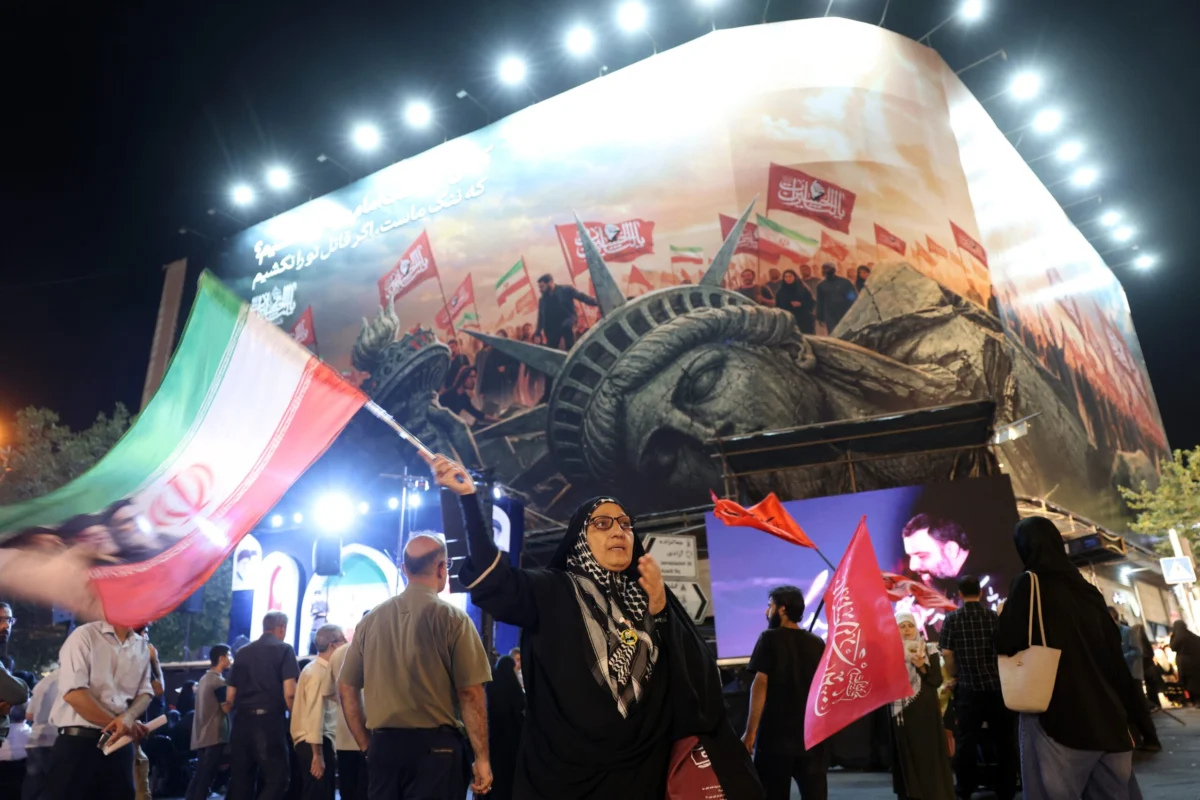
- August 26, 2026 (Iranian Protests): As depicted in the accompanying image, large-scale anti-US demonstrations erupted in Tehran following the announcement of "Operation Economic Outcast." These protests, often state-sponsored, served to channel public anger against the US while reinforcing the government’s narrative of resistance. The imagery of Iranians rallying near an anti-US billboard underscored the deep-seated animosity and the perception of economic warfare as an act of aggression.
- Late 2026 – Early 2027 (Increase in Maritime Aggressions): Following the severe economic measures, there was a noticeable uptick in incidents involving commercial shipping in the Gulf. These "ship attacks" are widely interpreted as Iran’s asymmetrical response to the economic blockade, a means to exert pressure on global energy markets and demonstrate its capacity to disrupt international trade, thereby raising the stakes for the international community.
- Current Period (US Precondition for Talks): The US declaration that talks are off the table until ship attacks cease marks a critical juncture, placing the onus of de-escalation squarely on Tehran’s actions in the maritime domain.
Official Responses and International Repercussions
The US position has been consistent: dialogue is possible, but not under duress. Secretary of State, speaking on condition of anonymity, reportedly emphasized that "the safety of international shipping lanes is non-negotiable. We cannot engage in good faith negotiations while our partners and global commerce are under threat. Iran must demonstrate a clear commitment to de-escalation through verifiable actions." This stance is echoed by key regional allies, including Saudi Arabia and the United Arab Emirates, who have repeatedly called for stronger international measures to secure maritime routes and deter Iranian aggression. These nations, highly dependent on these very shipping lanes for their own oil exports, view Iran’s actions as a direct threat to their economic stability and national security.
European powers, while often advocating for diplomatic solutions and maintaining channels of communication with Tehran, have also expressed deep concern over the attacks. The European Union’s High Representative for Foreign Affairs and Security Policy issued a statement urging "all parties to exercise maximum restraint and uphold international law, particularly regarding freedom of navigation." While hesitant to fully align with the stringent US preconditions, European capitals recognize the severity of the maritime incidents and their potential to ignite a broader conflict. There are ongoing, albeit often discreet, efforts by European diplomats to mediate, seeking pathways for de-escalation that could pave the way for future talks.
Meanwhile, countries like China and Russia, which have significant economic ties with Iran and often express skepticism towards unilateral US sanctions, have maintained a more nuanced position. While acknowledging the need for maritime security, they frequently criticize the "maximum pressure" campaign as counterproductive and advocate for dialogue without preconditions. Russia’s foreign ministry, for example, has previously called for a comprehensive regional security architecture that includes all Gulf states, rather than an approach focused solely on isolating Iran. China, a major buyer of Iranian oil, albeit often at discounted rates and through complex payment mechanisms, has consistently urged for diplomatic resolutions and opposed sanctions that impact its energy security.
Broader Impact and Implications
The current standoff carries profound implications for regional stability and the global economy.
- Heightened Risk of Miscalculation: The absence of direct diplomatic channels, coupled with ongoing military maneuvers and economic warfare, dramatically increases the risk of miscalculation. A single incident in the Strait of Hormuz, whether accidental or intentional, could quickly spiral into a wider military confrontation with devastating consequences for the entire region and beyond.
- Global Energy Market Volatility: The threat to shipping in the Gulf immediately translates into higher oil prices and increased insurance premiums for tankers, impacting consumers and businesses worldwide. Any significant disruption to oil flows could trigger a global economic slowdown, reminiscent of past oil crises.
- Humanitarian Concerns: The "Operation Economic Outcast" and the broader sanctions regime continue to inflict severe hardship on the Iranian populace. While the government claims to "manage" the situation, ordinary citizens face rampant inflation, shortages of essential goods, and a deteriorating quality of life. This internal pressure could either lead to greater social unrest or solidify nationalistic resolve against perceived foreign aggression.
- Diplomatic Stalemate and Future Prospects: The US precondition for talks creates a high bar for re-engagement. If Iran continues its maritime activities, the diplomatic freeze will persist, deepening the isolation and potentially leading to further escalations. Conversely, if Iran were to cease the attacks, it would then test the sincerity of the US offer for dialogue, potentially opening a narrow window for de-escalation and a return to negotiations on the broader issues of its nuclear program and regional behavior. However, such a move would require a significant political concession from Tehran, which is currently focused on projecting strength and resilience.
In conclusion, the US refusal to engage in talks with Iran until maritime aggressions cease marks a critical juncture in the escalating geopolitical drama. While Iran’s oil industry battles to circumvent crippling sanctions, the precarious balance of power in the Persian Gulf hangs by a thread. The international community watches with bated breath, aware that the path forward demands a delicate blend of diplomatic pressure, de-escalation, and a clear understanding of the severe consequences should this standoff continue to fester without a peaceful resolution. The immediate future of the region, and indeed global energy security, hinges on the next moves of both Washington and Tehran.
