

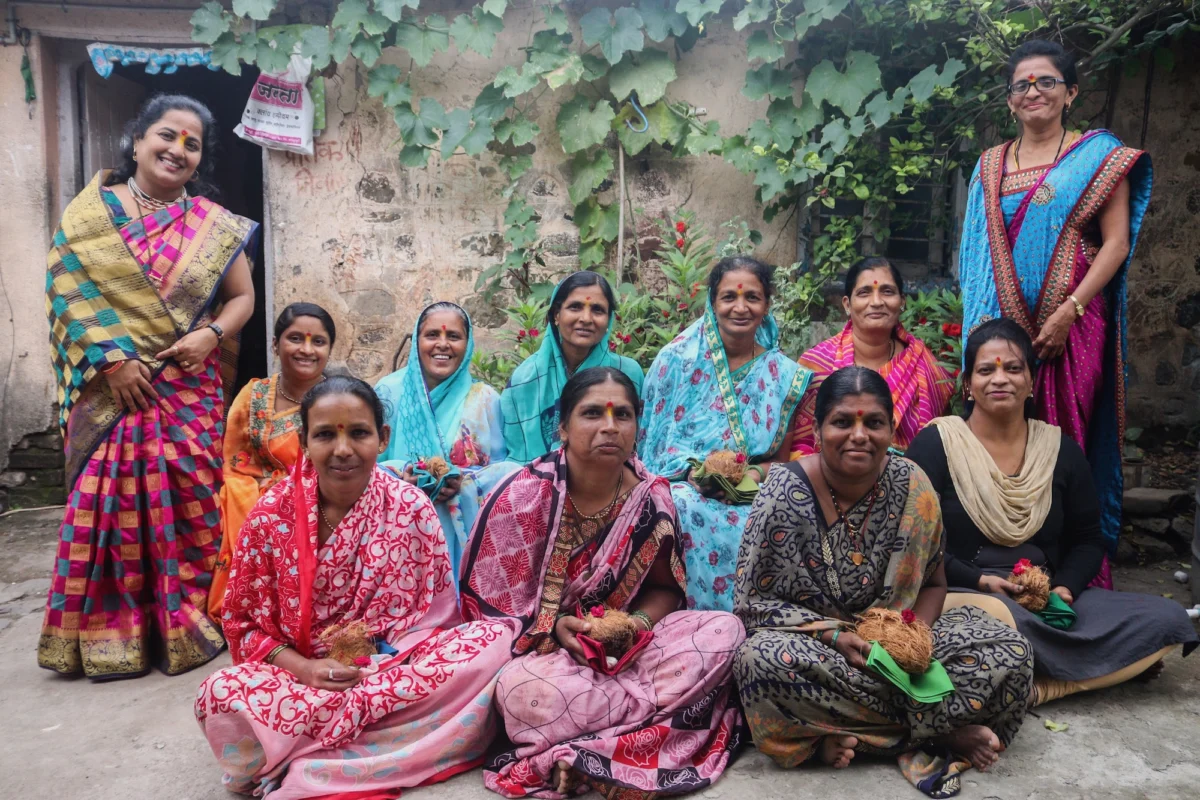
When Sanjivani Patil, a resident of Badlapur in India’s Maharashtra state, first began experiencing the debilitating physical and psychological shifts of perimenopause at age 42, the response from her community was a chorus of dismissal. For years, she endured irregular periods, excessive bleeding, and a profound sense of restlessness that eventually spiraled into suicidal ideation and clinical depression. Like millions of women in low- and middle-income countries, her suffering was categorized as a "normal" part of aging, a biological inevitability that required no medical intervention or emotional support. It was only after a hypertensive crisis led to her hospitalization—followed by the onset of night sweats, chronic insomnia, and cognitive "brain fog"—that the severity of her condition became impossible to ignore.

Sanjivani’s story is a microcosm of a burgeoning public health crisis in India, where menopause-related mental health remains a neglected frontier. While menopause is a natural biological transition occurring typically between the ages of 45 and 55, the accompanying hormonal fluctuations can have devastating impacts on mental well-being. Despite this, a lack of formal training for healthcare providers and a pervasive social stigma surrounding female reproductive health have left a massive portion of the population to suffer in silence. In this vacuum, a grassroots movement led by Accredited Social Health Activists (ASHAs) is emerging to provide the psychosocial support that the formal medical system has failed to deliver.
The ASHA Network: India’s Overburdened Frontline
The Accredited Social Health Activist (ASHA) program was established in 2005 under India’s National Rural Health Mission. The initiative was originally designed to bridge the gap between rural communities and the formal healthcare system, with a primary focus on reducing maternal and infant mortality. Today, more than 1 million ASHA workers serve as the backbone of India’s public health infrastructure.

Over the last two decades, the scope of the ASHA role has expanded exponentially. These women, who are officially classified as "voluntary workers" rather than government employees, are now responsible for everything from immunization drives and family planning to tuberculosis monitoring and non-communicable disease screening. During the COVID-19 pandemic, they were the primary agents for contact tracing and vaccination awareness in India’s most remote corners.
However, this expansion of duties has not been met with a corresponding increase in pay or formal training. ASHAs operate on a system of performance-based incentives, often earning meager stipends that fall well below the national minimum wage. Furthermore, their formal curriculum contains almost no information regarding menopause or the psychiatric comorbidities associated with hormonal transitions. It is within this context of systemic neglect that workers like Netradipa Patil, an ASHA union leader representing 3,000 activists, have begun to take matters into their own hands.

A Lifeline Through Peer Support and Art Therapy
Sanjivani Patil’s path to recovery did not begin in a doctor’s office, but through a series of phone calls with Netradipa. The two had met during a labor protest where ASHAs were demanding better working conditions. When Sanjivani disappeared from their regular communications, Netradipa—suspecting that the symptoms Sanjivani had previously described were linked to the menopausal transition—initiated a long-distance counseling effort.
Netradipa’s approach was holistic, filling the gap left by a medical system that had only offered Sanjivani standard antidepressants without addressing the underlying hormonal triggers. Recognizing that Sanjivani had lost her sense of self, Netradipa encouraged her to return to her passions: poetry and the creation of "rangolis"—intricate, hand-drawn floor designs made from colored powders.

The impact of this creative intervention was profound. Research increasingly supports the efficacy of such non-pharmacological approaches. A randomized trial in Turkey recently found that mandala coloring significantly reduced anxiety in menopausal women, while music therapy has been shown to improve sleep quality and reduce depressive symptoms. For Sanjivani, the "bank of positive affirmations" built through her art and Netradipa’s daily encouragement eventually allowed her to regain her confidence. After three years of struggle, she transitioned from a patient to an advocate, now maintaining a list of women in her community who exhibit similar symptoms to ensure they do not experience the same isolation she did.
The Statistical Reality of Menopausal Depression in India
The scale of the issue Sanjivani and Netradipa are tackling is evidenced by hard data. An analysis of over 28,000 women in India revealed that nearly 20% of postmenopausal women aged 50 and older are living with clinical depression. Despite these numbers, reliable data on the perimenopausal phase—the years leading up to the final period when hormonal fluctuations are most volatile—remains scarce.

The lack of data is compounded by a shortage of specialists. India has fewer than 4,000 clinical psychologists to serve a population of 1.4 billion people. In rural areas, the ratio is even more dire, making the ASHA workers the only accessible point of contact for mental health concerns.
Dr. Jayashri Kulkarni, director of the Women’s Mental Health Center at Monash University, notes that the medical community often misdiagnoses menopause-related depression as a standard major depressive disorder. "Standard antidepressants may not be helpful because they don’t address the specific hormonal fluctuations in the brain," Kulkarni explains. Furthermore, traditional blood tests used to measure hormone levels often fail to capture the "brain-level" changes that drive mood swings, irritability, and suicidal thoughts.

The Hysterectomy Epidemic and Systemic Misconceptions
One of the most concerning trends identified by health advocates in India is the over-reliance on hysterectomies—the surgical removal of the uterus—to treat menstrual irregularities. Data from India’s National Family Health Surveys indicates that by the age of 50, one in 10 Indian women has undergone the procedure.
In many cases, private clinics and overworked public hospitals recommend hysterectomies as a "quick fix" for heavy bleeding or fibroids, without discussing the psychological fallout of sudden, surgically induced menopause. Health activists argue that this "medicalization" of a natural life stage reinforces the idea that aging is a disease to be cured rather than a transition to be managed.

Martha Hickey, a professor of obstetrics and gynecology at the University of Melbourne, argues for a shift in how society views this stage of life. "When menopause is framed as an illness, it can reinforce the notion that aging marks a period of decline," she says. Hickey advocates for a model that recognizes the value of older women and views menopause as a period of potential personal growth and renewed purpose.
Implications for Public Health Policy
The grassroots efforts of ASHA workers like Netradipa and Sanjivani have highlighted a critical need for policy reform in India’s healthcare sector. To move beyond ad-hoc peer support, several systemic changes are required:

- Formal Training Modules: The Ministry of Health and Family Welfare must incorporate menopause management and mental health screening into the mandatory training for all 1 million ASHA workers.
- Fair Compensation: For ASHAs to provide effective psychosocial counseling, their status must be elevated from "voluntary" to "permanent," ensuring they receive stable salaries that reflect their expanded responsibilities.
- Integrated Care Models: Mental health support should be integrated into existing reproductive and child health (RCH) programs, ensuring that women are monitored not just during their childbearing years, but through the menopausal transition.
- Community Awareness Campaigns: Public health initiatives are needed to dismantle the taboos surrounding menopause, encouraging families to view it as a significant health phase rather than a source of shame or a "normal" pain to be ignored.
Conclusion: The Growing Chain of Healing
The work being done in Maharashtra is a testament to the resilience of women who have been marginalized by both their society and their healthcare system. Netradipa Patil has already trained more than 50 of her fellow ASHAs in menopause support, creating what Sanjivani calls a "chain of healing."
As India continues to grapple with a shortage of mental health professionals, the ASHA model provides a scalable, culturally sensitive solution. By validating the lived experiences of women and utilizing community-based interventions like art and peer counseling, these health activists are doing more than just treating symptoms; they are restoring the dignity and agency of a demographic that has long been invisible.

For Sanjivani, the journey from the brink of suicide to becoming a community leader is a reminder of the power of being heard. "Whenever I see someone recovering, I feel like I have given them a new life," she says. Her experience underscores a vital truth for global health: in the absence of high-tech medical infrastructure, the most powerful tool for healing is often the presence of a trained, empathetic peer who understands that the pain is real, and that recovery is possible.
