

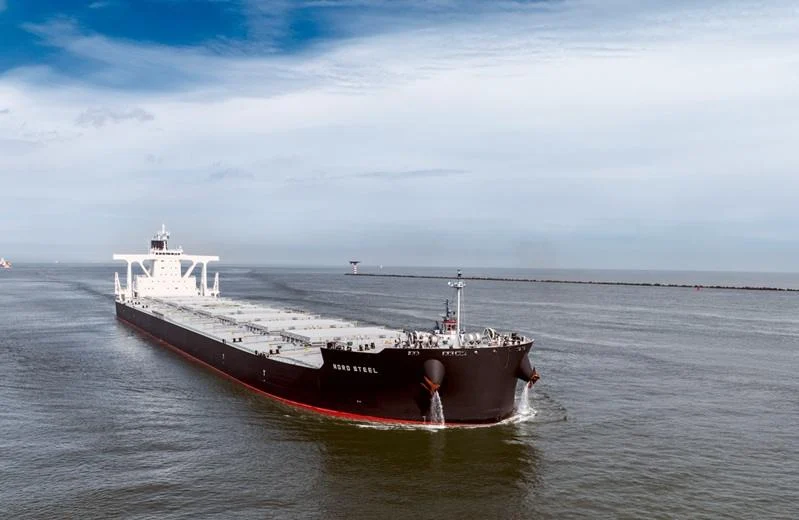
The Mechanics of the Book & Claim System
The Book & Claim model is a supply chain mechanism that allows for the separation of a product’s environmental benefits from its physical flow. In the context of maritime transport, this means that a shipowner can "book" a specific quantity of sustainable biofuel into their fleet operations in one part of the world, while a cargo owner—such as Microsoft—can "claim" the resulting emissions reduction to offset their Scope 3 footprint, regardless of where their specific containers are located.
This system was originally popularized in the aviation sector to encourage the uptake of Sustainable Aviation Fuel (SAF). In 2022, the RSB expanded this framework to address "hard-to-abate" sectors like shipping. The maritime industry currently accounts for approximately 3% of global greenhouse gas emissions, a figure that could rise significantly as global trade expands if decarbonization efforts are not accelerated. The primary hurdle for many companies is that sustainable fuel is not available at every port. The Book & Claim registry eliminates this geographic barrier, creating a virtual marketplace that incentivizes fuel producers to increase supply and carriers to invest in green technology.
Chronology of the Microsoft-Norden Partnership
The collaboration between Microsoft and Norden began in earnest in 2023, when the two companies launched a pilot program aimed at tackling Microsoft’s maritime supply chain emissions. At the time, Microsoft sought a credible way to reduce its Scope 3 emissions—emissions that occur in the value chain but are not directly owned or controlled by the company. Maritime transport is a significant component of these indirect emissions for hardware-heavy tech companies.
Throughout late 2023 and early 2024, the companies worked closely with the RSB to refine the registry’s maritime framework. This involved developing rigorous tracking protocols to ensure that every tonne of CO2e (carbon dioxide equivalent) reduced was verified and not double-counted. In a significant regulatory milestone, Norden became the first maritime operator to obtain the RSB Book & Claim trader certification. This certification was a prerequisite for the transaction, as it ensures that the carrier meets strict sustainability criteria regarding the feedstock used for biofuels and the transparency of their reporting.
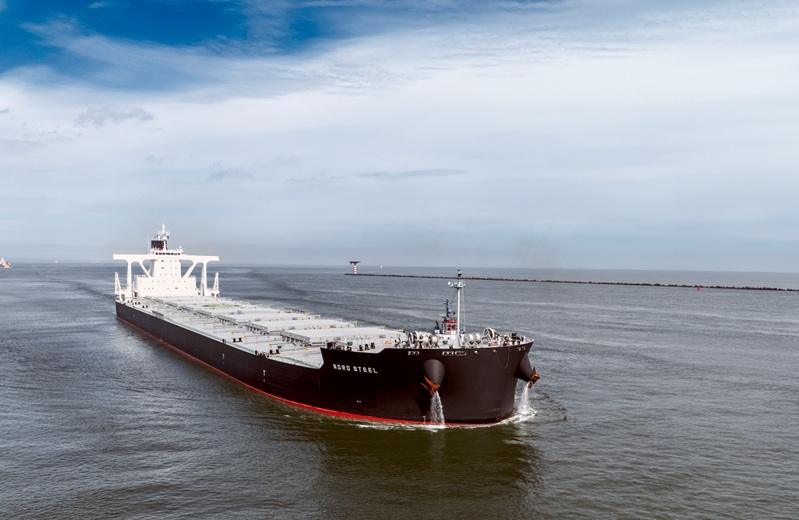
The pilot program was designed with a specific target: to reduce Microsoft’s maritime Scope 3 emissions by nearly 10,000 tonnes of CO2e over a three-year period. The recent announcement of the first completed transaction signifies that the infrastructure is now in place to scale these efforts beyond the pilot phase.
Technical Data and Environmental Impact
The environmental impact of this transaction is grounded in the use of advanced biofuels, typically derived from waste products such as used cooking oil or tallow. Unlike traditional heavy fuel oil (HFO), which is the standard for the shipping industry, these biofuels can reduce lifecycle carbon emissions by up to 80-90%.
The 10,000-tonne CO2e reduction target set by the Microsoft-Norden pilot is equivalent to removing over 2,000 gasoline-powered passenger vehicles from the road for one year. While this is a fraction of the total emissions generated by global shipping, the value lies in the scalability of the verification process. By using the RSB registry, the transaction ensures that the biofuels used are "second-generation," meaning they do not compete with food crops or contribute to deforestation—a common criticism of early-stage biofuels.
Furthermore, the data transparency provided by the RSB Book & Claim trader certification allows for precise carbon accounting. This is essential for companies like Microsoft, which have committed to becoming carbon negative by 2030. For a corporation of that scale, every gram of carbon must be accounted for with audit-ready documentation to satisfy both internal sustainability goals and external regulatory requirements, such as the Corporate Sustainability Reporting Directive (CSRD) in Europe.
Official Responses and Strategic Vision
Leaders from the participating organizations have emphasized that this transaction is a blueprint for the future of green logistics. Anne Jensen, the Chief Operating Officer at Norden, highlighted the role of the Book & Claim system in overcoming the "visibility gap" in global supply chains. According to Jensen, many companies find it difficult to address emissions that are embedded deep within their networks where they have little direct influence. She noted that by enabling investments in verified emissions reductions regardless of fuel location, the industry can bridge the gap between current infrastructure and future decarbonization goals.

Bella Horstmann, Senior Manager of Market Development at Microsoft, echoed these sentiments, stressing the need for solutions that are both "credible and scalable." Horstmann pointed out that companies no longer need to wait for a total overhaul of global fueling infrastructure to begin making a meaningful impact on their shipping emissions. This collaboration demonstrates that the tools for decarbonization are currently available for those willing to lead the transition.
The RSB has also expressed that the success of this pilot validates their efforts to extend aviation frameworks to the maritime sector. The organization maintains that a robust, third-party verified registry is the only way to maintain integrity in a market where "greenwashing" remains a significant concern for investors and regulators alike.
Broader Implications for the Maritime Industry
The successful execution of this transaction comes at a pivotal time for the shipping industry. The International Maritime Organization (IMO) recently updated its greenhouse gas strategy, aiming to reach net-zero emissions by or around 2050, with intermediate "checkpoints" in 2030 and 2040. To meet these targets, the industry must rapidly shift away from fossil fuels.
However, the "chicken and egg" problem has persisted: shipowners are hesitant to build vessels for fuels that aren’t widely available, and fuel suppliers are hesitant to produce fuels for which there is no guaranteed demand. The Microsoft-Norden transaction breaks this cycle by providing a clear demand signal. When a major cargo owner like Microsoft is willing to pay the "green premium" for verified reductions, it provides the financial certainty necessary for carriers like Norden to continue their biofuel trials and for fuel producers to scale up operations.
This move also signals a shift in how "Scope 3" emissions are managed. Historically, companies have viewed shipping as an "uncontrollable" part of their footprint. The Book & Claim model transforms shipping into a "controllable" variable. As more companies adopt this model, it is expected that verified emissions reductions will become a standard offering in ocean transport contracts.

Future Outlook and Challenges
While the Microsoft-Norden pilot is a success, challenges remain for the wider adoption of sustainable maritime fuels. The "green premium"—the higher cost of biofuels compared to HFO—remains a barrier for smaller companies with thinner margins. Additionally, there is a global shortage of sustainable feedstock for biofuels, which means the maritime industry will eventually need to compete with the aviation and trucking sectors for the same limited resources.
Looking ahead, the focus will likely shift toward synthetic fuels, such as green ammonia or methanol, which can be produced using renewable electricity. The Book & Claim system is fuel-agnostic, meaning it can easily be adapted to these future technologies once they become commercially viable.
For now, the Norden-Microsoft partnership stands as a significant milestone. It proves that through cross-industry collaboration and rigorous third-party verification, the maritime sector can move from theoretical goals to tangible, verified carbon reductions. As Norden aims to scale this solution to other clients, the maritime industry may be entering a new era where "green shipping" is no longer a niche service, but a verifiable and tradeable commodity in the global effort to combat climate change.
