

After a prolonged period of five consecutive weeks witnessing an upward trajectory, mortgage rates experienced a marginal decline last week, a development significant enough to catalyze a modest resurgence in demand across the housing market. This slight reprieve, while seemingly minor, marked a notable shift from the prevailing trend, offering a glimmer of encouragement to prospective homebuyers and those considering refinancing their existing loans. The overall volume of mortgage applications rose by 3.6% compared to the preceding week, as reported by the Mortgage Bankers Association’s (MBA) seasonally adjusted index, signaling a sensitive response from the market to even the most subtle movements in borrowing costs.
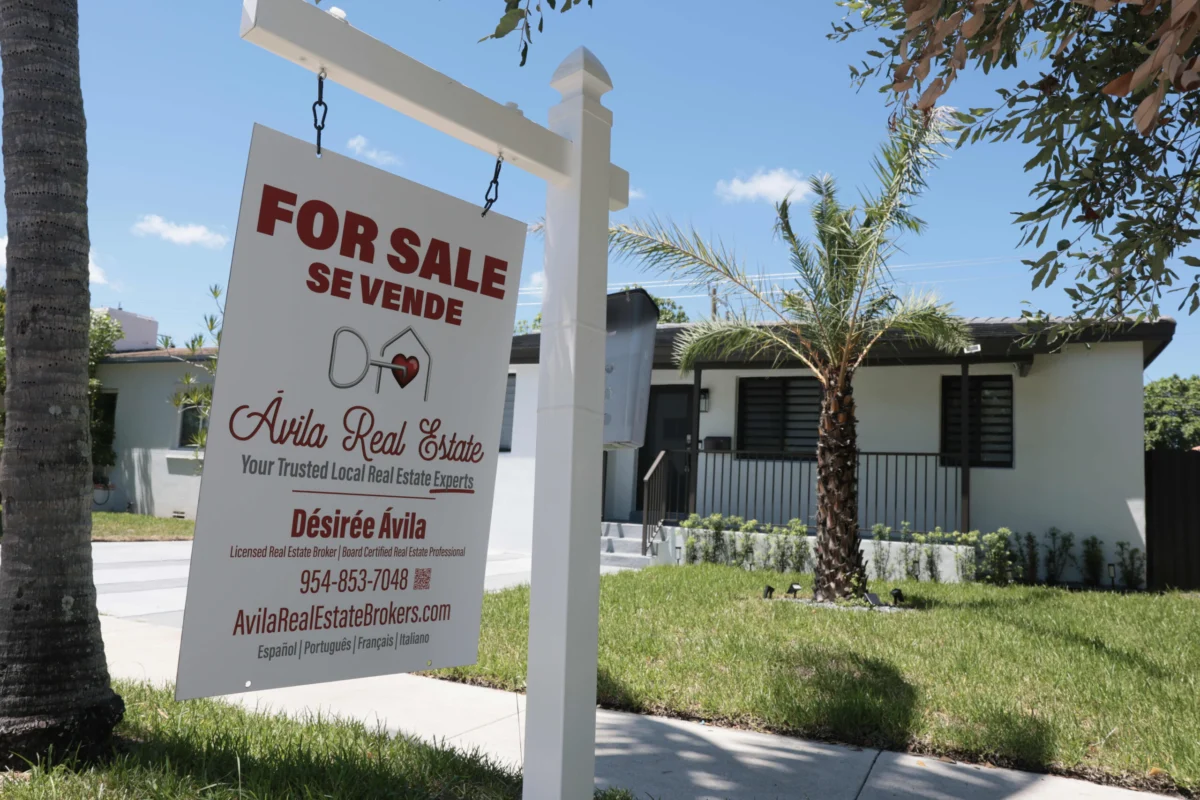
The average contract interest rate for a 30-year fixed-rate mortgage, specifically for conforming loan balances capped at $832,750, saw a decrease to 6.77% from the previous week’s 6.81%. This modest dip of four basis points was observed for loans with a 20% down payment, though points, including the origination fee, concurrently edged up to 0.67 from 0.65. This intricate interplay of falling rates and rising points underscores the nuanced nature of mortgage pricing, where lenders adjust various components to manage risk and profitability. The broader economic context of mid-August 2026, as depicted by the imagery of a "for-sale" sign in Miami, Florida, frames these developments within a period characterized by cautious optimism tempered by persistent economic headwinds.
The Nuance of Rate Movements: A Closer Look at Last Week’s Dip
The slight decline in mortgage rates was not an isolated event but rather a ripple effect of broader macroeconomic and geopolitical currents. Joel Kan, Vice President and Deputy Chief Economist at the MBA, attributed this particular dip to a temporary decrease in oil prices. "Mortgage rates declined slightly last week as oil prices dipped briefly on the hopes of a sustained resolution to the war in Iran," Kan elaborated in a recent release. This statement highlights the intricate link between global energy markets, geopolitical stability, and domestic lending rates. The "war in Iran," a significant geopolitical event unfolding in the article’s implied future timeline of August 2026, has evidently been a major factor influencing global commodity prices and, by extension, inflation expectations. A perceived de-escalation or progress towards resolution in such a conflict can ease fears of supply chain disruptions and energy cost spikes, thereby alleviating inflationary pressures and allowing bond yields—which mortgage rates tend to track—to soften.
The MBA’s weekly mortgage applications survey is a critical barometer for the housing market, providing timely insights into borrower demand. Its seasonally adjusted index accounts for typical fluctuations throughout the year, offering a clearer picture of underlying trends. The 3.6% increase in total application volume, while not a dramatic surge, represents a positive shift after the market had absorbed five consecutive weeks of rising rates, a period that likely deterred many potential borrowers from entering the market or pushed them to the sidelines.
Mortgage Application Dynamics: Refinance vs. Purchase
A deeper dive into the application data reveals divergent trends between refinancing and home purchase activities. Applications to refinance a home loan saw a 5% increase for the week, indicating that even a minor dip in rates can re-ignite interest among existing homeowners seeking to optimize their mortgage terms. However, this weekly gain is dwarfed by a more significant year-over-year comparison, with refinance applications standing 22% lower than the same week one year ago. This substantial annual decline underscores the enduring impact of the broader upward trend in interest rates over the past year. As Kan noted, "As refinance incentives have dwindled with rates at current levels, the average loan size for refinance applications was down to its lowest level since July 2025." This suggests that only those with specific financial motivations, perhaps to tap into equity or consolidate debt at marginally better rates, are currently pursuing refinancing, and likely for smaller loan amounts. The average rate one year ago was 10 basis points lower, making refinancing a more attractive proposition then.
Conversely, applications for a mortgage to purchase a home rose by 3% for the week. While positive, this uptick was tempered by a 1% decrease year over year. The month of August is historically one of the slower periods for home sales, often referred to as the "dog days of summer" in real estate, as families settle into new school routines and vacation plans take precedence. However, the current year appears to be experiencing an even weaker August than the preceding year. This exacerbated sluggishness is primarily attributed to a confluence of factors: stubbornly high home prices that continue to challenge affordability, a pervasive sense of "less certainty in the overall economy," and a persistent lack of meaningful improvement in the supply of homes available for sale. These elements combine to create a challenging environment for potential buyers, even with minor rate adjustments.
The Persistent Challenge of High Home Prices and Limited Supply
The sustained elevation of home prices remains a formidable barrier for many aspiring homeowners, particularly first-time buyers. Despite the slight easing of mortgage rates, the cumulative effect of high prices and higher borrowing costs has significantly eroded purchasing power. Several interconnected factors contribute to this persistent challenge. On the supply side, a chronic shortage of housing inventory continues to plague the market. Years of underbuilding, coupled with a demographic surge in demand, have created an imbalance. Furthermore, many existing homeowners are "locked in" to historically low mortgage rates secured during the early 2020s, making them reluctant to sell and trade up or down, as doing so would mean taking on a new mortgage at significantly higher rates. This "golden handcuff" effect further constrains the supply of available homes.
Construction costs, including labor, materials, and land, have also remained elevated, making it expensive for developers to bring new housing stock to the market at price points accessible to a broader segment of the population. Investor activity, while varying by market, also plays a role, with institutional and individual investors competing for properties, sometimes driving up prices in certain segments. The "less certainty in the overall economy" mentioned by the MBA reflects broader anxieties among consumers and businesses. This can encompass concerns about inflation’s trajectory, the stability of the job market, geopolitical tensions extending beyond the Middle East, and the potential for a broader economic slowdown or recession. Such uncertainty often leads potential buyers to postpone major financial commitments like purchasing a home, even if rates see a slight dip.
Economic Undercurrents: Inflation, Geopolitics, and the Federal Reserve
The interconnectedness of global events and domestic financial markets is starkly evident in Joel Kan’s reference to the "war in Iran" and its impact on oil prices. Geopolitical conflicts, particularly in major oil-producing regions, have a profound and immediate effect on global energy markets. Surging oil prices translate directly into higher costs for transportation, manufacturing, and consumer goods, fueling inflationary pressures. Conversely, any perceived path toward de-escalation or resolution can calm these markets, leading to a dip in oil prices and subsequently dampening inflation expectations. This direct correlation is why central banks, like the U.S. Federal Reserve, closely monitor geopolitical developments alongside domestic economic data.
The Federal Reserve’s primary mandate is to maintain price stability and foster maximum sustainable employment. In its ongoing battle against inflation, the Fed has employed a strategy of raising the federal funds rate, which influences borrowing costs throughout the economy, including mortgage rates. While mortgage rates don’t directly mirror the federal funds rate, they are closely tied to the yield on the 10-year U.S. Treasury bond, which in turn reacts to expectations about inflation, economic growth, and the Fed’s monetary policy stance. When inflation expectations cool, as might happen with a perceived resolution to a major geopolitical conflict impacting oil, Treasury yields tend to fall, providing an opportunity for mortgage rates to follow suit. The Fed’s forward guidance and any signals regarding its future rate hike path are therefore paramount in shaping market sentiment and rate trajectories.
Looking Ahead: The Critical CPI Release and Market Volatility
Despite last week’s modest decline, mortgage rates have already begun to move slightly higher at the start of the current week, according to a separate survey from Mortgage News Daily. This immediate rebound underscores the inherent volatility and sensitivity of the market to incoming economic data. The financial world is now bracing for the release of the monthly Consumer Price Index (CPI), scheduled for Wednesday. This data point is universally recognized as one of the most crucial pieces of economic information for the month, with the potential to dictate the direction of interest rates in the short to medium term.
Matthew Graham, Chief Operating Officer at Mortgage News Daily, emphasized the CPI’s outsized importance. "There’s no way to know how it will impact rates ahead of time—only that a large deviation from expectations is likely to result in a larger-than-average move higher or lower," Graham stated. The CPI report provides a comprehensive measure of inflation, tracking the average change over time in the prices paid by urban consumers for a market basket of consumer goods and services. A higher-than-expected CPI reading would suggest that inflation remains stubbornly persistent, potentially prompting the Federal Reserve to maintain a hawkish stance or even consider further rate hikes, which would likely push mortgage rates higher. Conversely, a lower-than-expected CPI could signal that inflationary pressures are easing, giving the Fed more room to pause or even consider future rate cuts, which would typically lead to lower mortgage rates. The market’s reaction will hinge not just on the headline number but also on the core CPI (excluding volatile food and energy prices) and year-over-year comparisons, as investors attempt to gauge the true underlying inflationary trend.
Broader Implications for the Housing Market and Economy
The delicate dance of mortgage rates, home prices, and economic indicators has profound implications for the broader housing market and the economy at large. For potential homebuyers, these fluctuations directly impact affordability. Even a small percentage point change in interest rates can translate into hundreds of dollars difference in monthly mortgage payments, significantly altering what a buyer can afford. The current environment, characterized by high prices and fluctuating rates, is particularly challenging for first-time buyers who often lack substantial equity or savings for a large down payment. Their ability to enter the market is critical for its long-term health and for broader wealth creation.
For homeowners, especially those with adjustable-rate mortgages or those considering home equity lines of credit, rate movements dictate borrowing costs and financial flexibility. The suppressed refinance activity suggests that many homeowners are content with their existing, lower-rate mortgages, which paradoxically contributes to the limited housing supply. The housing sector is a significant component of the U.S. economy, impacting construction, manufacturing (appliances, furniture), financial services, and employment. A stagnant or declining housing market can ripple through these sectors, potentially dampening overall economic growth. Policymakers and economists closely monitor housing data as a leading indicator of consumer confidence and economic vitality.
Historical Context and Future Trends
To fully appreciate the current state of the market, it’s essential to place it within historical context. The ultra-low mortgage rates experienced during the early 2020s, driven by aggressive monetary easing during the pandemic, were an anomaly. The current rates, while higher than that unprecedented period, are arguably closer to historical averages, though they represent a significant shift for a generation of homebuyers accustomed to cheaper borrowing. The transition to a "new normal" of higher rates has necessitated an adjustment in expectations for both buyers and sellers.
Looking ahead, the trajectory of mortgage rates will largely depend on the Federal Reserve’s battle against inflation, the evolving geopolitical landscape (especially regarding energy), and the resilience of the U.S. economy. Demographic shifts, such as the large millennial generation reaching peak homebuying age, will continue to exert upward pressure on demand, further complicating the supply challenge. Innovations in housing finance, government policies aimed at increasing affordability, and sustained efforts to boost housing construction will all play a role in shaping the future of the market. The next several months will likely remain characterized by volatility, with each major economic data release, particularly the CPI, acting as a critical pivot point for market sentiment and interest rate movements. The housing market, therefore, remains in a delicate equilibrium, poised to react significantly to every nuance of economic and geopolitical news.
