

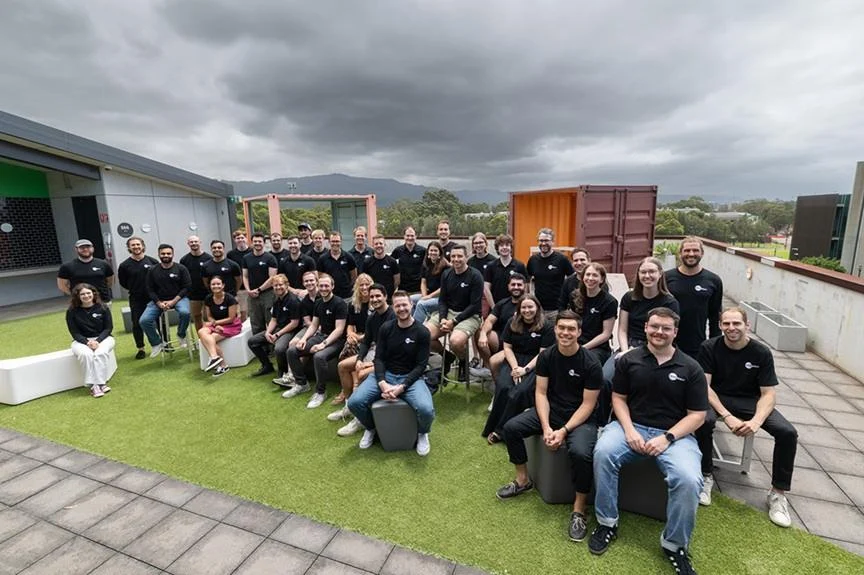
The global energy landscape is currently navigating a period of unprecedented transformation, marked by a shift from centralized fossil fuel generation to decentralized renewable sources and an exponential increase in demand. In this high-stakes environment, Sydney-based grid intelligence pioneer Gridsight has announced the successful completion of a $26 million Series B funding round. This strategic infusion of capital is earmarked for the aggressive expansion of the company’s artificial intelligence-driven platform across the United States and Australia, providing utilities with the digital tools necessary to maximize the efficiency of existing electrical infrastructure.
Founded in 2020, Gridsight has rapidly emerged as a critical player in the "grid-edge" technology sector. The company specializes in software that leverages existing data streams—such as smart meter readings and network sensor inputs—to create a high-fidelity, real-time view of distribution networks. By applying advanced machine learning algorithms to this data, Gridsight enables utilities to identify latent capacity, manage constraints, and integrate a higher volume of distributed energy resources (DERs), such as residential solar and electric vehicle (EV) charging stations, without the immediate need for prohibitively expensive physical upgrades.
The Series B round was led by Insight Partners, a global software investor known for scaling high-growth technology companies. The round also saw participation from Galvanize and a cohort of existing backers, including Airtree, Energy Transition Ventures, and Aera VC. The involvement of such high-profile investors underscores a growing market consensus: the path to a decarbonized economy relies less on building new wires and more on optimizing the ones already in the ground.
Addressing the Stagnation of Grid Infrastructure
For nearly 15 years, electricity demand in many developed nations remained relatively stagnant, a byproduct of improved energy efficiency and the outsourcing of heavy industry. However, this period of stability has come to an abrupt end. The convergence of three major trends—the rapid proliferation of AI-driven data centers, the mass adoption of electric vehicles, and the broader electrification of heating and industry—has sent projected demand soaring.
Traditional utility business models are ill-equipped to handle this surge. Historically, when a network reached its limit, the solution was "augmentation"—building new substations, laying more copper, and upgrading transformers. These capital-intensive projects are not only slow to execute, often taking years to clear regulatory and environmental hurdles, but they are also increasingly difficult to finance as ratepayers push back against rising utility bills.
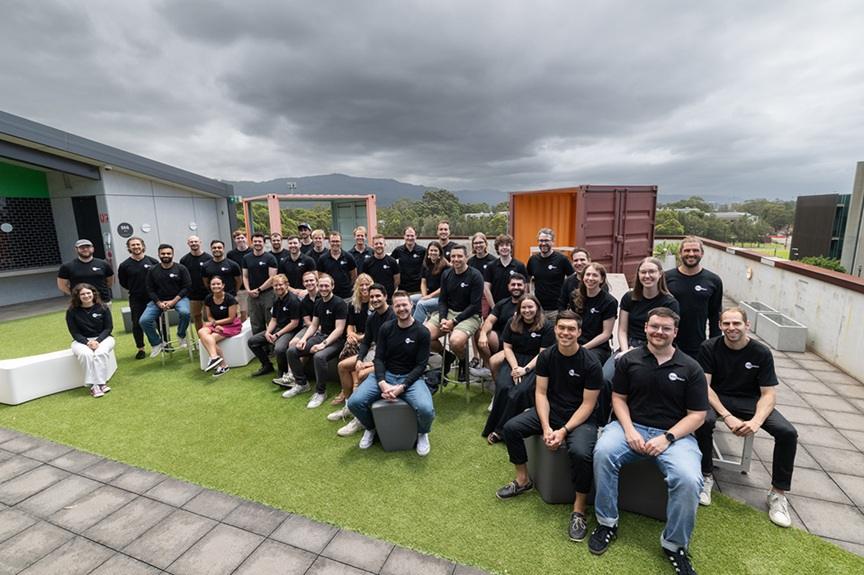
Gridsight’s internal data highlights a startling inefficiency within the current system: on average, as much as three-quarters of existing grid capacity remains unused at any given time. This "latent capacity" exists because utilities traditionally operate based on "worst-case scenario" static limits. By using AI to transition from static modeling to dynamic, real-time capacity management, Gridsight allows utilities to tap into this hidden potential.
The Technology: From Smart Meters to Digital Twins
At the core of Gridsight’s value proposition is its ability to turn "dark data" into actionable intelligence. Most modern utilities have invested billions in smart meters (Advanced Metering Infrastructure), yet many struggle to utilize the granular data these devices produce. Gridsight’s platform ingests this data to create a "digital twin" of the distribution network.
This digital representation allows utility engineers to see exactly how power is flowing at the "edge" of the grid—the neighborhood level where solar panels and EV chargers are most active. The AI identifies where the network is truly stressed and, more importantly, where it has room to grow. This visibility is essential for the "hosting capacity" of the grid—the amount of renewable energy a specific neighborhood can support before voltage fluctuations or thermal overloads occur.
Brendan Banfield, Co-founder and CEO of Gridsight, emphasized that the challenge facing modern grids is not a simple lack of power, but a lack of spatial and temporal awareness. "The grid’s capacity challenge is not uniform," Banfield stated. "For the majority of the year, significant capacity exists; but it is uneven, dynamic and geographically dependent. Our platform helps utilities quantify that capacity, connect customers faster and direct investment to the pockets of the grid that maximize its impact."
Proven Impact: The Endeavour Energy Case Study
The efficacy of Gridsight’s approach has already been demonstrated through large-scale deployments. In Australia, the company partnered with Endeavour Energy to implement a unified capacity management platform. The results provided a blueprint for how software can revolutionize residential energy markets.
Before the partnership, Endeavour Energy, like many utilities, maintained a static limit on how much solar energy households could export back to the grid—typically around 5 kilowatts (kW) to ensure network stability. By utilizing Gridsight’s real-time dynamic control and visibility tools, Endeavour was able to double this static limit to 10 kW. This change allowed homeowners to realize a greater return on their solar investments while providing the grid with more green energy during peak production hours.

The financial and environmental implications of the Endeavour project are significant. The program is projected to unlock more than $100 million in value for customers by reducing energy costs and increasing export credits. Furthermore, it has added 600 megawatts (MW) of additional solar capacity to the grid—roughly the equivalent of a medium-sized coal-fired power plant—without digging a single trench or stringing a new wire.
Strategic Expansion into the United States
With the new $26 million in capital, Gridsight is prioritizing the U.S. market, where the grid is under immense pressure. The U.S. Department of Energy has frequently warned that the nation’s aging electrical infrastructure is a primary bottleneck for the energy transition. Thousands of renewable energy projects are currently stuck in "interconnection queues," waiting for utility studies and infrastructure upgrades that can take years to complete.
Gridsight is already making inroads with major U.S. players. The company is working with Xcel Energy, which serves millions of customers across eight Western and Midwestern states, and United Illuminating, a subsidiary of Avangrid (part of the Iberdrola Group) serving Connecticut. These partnerships are focused on accelerating the interconnection process for EVs and heat pumps, ensuring that the transition to clean energy does not stall at the local transformer level.
The U.S. expansion comes at a favorable time, as the Inflation Reduction Act (IRA) and the Infrastructure Investment and Jobs Act have allocated billions of dollars toward grid modernization. Regulators are increasingly pressuring utilities to adopt "Grid-Enhancing Technologies" (GETs) and software solutions like Gridsight’s to lower costs for consumers.
Investor Perspectives and Market Analysis
The lead investor in the Series B, Insight Partners, views Gridsight as a necessary evolution for the utility sector. Rachel Geller, Managing Director at Insight Partners, noted that the energy transition is fundamentally a data problem. "The energy transition is stress-testing utility networks in ways they were never designed to handle," Geller said. "Gridsight’s platform provides the intelligence, visibility, and control needed to unlock latent capacity, connect more load, and stay ahead of demand without waiting for new infrastructure."
Financial analysts suggest that the "Grid Intelligence" market is poised for explosive growth. As global temperatures rise and extreme weather events become more frequent, the resilience of the grid becomes a matter of national security. Software that can predict outages, manage load during heatwaves, and facilitate the rapid deployment of renewables is no longer a luxury for utilities; it is a necessity.

The Series B funding also reflects a broader trend in venture capital: a shift toward "Climate Tech" that offers immediate, scalable solutions. While long-term bets on fusion or hydrogen continue, investors are increasingly drawn to software platforms like Gridsight that can deliver measurable impact on the existing carbon footprint of the power sector today.
Chronology of Gridsight’s Growth
- 2020: Gridsight is founded in Sydney, Australia, with a focus on using AI to solve the "low-voltage" visibility gap in distribution networks.
- 2021-2022: The company secures initial seed and Series A funding, beginning pilot programs with major Australian Distribution Network Service Providers (DNSPs).
- 2023: Gridsight expands its footprint in the Australian market, culminating in the landmark partnership with Endeavour Energy to manage residential solar exports dynamically.
- Early 2024: The company begins formal operations and pilot programs in the United States, targeting utilities in states with high EV and solar adoption rates.
- September 2026: Gridsight announces its $26 million Series B funding round led by Insight Partners to scale its AI-driven capacity management solutions globally.
Implications for the Future of Energy
The success of Gridsight’s funding round signals a paradigm shift in how the world thinks about energy infrastructure. For over a century, the solution to energy growth was "more"—more power plants, more poles, and more wires. In the 21st century, the solution is "smarter."
By proving that AI can safely and reliably manage the complexities of a decentralized grid, Gridsight is helping to lower the "green premium"—the extra cost often associated with choosing clean energy over fossil fuels. When utilities can connect more solar panels and EVs to the existing grid at a lower cost, those savings are eventually passed on to the consumer, making the energy transition economically sustainable.
As Gridsight deploys its $26 million in new capital, the industry will be watching closely. The company’s ability to scale its successes from the Australian suburbs to the vast and varied landscapes of the American utility market will be a litmus test for the role of AI in the global fight against climate change. If Gridsight succeeds, the "invisible" capacity of our existing wires may prove to be the most valuable resource in the transition to a net-zero world.
