

Six months since the United States and Israel launched their war on Iran, triggering turmoil in world energy markets, the fallout continues to reverberate through many areas of the global economy, reshaping industries, challenging geopolitical alliances, and exacerbating humanitarian crises. While the conflict has strained numerous sectors, others have found unexpected opportunities amid the chaos, illustrating the complex and often paradoxical economic dynamics of modern warfare. This analysis delves into the key economic winners and losers of a conflict that has fundamentally altered global trade, finance, and supply chains.
A Conflict’s Genesis and Immediate Global Tremors
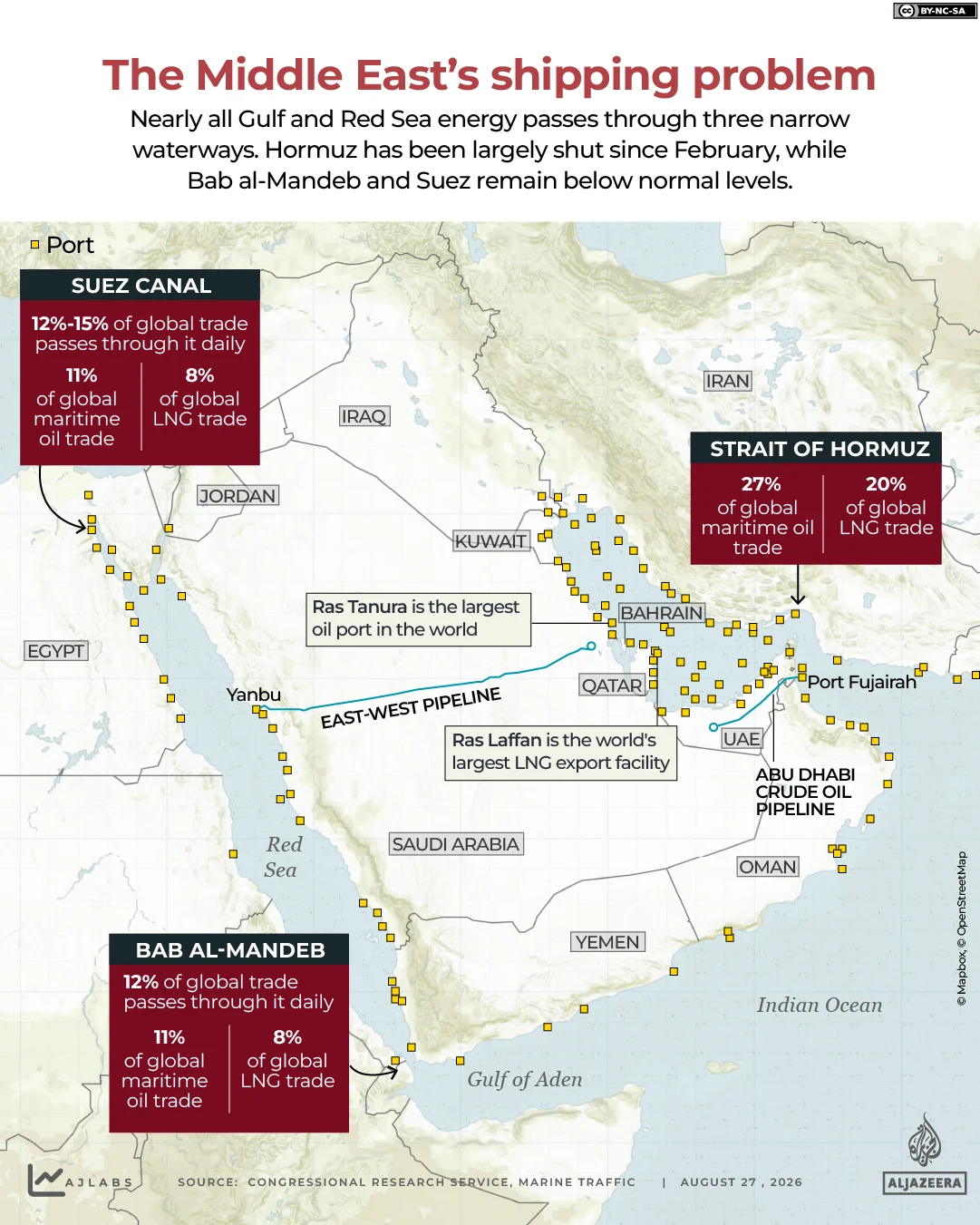
The war, which commenced in late February 2026, erupted following escalating tensions over Iran’s nuclear program and its regional proxies. Diplomatic efforts had repeatedly failed to de-escalate the situation, culminating in a series of targeted strikes by the US and Israel against Iranian military and strategic assets. Iran’s swift retaliation, including missile attacks on Gulf energy infrastructure and the effective closure of the Strait of Hormuz, immediately sent shockwaves through the global economy. This vital chokepoint, through which roughly 20% of the world’s oil supply and a significant portion of liquefied natural gas (LNG) passes, became a flashpoint, triggering unprecedented volatility in energy markets. Crude benchmarks like Brent and WTI surged by over 40% in the initial weeks, reaching multi-year highs and setting the stage for widespread inflationary pressures.
Beyond the Strait of Hormuz, Iranian-backed Houthi forces in Yemen intensified their attacks on Saudi-linked shipping in the Bab al-Mandeb Strait, further disrupting maritime trade routes vital for connecting Asia, Europe, and Africa. This dual blockade not only choked energy supplies but also significantly increased shipping insurance premiums and transit times, impacting virtually every sector reliant on global trade.
The Energy Nexus: Winners and Complex Shifts
The disruption in global oil and gas supplies has created a bifurcated reality for the energy sector, benefiting both traditional fossil fuel giants and, unexpectedly, accelerating the transition towards cleaner alternatives.
Oil and Gas Giants Soar Amidst Scarcity
The immediate and sustained surge in crude oil prices has translated directly into bumper profits for the world’s largest energy companies. With the closure of the Strait of Hormuz and targeted Iranian strikes on critical energy infrastructure in Gulf countries, supply dramatically tightened, driving prices to levels unseen in years.
US supermajor ExxonMobil reported a staggering $14.5 billion profit in the second quarter of 2026, marking its best quarterly earnings in four years. Chevron, the second-largest US producer, followed suit with a $12 billion profit for the same period, its highest in six years. European counterparts also capitalized on the volatile market. France’s TotalEnergies saw its profit climb to $6 billion in the April-June period, a significant increase from $3.6 billion last year. British giants Shell and BP more than doubled their year-on-year earnings, posting quarterly profits of $9.8 billion and $5.73 billion, respectively.

Ipek Ozkardeskaya, a senior analyst at Swissquote Bank, noted that "European energy companies did even better than their US peers as they actively trade oil, which significantly boosted their revenues." She elaborated, "While supply shortages remain a clear risk, energy is an essential commodity. These companies possess the leverage to raise prices, not only covering potential revenue losses but also generating substantial profits from the increased cost structure."
Even some Middle Eastern producers, despite the regional turmoil, reported impressive gains. Saudi Aramco netted $33.4 billion in its most recent quarter, a one-third increase from 2025, underscoring the enduring demand for their output. However, not all regional players fared equally. The state-owned Abu Dhabi National Oil Company (ADNOC) reported a 52 percent drop in second-quarter profit to $665 million from $1.39 billion a year earlier, directly attributing the decline to sales disruptions caused by the Strait of Hormuz closure. Despite this setback, ADNOC still managed to exceed its internal forecasts, highlighting the resilience of the sector even under duress.
The Paradox of Energy Transition: Renewables and Coal Gain Traction
The energy crisis has ironically propelled both the world’s "cleanest" and "dirtiest" energy sources. The escalating cost and geopolitical instability associated with fossil fuels have undeniably strengthened the economic case for renewable energy.
Governments and corporations, eager to reduce their exposure to volatile oil and gas markets, have accelerated investments in solar, wind, and hydro power. The Global Energy Crisis Policy Monitor identifies at least 26 countries and regions, including major economies like China, Australia, Canada, and France, that have announced new or expanded clean energy initiatives since the war began. The International Energy Agency (IEA) estimates that electric vehicles (EVs) will account for an unprecedented 29 percent of all vehicle sales in 2026, reflecting a clear consumer shift driven by fuel price anxieties.
Jan Rosenow, a professor of energy and climate policy at the University of Oxford, commented, "The conflict has unequivocally strengthened the structural case for renewables at a time when electricity demand is hitting record levels in many countries. Companies now widely expect oil and gas prices to remain elevated for the foreseeable future, which maintains strong price pressure to switch away from fossil fuels. This environment will only strengthen the market for renewables."
Simultaneously, the quest for readily available and cheaper energy alternatives has led to a resurgence in coal consumption. South Africa’s thermal coal producer Thungela Resources, for instance, doubled its half-year profits in August, as many nations turned to coal to offset dwindling oil and gas supplies. Production at Thungela’s Ensham mines in Queensland surged by 38 percent in the first half of the year. The company reported headline earnings per share (HEPS) of 4.80 South African rand ($0.30), a substantial increase from 1.92 rand ($0.12) in June 2025.
Despite its environmental drawbacks, coal remains significantly cheaper and more accessible than oil. This has particularly appealed to Asian countries, heavily reliant on Strait of Hormuz shipping. Indonesia, the world’s leading coal exporter, reversed previous plans to curb production, aiming to capitalize on rising prices, which reached $131.85 per tonne in July, up from $102.20 a year prior. Energy data company Ember projects that global coal output will rise by 1.8 percent by the end of 2026 under a "worst-case" scenario, underscoring the conflict’s complex impact on energy transition efforts.
The Cost of Conflict: Defence and Public Coffers
The war has created a boom for defence contractors, while simultaneously imposing a significant and growing financial burden on taxpayers.

Defence Firms Reap Billions Amidst Depleted Arsenals
The intense nature of the conflict, characterized by sustained missile and drone exchanges, has led to a rapid depletion of advanced weaponry, particularly air and missile defence systems. Reports in late July suggested US forces in the Middle East were running low on essential Patriot and Terminal High Altitude Area Defense (THAAD) interceptors, though the Trump administration pushed back on these claims.
The demand for replenishment has translated into massive contracts for defence firms. On August 17, the Pentagon announced a $22.9 billion agreement with RTX Corporation to ramp up production of Tomahawk cruise missiles, a staple for precision strikes. Furthermore, the US military secured a $59 billion deal with Lockheed Martin to triple the production of Patriot interceptor missiles, heavily used by US and Gulf forces against Iranian missile and drone attacks.
This dynamic highlights Iran’s adeptness in asymmetric warfare. While a single Patriot defence system costs over $1 billion and each interceptor missile approximately $4 million to produce, the Iranian Shahed drones they are deployed against are mass-produced at a cost of just $20,000 to $50,000 each.
Rami Sarafa, CEO and founder of Cordoba Advisory Partners, elaborated on the industry shifts: "Demand has surged for air and missile defence, interceptor missiles, counter-drone technologies, surveillance and intelligence systems, satellites, propulsion, warheads, and munitions replenishment. The conflict has underscored the critical importance of affordable drone interceptors, layered missile defence, persistent Intelligence, Surveillance, and Reconnaissance (ISR), and the ability to rapidly manufacture large quantities of expendable munitions. This is a painful lesson the US and Israel are learning."
Despite increased demand, stock market performance for defence firms has been mixed. Northrop Grumman shares are down about 25 percent since the conflict began, and Boeing has dropped about 8 percent. Lockheed Martin, however, has seen its stock rise by about 14 percent, slightly outpacing the broader US stock market.
US Taxpayers Bear the Burden
The financial cost of the war to US taxpayers is rapidly escalating, with initial official estimates starkly understating the true long-term impact. In late July, US Defense Secretary Pete Hegseth provided Congress with an estimate of $37.5 billion for the war’s cost up to that point.
However, many observers believe this figure is a significant underestimate. Linda Bilmes, a senior lecturer in public policy at Harvard Kennedy School, suggested Hegseth’s estimate likely focused solely on the upfront cost of munitions. It neglected crucial medium- and long-term expenses, ranging from extensive repairs to damaged military installations to decades-long disability and healthcare payments for wounded soldiers. "The Pentagon is currently only addressing the short-term costs, predominantly munitions valued at historical inventory prices," Bilmes told Al Jazeera. "My comprehensive analysis indicates that the total budgetary costs will likely reach $1 trillion, factoring in the full spectrum of operational, logistical, and personnel-related expenditures over time." This burgeoning financial obligation will undoubtedly strain federal budgets, potentially impacting domestic spending priorities and contributing to national debt.
Global Economic Ripples: Beyond Energy and Defence
The war’s economic repercussions have extended far beyond the immediate sectors of energy and defence, touching virtually every corner of the global economy.

Banks Thrive on Volatility
Paradoxically, the market volatility spurred by the war has created a lucrative environment for financial institutions. As investors seek to capitalize on wild market swings or reallocate assets from equities to safer havens like bonds, trading volumes have surged. This increased activity, coupled with rising interest rates by central banks attempting to curb inflation, has bolstered bank profits.
The "Big Four" US banks reported impressive double-digit increases in profit in the second quarter of the year. JPMorgan, Bank of America, Citigroup, and Wells Fargo collectively netted a staggering $42.5 billion, reflecting robust performance in trading, lending, and advisory services. International lenders also saw significant gains. UK’s HSBC reported a 60 percent jump in net profit to $10.1 billion in the last quarter, while France’s Societe Generale saw its earnings rise 23 percent to $2.04 billion. These figures underscore how financial intermediaries can benefit from periods of economic uncertainty and heightened market activity.
Airlines Grounded by Soaring Costs and Restricted Airspace
The aviation industry has been among the most severely impacted sectors, particularly in the Middle East. Iranian missile and drone attacks in the early months of the conflict forced the cancellation or diversion of tens of thousands of flights, paralyzing air travel in a critical global hub.
While major Middle East carriers have yet to release their most recent quarterly earnings, the International Air Transport Association (IATA) estimates that the region’s airlines are collectively on track for a $4.3 billion loss in 2026, a sharp reversal from a $7.2 billion profit in 2025. The disruption’s reverberations have been felt globally due to skyrocketing jet fuel prices. Air New Zealand, for instance, reported a loss of approximately $200 million for the 12 months to June 30, directly attributing it to higher fuel costs.
Gerben Hieminga at ING Research highlighted the multi-faceted challenges: "Airlines have faced a crippling combination of cancelled flights, significantly longer routes to avoid conflict zones, constrained airspace, and astronomically expensive jet fuel. This perfect storm is particularly damaging for Gulf carriers and European or Asian airlines heavily reliant on the East-West corridor, though US carriers have generally been less directly exposed to the immediate regional disruptions."
Automakers Navigate Supply Chain Headwinds
The automotive industry, a manufacturing-intensive sector, has visibly struggled with the rising cost of key materials such as aluminium, plastics, and paint, all of which have seen price hikes linked to energy costs and supply chain disruptions.
Toyota, the world’s largest carmaker, announced last week that its global sales fell by almost 5 percent in July, marking the sixth consecutive month of decline. This follows an earlier warning from the Japanese automaker that it expected the conflict to cost it $4.3 billion. Germany’s Volkswagen, the second-biggest global carmaker, saw its earnings drop by nearly one-third in the second quarter, as the war’s fallout compounded increasing competition from Chinese brands.
Erin Keating, executive analyst at Cox Automotive, explained the subtle but pervasive impact: "The war’s bigger, less-visible fingerprint has been on the supply side: Middle East production and export disruptions affecting companies like Toyota, Mazda, and Hyundai, rerouted inventory leading to delays, and Iran-linked cost spikes in aluminium and specialized chip materials. While higher gas prices might offer a modest boost to electric vehicles and hybrids, the overall market effect is likely to remain negative if consumer confidence continues to wane and purchasing power is eroded by inflation."
The Humanitarian Toll: A World on the Brink of Hunger
Perhaps the most devastating impact of the war has been on global food security. Higher fuel and fertilizer costs, direct consequences of the energy crisis, have driven up food prices, pushing millions more into precarious situations and deepening the risk of hunger worldwide.

"The Gulf is not only crucial for oil and gas but also for fertilizer and its feedstocks," noted Gerben Hieminga of ING Research. "If farmers respond to high prices by applying less fertilizer, the economic impact will manifest months later through lower yields and even higher food prices, with vulnerable importing countries in Africa and Asia facing the greatest risks."
The Food and Agriculture Organization (FAO) reported in July that its food price index rose 0.6 percent compared with the previous month, reaching its highest level since January 2023. The UN agency attributed this rise to the combined effects of persistent drought and elevated fuel prices exacerbated by the conflicts in both the Middle East and Ukraine. The World Food Programme (WFP) has estimated that an additional 7.1 million people across three already vulnerable countries – Somalia, Afghanistan, and Sri Lanka – are now struggling to obtain sufficient food due to the war’s fallout.
UN Secretary-General Antonio Guterres warned last week that the conflict had turned the world’s food supply into "collateral damage." He issued an urgent call for an end to the disruption of trade through the Strait of Hormuz and the Bab al-Mandeb Strait, emphasizing the catastrophic consequences for global food chains and humanitarian aid efforts.
Broader Implications and Outlook
Six months into the US-Israel war on Iran, the global economy finds itself in a precarious state. The conflict has acted as a powerful inflationary shock, pushing up prices for everything from fuel and food to raw materials and manufactured goods. Central banks globally face the difficult task of taming inflation without triggering a deeper recession, a challenge compounded by geopolitical uncertainty.
Longer-term implications include a potential re-evaluation of global supply chain resilience, with some industries likely considering diversification or regionalization to mitigate future shocks. The geopolitical landscape is also undergoing significant shifts, with energy security becoming a paramount concern for many nations, influencing foreign policy and strategic alliances. While some sectors have thrived on the back of volatility and demand for military hardware, the overall picture is one of widespread economic strain and increased humanitarian suffering. The enduring effects of this conflict will likely shape global economic trends and policy decisions for years to come.
