

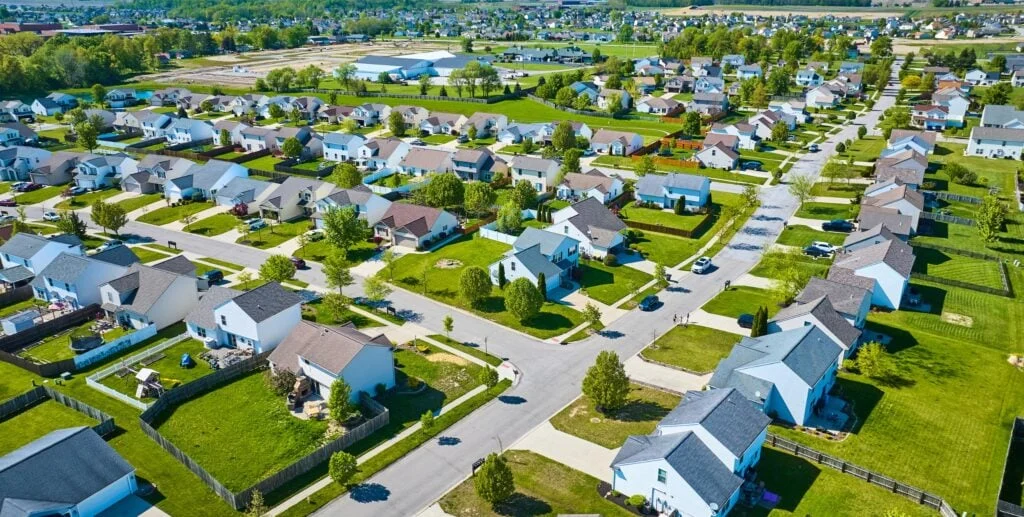
The American Midwest has emerged as the undisputed leader of the national real estate landscape in the summer of 2026, claiming the top positions in major housing rankings and cash flow surveys. According to the Wall Street Journal/Realtor.com Summer 2026 Housing Market Ranking, cities within the nation’s heartland have secured the equivalent of gold, silver, and bronze medals for their combination of affordability and market demand. This regional dominance is further supported by the BiggerPockets Pulse cash flow surveys, which consistently place Midwestern metros at the peak of investor interest. However, as the 2026 fiscal year progresses, economic analysts and real estate experts are warning that these high-yielding markets carry underlying complexities that require a more nuanced approach than simple "top ten" lists suggest.
The Paradox of High Rental Yields and Market Demand
The current surge in Midwestern investment is driven largely by a tightening national economy. With mortgage interest rates hovering near the 7% mark, the traditional "coastal" investment strategy has become increasingly untenable for many. Investors are forced to navigate a narrow corridor between high rental income and low acquisition costs, a search that inevitably leads to the Midwest. Data from Leading Landlord, utilizing Zillow home value and rent metrics, identifies Detroit, Cleveland, St. Louis, Milwaukee, and Indianapolis as the five highest-yielding rental markets in the United States.
While these numbers are attractive on paper, they often obscure a more challenging reality. Market analysts point out that house prices in these regions remain low precisely because historical demand has lagged behind the Sunbelt and coastal hubs. The high yields are, in part, a "risk premium" for investing in areas where economic growth has traditionally been slower. Furthermore, the labor market—the primary driver of rental demand—is currently experiencing a period of significant cooling.
Dean Baker, co-founder of the Center for Economic and Policy Research, recently noted that the U.S. labor force is growing at an exceptionally slow pace, exacerbated by a sharp decline in immigration. This stagnation has direct implications for landlords. In July 2026, U.S. employers unexpectedly shed 23,000 jobs, while previous gains were revised downward. Baker highlighted that even in the face of persistent inflation, wage growth has slowed, signaling a weakening labor market that is unlikely to see a rapid turnaround. For real estate investors, this means that while a property may offer a high theoretical yield, the actual stability of the tenant base is tied to a volatile employment sector.
A Chronology of the Midwestern Economic Shift
To understand the current dominance of the Midwest in 2026, it is necessary to look at the demographic and economic shifts that have occurred over the last four years.
In 2022, the Midwest faced a significant crisis, recording a net loss of approximately 175,000 residents as the "Zoom-town" boom drew workers toward mountain states and the South. However, by late 2024, the trend began to reverse as the cost of living in southern metros spiked and the "insurance crisis" in coastal states like Florida and California made homeownership prohibitive.
By the end of the 2025 census period, the Midwest had stabilized. For the year ending in June 2026, census data revealed that the region actually gained 16,000 residents, a modest but symbolically massive victory for local governments. This shift has been led by "reinvented" cities—former manufacturing hubs that have successfully transitioned into service-based and tech economies. Indianapolis, Des Moines, Cleveland, and Akron have become the primary beneficiaries of this domestic migration, attracting remote workers and young professionals seeking a middle-class lifestyle that is no longer attainable on the coasts.
The Critical Link Between Employment and Tenant Stability
The proverb "jobs create tenants" remains the golden rule for Midwestern landlording. Unlike the speculative markets of the early 2020s, the 2026 market is grounded in industrial and corporate stability. Investors are increasingly "following the money" to established metropolitan areas where diversified economies provide a safety net against localized recessions.
Recent corporate activity supports this strategic shift. Reuters reported in July 2026 that Bank of America has significantly expanded its senior investment banking presence in Chicago, Detroit, and Minneapolis. This expansion is specifically targeted at "middle-market" companies—the mid-sized firms that form the backbone of the Midwestern economy.
Similarly, the Monster Jobs Market Report identifies Minneapolis-St. Paul, Cincinnati, Milwaukee, Dayton, and Indianapolis as high-growth markets. Vicki Salemi, a career advice expert at Monster, noted that while healthcare remains the primary driver of hiring, there is significant activity in transportation, logistics, and customer service. This broadening of the employment base suggests that the Midwest is no longer a "one-industry" region, making it a more resilient environment for long-term rental investments.
Policy Risks and the Rural-Urban Divide
While major Midwestern metros are thriving, the story in rural areas and smaller satellite cities is more precarious. Real estate investors often find the highest "paper" cash flow in rural counties, but these areas are currently the most vulnerable to shifting federal policies.
In Indiana, the pharmaceutical giant Roche recently signaled a potential retreat from a planned $50 billion investment in the United States. The company cited new government drug-pricing policies as a primary reason for reconsidering its expansion. For a landlord in a city like Indianapolis or its suburbs, the loss of such a massive corporate anchor would lead to a surplus of housing and a sharp decline in rental demand.
Furthermore, trade policies and tariffs are beginning to disrupt the construction sector. In Fayette County, Georgia—and similar industrial corridors across the Midwest—residents and developers have reported that tariffs on imported materials are slowing down critical infrastructure projects. One resident told The Guardian that an under-construction battery plant, once seen as a beacon of local employment, now faces an uncertain future due to rising costs. For investors, this highlights the danger of "speculative investing" in small towns based on the promise of a single factory or plant. If the project stalls, the local housing market often collapses with it.
The Transformation of the "Rust Belt" to the "Brain Belt"
Perhaps the most encouraging sign for the 2026 Midwest market is the cultural and demographic revitalization of cities like Akron, Ohio. Once the "Rubber Capital of the World," Akron suffered decades of decline following the departure of major tire manufacturers. However, the city is now seeing a resurgence driven by tech start-ups and philanthropic investment.
Kyle Kutuchief of the Knight Foundation noted that Akron is finally "ticking up" in population after decades of loss. The repurposing of abandoned industrial sites—such as the old B.F. Goodrich factory—into modern tech hubs is a blueprint that other Midwestern cities are following. This "Brain Belt" transition is attracting a more educated, higher-earning tenant base, which in turn supports higher rents and property appreciation.
The Journal’s analysis of census numbers suggests that this growth is not merely a fluke but a result of three converging factors: domestic moves from expensive states, a steady flow of international migration, and a stabilizing birth-to-death ratio. For the first time in sixty years, the Midwest is being viewed not as a place to leave, but as a destination for long-term residency.
Implications for Real Estate Strategy in 2027 and Beyond
As we look toward the end of 2026 and into 2027, the "Midwest Miracle" appears to be a permanent fixture of the U.S. real estate market, but the era of easy gains is over. The "Top Ten" lists that draw investors to Detroit or Cleveland are starting points, not final destinations.
The successful 2026 investor is one who looks beyond the rental yield and examines the "nuance" of the local economy. A high yield in a neighborhood with a 20% vacancy rate or a declining major employer is a "value trap." Conversely, a slightly lower yield in a city with expanding healthcare systems, like the Mayo Clinic in Minnesota or the Cleveland Clinic in Ohio, offers far better risk-adjusted returns.
The broader implications for the national market are clear: the Midwest has become the new frontier for affordability. As long as interest rates remain elevated and coastal living costs continue to outpace wage growth, the heartland will continue to dominate the rankings. However, landlords must remain vigilant. The "Chutes and Ladders" nature of employment demand means that a market can shift from a gold-medal winner to an underperformer in a single fiscal quarter.
In conclusion, while the Midwest is currently the champion of the U.S. housing market, the victory is fragile. Investors must prioritize markets with diversified employment, stable population growth, and a clear path toward economic modernization. The 2026 market rewards those who do the deep research, recognizing that in real estate, all that glitters is not necessarily a safe investment. The true value lies in the paychecks of the tenants, and in the Midwest, those paychecks are increasingly tied to a complex web of global trade, federal policy, and local innovation.
