

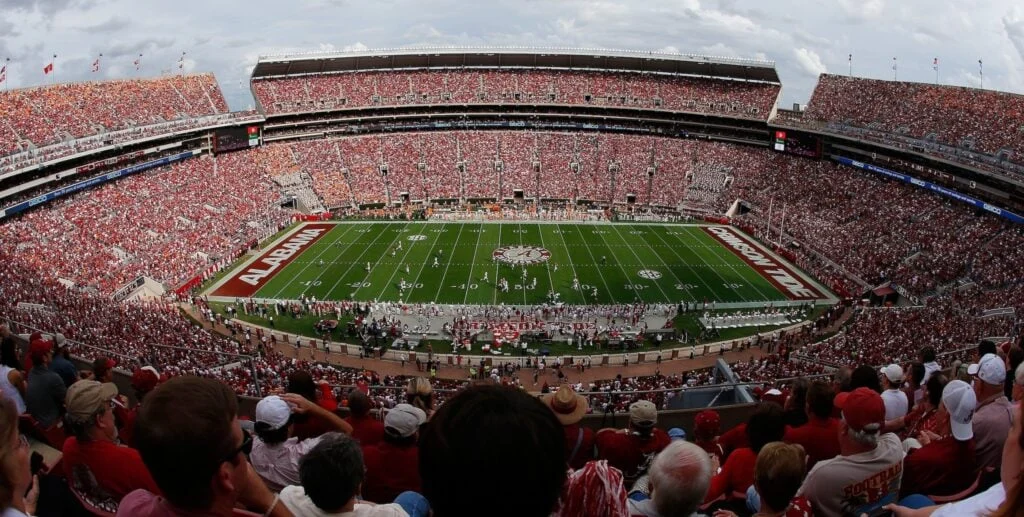
The intersection of collegiate athletics and real estate investment has reached a critical maturation point in 2026, as short-term rental (STR) operators increasingly pivot from oversaturated coastal markets toward high-yield university towns. While traditional tourism hubs often face diminishing returns due to supply gluts, college towns—particularly those anchored by "Blue Blood" football programs—offer a unique economic phenomenon: the "Football Premium." This specific revenue spike, concentrated over six or seven home-game Saturdays, can dictate the annual profitability of a property, sometimes doubling or tripling nightly rates compared to off-season figures. However, as the 2026 data indicates, the relationship between on-field performance and financial yield is far from linear, necessitating a rigorous analysis of zoning laws, local tax structures, and year-round economic stability.
Methodology and Data Acquisition
The 2026 rankings were derived from a comprehensive cross-referencing of AirDNA market estimates, Zillow Home Value Index (ZHVI) data, and an exhaustive audit of municipal zoning ordinances. The initial study tracked the home markets of the top 50 NCAA football programs. Markets located within major metropolitan areas—such as Los Angeles, Chicago, or Atlanta—were excluded to isolate the "stadium effect." In large metros, a 100,000-seat stadium’s impact is often absorbed by the broader hospitality infrastructure, whereas in smaller college towns, the influx of visitors fundamentally shifts the supply-demand equilibrium.
Each market was evaluated based on five primary metrics: annual revenue potential, average daily rate (ADR) lift during the fall season, current occupancy trends, regulatory accessibility for remote investors, and the "effective" property tax rate for non-owner-occupied dwellings. The final rankings prioritize markets where revenue growth remained positive through July 2026 and where local legislation permits non-primary residence short-term rentals.
The 2026 Rankings: Top 10 Markets for STR Investment
1. South Bend, Indiana (Notre Dame Fighting Irish)
South Bend emerged as the premier market for 2026, outperforming its closest competitor by a significant margin. With a median home value of approximately $202,170 and an average annual STR revenue of $39,546, the market offers a gross yield that is increasingly rare in the current real estate climate. The "Irish" effect is profound; September nightly rates typically run 82% higher than the July baseline. Despite a modest 46% annual occupancy rate, the high-value weekends driven by Notre Dame’s national alumni base sustain the model. Investors should note that Indiana caps non-homestead rentals at a 2% tax rate, which must be factored into cash flow projections.
2. Tuscaloosa, Alabama (Alabama Crimson Tide)
Tuscaloosa remains a titan of the "Football Premium" model, with fall rates averaging $513 compared to a summer floor of $252. However, the market is defined by its restrictive "Tourist Overlay" area, which limits STR operations to 45 days per calendar year by right. This regulation effectively tethers the market to the football season. While the average revenue sits at $37,800, much of this is concentrated in the autumn months. Alabama’s tax assessment for rentals is double that of owner-occupied homes (20% vs. 10%), making precise tax budgeting essential.
3. Oxford, Mississippi (Ole Miss Rebels)
Oxford represents the most football-dependent market in the United States. It boasts the highest nightly rates in the study, averaging $438, but the lowest annual occupancy at 33%. In Oxford, a property may sit vacant for two-thirds of the year and still generate over $41,000 in gross revenue due to the extreme demand during SEC home games. Nightly rates in September often clear $600. The regulatory environment is nuanced; the local Land Development Code does not explicitly classify non-owner-occupied STRs, leaving approval largely to the discretion of the Planning Director.
4. Athens, Georgia (Georgia Bulldogs)
Athens is a high-performance market that saw a 7.6% revenue increase in 2026, driven by a 17% hike in nightly rates despite a contraction in total supply. This indicates a maturing market where professionalized operators are outlasting casual hosts. However, Athens-Clarke County has become increasingly restrictive. Remote investors must target specific commercial zones and navigate a discretionary Special Use Permit process, as the commission has recently shown resistance to new residential STR applications.
5. Lubbock, Texas (Texas Tech Red Raiders)
Lubbock offers the lowest barrier to entry, with median home values hovering around $212,191. Unlike the "football-only" towns, Lubbock’s peak revenue month is May, driven by Texas Tech’s graduation ceremonies rather than athletics. This provides a more balanced revenue curve. With a 6.8% annual revenue growth rate, it serves as a stable entry point for investors seeking yield over the "trophy" status of more famous college towns.
6. Iowa City, Iowa (Iowa Hawkeyes)
Iowa City reported the strongest growth metrics in the 2026 study, with revenue up 18.8% and occupancy rising by 12.4%. The market’s strength is bolstered by state-level preemption, which prevents the city from banning or capping STRs. This legislative protection makes Iowa City one of the most secure environments for long-term STR planning, despite having the highest property tax rate (1.71%) in the top 10.
7. Norman, Oklahoma (Oklahoma Sooners)
Norman provides a "clean" investment profile with a transparent regulatory framework. STRs are permitted by right in most residential zones with a simple $300 annual license. The market is currently underserved, with only 558 active listings as of mid-2026. Revenue rose 12.2% year-over-year, making it a prime target for investors looking for low-friction operations.
8. Columbia, South Carolina (South Carolina Gamecocks)
With a median home value of $230,662 and a gross revenue yield of nearly 16%, Columbia is a high-yield market. However, the city has implemented a moratorium on new residential STR permits in certain districts. Success here requires targeting properties in mixed-use or commercial zones, or those fronting major arterial streets, which are exempt from the strictest residential caps.
9. Columbia, Missouri (Missouri Tigers)
The Missouri market saw a 15.6% revenue jump in 2026, one of only three towns where fall revenue consistently exceeds summer revenue. The city enforces a "one license per owner" rule, which prevents large-scale portfolio accumulation within city limits. Savvy investors have pivoted to larger acreage properties just outside the city boundary to bypass the eight-occupant cap and the 120-night rental limit.
10. Columbus, Ohio (Ohio State Buckeyes)
Despite being home to one of the nation’s premier football programs, Columbus ranks 10th because its economy is diversified far beyond the university. With Intel and major hospital systems providing year-round demand, the "football lift" is only 0.98x—meaning game days aren’t even the most expensive nights of the year. Columbus is an occupancy play rather than a rate play, boasting the highest occupancy (62%) in the study for homes under $250,000.
Regulatory Landscape: The Reality Check for Investors
The most critical finding of the 2026 analysis is the direct correlation between high "football premiums" and aggressive municipal regulation. In towns like State College, Pennsylvania, and Auburn, Alabama, the extreme demand for game-day housing led to local backlash, resulting in primary-residence requirements or strict night caps.
In State College, for instance, gross revenue potential is the highest in the country at over $46,000, yet the market is functionally closed to remote investors because properties must be the owner’s primary residence for at least eight months of the year. This regulatory trend suggests that the most profitable markets are often the ones with the shortest "shelf life" for new permits. Investors are increasingly required to provide "local responsible parties" and carry specialized liability insurance, often totaling upwards of $300,000, to maintain compliance.
Broader Impact and Market Implications
The shift toward college town STRs reflects a broader change in the American real estate landscape. As remote work stabilized in 2026, the demand for mid-sized cities with high cultural and athletic amenities has surged. This has created a "town and gown" tension, where local residents blame STR investors for rising housing costs.
However, the data suggests that STRs in these markets provide a vital surge capacity for universities that lack sufficient hotel infrastructure for major events. In towns like Oxford and Tuscaloosa, the hospitality industry cannot realistically build enough hotel rooms to accommodate 100,000 visitors for seven weekends a year. STRs fill this gap, providing significant tax revenue through hotel occupancy taxes (HOT) that fund local infrastructure.
Conclusion: Strategy for 2027 and Beyond
For the remainder of 2026 and heading into 2027, the most successful investors will be those who prioritize "regulatory durability" over pure football rankings. The data proves that a team’s recruiting rank or national poll position does not guarantee a return on investment. Instead, markets like South Bend and Iowa City—which offer a combination of affordable entry prices, state-protected rights, and high alumni engagement—remain the gold standard.
Investors are cautioned to verify the legality of non-owner-occupied rentals at the specific address level before entering into contracts. As municipal councils continue to debate the impact of STRs on housing affordability, the "by-right" status of a property is the most valuable asset an investor can hold. The era of "buying anywhere near the stadium" has ended; the era of the sophisticated, regulation-first college town operator has begun.
