

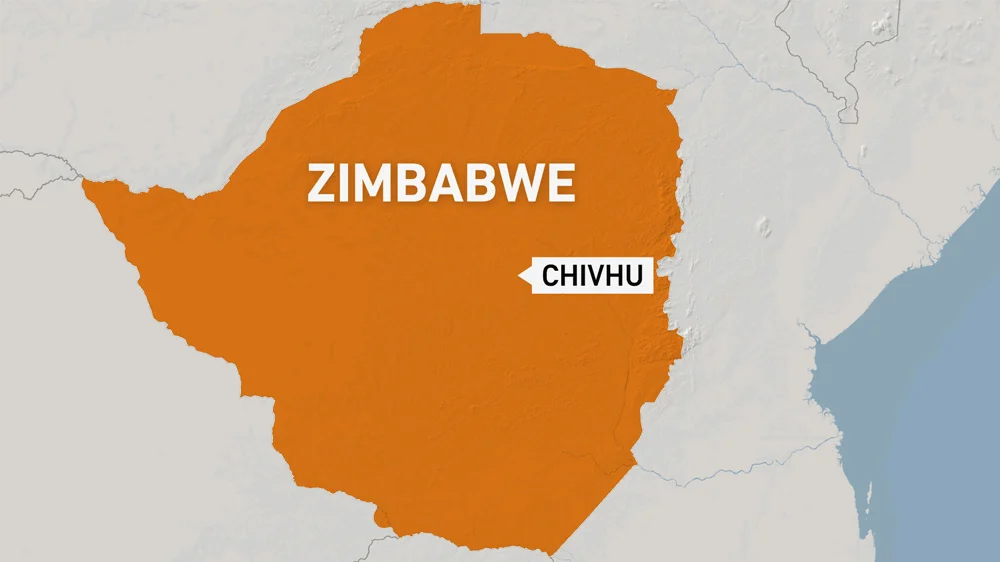
A devastating head-on collision between a minibus carrying members of a church and a haulage truck in central Zimbabwe has resulted in the deaths of at least 27 people, according to police reports. The catastrophic incident, which occurred on Friday evening, October 20th, near Chivhu, approximately 140 kilometers (87 miles) south of the capital city, Harare, has once again brought into sharp focus the precarious state of road safety and infrastructure within the Southern African nation. The initial police investigation suggests the crash was precipitated by the haulage truck attempting to overtake another vehicle, a maneuver that tragically led it directly into the path of the oncoming minibus.
The collision, reported by police spokesperson Paul Nyathi on Saturday, left a scene of utter devastation. The minibus, described as a mangled, charred shell in footage shared by the state-run broadcaster ZBC News, bore the brunt of the impact. The haulage truck lay on the opposite side of the road, testament to the force of the collision. The victims were identified as members of a popular African Christian denomination, en route to a conference, underscoring the profound community impact of the tragedy. While 23 individuals were pronounced dead at the scene, others succumbed to their injuries after being rushed to a local hospital, as confirmed by a provincial government minister quoted by ZBC News. The incident occurred on a flat, remote stretch of road characterized by low vegetation and open terrain, an area where such a high-impact collision would have left little chance for survival for those involved.
A Chronology of Catastrophe
The tragic sequence of events unfolded at approximately 18:30 GMT on Friday, a time when visibility can be challenging, especially on unlit rural roads. The minibus, packed with passengers, was navigating the highway near Chivhu, a town situated along a key arterial route connecting Harare to other parts of the country and neighboring South Africa. Simultaneously, a large haulage truck, a common sight on Zimbabwe’s highways due to its role in transporting goods across the region, was also traveling on the same road.
According to preliminary police findings, the critical moment arrived when the truck driver initiated an overtaking maneuver. The specific details of the road conditions at that exact point—whether there were clear overtaking zones, blind spots, or other contributing factors—are still under investigation. However, the attempt to overtake another vehicle proved fatal. Instead of safely completing the maneuver, the truck collided head-on with the approaching minibus. The sheer kinetic energy of two large vehicles moving in opposite directions meant the impact was immediate and catastrophic, offering little to no opportunity for evasive action.
Emergency services, alerted to the disaster, faced a grim scene. The immediate aftermath involved frantic efforts to extract survivors and recover the deceased from the wreckage. Medical personnel worked tirelessly to stabilize the injured before transporting them to nearby medical facilities. The high initial death toll at the scene itself speaks volumes about the severity of the crash, with the number sadly climbing as more succumbed to critical injuries. The remote location, while offering some logistical challenges, also meant that the devastating impact was largely confined to the immediate vicinity of the accident, with the broader public only becoming aware through official reports and harrowing social media footage.
Zimbabwe’s Enduring Road Safety Crisis: A Broader Context
This recent calamity is not an isolated event but rather the latest in a relentless series of deadly crashes plaguing Zimbabwe’s road network. The nation has grappled with a persistent and severe road safety crisis for many years, a problem rooted in a confluence of factors including dilapidated infrastructure, inadequate funding for maintenance, and often, driver negligence and non-compliance with traffic regulations.
Zimbabwe’s roads, once considered among the best in Southern Africa, have deteriorated significantly over decades due to chronic underfunding and neglect. Potholes are ubiquitous, turning many major highways into treacherous obstacle courses. This poor road surface not only increases the risk of accidents by forcing drivers into evasive maneuvers but also contributes to accelerated wear and tear on vehicles, making them more susceptible to mechanical failures. The lack of proper road markings, signage, and adequate lighting, particularly in rural and remote stretches, further exacerbates the risks, especially during nighttime travel.
A critical component of Zimbabwe’s transport ecosystem is the privately run minibus taxi, colloquially known as a "kombi." These vehicles form the backbone of public transport for millions of Zimbabweans, especially for inter-city travel and daily commutes, due to the limited availability and reliability of state-run public transport. While essential, kombis are frequently criticized for widespread overloading, unroadworthiness, and aggressive driving practices by their operators, often driven by intense competition and the pressure to maximize daily earnings. The lack of stringent enforcement of traffic laws and vehicle inspection standards contributes to a culture of impunity that puts countless lives at risk. The recent crash involving a minibus carrying a large group of church members tragically illustrates the vulnerability of passengers reliant on this mode of transport.
Statistical data, though often challenging to obtain comprehensively, consistently paints a grim picture of road fatalities in Zimbabwe. Reports from various local and international organizations frequently place Zimbabwe among countries with high road accident rates. The World Health Organization (WHO) and other global road safety bodies have consistently highlighted the disproportionate burden of road traffic injuries and fatalities in low- and middle-income countries, where factors like rapid motorization, poor infrastructure, weak enforcement, and inadequate post-crash care converge to create deadly conditions. While precise, up-to-the-minute figures for Zimbabwe are subject to ongoing collection, the trend indicates thousands of injuries and hundreds of fatalities annually, placing a significant strain on the country’s healthcare system and economy.
Echoes of Previous Tragedies
The Chivhu disaster resonates with several other major road accidents that have claimed numerous lives in recent months and years:
- April 2023 Minibus Fire: Earlier this year, at least 18 people perished when a minibus burst into flames on a highway in the southern part of the country. Investigations into that incident pointed towards mechanical failure, potentially exacerbated by poor maintenance and overloading, trapping passengers inside the burning vehicle.
- April 2023 Truck-Car Collision: In another tragic event earlier the same month, a woman and her five children were killed when their vehicle collided with a haulage truck on a highway linking Zimbabwe and South Africa. This incident, like the Chivhu crash, involved a large commercial vehicle, highlighting the particular dangers posed by interactions between light vehicles and heavy goods vehicles on Zimbabwe’s roads.
- Past Major Crashes: Going further back, Zimbabwe has witnessed numerous mass casualty events, including bus crashes that have claimed dozens of lives. These recurring incidents underscore systemic failures in road safety management, vehicle regulation, and driver behavior.
These previous incidents serve as stark reminders that the factors contributing to road carnage are deeply entrenched, ranging from the mechanical integrity of vehicles and the discipline of drivers to the fundamental quality of the road infrastructure itself.
Official Responses and Calls for Action
In the wake of the Chivhu tragedy, authorities have initiated a comprehensive investigation to ascertain the full circumstances leading to the collision. Police spokesperson Paul Nyathi confirmed the ongoing probe, emphasizing the commitment to understanding every detail that contributed to the loss of life. Such investigations are crucial not only for accountability but also for identifying systemic flaws that can be addressed to prevent future occurrences.
Government officials, including the provincial government minister quoted by ZBC News, have expressed profound condolences to the bereaved families and the affected church community. These expressions of sympathy are typically accompanied by calls for increased caution on the roads and a renewed commitment to enforcing traffic laws. Historically, such high-profile accidents often trigger temporary surges in police presence on highways and calls for public awareness campaigns on road safety.
However, beyond immediate condolences and reactive measures, there is an overarching expectation for more substantive, long-term interventions. Road safety advocates and the general public often call for:
- Infrastructure Rehabilitation: A concerted, well-funded national program to repair and upgrade the dilapidated road network, including filling potholes, improving signage, and installing adequate lighting.
- Stricter Vehicle Inspections: Enhancing the regulatory framework and enforcement mechanisms for vehicle roadworthiness, especially for public transport vehicles like kombis and haulage trucks. This includes regular and thorough inspections, with severe penalties for non-compliance.
- Driver Training and Discipline: Implementing more rigorous driver training programs, retesting initiatives, and aggressive enforcement against reckless driving, speeding, overloading, and driving under the influence.
- Public Awareness Campaigns: Sustained educational campaigns to instill a culture of road safety among all road users—drivers, passengers, pedestrians, and cyclists.
- Emergency Response Enhancement: Improving the capacity and coordination of emergency services, including quicker response times, better equipped ambulances, and enhanced trauma care facilities, particularly in remote areas.
The Minister of Transport and Infrastructural Development, along with other relevant ministries, is expected to provide detailed statements regarding the government’s plan to address the perennial road safety challenges. These statements often include commitments to infrastructure projects and policy reviews, though the pace and extent of implementation remain a critical concern for the public.
Broader Impact and Implications
The Chivhu crash extends its tragic tentacles far beyond the immediate scene of the accident, sending ripples of grief and concern throughout Zimbabwean society.
- Humanitarian and Social Impact: The loss of 27 lives, particularly members of a single church traveling for a religious conference, inflicts immense pain on families, friends, and the entire religious community. The collective trauma of such a sudden and devastating loss can have long-lasting psychological and social consequences. Funerals on such a scale place significant emotional and logistical burdens on communities already facing economic hardships.
- Economic Impact: Beyond the immeasurable human cost, road accidents carry substantial economic burdens. These include direct costs such as emergency services, medical treatment, property damage, and indirect costs like lost productivity, legal expenses, and the long-term care of accident survivors with disabilities. For a developing economy like Zimbabwe’s, these costs represent a drain on already stretched resources.
- Policy and Governance Implications: The recurring nature of such disasters puts immense pressure on the government to demonstrate effective governance in areas of infrastructure development, law enforcement, and public safety. Failure to adequately address these issues can erode public trust and confidence in state institutions. It also highlights the urgent need for a holistic, multi-sectoral approach to road safety, involving ministries of transport, health, local government, and police.
- Regional Context: Zimbabwe’s road safety challenges are not unique in Southern Africa, where many countries face similar issues. However, the severity and frequency of major incidents in Zimbabwe suggest that the problem is particularly acute. Improving road safety is also crucial for regional trade and tourism, as Zimbabwean highways serve as vital transit corridors for goods and people across the SADC region.
- Public Consciousness and Behavior: Each major crash serves as a grim reminder to the public about the dangers on the roads. While temporary changes in behavior (e.g., increased caution) might follow, sustained improvement requires a fundamental shift in attitudes towards road safety, driven by both personal responsibility and robust enforcement.
In conclusion, the horrific head-on collision near Chivhu is a profound tragedy that underscores the urgent and multifaceted road safety crisis confronting Zimbabwe. While investigations will pinpoint the immediate causes of this specific incident, the broader context of dilapidated infrastructure, problematic public transport practices, and inconsistent law enforcement points to a systemic challenge that demands comprehensive and sustained intervention. The lives lost represent not just statistics, but individuals with families, dreams, and contributions to their communities. Their deaths serve as a poignant and powerful call to action for all stakeholders—government, law enforcement, transport operators, and individual road users—to prioritize safety and work collectively towards making Zimbabwe’s roads safer for everyone. Until decisive action is taken to address the root causes of road carnage, such devastating incidents risk remaining a tragically frequent occurrence.
