

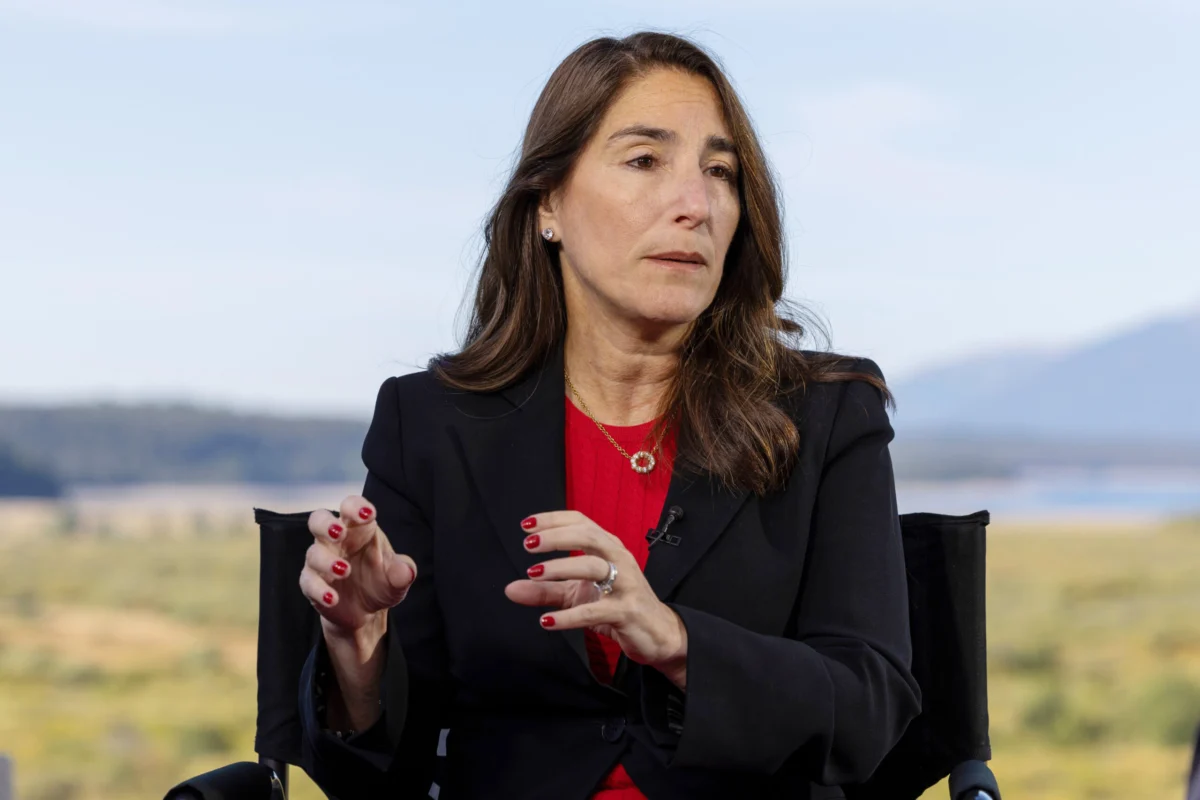
Cleveland Federal Reserve President Beth Hammack has reiterated her firm stance advocating for an immediate increase in interest rates, asserting that recent inflation data indicates the central bank remains significantly distanced from its mandated price stability objective. Her remarks, delivered during a live CNBC interview at the Federal Reserve’s annual symposium in Jackson Hole, Wyoming, underscore a persistent concern within the Federal Reserve system regarding the entrenched nature of inflation and its tangible impact on American households.
Inflationary Headwinds Persist, Prompting Calls for Action
Hammack pointed to a recently released inflation report, which revealed annualized inflation rates hovering around 3%. While acknowledging a deceleration in the monthly pace of price increases over the preceding months, she contended that such a trend is insufficient to warrant a pause in monetary policy tightening. "I don’t want to prejudge anything. But I believe now is the time to act," Hammack stated, emphasizing her conviction that the United States has been grappling with an inflationary environment for over five years, a period during which inflation has consistently surpassed the Federal Reserve’s 2% target. She further elaborated that her assessment of financial conditions and her discussions with market participants do not reveal any substantial policy restraint, suggesting that current monetary policy remains too accommodative given the inflationary backdrop.
These pronouncements align with Hammack’s previous policy stances. Notably, at the Federal Open Market Committee (FOMC) meeting in July, Hammack was one of three dissenting voices against the decision to maintain the federal funds rate within the 3.5%-3.75% target range. She, along with her fellow dissenters, advocated for a quarter-percentage-point rate hike at that meeting, underscoring a divergence in opinion within the committee regarding the urgency of further monetary tightening.
The Imperative of Addressing Inflation for Household Well-being
Hammack articulated her continued belief in the necessity for the Federal Reserve to take decisive action against inflation, which she described as placing a considerable strain on household budgets. "The longer inflation stays above our objective, the harder it will be for us to bring it back down, and the more pain that individuals and businesses are going to be experiencing," she warned. Her concern extends beyond mere economic metrics; she highlighted the risk of an "inflationary mindset" becoming embedded within the public’s perception and behavior. "To me, the real problem with us missing on our inflation objective for so long is the risk that an inflationary mindset starts to set in with the public," Hammack explained. This sentiment suggests a fear that prolonged high inflation could lead to expectations of future price increases, potentially fueling a wage-price spiral and making inflation more difficult to control.
Economic Factors Contributing to Inflationary Pressures
While the exact drivers of inflation are complex and often debated, recent analyses have traced a portion of this year’s inflation surge to several key factors. The ongoing geopolitical tensions, including the impact of the war in Iran, have contributed to supply chain disruptions and increased energy costs. Furthermore, the implementation of tariffs on imported goods can lead to higher prices for consumers and businesses. On the demand side, the burgeoning interest in artificial intelligence has spurred significant investment and demand for related technologies and resources, potentially contributing to broader inflationary pressures in certain sectors.
Policymakers at the Federal Reserve typically aim to look through temporary supply shocks and other transient factors. However, a growing concern among some Fed officials, including Hammack, is that the persistent nature of these inflationary pressures could lead to their entrenchment within the broader economy, making them more difficult to dislodge. This concern is amplified by the potential for these elevated prices to become a normalized feature of the economic landscape, impacting long-term economic stability.
Anecdotal Evidence of Household Strain

To illustrate the tangible consequences of persistent inflation, Hammack shared a poignant observation from a recent meeting with workers in Erie, Pennsylvania. She recounted how these individuals, despite holding what she described as "good jobs" and working diligently every day, expressed a profound sense of despair. "They’re working every day, coming in, they’ve got good jobs, and yet they still feel like they can’t make ends meet. They can’t go and afford an ice cream cone on the weekend with their kids," Hammack stated. This anecdote powerfully conveys the erosion of purchasing power experienced by ordinary Americans, where even modest discretionary spending has become a challenge. Such firsthand accounts serve as a stark reminder of the human cost of inflation and underscore the urgency with which the Federal Reserve is expected to address it.
Market Expectations and the Path Forward
Despite President Hammack’s strong advocacy for immediate action, market pricing currently suggests a different trajectory for the Federal Reserve’s monetary policy. Futures markets indicate a prevailing expectation that the Fed will maintain its current interest rate policy at both its September and October meetings. The consensus among market participants appears to be a further rate hike is not anticipated until December. This divergence between a hawkish policymaker’s call for immediate action and the market’s more gradual outlook highlights the ongoing debate and uncertainty surrounding the optimal path for monetary policy in the current economic climate.
Historical Context of Federal Reserve Policy and Inflation
The Federal Reserve’s dual mandate is to promote maximum employment and price stability. For much of the post-Global Financial Crisis era, inflation remained stubbornly below the Fed’s 2% target, prompting a period of exceptionally low interest rates and quantitative easing. However, the economic landscape shifted dramatically following the COVID-19 pandemic. Unprecedented fiscal stimulus, coupled with supply chain disruptions and a surge in consumer demand as economies reopened, led to a significant uptick in inflation starting in 2021. This marked a departure from the preceding decade, forcing the Fed to pivot towards a more aggressive monetary policy stance.
The current period of elevated inflation, even with signs of moderation, represents a critical juncture for the Federal Reserve. The central bank’s credibility in achieving its price stability mandate is paramount. Prolonged periods of inflation above target can erode public confidence in the Fed’s ability to manage the economy, potentially leading to self-fulfilling prophecies of higher inflation.
Broader Economic Implications of Interest Rate Decisions
The Federal Reserve’s interest rate decisions have far-reaching implications for the U.S. economy and global financial markets. Higher interest rates generally lead to:
- Increased Borrowing Costs: For consumers, this means higher mortgage rates, auto loan rates, and credit card rates, which can dampen consumer spending. For businesses, it increases the cost of capital, potentially slowing investment and expansion.
- Reduced Inflationary Pressures: By making borrowing more expensive and thus reducing demand, higher interest rates are intended to cool down the economy and bring inflation back towards the target.
- Stronger U.S. Dollar: Higher interest rates can attract foreign investment, increasing demand for the U.S. dollar and potentially making U.S. exports more expensive.
- Impact on Asset Prices: Rising interest rates can lead to declines in the value of assets like stocks and bonds, as future earnings and cash flows are discounted at a higher rate.
- Potential for Economic Slowdown or Recession: If monetary policy is tightened too aggressively, there is a risk of triggering an economic recession. Policymakers must carefully balance the need to control inflation with the imperative to avoid an excessive economic downturn.
Analysis of Hammack’s Stance
President Hammack’s persistent call for action reflects a hawkish perspective within the Federal Reserve, prioritizing the swift restoration of price stability. Her emphasis on the potential for an "inflationary mindset" to take hold suggests a concern that waiting too long to act could embed inflationary expectations, making the eventual task of bringing inflation down even more challenging and potentially more painful for the economy. The anecdote from Erie, Pennsylvania, serves as powerful anecdotal evidence of the real-world consequences of inflation on ordinary citizens, reinforcing the urgency of her message.
The current debate within the FOMC, as evidenced by Hammack’s dissent, highlights the difficult trade-offs facing central bankers. They must navigate a complex economic environment characterized by persistent inflation, potential recessionary risks, and the need to maintain public confidence. The market’s more cautious outlook, anticipating a pause before further tightening, suggests that many participants believe the Fed is already on a path to achieve its goals or that the risks of overtightening are significant. The coming months will be crucial in determining which perspective prevails and how the Federal Reserve ultimately calibrates its monetary policy in its ongoing battle against inflation. The economic data, combined with the forward guidance from Fed officials, will be closely scrutinized for any shifts in this delicate balancing act.
